 Anacortes
 Living With La Conner's Climate
La Conner sits on the Swinomish Channel, close enough to salt water that the air itself becomes part of the maintenance conversation for anyone who owns a home here. Between the tidal channel, the open exposure across the Skagit Valley farmland, and the marine weather that rolls in off Puget Sound and the Salish Sea, homes in this part of Skagit County face a specific combination of stressors: salt-laden air that accelerates corrosion and finish breakdown, long stretches of driving rain that push water sideways into seams and laps, and a moss and algae season that can run most of the year on north-facing and shaded walls. None of this is unique to La Conner alone, but the town's proximity to the water and its low, open setting tend to concentrate these effects more than you'd see a few miles inland.
Siding, trim, roofing, and even window frames all take this exposure differently depending on what they're made of. Some materials shrug it off for decades. Others need paint touch-ups, caulking, and moisture repairs on a schedule that never really stops. Understanding which category your home's exterior falls into is the first step toward a lower-maintenance, longer-lasting result.
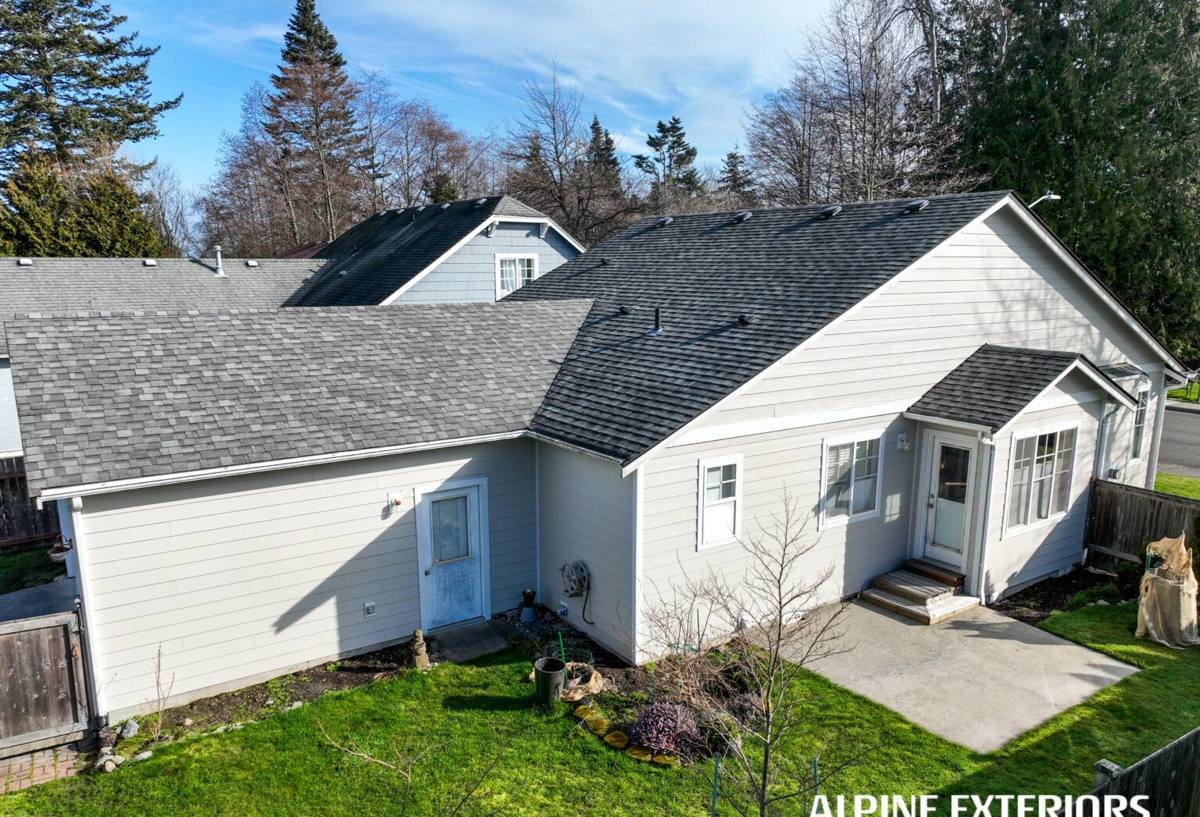
What Salt Air and Driving Rain Actually Do to a House
Salt Air
Airborne salt is corrosive to exposed metal fasteners, flashing, and hardware, and it can also degrade certain paint and coating systems faster than the manufacturer's stated repaint interval would suggest. Over years, homes closer to open water tend to show chalking, fading, and fastener staining sooner than the same materials would inland.
Driving Rain
Wind-driven rain doesn't just fall on a wall — it gets pushed into it. Horizontal siding laps, window and door trim, and any penetration in the wall (hose bibs, vents, light fixtures) are all points where water intrusion starts if the material or the installation isn't built to shed it. Once moisture gets behind siding, the damage often isn't visible until sheathing or framing underneath is already compromised.
Moss and Algae
Skagit County's damp, mild climate keeps humidity high for much of the year, and shaded or north-facing walls in particular stay wet longer after every rain event. That's ideal growing conditions for moss and algae, which not only look bad but also hold moisture against the siding surface, extending the time any given wall stays wet after a storm.
How Common Siding Materials Hold Up
Homeowners in La Conner and the surrounding area are usually choosing between a handful of siding categories when it's time to replace or upgrade. Here's an honest look at how they compare under this specific climate profile.
| Material | Moisture Behavior | Salt Air Resistance | Maintenance Load |
|---|---|---|---|
| Vinyl | Doesn't absorb water itself, but seams and J-channels can let water behind the panel | Can become brittle and fade faster in coastal UV/salt exposure | Low routine upkeep, but repairs are visible and panels can warp |
| Primed Wood / Spruce Lap | Absorbs moisture readily; prone to swelling, cupping, and rot at end grain | Poor without frequent repainting | High — repainting and caulking every few years |
| Engineered Wood (e.g., LP-type products) | Resin-treated to resist moisture, but edge and joint sealing is critical | Moderate; failures concentrate at unsealed cuts and laps | Moderate to high — installation precision matters a lot |
| James Hardie Fiber Cement | Cement-based composition doesn't swell, rot, or delaminate from moisture exposure | Strong; factory-cured ColorPlus finish is engineered for UV and weather exposure | Low — occasional rinse and repaint of trim per warranty guidance |
This isn't a knock on every alternative — vinyl and engineered wood siding both have legitimate uses and plenty of homes wear them fine in gentler climates. But in a marine, high-rainfall setting like La Conner's, the materials that depend most heavily on paint film integrity or seam sealing tend to show their weaknesses earliest.
Why We Install Only James Hardie Fiber Cement
We made a deliberate decision as a company to install James Hardie fiber cement siding exclusively — not vinyl, not LP SmartSide or similar engineered wood panels, not Cemplank or Allura, and not primed spruce or cedar lap. That's not a marketing position; it's a standard we hold because of what we've seen play out on real houses in this climate over time.
- Non-combustible composition — fiber cement resists ignition in a way wood-based products cannot, which matters as wildfire smoke and dry-season risk have become a bigger part of Pacific Northwest summers.
- Moisture stability — Hardie's cement-based board doesn't swell, warp, or rot the way wood and wood-composite sidings can when they take on water at cut ends or unsealed joints.
- Factory-applied ColorPlus finish — the color is baked on in a controlled factory process rather than field-painted, which gives far more consistent, UV- and weather-resistant coverage than a job-site paint job, and it holds up well against the fading and chalking that salt air accelerates.
- Climate-engineered product lines — Hardie's HZ5 formulation is built specifically for cold, wet Pacific Northwest weather cycles, which is the right match for Skagit County.
- Strong transferable warranty — backed by a manufacturer with decades of track record, and transferable if you sell the home, which matters for resale confidence.
We're not going to tell you vinyl or engineered wood siding is junk — plenty of it is manufactured to a reasonable standard. What we will say is that once you've seen how each product actually performs a decade or two into coastal Skagit County weather, the trade-offs (repainting cycles, seam vulnerability, warranty limitations) stop looking worth it compared to a product built to shed moisture and hold its finish without that ongoing maintenance burden.
What Correct Installation Involves
Fiber cement is only as good as the installation behind it. A big part of why Hardie siding underperforms on some homes isn't the product — it's shortcuts in the install. Proper installation in a wet, wind-driven-rain climate like La Conner's includes:
- Correct water-resistive barrier and flashing detail behind every seam, window, and penetration
- Manufacturer-specified fastener spacing, type, and depth — over- or under-driven nails are a common failure point
- Proper clearance between siding and grade, decks, roofing, and other transitions to avoid trapped moisture
- Correctly caulked and painted cut edges, since factory ColorPlus coverage doesn't extend to a field cut unless it's sealed
- Panel and joint layout that accounts for expansion and the specific exposure of each wall face
This is also where a crew's familiarity with the local climate pays off. A wall facing the channel or open farmland catches wind-driven rain differently than a protected, tree-sheltered wall on the same house, and installation details should account for that difference rather than treating every elevation the same.
The Full Exterior Envelope: Roofing, Windows, and Decks
Siding doesn't work in isolation — it's one piece of a home's exterior envelope, and in a climate like this, the pieces need to work together. We handle roofing, windows, and decks alongside siding for exactly that reason.
Roofing
A roof that's shedding moss, holding moisture, or leaking at flashing points will eventually push water down onto the siding and trim below it, undermining even a well-installed wall assembly. Roof and siding condition are worth evaluating together, not separately.
Windows
Window flashing and trim integration is one of the most common failure points behind siding, especially on older homes that have been re-sided over original window details. Replacing siding is a natural point to also address aging or poorly flashed windows.
Decks
Decks that attach directly to a house create a transition point where water management has to be right, particularly with driving rain pushing moisture toward the ledger board and adjacent wall. Salt air and constant moisture also take a toll on deck materials and fasteners over time, so build quality matters here too.
Choosing a Local Contractor for La Conner
La Conner is a small town, and homes here range from older waterfront and near-channel properties to newer construction further out toward the valley. A contractor who works regularly in this specific stretch of Skagit County — not just generically "the Pacific Northwest" — will already understand which walls take the worst of the weather, how moss behaves on shaded northern exposures here, and what kind of moisture problems tend to show up on homes near the water versus those further inland.
A few things worth checking before hiring anyone for exterior work in this area:
- Washington state contractor license and current insurance, verifiable independently
- Manufacturer-specific training or certification for the siding product being installed, not just general carpentry experience
- A written scope that specifies flashing, house wrap, and fastener details — not just "install siding"
- Willingness to walk your home's specific exposures (channel-facing, shaded, ground-level) and explain how the plan accounts for each
- References or past work you can actually see, not just photos
- Clear warranty terms in writing, both for materials and for labor
Maintenance in a Salt-Air, Moss-Prone Climate
Even the best siding benefits from basic upkeep in this environment. A periodic rinse to remove salt residue and organic buildup, prompt attention to any caulking that's cracked or pulled away, and keeping gutters and downspouts clear so water isn't dumping onto walls all go a long way. Fiber cement reduces the maintenance burden significantly compared to wood or engineered wood products, but "low-maintenance" doesn't mean "no-maintenance" — a house near the water still needs occasional attention no matter what it's clad in.
If you're weighing a siding, roofing, window, or deck project for a home in La Conner, we're happy to take a look and talk through what your specific property is dealing with. Reach out for a free, no-pressure estimate using the form below.