 Anacortes
 Two Very Different Materials, Not Just Two Price Points
Homeowners in Anacortes shopping for new siding usually end up comparing two products: vinyl and fiber cement. On paper they look like they're competing for the same job, but they're built from almost nothing alike. Vinyl is an extruded PVC plastic panel, formulated with pigment throughout and designed to flex with temperature swings. Fiber cement is a composite of cement, sand, and cellulose fibers, pressed and cured into a dense, rigid board, then factory-finished with a baked-on acrylic topcoat. One is plastic. One is closer to masonry. That difference in what the material actually is drives almost every other difference on this page — how it handles moisture, how long it lasts, what it costs to maintain, and how it looks twenty years in.
We're not neutral here. This company installs James Hardie fiber cement exclusively and hasn't put vinyl on a house in years. That's a real professional position, not a sales pitch, and we think it's fair to explain the reasoning rather than just state it.
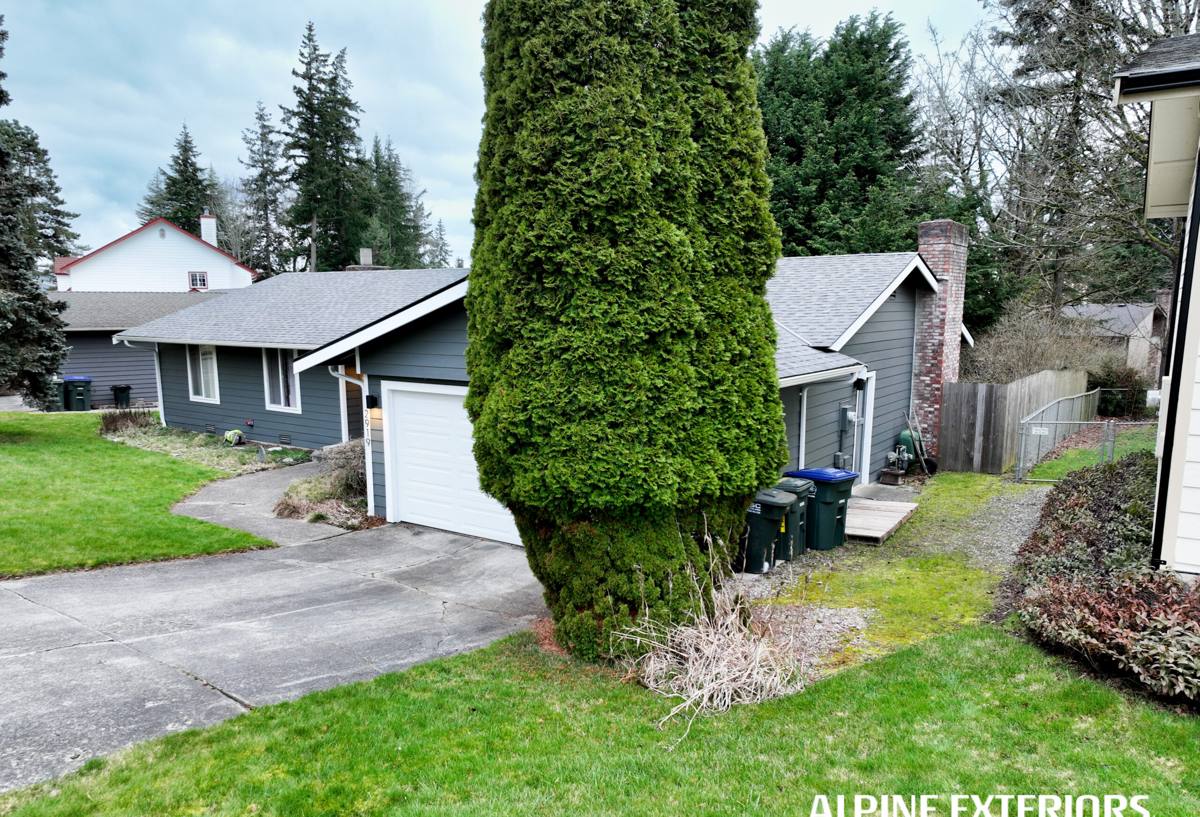
How Each Product Handles Anacortes' Climate
Skagit County siding doesn't just deal with rain — it deals with salt air off Fidalgo Bay and Rosario Strait, driving horizontal rain during winter storms, and a moss and algae season that can run eight months out of the year on shaded north and west elevations. That combination is genuinely hard on exterior materials.
Vinyl in this environment
Vinyl doesn't rot and doesn't need paint, which is its real strength. But it's a thin material — typically 0.038" to 0.046" — that expands and contracts noticeably with temperature swings, and it's installed with a "hang loose" method using slotted nails specifically because it needs room to move. In sustained wind-driven rain, water can work behind vinyl panels at the laps and penetrate to the weather barrier, especially on older or poorly installed jobs. It also chalks and fades under UV exposure over years, and salt air can accelerate that surface breakdown. Cold snaps can make it brittle enough to crack on impact.
Fiber cement in this environment
Fiber cement is dimensionally stable — it doesn't expand and contract the way vinyl does, so it holds tight seams and doesn't warp or buckle in temperature swings. James Hardie's HZ5 product line is specifically engineered for wet, freeze-prone climates like ours, with formulations aimed at resisting moisture-related damage. It's also dense enough to resist impact from wind-driven debris, and its factory ColorPlus finish is baked on and warranted separately from the substrate, which matters when salt air is working on every painted surface on the house.
Durability and Lifespan, Compared Honestly
| Factor | Vinyl Siding | Fiber Cement (Hardie) |
|---|---|---|
| Typical lifespan | 20-30 years, shorter in harsh coastal exposure | 30-50+ years when installed to spec |
| Impact resistance | Can crack or shatter, especially when cold | Resists denting and cracking; won't shatter |
| Dimensional stability | Expands/contracts with heat; can ripple or bow | Stable; holds straight lines over decades |
| Moisture behavior | Sheds water on the face; vulnerable at laps/penetrations | Engineered for wet climates; won't rot |
| Color retention | Fades and chalks with UV/salt exposure | Factory finish warranted against fading/chipping |
| Fire performance | Combustible plastic; can melt/deform near heat | Non-combustible |
None of this means vinyl is a bad product for what it is. It's inexpensive, low-maintenance in mild climates, and a reasonable choice for a lot of the country. Our objection isn't that vinyl is junk — it's that in this specific climate, with this specific salt and rain exposure, it doesn't hold up as well as a material engineered for exactly these conditions.
Maintenance: What You're Actually Signing Up For
Vinyl's sales pitch is "no maintenance," and it's mostly true in the sense that you never paint it. But maintenance isn't only paint. Vinyl needs regular washing to keep salt film and algae from etching into the surface, and damaged panels are matched by color and profile, which gets harder as a product ages out of production and the color has faded on the rest of the house. Cracked or warped panels are common enough after a decade of coastal exposure that partial re-siding jobs aren't rare.
Fiber cement's maintenance is different in kind. It doesn't need washing to prevent material degradation, though moss and algae still grow on any exterior surface here and periodic gentle cleaning keeps things looking sharp. The factory finish is warranted for decades, so repainting isn't the routine expense it is with field-painted wood or fiber cement that wasn't factory-finished. The real maintenance item with any siding in this climate is caulking and flashing at penetrations — that's a workmanship issue more than a material one, and it applies to both products.
Fire and Impact Considerations
This matters more every year in Washington. Vinyl is a petroleum-based plastic — it's combustible and can soften, deform, or ignite when exposed to radiant heat from a nearby fire, even one that never touches the house directly. Fiber cement is non-combustible by composition; it doesn't contribute fuel to a fire. For homeowners weighing wildfire exposure or simply wanting one less combustible material on the exterior envelope, that's a meaningful difference, not a marketing point.
On everyday impact — a ladder bump, a thrown rock, hail, wind-driven branches — fiber cement's density resists denting and cracking noticeably better than thin vinyl panels, which can crack on impact and are especially brittle when cold, a real consideration during Skagit County's winter storms.
Appearance and Resale Value
Vinyl has improved in texture and profile options over the years, but it's still a thin plastic panel, and on close inspection — especially in raking light — it tends to read as what it is. It also can't be painted a different color down the road without voiding warranties, since the color is the plastic itself.
Fiber cement takes paint-quality factory finishes with real wood-grain or smooth textures, in lap, shingle, and panel profiles, and holds sharp lines and shadow lines that read as substantial rather than thin. Appraisers and real estate agents generally treat fiber cement as a premium material relative to vinyl, which tends to show up in resale comparisons, particularly on higher-value homes.
Cost: The Real Comparison
Vinyl is genuinely less expensive upfront — that's not in dispute and we won't pretend otherwise. But the honest comparison isn't just materials-and-labor day one; it's cost over the life of the siding.
| Cost Factor | Vinyl | Fiber Cement (Hardie) |
|---|---|---|
| Upfront material + install | Lower | Higher |
| Repainting over 30 years | None required, but panels fade/degrade and get replaced | None required (factory finish warranted) |
| Partial repair/replacement | More common; color-matching aging panels is difficult | Less common; durable finish ages more evenly |
| Insurance considerations | Combustible material | Non-combustible, sometimes favorable |
| Resale positioning | Standard/economy | Premium |
When you spread the real costs — including the higher odds of panel replacement, fading, and eventual full re-siding — across three decades of Anacortes weather, the gap between the two products narrows a lot more than the sticker price suggests.
Warranty Structures Compared
Vinyl warranties are typically prorated, meaning the coverage value decreases every year you own the product, and many exclude fading and color change past a certain point — exactly the failure mode most common in salt air. Coverage is also frequently tied to the original owner, with reduced protection after a home sale.
James Hardie backs its fiber cement products with a non-prorated limited warranty, and ColorPlus factory-finished products carry a separate finish warranty covering chipping, cracking, and fading. Both are transferable to a new owner within the coverage period, which is a real selling point if you plan to sell the home before the warranty term ends. Warranty terms and transfer conditions are spelled out by the manufacturer — we walk homeowners through the actual documentation rather than a summary, since the fine print is what matters.
Why We Standardized on Hardie
We used to install a range of siding products. We narrowed to James Hardie fiber cement exclusively because, house after house in this exact climate, it held up the way it was supposed to and the callbacks were about workmanship details, not the material failing on its own. A few of the specific reasons:
- Non-combustible — a genuine safety difference, not just a spec sheet line
- HZ5 formulation engineered for wet, freeze-prone coastal climates like Skagit County
- Factory-applied ColorPlus finish resists the fading and chalking that salt air accelerates
- Dimensionally stable — holds tight seams and straight lines instead of expanding and contracting
- Dense enough to resist wind-driven debris and impact damage
- Non-prorated, transferable warranty coverage
- One product system we install correctly every time, rather than juggling install specs across several brands
That last point matters more than it might seem. A siding product's real-world performance depends heavily on correct installation — proper clearances, fastening, flashing, and caulking. Standardizing on one system lets our crews install it the same correct way on every job, rather than switching techniques between products.
Making the Right Call for Your Home
If budget is the deciding factor and you're not planning to stay in the home long-term, vinyl is a legitimate option elsewhere in the country. But for a home that's going to sit through Anacortes winters, salt air, and moss season for the next several decades, we think the math and the material performance both point toward fiber cement — which is why it's the only product we put on houses.
If you'd like to see and touch actual Hardie samples, talk through colors and profiles, or just get a straight answer on what your home's siding situation actually needs, we're happy to come take a look. The estimate is free and there's no pressure — just an honest assessment from a crew that only installs one product and has no reason to steer you toward add-ons you don't need.