 Anacortes
 Siding in Cap Sante: Built for a Working Waterfront Climate
Cap Sante sits right where Anacortes meets the water — the marina, the park up on the bluff, and the homes tucked in around that high ground all sit close enough to Fidalgo Bay and the Guemes Channel that the marine environment is part of daily life. That's part of what makes the area desirable, and it's also exactly why siding here takes more abuse than siding a few miles inland in Skagit County. Salt-laden air, driving rain off the water, and a moss season that can stretch most of the year all work on an exterior around the clock, whether anyone's paying attention to it or not.
We're a local siding, roofing, window, and decking contractor, and Cap Sante is squarely in our service area. This page covers what the climate actually does to a house here, how we approach siding replacement for it, and why our answer to "what should I put on my house" is the same every time: James Hardie fiber cement, installed correctly, and nothing else.
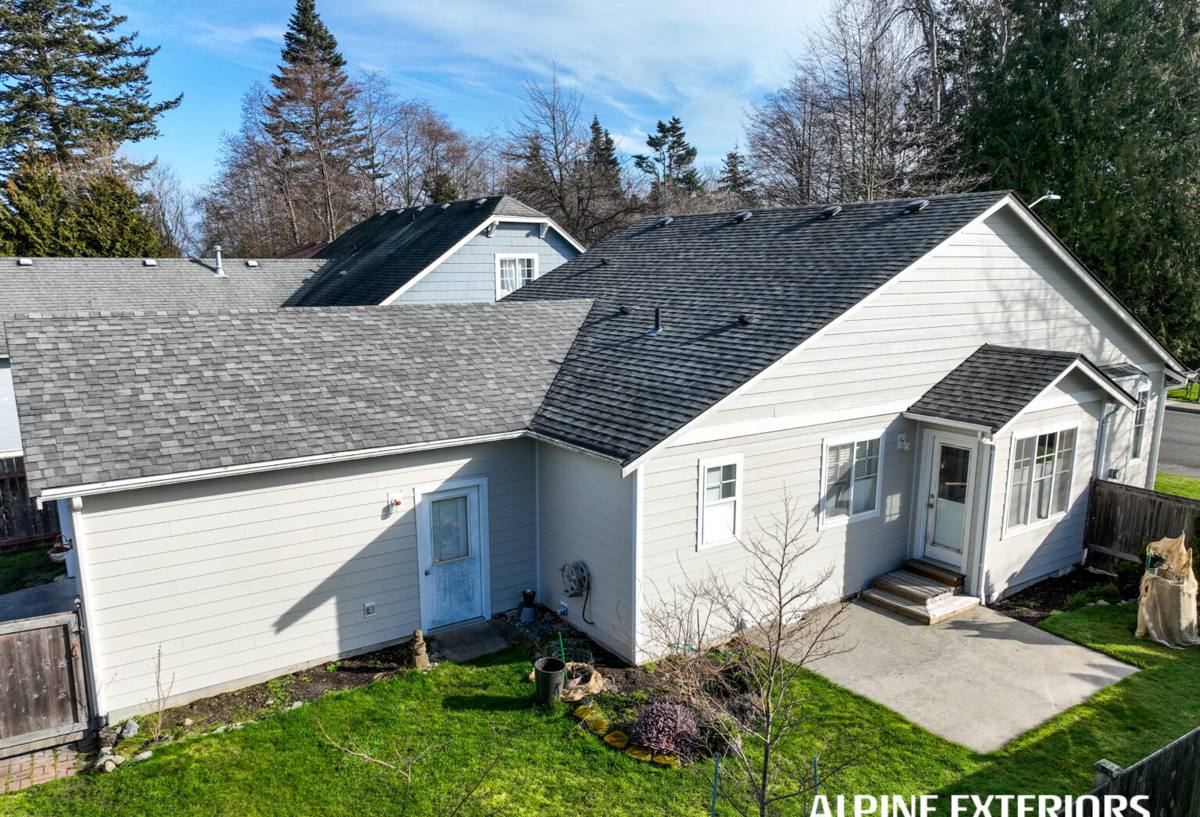
What Salt Air and Wind-Driven Rain Do to a House
Proximity to saltwater changes how an exterior ages. Airborne salt is corrosive to fasteners and metal trim, and it accelerates the breakdown of finishes that aren't built to handle it. Combine that with wind coming off open water — which pushes rain sideways into wall assemblies rather than letting it run straight down — and you get siding systems tested harder than the average suburban installation a few miles away.
The specific stresses at play
- Wind-driven rain intrusion at laps, seams, and butt joints, especially on walls facing the water or exposed to prevailing wind
- Salt exposure that speeds up corrosion on fasteners, flashing, and trim if the wrong materials are used
- UV and moisture cycling on painted or coated surfaces, which shows up as chalking, fading, and eventually peeling
- Repeated wet-dry cycles that stress any material prone to swelling, especially at cut edges and fastener penetrations
None of this means a house near Cap Sante is doomed to constant repairs. It means the materials and details matter more here than they do somewhere drier and further from the water, and cutting corners shows up faster.
Moss, Shade, and the Long Wet Season
Anacortes gets a genuinely long moss season, and Cap Sante's mix of mature trees, north-facing exposures, and marine humidity gives moss and algae plenty to work with. Moss on a roof is the more visible problem, but it affects siding too — north walls, areas under overhangs, and anything shaded by trees stay damp longer and are more prone to green or black staining, especially on porous or absorbent surfaces.
This is less about any one product failing and more about maintenance load. A siding material that holds moisture, needs frequent recoating, or has seams that trap organic debris is going to need more attention in a spot like Cap Sante than the same product would in a drier part of the state. We factor that into every material recommendation we make.
Why We Only Install James Hardie Fiber Cement
We get asked why we don't offer vinyl, LP SmartSide, or the cheaper fiber cement alternatives like Cemplank or Allura. The honest answer is that we've standardized on one system because it holds up to conditions like Cap Sante's without asking the homeowner to babysit it.
What that comes down to
- Non-combustible material — fiber cement doesn't feed a fire the way wood-based products can, which matters anywhere wildfire smoke and ember exposure has become a regional concern in Washington summers
- ColorPlus factory finish — baked-on, UV-cured color that resists the fading and chalking that field-applied paint struggles with in a salt-air, high-UV-cycling environment
- HZ5 engineering — Hardie's product lines are formulated by climate zone; the versions we install are matched to the Pacific Northwest's wet, moderate-temperature exposure
- Dimensional stability — fiber cement doesn't swell, warp, or delaminate at cut edges the way wood-based composite products can when they take on moisture repeatedly
- A real transferable warranty — one that follows the house through a sale, which matters in a market like Cap Sante where waterfront-adjacent homes turn over to new owners who'll want that protection intact
That's not a knock on every other product on the market in isolation — vinyl is inexpensive, LP SmartSide has genuine fans, and lower-cost fiber cement lines exist for a reason. It's that we install exterior products we're willing to warranty and stand behind on this specific coastline, and Hardie is what's earned that spot on our trucks.
Roofing, Windows, and Decks: The Whole Envelope Matters
Siding doesn't work in isolation. A house near Cap Sante fails at the weak point, not necessarily the largest surface. That's why we handle roofing, windows, and decks alongside siding rather than treating them as separate trades.
Where the systems connect
- Roofing — moss growth, flashing at wall-to-roof transitions, and gutter overflow all directly affect how much water your siding sees and for how long
- Windows — flashing and sealant details around window openings are one of the most common sources of hidden moisture intrusion behind siding, especially on wind-exposed elevations
- Decks — ledger board connections and any deck-to-wall junction need the same moisture management thinking as siding, or they become an entry point
When we quote a siding job, we look at the whole exterior envelope, not just the wall cladding, because a new siding job installed over an old, leaking window flashing detail just moves the problem behind the new material.
What a Local Crew Actually Brings to a Cap Sante Job
A crew that works Skagit County regularly knows which elevations on a given street tend to take the wind, how far moss creep typically runs before a homeowner notices it, and what flashing and fastener choices have held up locally versus which ones haven't. That's not something a traveling crew or an out-of-area estimator picks up from a spec sheet.
It also means someone who answers the phone if a warranty question comes up five years down the road, not a subcontractor who's moved on to another region. For a house exposed to salt air and driving rain, correct installation — proper clearances, correct fastener spacing, flashing integrated the right way at every penetration — matters as much as the material itself. We install to manufacturer spec because that's what keeps the warranty valid and the wall assembly dry.
How a Siding Replacement Project Runs
Every job is a little different, but the shape of it is consistent:
- On-site inspection and estimate — we look at current siding condition, trim, flashing, and any moisture or moss issues before quoting anything
- Material and color selection — walking through Hardie's plank, shingle, and panel options and ColorPlus palette
- Removal of old siding and inspection of the sheathing and weather-resistive barrier underneath
- Repair of any damaged sheathing or framing found once the old siding is off
- Installation of new water-resistive barrier and flashing details at every window, door, and penetration
- Hardie siding installation to manufacturer spec, including correct fastener type and placement for coastal exposure
- Final walkthrough and warranty documentation
Questions worth asking before you sign anything
- Is the crew installing to the manufacturer's written installation instructions, not just "how we always do it"?
- Who inspects the sheathing once old siding comes off, and what happens if there's hidden damage?
- What fastener and flashing materials are being used, and are they rated for a marine/salt-air environment?
- Is the warranty transferable if the home sells?
- Does the quote include trim, flashing, and any necessary window or roof-edge work, or just the field siding?
Cost Factors for Cap Sante Siding Projects
Every home is different, but a few factors consistently move the price on a project in this area more than they would somewhere less exposed:
| Factor | Why it matters near Cap Sante |
|---|---|
| Wall exposure to wind and water | Water-facing or wind-exposed elevations often need more careful flashing detail and sometimes additional trim work |
| Condition of existing sheathing | Homes with a history of moisture intrusion may need sheathing repair once old siding is removed |
| Moss and organic staining on trim/soffits | Areas under trees or in constant shade sometimes need extra prep or protective detailing |
| Access and site conditions | Sloped lots and tight waterfront-adjacent lots can affect staging and labor time |
| Scope beyond siding | Bundling trim, roofing edge work, or window flashing into the same project affects total cost but reduces long-term risk |
We give straightforward, written estimates and walk through exactly what's driving the number — no vague allowances hiding scope we haven't actually assessed.
A House That's Ready for What Cap Sante Sends Its Way
Homes in this part of Anacortes deal with more than the average Skagit County property — the salt air, the wind off the water, and a moss season that doesn't take much of a break. Siding here needs to be installed right and built to shrug off conditions that would wear down a lower-grade product faster than the homeowner expects. That's the whole reason we install James Hardie fiber cement exclusively, and why we look at the roof, windows, and decks alongside the siding rather than in isolation.
If you're weighing a siding project on a Cap Sante home, we're happy to come take a look, walk the exterior with you, and put together a free, no-pressure estimate — no obligation, just a straight assessment of what your house actually needs.