 Anacortes
 Siding Built for March Point's Waterfront Exposure
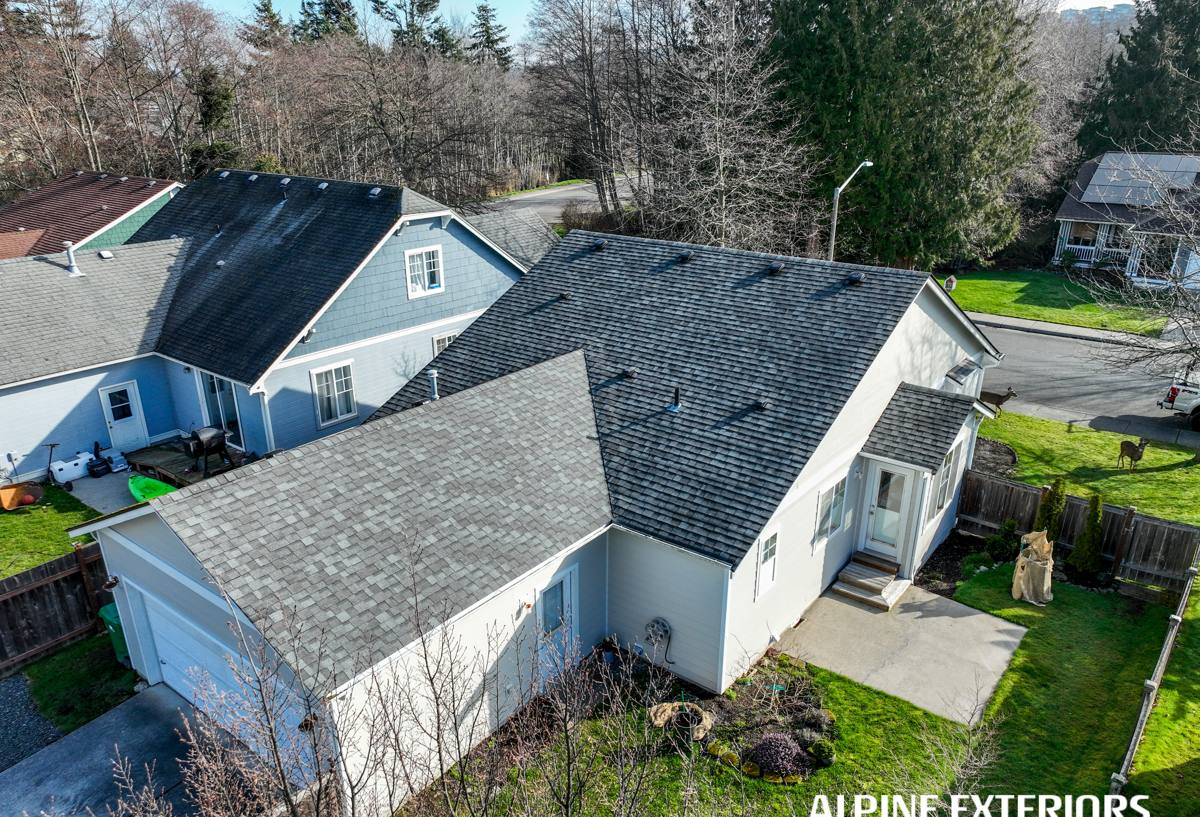
March Point sits out on Fidalgo Bay, close enough to the water that homes here take a different kind of beating than houses tucked further inland in Anacortes. Wind off the bay carries salt and moisture straight into siding, trim, and window flashing, and there's little in the way of tree cover or terrain to slow it down. If you've owned a home out here for more than a few winters, you've probably already noticed how much harder the exterior works compared to a house in town.
We're a local siding, roofing, window, and deck contractor, and March Point is part of our regular service area. We're not asking you to ship materials across the state or wait weeks for a crew to be "in the neighborhood" — this is one of the areas we already know, and we've seen firsthand what salt air, driving rain, and Skagit County's long moss season do to different siding products over time.
What the Climate Actually Does to Siding Out Here
Salt Air and Metal Fasteners
Homes closer to Fidalgo Bay and the Swinomish Channel deal with airborne salt that most inland Anacortes properties barely see. Salt accelerates corrosion on exposed fasteners, metal trim, and any siding edge where the factory coating has been compromised. Over years, that shows up as rust streaking, swollen fastener heads, and paint failure concentrated right around the nail line — often before the siding itself would otherwise need attention.
Driving Rain and Wind-Driven Moisture
March Point doesn't have much to break the wind coming off the water. Rain here often arrives sideways, not straight down, which means it gets pushed into laps, seams, and butt joints that would stay dry on a more sheltered lot. Siding systems that rely on paint film alone for water resistance — rather than being engineered as a water-resistant material through and through — are the ones that show trouble first: swelling, soft spots, and paint that lifts from the substrate.
Moss, Algae, and the Long Wet Season
Skagit County's wet season runs long, and shaded or north-facing walls near mature landscaping stay damp for extended stretches. That's exactly the environment moss and algae need. On porous or wood-based siding, sustained moisture contact isn't just cosmetic — it feeds rot at seams and end cuts. A siding material's ability to shed water and resist moisture absorption matters more here than it does in drier parts of the state.
Why We Only Install James Hardie Fiber Cement
We made a deliberate call a while back to stop installing several products that are common elsewhere in the industry — vinyl, LP SmartSide, Cemplank, Allura, primed spruce, and cedar — and to install James Hardie fiber cement exclusively. That's not a marketing angle; it's a standard we hold because of what we've seen play out on homes in marine-exposed areas like March Point over a full service life, not just the first few years after installation.
| Factor | Why It Matters on March Point |
|---|---|
| Non-combustible material | Fiber cement doesn't contribute fuel to a fire, which matters for insurance consideration and peace of mind regardless of exposure |
| Moisture resistance | Engineered to resist swelling, cracking, and rot in sustained wet conditions — a real factor with driving bay rain |
| Factory-applied ColorPlus finish | Cured under controlled conditions for stronger adhesion than field-applied paint, so color holds up longer against salt air and UV |
| Climate-engineered HZ product lines | Hardie builds versions of its siding tuned to different moisture and temperature zones — relevant in a maritime climate like Skagit County's |
| Pest resistance | Fiber cement doesn't feed insects the way wood-based products can |
We're not going to tell you every product we don't install is a bad product — most of them have legitimate strengths and plenty of contractors use them well. Vinyl is inexpensive and low-maintenance in mild conditions, but it can warp under heat and its seams and fastening slots aren't built for constant wind-driven rain exposure. Engineered wood products like LP SmartSide perform reasonably in drier climates, but they depend on an intact factory coating and careful field sealing at every cut edge to keep moisture out — a demanding standard to maintain consistently on a waterfront exterior over decades. Primed spruce and cedar are attractive natural materials, but raw or lightly primed wood siding needs a disciplined repainting and maintenance schedule to keep ahead of moss, rot, and UV breakdown, and that maintenance burden only grows in a location like March Point. We'd rather install one product we trust completely for this climate than offer several and hope the trade-offs don't catch up with a homeowner in fifteen years.
Signs Your March Point Home May Need Siding Attention
- Paint that's peeling, bubbling, or chalking, especially on walls facing the water or prevailing wind
- Soft or spongy spots when you press on siding near the bottom courses or around window trim
- Visible gaps, warping, or buckling at seams and butt joints
- Persistent moss or algae growth that returns quickly after cleaning
- Rust staining running down from nail heads or metal trim
- Rising energy bills that suggest the exterior envelope isn't sealing the way it should
- Siding that's simply aged past its practical service life, even if it looks intact from the street
Any one of these on its own might just need a repair. Several at once, especially on a home that's had the same siding for two or three decades, usually points toward a full replacement being the more cost-effective long-term move.
How We Approach a March Point Siding Project
Inspection and Assessment
We start by walking the exterior and identifying which walls are taking the most weather exposure — usually the sides facing the bay and prevailing wind. We check for hidden moisture damage behind the siding, not just what's visible on the surface, since trapped moisture is often worse than what shows up in a quick visual scan.
Repair vs. Full Replacement
Not every job needs to be a full tear-off. If the damage is isolated — a section near a downspout, storm-damaged trim, a few compromised boards — a targeted repair with matched Hardie product can be the right call. When the damage is spread across multiple elevations or the existing material has reached the end of its useful life, full replacement gives you a clean, consistent envelope instead of patches that age at different rates.
Installation to Spec
James Hardie siding performs the way it's rated to perform only when it's installed correctly — proper clearances, correct fastening patterns, sealed joints, and flashing details that actually manage water instead of trapping it. That installation discipline matters more in a driving-rain environment like March Point than it would somewhere more sheltered, and it's a big part of why manufacturer warranty terms depend on qualified installation.
What Drives Project Cost
| Factor | Why It Affects Price |
|---|---|
| Home size and wall complexity | More square footage, corners, and trim details mean more material and labor |
| Extent of hidden damage | Rot or water damage found once old siding comes off can add repair scope |
| Siding profile and color | Lap width, shingle-style panels, and ColorPlus versus field-painted options carry different material costs |
| Trim and accessory work | Window trim, corner boards, and fascia are often replaced or refreshed alongside siding |
| Access and site conditions | Waterfront lots, slopes, or tight setbacks can affect staging and labor time |
Why a Local Crew Matters Here
A contractor based outside Skagit County can sell you siding, but they're less likely to know which walls in March Point take the worst of the weather, how the local building department handles permitting, or what flashing details actually hold up against a winter of driving bay rain. We work in Anacortes and the surrounding county regularly, which means we're not guessing about how this climate treats an exterior — we're building around what we've already observed on homes like yours.
Roofing, Windows, and Decks — The Rest of the Envelope
Siding doesn't work in isolation. Roofing, window flashing, and deck ledger connections all interact with how water moves around your home, and on a wind-exposed property like one in March Point, a weak point in any of those systems can undermine even a well-installed siding job. Because we handle siding, roofing, windows, and decks, we can look at your exterior as one connected system rather than quoting a single component in a vacuum.
Get a Free, No-Pressure Estimate
If your March Point home is showing wear from the salt air, rain, or moss, or you're just planning ahead, we're happy to come take a look. There's no pressure and no obligation — just an honest read on what your siding actually needs and what a James Hardie replacement or repair would involve. Use the form below to request your free estimate.