 Anacortes
 Serving Oak Harbor from Just Across Deception Pass
Oak Harbor sits on Whidbey Island, a short drive south from Anacortes across the Deception Pass Bridge. We've built our business around the exterior conditions of this stretch of Puget Sound, and Oak Harbor deals with the same core problems as Fidalgo Island: salt-laden marine air, long stretches of driving rain, and a moss season that seems to start earlier and last longer every year. A siding, roofing, window, or deck job here isn't the same as a job in a dry inland climate, and it shouldn't be treated that way.
We're a local crew, not a regional franchise dispatching whoever's available. That matters more here than in most places, because so much of what determines whether an exterior holds up in Oak Harbor comes down to details that only show up when you've worked on enough homes in this specific climate to know what to look for.
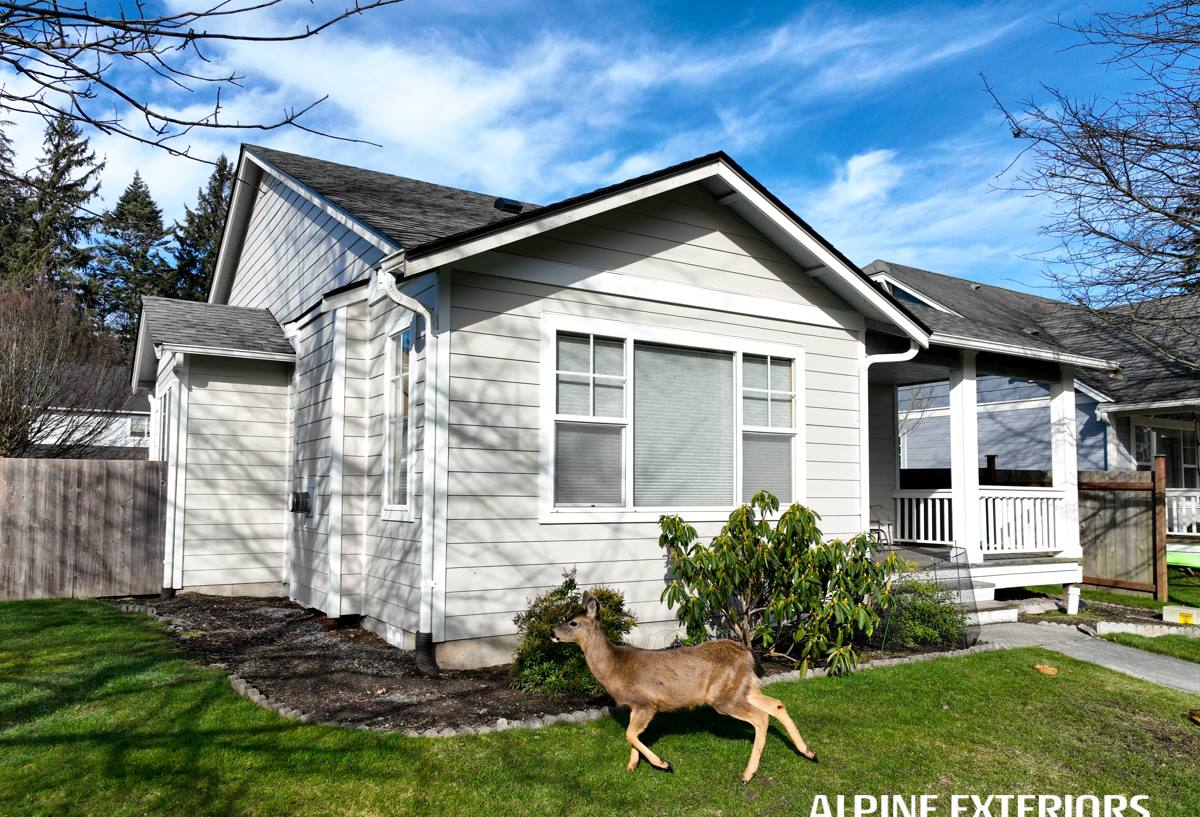
What the Marine Climate Actually Does to a House
Oak Harbor's exposure to Puget Sound and the Strait of Juan de Fuca means homes take on a steady diet of salt-bearing wind, especially on west- and south-facing walls. Salt air accelerates corrosion of exposed metal fasteners, trim flashing, and hardware, and it speeds up the breakdown of coatings and finishes that weren't engineered for coastal exposure. Combine that with rain that can come in sideways during winter storms, and you get moisture pushed into seams, laps, and fastener penetrations that would stay dry in a calmer climate.
Moss, Algae, and the Shade Problem
Add in the tree cover and cloudy, humid stretches common to this part of the Pacific Northwest, and you get ideal conditions for moss and algae growth on north-facing walls, under eaves, and anywhere siding stays shaded and damp for days at a time. On some materials this is cosmetic. On others, sustained moisture trapped against the surface is exactly the condition that leads to swelling, delamination, or rot underneath.
Freeze-Thaw Is Real, Just Less Dramatic
Oak Harbor doesn't see the deep freezes of inland climates, but it does see enough freeze-thaw cycling in winter that any siding already holding moisture is at risk of cracking or popping fasteners. The combination of wet-then-cold, repeated over a whole winter, is quietly harder on an exterior than a single hard freeze.
Why We Install Only James Hardie Fiber Cement
We made a deliberate decision to install James Hardie fiber cement siding exclusively, and we don't install vinyl, LP SmartSide, Cemplank, Allura, primed spruce, or cedar. That's not a marketing position — it's a standard we hold ourselves to because of what we've seen these products do (and not do) in exactly this kind of climate.
What Fiber Cement Gets Right for This Area
- Non-combustible material, which matters in a region where wildfire smoke and drought stress have become more common in late summer
- Engineered specifically for high-moisture climates through Hardie's HZ10 product line, which is formulated for the wetter, milder regions of the Pacific Northwest
- ColorPlus factory-applied finish resists fading and chipping better than field-applied paint, which matters when salt air degrades coatings faster
- Doesn't feed mold, rot, or insects the way wood-based products can when they take on moisture
- Holds paint and color far longer under UV and salt exposure than primed wood siding
Why We Walked Away From the Alternatives
Vinyl siding is inexpensive and low-maintenance, but it expands and contracts significantly with temperature swings, can crack in cold snaps, and isn't repairable in the same piece-by-piece way fiber cement is — a damaged section usually means replacing the whole panel run. LP SmartSide and other engineered wood products perform reasonably well when installation and caulking are perfect and stay perfect, but they're wood-based, and wood-based siding in a climate this wet leaves very little margin for error at seams, end cuts, and fastener penetrations. Cedar is genuinely beautiful, but it requires an ongoing maintenance commitment — refinishing, caulking, watching for rot at grade — that most homeowners underestimate when they choose it. We'd rather install one product very well than install five products with five different maintenance conversations.
Beyond Siding: Roofing, Windows, and Decks
Most exterior problems in Oak Harbor don't happen in isolation. A roof that's shedding granules, windows with failed seals, and a deck with soft framing all interact with siding performance — water finds the weak point in the system, not just the weak point in one material.
Roofing
Roof condition directly affects how much water your walls see. A roof that's past its service life, has failing flashing, or has undersized gutters will dump more water onto the siding below than it was ever designed to handle. We look at roof condition as part of any siding conversation, not as a separate sale.
Windows
Window flashing and integration with the siding plane is one of the most common failure points we find when we open up a wall. Old aluminum or wood windows with failed seals let moist marine air infiltrate the wall cavity, and improperly flashed window replacements can create hidden leaks that don't show up until there's already damage behind the siding.
Decks
Decks in this climate take a beating from the same rain and moisture exposure as siding, plus standing water and ground contact issues that siding doesn't face. Ledger board attachment and flashing where a deck meets the house is a common source of hidden rot, and it's directly relevant to siding work happening on the same wall.
How a Typical Job Runs
Every project starts with an on-site look at the actual condition of your walls, not just a measurement for materials. In an area with this much moisture exposure, we're checking for soft spots, existing water damage, and how the current siding was flashed before we ever talk product or price.
- On-site assessment of existing siding, trim, flashing, and any visible moisture damage
- Written estimate covering material, labor, disposal of old siding, and any repair work needed underneath
- Removal of old siding and inspection of the weather-resistive barrier and sheathing
- Repair of any rot or damaged sheathing found before new siding goes on — this is not optional in a wet climate
- Installation of James Hardie panels or planks per manufacturer specifications, including proper fastener spacing, clearances, and flashing details
- Final walkthrough and caulking/paint touch-up as needed
Comparing Siding Options for a Marine Climate
| Material | Moisture Performance | Maintenance | Typical Lifespan |
|---|---|---|---|
| James Hardie Fiber Cement | Excellent; engineered for wet climates, won't rot or delaminate | Occasional wash; ColorPlus finish holds color for years | 30+ years with correct install |
| Vinyl | Doesn't rot, but seams and J-channels can trap moisture | Low, but cracks and fades over time in UV/salt exposure | 15-25 years |
| Engineered Wood (LP SmartSide) | Good if sealing is perfect and stays that way | Requires vigilant caulk and paint upkeep | 20-25 years, shorter if sealing fails |
| Cedar | Natural material, absorbs and releases moisture, prone to rot without upkeep | High; regular refinishing and inspection | 15-30 years, highly maintenance-dependent |
What Drives Cost
Every home is different, but a few factors consistently move the price on a siding project in this area:
| Factor | Why It Matters |
|---|---|
| Amount of hidden damage under old siding | Wet climates often mean rot repair is discovered mid-project, not before |
| Home size and wall complexity | More corners, gables, and trim details mean more labor and cut waste |
| Siding profile chosen | Lap siding, shingle-style panels, and board-and-batten each price differently |
| Access and site conditions | Tight lots, tall walls, or landscaping obstacles affect scaffolding and staging time |
| Trim and accessory work | Fascia, soffit, and window trim replacement adds scope beyond the field siding |
We don't quote from a distance. A real number requires seeing the actual condition of your walls first, especially in a climate where hidden moisture damage is common enough that we budget time to look for it.
What to Ask Before Hiring Anyone for Exterior Work
- Are they licensed and insured in Washington, and will they show you proof without being asked twice?
- Do they specialize in one siding system they can install to spec, or do they sell whatever's cheapest that week?
- Will they inspect and repair sheathing underneath, or just cover over whatever's there?
- Do they follow the manufacturer's fastening, clearance, and flashing requirements closely enough to keep the warranty valid?
- Are they local enough to be reachable years later if a question comes up?
Living With Hardie Siding Long-Term
One of the practical advantages of switching to fiber cement in a climate like this is how little ongoing attention it needs compared to wood-based products. An occasional rinse to knock off pollen, salt residue, or the start of algae growth on shaded walls is usually enough. There's no annual recaulking ritual, no watching for soft spots at the bottom courses, and no refinishing schedule to keep on a calendar. That's a meaningful difference over a 20- or 30-year ownership horizon in a place where the weather doesn't give a low-maintenance material much of a break.
If you're weighing a siding, roofing, window, or deck project on your Oak Harbor home, we're glad to take a look and walk you through what we're seeing and what it would take to fix it right. There's no pressure and no cost to get our honest read — just fill out the form below to set up a free estimate.