 Anacortes
 Siding Built for Mount Vernon's Skagit Valley Climate
Mount Vernon sits in the heart of the Skagit Valley, a low-lying river floodplain a short drive inland from Anacortes and the saltwater of Fidalgo Bay. That location gives the area its own particular mix of weather challenges: moisture-laden marine air moving in off the Sound, valley fog that settles along the Skagit River on cool mornings, and long stretches of the year where surfaces simply don't dry out fast. Homes here don't need to sit right on the water to feel the effects of a wet Pacific Northwest climate — they just need enough shade, enough humidity, and enough consecutive gray days, and Mount Vernon has all three.
We're an Anacortes-based siding, roofing, window, and deck contractor that works throughout Skagit County, and Mount Vernon is a regular part of our service area. We install one siding product system — James Hardie fiber cement — and this page explains why, along with what homeowners in this specific area should know before they replace their siding.
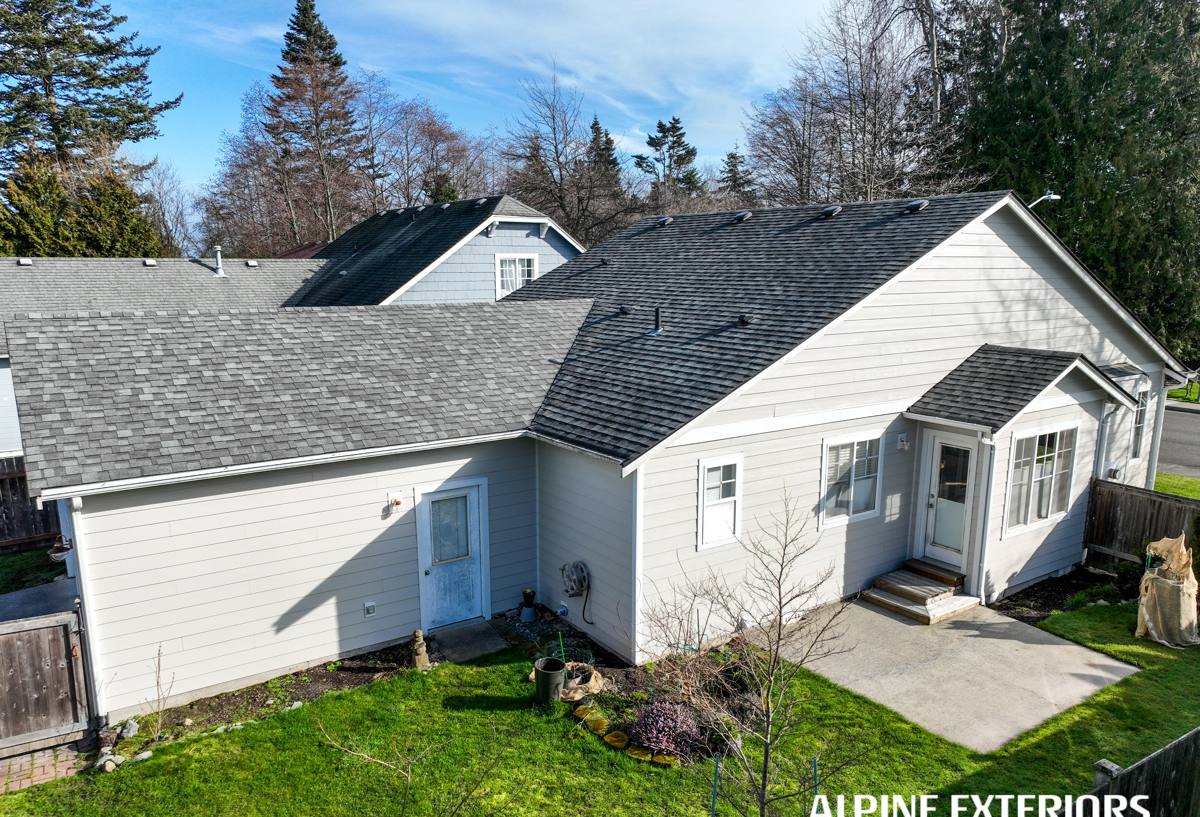
What Driving Rain and a Long Moss Season Do to a House
Three things drive most of the siding problems we see on Mount Vernon homes:
Sustained Moisture Exposure
It's not any single storm that damages siding here — it's the cumulative effect of many wet months in a row with limited drying time between them. Siding that absorbs water, or that traps water behind it due to poor flashing or ventilation, stays damp longer than it should. Over years, that moisture cycle is what causes swelling, soft spots, and paint failure on materials that aren't engineered for it.
Moss, Algae, and Organic Growth
Shaded north- and east-facing walls, overhanging trees, and long damp seasons are ideal conditions for moss and algae to take hold on exterior surfaces. On some siding materials, that growth just sits on the surface and can be cleaned off. On materials with weaker moisture resistance, prolonged organic growth can hold water against the substrate and accelerate deterioration underneath the finish.
Temperature Swings and Freeze-Thaw
Skagit Valley winters bring occasional hard freezes on top of already-saturated wood, siding, and trim. Water that has worked its way into a material and then freezes expands — and that's when cracking, splitting, and fastener failure tend to show up, often in places that looked fine the season before.
Why We Install Only James Hardie Fiber Cement
Most siding contractors offer a menu of products — vinyl, engineered wood, fiber cement from a few different manufacturers — and let the homeowner pick based on price. We made a different call. After years of doing tear-offs and repairs across our service area, the pattern was consistent: the callbacks, the moisture damage, and the "why did this fail so early" conversations almost never came from Hardie installations. They came from everything else.
That doesn't mean every other product is worthless. Vinyl is inexpensive and low-maintenance in the right setting. Engineered wood siding (like LP SmartSide) machines and installs quickly and holds paint well when new. Cedar has real curb appeal for the right buyer. But each of those comes with a trade-off that matters more in a climate like ours than it does somewhere drier:
- Vinyl can warp or distort under sustained heat and doesn't offer the same impact resistance or paintable, high-end finish options as fiber cement.
- Engineered wood products are wood-based, meaning any breach in the factory coating or a caulking failure at a seam gives moisture a path into a material that can swell and deteriorate if it stays wet.
- Cedar is a natural wood product that requires ongoing sealing, staining, and vigilance against moisture, insects, and rot — a maintenance schedule most homeowners underestimate when they buy the house.
James Hardie fiber cement is cement, sand, and cellulose fiber — non-combustible, dimensionally stable, and engineered specifically for wet regional climates through its HardieZone HZ5 product line. It doesn't feed organic growth the way wood-based products can, it holds a factory-applied ColorPlus finish far longer than field-applied paint, and it comes with a strong transferable warranty when installed to Hardie's specification. That's the product we stand behind, and it's the only one we put on a house.
James Hardie Product Lines We Use
Hardie makes several distinct siding profiles, and the right mix usually depends on the home's architecture and the homeowner's preference, not the climate — HZ5 engineering applies across the product line here.
| Product | Look | Common Use |
|---|---|---|
| HardiePlank lap siding | Traditional horizontal lap, smooth or cedar-textured | Most common choice for full re-sides |
| HardiePanel vertical siding | Board-and-batten, vertical panels | Accent walls, gables, modern or farmhouse styles |
| HardieShingle | Staggered or straight-edge shingle profile | Craftsman and cottage-style homes |
| HardieTrim | Fascia, corner boards, window and door trim | Paired with any of the above for a finished look |
All of it comes in ColorPlus factory-finish colors, which matters more here than it might in a drier climate — a factory-baked finish resists the fading, chalking, and moss-staining that field-applied paint struggles with over years of Skagit Valley weather.
How This Fits Together With Roofing, Windows, and Decks
Siding doesn't work in isolation. The roof edge, the window flashing, and the deck ledger connections all interact with the siding envelope, and a weak point at any one of those transitions can undermine an otherwise good siding job. Because we handle siding, roofing, windows, and decks as one contractor, we can look at the whole exterior at once instead of treating each trade as a separate project with separate assumptions:
- Roof drip edges and gutters need to direct water away from siding, not down the face of it.
- Window flashing has to integrate correctly with the new siding's water-resistive barrier — this is one of the most common failure points we find on older homes.
- Deck ledger boards and any siding behind or around a deck need proper flashing so water isn't channeled directly into the wall assembly.
When a homeowner is already re-siding, it's often the right time to address roofing, window, or deck issues that would otherwise get covered up and forgotten.
What Correct Installation Actually Involves
Fiber cement performs the way it's supposed to only when it's installed to Hardie's specification. A rushed or careless install can undercut even the best siding material. Here's what we hold every job to:
- Proper clearance between siding and grade, decks, patios, and roof lines to prevent wicking
- Correct fastener type, spacing, and placement per Hardie's installation guide
- Properly lapped and sealed water-resistive barrier behind the siding
- Flashing integrated correctly at every window, door, and penetration
- Factory-cut edges primed or capped where field cuts expose raw material
- Caulking only where Hardie specifies it — not as a substitute for proper flashing
Skipping any of these doesn't usually cause an immediate problem. It shows up two, five, or ten years later as a moisture issue that's much more expensive to fix than it would have been to install correctly the first time.
What Drives Project Cost in Mount Vernon
Every home is different, but the same handful of factors tend to move the price up or down on siding projects in this area:
| Factor | Why It Matters |
|---|---|
| Existing siding removal | Tear-off of old wood, vinyl, or damaged material adds labor before new siding goes on |
| Hidden moisture damage | Rot found under old siding needs sheathing or framing repair before re-siding continues |
| Home size and wall complexity | More corners, gables, and dormers mean more cutting, flashing, and labor time |
| Product line and profile | Lap, panel, and shingle profiles carry different material and labor costs |
| Trim and accent work | Full HardieTrim packages and accent details add cost but also add resale value |
We give honest, itemized estimates rather than a single flat number, so homeowners can see exactly what's driving the cost and where there's room to adjust scope if needed.
Why a Local Crew Matters in Skagit County
A crew that works Anacortes, Mount Vernon, and the surrounding Skagit County towns regularly sees how this specific climate treats siding over years, not just in a showroom or a sales brochure. We know what a Skagit Valley winter does to an improperly flashed window, and we know what five years of moss season looks like on a wall that wasn't ventilated correctly. That experience shapes how we install every job, not just how we talk about the product.
Being local also means we're accountable after the project is done. If a warranty question comes up or something needs a second look, we're not a crew that drove in from out of the area for one job and moved on.
If you're weighing a siding replacement — or want a second opinion on a quote you already have — we're happy to walk your home with you and give you a straightforward, no-pressure estimate. Use the form below to get started.