 Anacortes
 Why Fidalgo Island Is a Different Kind of Siding Job
Fidalgo Island sits where the Salish Sea meets Skagit County's marine climate, and that location shapes everything about how a home's exterior ages here. Homes close to the water deal with salt-laden air that settles on siding, trim, and fasteners day after day. Homes tucked into the tree cover around Anacortes deal with shade, dampness, and moss that never really goes away between October and June. Many properties get both. That combination is harder on exterior materials than most inland Skagit County neighborhoods, and it's why we treat Fidalgo Island jobs differently from the start — different prep, different material choices, different attention to drainage and fastening.
We've been doing exterior work in this area long enough to know that a siding job that looks fine on a dry July afternoon can start showing problems by the second or third wet winter if it wasn't built for what this island actually throws at a house. That's the standard we hold every job to.
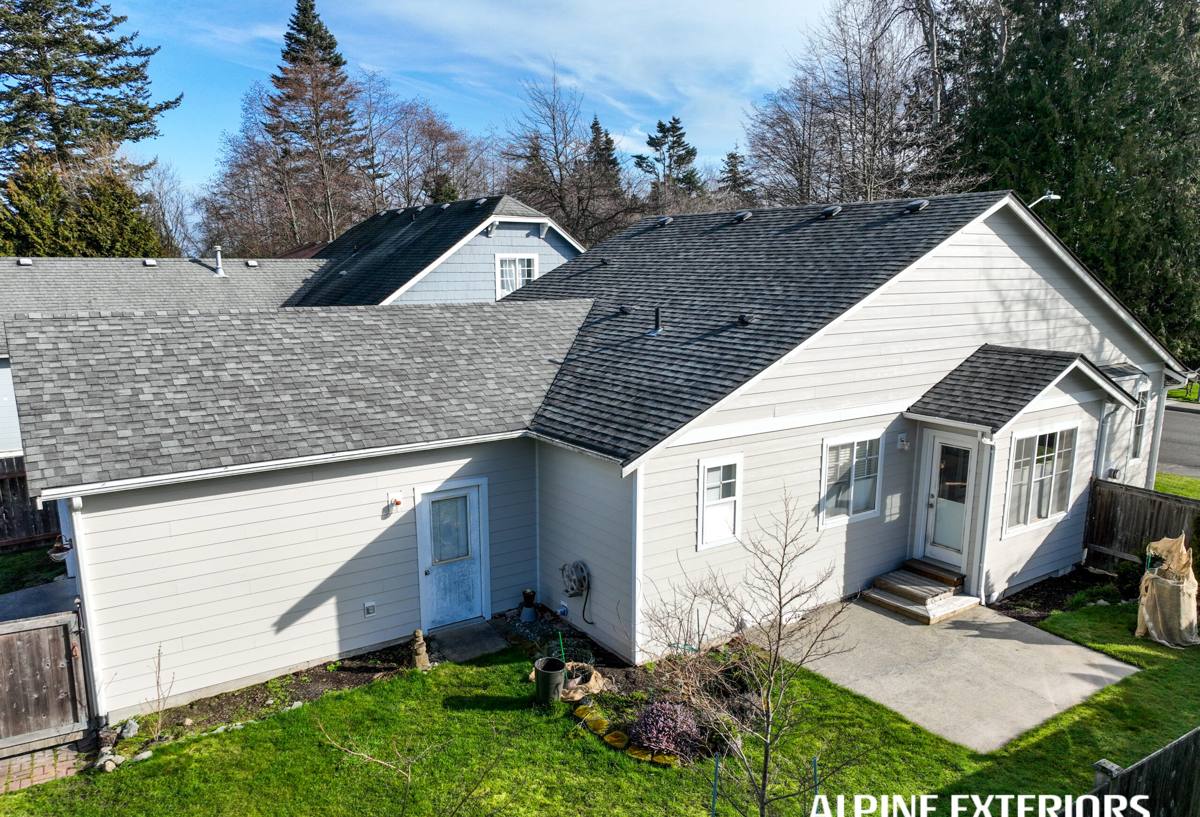
What the Climate Actually Does to a House Here
Salt Air and Corrosion
Airborne salt from the surrounding water accelerates corrosion on anything metal — fasteners, flashing, trim screws, even lower-quality hardware hidden behind siding panels. Over years, corroding fasteners can loosen siding, stain the face of panels with rust streaks, and compromise the seal at seams and penetrations. This isn't unique to Fidalgo Island, but proximity to open water makes it more pronounced here than in most of the county.
Driving Rain and Wind-Driven Moisture
Storms coming off the water don't just drop rain straight down — wind pushes it sideways into wall assemblies, around window and door openings, and up under poorly lapped siding. A siding system that isn't installed with correct overlaps, flashing, and a functioning drainage plane behind it will eventually let that moisture find a way in, even if the surface material itself is sound.
Moss, Algae, and the Long Wet Season
Shaded lots and north-facing walls on Fidalgo Island stay damp for extended stretches of the year, which is exactly what moss and algae need to take hold. On some siding materials this is mostly cosmetic. On others, sustained moisture contact against the material itself becomes a real durability issue, not just an appearance one — which is a big part of why the material you choose matters as much as the workmanship.
Why We Only Install James Hardie Fiber Cement
We made the decision years ago to standardize on James Hardie fiber cement siding for every siding job we do, including here on Fidalgo Island, and we don't install vinyl, LP SmartSide, Cemplank, Allura, primed spruce, or cedar. That's not a marketing position — it's a professional standard based on how these products actually perform over time in a marine climate like this one.
Fiber cement is non-combustible, which matters given Washington's increasing wildfire seasons even on the wetter west side of the state. It doesn't feed moss and algae growth the way wood-based products can, it holds up to salt air better than most alternatives, and James Hardie's ColorPlus factory finish is baked on and formulated to resist fading from UV exposure — which matters on the sun-exposed sides of island homes just as much as the shaded, damp sides matter for moisture. James Hardie also builds region-specific HZ product lines engineered for climates like the Pacific Northwest's, and backs installations with a strong transferable warranty when the work is done to their specifications.
We're not going to tell you other siding materials are junk — some of them have real strengths. But we've seen enough of them fail early in exactly the conditions Fidalgo Island produces — sustained moisture, salt exposure, heavy shade — that we stopped installing them. When we put our name behind a siding job, we want to be confident it's still doing its job in twenty years, not five.
How We Approach a Fidalgo Island Siding Project
Assessment First
Every job starts with a real look at the house — which walls take the worst weather, where moss has already established itself, whether there's existing moisture damage behind the current siding, and how the home is oriented relative to wind and sun. A house on a bluff facing open water needs different detailing than one set back in the trees, even if they're both technically "on Fidalgo Island."
What's Underneath Matters as Much as the Siding Itself
A correct installation includes a properly lapped weather-resistant barrier, correctly flashed windows and doors, and rainscreen or drainage detailing where it's called for so that any moisture that does get past the siding face has somewhere to go instead of sitting against the wall sheathing. This is where a lot of siding failures actually originate — not in the siding material, but in shortcuts taken underneath it.
Fastening for a Corrosive Environment
Given the salt air, fastener selection and installation matter more here than in a lot of inland projects. Following manufacturer specifications for corrosion-resistant fasteners and correct nailing patterns isn't optional on a job like this — it's the difference between siding that stays tight for decades and siding that starts working loose within a handful of years.
Siding Is Rarely the Only Thing That Needs Attention
Because we handle siding, roofing, windows, and decks, we're often the ones who notice when a siding problem traces back to something else — a roof edge that's been dumping water onto a wall for years, a window that was never properly flashed, or a deck ledger board trapping moisture against the house. On Fidalgo Island in particular, these systems interact constantly with the same weather stressors: salt air corrodes deck and roof fasteners just like it does siding fasteners, and a poorly maintained roof drainage path is one of the more common hidden causes of siding damage we find during assessments. We'd rather flag that during a siding conversation than have a homeowner deal with it as a surprise later.
Comparing Common Siding Options for This Climate
| Material | Salt Air / Moisture Behavior | Moss & Algae Resistance | Typical Maintenance |
|---|---|---|---|
| James Hardie Fiber Cement | Engineered for marine/coastal climates; non-combustible | Doesn't feed organic growth like wood-based products | Occasional cleaning; factory finish reduces repainting needs |
| Vinyl | Can warp or become brittle with UV and temperature swings; seams are moisture entry points | Moderate; can trap moisture at laps | Low, but limited repair options if damaged |
| Wood / Cedar | Absorbs moisture readily; prone to rot in sustained damp conditions | Susceptible without diligent upkeep | Regular refinishing, sealing, and inspection |
| LP SmartSide / Engineered Wood | Wood-strand core sensitive to sustained moisture exposure at cuts and edges | Requires careful edge sealing and maintenance | Moderate; edge and seam maintenance is important |
Cost Factors Worth Understanding Before You Get a Quote
Every Fidalgo Island home is different, so we're not going to throw out a number that doesn't mean anything without seeing the house. But these are the real factors that move a siding estimate up or down:
- Condition underneath the existing siding: hidden moisture damage or rot found during tear-off adds repair work before new siding can go on.
- Home size and complexity: more corners, dormers, and trim detail mean more labor and material cuts.
- Access and site conditions: steep lots, limited driveway access, or dense tree cover common on parts of the island can affect staging and timeline.
- Product selection: James Hardie panel, lap, and shingle-style products vary in price, as do trim and color options.
- Drainage and flashing work needed: homes that need rainscreen detailing or extensive re-flashing take more time than a straightforward re-side.
A Practical Checklist for Homeowners Considering Siding Work
- Look for visible moss, algae, or dark streaking, especially on shaded or north-facing walls
- Check for soft spots, bubbling paint, or staining near the base of walls and around window trim
- Note any rust streaking below fasteners or metal trim pieces
- Pay attention to areas where the roofline, gutters, or deck attach to the house — these are common water-entry points
- Ask any contractor you're considering exactly which siding products they install and why they chose them
- Confirm what warranty coverage applies to both the material and the installation labor
Why a Local Crew Matters Here
Siding crews that don't work in coastal Skagit County regularly don't always account for what this environment does to a house. Detailing that's perfectly adequate in a drier inland climate can fall short on Fidalgo Island. We work in Anacortes and the surrounding communities routinely, which means we're not guessing at how a wall assembly needs to be built to hold up to salt air and a long wet season — we're building to what we've actually seen work, and seen fail, on homes like yours.
If you're weighing a siding, roofing, window, or deck project on Fidalgo Island, we're happy to take a look at your home and walk through what we're seeing and what we'd recommend. There's no pressure and no obligation — just a straightforward, honest assessment. Request a free estimate using the form below.