 Anacortes
 Burlington's Exterior Climate: What Homes Are Really Up Against
Burlington sits in the Skagit Valley, a few miles inland from the saltwater of Fidalgo Bay and the San Juan channels, but close enough that the same weather systems that soak Anacortes roll through here too. Homes in this part of Skagit County deal with a long wet season, heavy dew and fog off the valley floor, and enough humidity for most of the year that exterior surfaces rarely get a real chance to fully dry out between rain events. Add in the moss and algae growth that thrives in shaded, damp conditions, and you have an environment that is genuinely hard on siding, trim, and roofing — even when a home looks fine from the curb.
None of this makes Burlington unusual for western Washington. But it does mean that whatever goes on the outside of a house here needs to handle sustained moisture exposure, not just the occasional storm. That's the lens we use on every siding, roofing, window, and deck project we take on in this area.
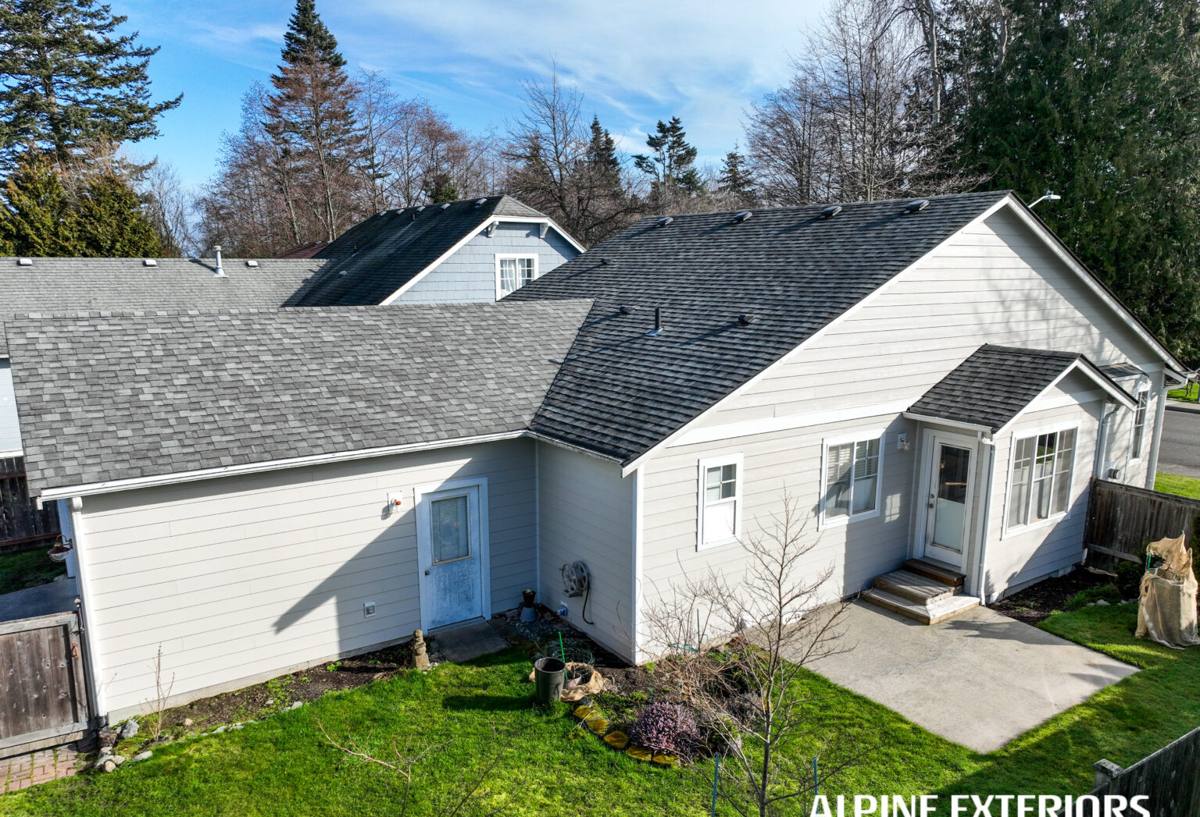
How Moisture and Moss Actually Damage Siding
The failures we see on older homes in the Skagit Valley follow a predictable pattern. It's rarely one big storm that causes the damage — it's years of repeated wetting and drying, moss holding moisture against a surface, and small gaps or cracks that let water behind the cladding where it doesn't belong.
Common problems on homes without climate-appropriate siding
- Wood-based siding (cedar, primed spruce, OSB-based products) swelling, delaminating, or rotting at butt joints and lower courses
- Moss and algae staining on north-facing and shaded walls that never fully dry
- Paint failure and peeling from moisture pushing out through the substrate
- Caulk joints cracking and opening small entry points for water
- Soft or spongy trim boards around windows and doors, often discovered only after damage has spread
Once moisture gets behind siding, it can sit against sheathing and framing for months before anyone notices a problem, because the visible symptoms — a little staining, a slightly uneven wall — often look cosmetic long before they are.
Why We Install Only James Hardie Fiber Cement
We made a deliberate decision as a company to install James Hardie fiber cement siding exclusively — not vinyl, not LP SmartSide, not Cemplank or Allura, not primed wood. That's not a marketing position, it's a practical one built around what actually holds up in this climate.
Fiber cement is made from cement, sand, and cellulose fibers. It doesn't absorb water the way wood-based products can, it won't rot, and it doesn't feed moss and mildew growth the way organic materials do. James Hardie also engineers its HardieZone products specifically for moisture and climate conditions, with the HZ5 line built for the wetter Pacific Northwest. That matters more here than in drier climates, because the margin for error with lesser-performing materials is smaller when a house is wet more often than it's dry.
What we're weighing when we say no to other products
Vinyl siding is inexpensive and low-maintenance, but it expands and contracts with temperature swings, can crack in cold snaps, and doesn't offer the same fire resistance or paintable, factory-finished surface that fiber cement does. Engineered wood products like LP SmartSide perform reasonably well when installed and maintained correctly, but they're wood-based at the core, meaning caulking, painting, and joint maintenance are non-negotiable over the life of the product — skip that upkeep in a wet climate and you're back to the moisture problems wood-based siding is known for. Other fiber cement brands compete on price but don't carry the same factory finish warranty or the track record James Hardie has built over decades. We'd rather install one product well than offer five options and hope homeowners maintain the ones that need it most.
James Hardie Product Lines We Install
| Product | Best For | Notes |
|---|---|---|
| HardiePlank lap siding | Most homes, traditional or modern look | Available in smooth or cedar-textured finish |
| HardieShingle | Craftsman or cottage-style accents | Staggered or straight-edge panel options |
| HardiePanel vertical siding | Modern builds, gable accents, mixed-material facades | Often paired with lap siding for contrast |
| HardieTrim | Window, door, and corner trim | Matches ColorPlus finishes for a uniform look |
All of these come with the ColorPlus factory finish option, which bakes color onto the board under controlled conditions rather than relying on field-applied paint. In a climate where field-painted surfaces are fighting moisture and UV exposure from day one, a factory finish is a meaningful advantage — it's more consistent, more durable, and backed by its own finish warranty separate from the product warranty.
How Our Installation Process Works
Fiber cement performs the way it's supposed to only when it's installed correctly, and a lot of the problems we get called out to fix on other contractors' work trace back to installation shortcuts, not the material itself.
What a proper installation includes
- On-site assessment of existing siding, trim, and any moisture or rot already present behind the wall
- Removal of old siding and inspection of sheathing, with repair or replacement of any damaged framing before new siding goes on
- Installation of a weather-resistant barrier and correct flashing details at windows, doors, and roof-to-wall intersections
- Proper fastening, clearances, and gapping per James Hardie's published installation specifications
- Caulking and sealing at the points most exposed to wind-driven rain
- Final inspection and cleanup
The flashing and moisture-barrier details matter as much as the siding itself. A home can have excellent siding installed over poor flashing and still end up with water intrusion — that's why we treat those steps as core to the job, not an afterthought.
Roofing, Windows, and Decks in the Same Climate
Siding rarely fails in isolation. A roof that's shedding granules or has aging flashing sends water down onto the wall assembly below it. Old windows with failed seals let moisture track into the wall cavity around the frame. A deck built without attention to ledger flashing or proper drainage can rot from the point where it meets the house. Because we handle siding, roofing, windows, and decks, we can look at a Burlington home's whole exterior envelope rather than patching one component while ignoring how it interacts with the rest.
This matters especially in a climate where the failure mode is almost always moisture-related. A new roof does less good if the wall behind a bad flashing detail keeps taking on water. A deck replacement is only as good as the flashing where it ties into the siding above it.
What Siding Replacement Typically Involves — Cost Factors
| Factor | Why It Matters |
|---|---|
| Home size and wall complexity | More corners, gables, and dormers mean more cutting, trim, and labor |
| Condition of existing sheathing | Rot or damage found during tear-off adds repair scope before new siding goes on |
| Product mix | Lap siding, shingle accents, and panel sections at different price points |
| Finish choice | Factory ColorPlus finish versus field-primed for on-site paint |
| Trim and detail work | Window and door trim, corner boards, and fascia detailing add time and material |
We give honest, project-specific estimates after an in-person look at the home — broad ranges without seeing the actual siding condition and wall complexity aren't useful to homeowners trying to budget accurately.
Choosing a Contractor for Skagit County Exterior Work
Where you are matters more than people expect for exterior work. A crew that works Skagit County regularly understands how moisture and moss behave here, knows what flashing details actually hold up through a wet winter, and isn't guessing at what "normal" wear looks like on a Skagit Valley home versus a house in a drier part of the state.
Questions worth asking before you hire
- Are you licensed and insured to work in Washington, and can you provide proof?
- Do you install to the manufacturer's published specifications, including flashing and fastening details?
- What warranty covers the product, and what warranty covers your labor?
- Can you explain what you found once old siding or roofing comes off, before covering it back up?
- Do you work in this area regularly, or is this a one-off job for you?
A contractor who can answer these clearly, without dodging or vague reassurances, is worth far more than one offering the lowest bid.
Get a Straightforward Estimate
If you're weighing a siding, roofing, window, or deck project for a Burlington home, we're happy to take a look and give you a straightforward assessment — what we see, what we'd recommend, and why. There's no pressure and no obligation. Fill out the form below to schedule a free estimate.