 Anacortes
 What Board & Batten Actually Means
Board and batten is one of the oldest siding patterns in the Pacific Northwest, and it's having a real moment again on new builds and remodels around Anacortes. The look is simple: wide vertical panels (the "boards") with narrower strips (the "battens") covering the seams between them. It reads as clean, modern farmhouse, or classic Skagit Valley barn, depending on color and trim choices. But the pattern's simplicity is deceptive. Vertical siding moves water differently than horizontal lap siding, and it exposes more seams to the weather if it isn't detailed correctly. Done well, it's one of the more distinctive exteriors you can put on a house. Done poorly, it's one of the faster ways to get water behind your siding.
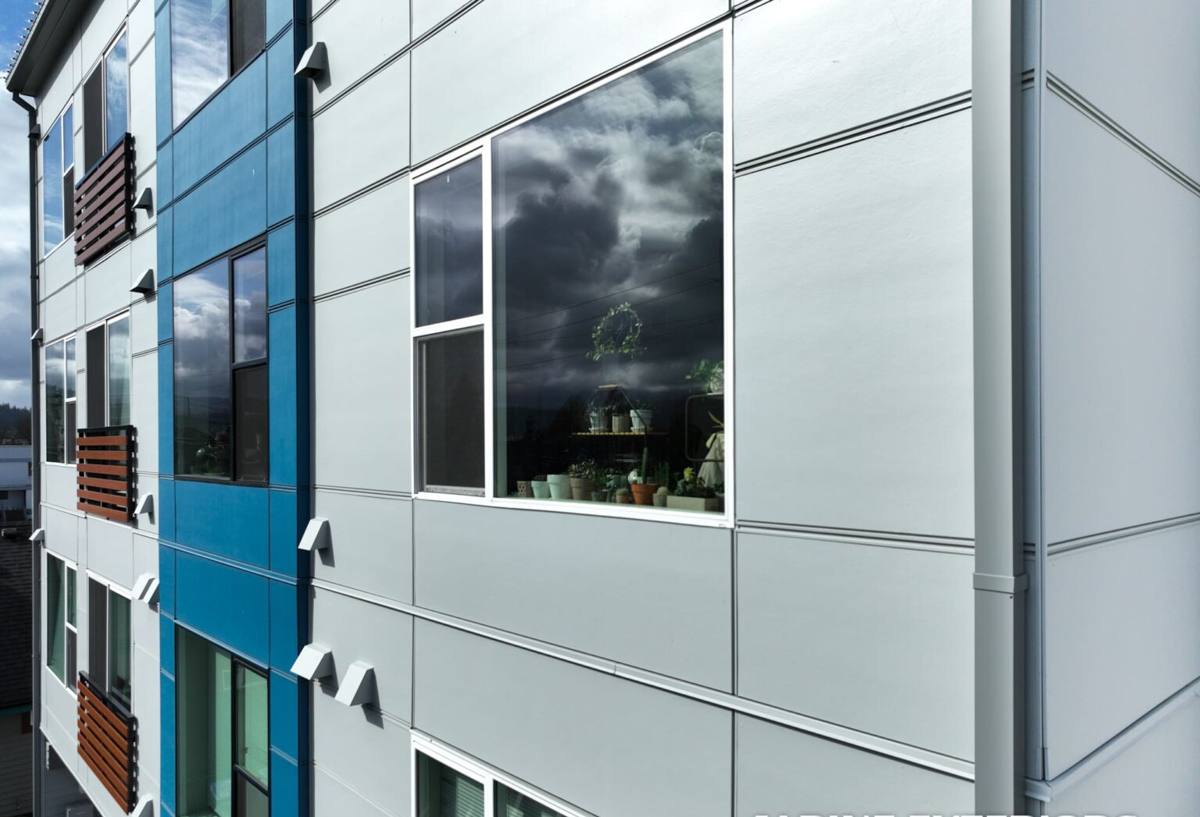
Why Fiber Cement Suits the Board & Batten Look
Board and batten was originally a wood pattern, and a lot of homeowners still picture it in cedar or rough-sawn boards. The problem is that vertical wood siding sheds water along its length instead of shingling it away course by course the way lap siding does, which means every seam, every batten joint, and every panel end grain is a spot where moisture can get in. Wood and wood-composite panels expand, contract, and cup with humidity, and in a climate where damp weather sticks around for months, that movement eventually shows up as splitting, popped nails, or soft spots at the bottom edge where boards sit closest to grade.
How the panels are built
James Hardie's fiber cement panels are a mix of cement, sand, and cellulose fiber, cured into a dense, dimensionally stable board. They don't absorb water the way wood does, they don't expand and contract with the seasons the way vinyl and some engineered wood products do, and they're non-combustible. For a vertical pattern where the panel itself is doing most of the visual work, that stability matters — a warped or bowed panel is a lot more noticeable running vertically than it is hidden in a stack of horizontal lap boards.
Battens: material and spacing
The battens matter as much as the panels. We install Hardie trim battens, not dimensional lumber, specifically because wood battens are the first thing to crack, cup, or pull away from the wall in a wet climate. Batten spacing is also a design decision, not just an aesthetic one — spacing that's too wide leaves large unsupported panel spans, and spacing that ignores stud layout means battens aren't always landing on solid backing where they should be fastened.
James Hardie Panel Options for Board & Batten
HardiePanel Vertical Siding
This is the standard workhorse panel for board and batten projects — a smooth or stucco-textured 4x8 or 4x10 sheet installed vertically with battens over the seams. It's the most common choice because it's straightforward to detail correctly, comes pre-primed or in factory ColorPlus finish, and holds a crisp, flat look that reads well in both traditional and modern designs.
Artisan Vertical Siding
Hardie's Artisan line is a heavier-gauge, more dimensionally refined panel aimed at higher-end architectural work. It has a truer wood-grain texture and tighter tolerances, which shows in the shadow lines around battens and trim. It costs more than standard HardiePanel, and for most board and batten projects in this area, standard HardiePanel with ColorPlus finish gets the same visual result for less money. Artisan earns its keep on accent walls, gable features, or projects where the client specifically wants that upgraded look.
Comparing Board & Batten Materials
Homeowners researching this look usually run into three material paths. Here's how they stack up on the things that actually matter over time:
| Material | Moisture behavior | Fire rating | Typical maintenance | Realistic lifespan |
|---|---|---|---|---|
| Solid wood (cedar, rough-sawn) | Absorbs and releases moisture; prone to cupping and checking | Combustible | Refinish/reseal every 3-5 years | 15-25 years before major repair |
| Vinyl board & batten | Doesn't rot, but expands/contracts with temperature; seams can gap | Combustible, can deform in heat | Low, but panels fade and can't be spot-repaired invisibly | 20-30 years, fading is gradual |
| Engineered wood panel | Resists cupping better than solid wood, but edges are vulnerable if cut/sealed poorly | Combustible | Repaint cycle, edge sealing on cuts | Varies widely with installation quality |
| James Hardie fiber cement | Dimensionally stable, doesn't swell or rot | Non-combustible | Occasional wash; ColorPlus finish doesn't need repainting on the standard cycle | 30+ years when installed to spec |
The numbers in that table only hold up if the installation is right. Fiber cement's advantages come from the material itself; they get thrown away just as easily as any other product if flashing, gaps, and fastening aren't handled correctly.
Installation Details That Determine Whether It Lasts
Water-resistive barrier and flashing
Every board and batten job starts underneath the panels, not with them. A continuous water-resistive barrier, properly lapped and taped, goes on the wall sheathing first. Flashing at window and door heads, at the base of the wall, and at any horizontal trim transition has to shed water out and away from the sheathing, not just sit there decoratively. This is the part of the job nobody sees once it's done, and it's the part that decides whether the wall stays dry for the next thirty years.
Fastening and gaps
Panels need to be fastened per Hardie's published spec — correct nail or screw type, spacing, and penetration into framing, not just into sheathing. Vertical panels also need a gap at the bottom for drainage and shouldn't be run tight to grade, roofing, or deck surfaces. Battens get fastened independently through the panel into the stud, not just tacked to the panel face, so the whole assembly moves as one system.
Caulking philosophy
Some crews caulk every seam on a board and batten job and call it sealed. We treat caulk as a backup, not the primary defense — the flashing and water-resistive barrier underneath are what actually keep water out. Caulk fails eventually; it's UV-exposed, it's the first thing to crack in freeze-thaw cycling, and a wall that depends on caulk staying perfect for decades is a wall that's going to leak eventually.
ColorPlus Finish and HZ5 Engineering for This Climate
Anacortes sits right on the water, and that means salt air is a constant low-grade stress on anything on the outside of a house — it accelerates corrosion on fasteners and hardware and breaks down paint film faster than it would inland. James Hardie's HZ5 product line is engineered for the wetter, harsher weather patterns found in the Pacific Northwest, and ColorPlus is a factory-applied, baked-on finish rather than a field-applied paint job. That matters here specifically because field-painted siding in a marine climate is fighting salt exposure and near-constant moisture from the moment it's installed, while a factory finish is cured under controlled conditions before it ever sees Skagit County weather. It also means color goes on evenly across every panel, without the brush and roller variation you sometimes see on site-painted vertical siding.
What Correct Installation Should Look Like
If you're evaluating a bid or checking a job in progress, these are the things worth confirming:
- Water-resistive barrier installed and taped before any siding goes up, with no exposed sheathing seams
- Flashing at every window head, door head, and horizontal trim transition
- Minimum gap maintained at the bottom of the wall for drainage — panels not run tight to grade, decks, or roofing
- Fasteners matching Hardie's spec for type, spacing, and embedment into framing
- Battens fastened independently into studs, not just through the panel face
- Panel and batten layout planned against actual stud spacing before installation starts
- Caulk used at trim and penetrations as a backup seal, not as the primary water barrier
The James Hardie Warranty on Board & Batten
James Hardie backs its fiber cement products with a 30-year non-prorated limited warranty on the substrate, and ColorPlus finishes carry their own separate finish warranty covering fading and film integrity. That warranty is also transferable to a new owner if the house sells, which is worth mentioning to anyone thinking about resale value along with curb appeal. Warranty coverage assumes installation followed Hardie's published requirements — another reason the flashing, fastening, and gap details above aren't optional extras, they're what keeps the coverage intact if you ever need it.
Why We Only Install It This Way
We install James Hardie exclusively, and board and batten is one of the clearest examples of why. This pattern has more seams and more vertical water paths than lap siding, so it's less forgiving of a product that swells, cups, or depends on paint film holding up against salt air and driving rain year after year. Fiber cement gives us a panel that stays flat and stable, an HZ5 line engineered for this specific climate, and a factory finish that isn't racing to fail before the caulk does. Combined with flashing and fastening done to spec, that's what makes a board and batten exterior in Anacortes something you install once and don't think about again for decades, instead of a design choice you're touching up every few years.
If you're considering board and batten for a new build, an addition, or a full re-side and want to talk through layout, color, and what it would take on your specific house, we're happy to walk the property and put together a straightforward, no-pressure estimate.