 Anacortes
 Ship Harbor sits right where Anacortes meets the water — close to the ferry terminal, the Ship Harbor Interpretive Preserve, and the open exposure of the Guemes Channel and Rosario Strait. Homes here take a different kind of beating than a house tucked into Anacortes' interior neighborhoods. Salt-laden wind, near-constant marine moisture, and the shade from second-growth fir and madrona all combine to shorten the working life of a lot of exterior materials. We've replaced siding, patched roofs, and swapped out failed windows all over this part of Anacortes, and the pattern is consistent: whatever's on the house has to survive salt air, driving rain, and a moss season that runs most of the year.
What Makes Ship Harbor's Exterior Conditions Tough
Skagit County's marine climate is mild compared to a lot of the country, but "mild" doesn't mean easy on a building. Ship Harbor's proximity to the water means homes there get a heavier dose of a few specific stressors than houses further inland in Anacortes:
- Salt air: Airborne salt accelerates corrosion on fasteners, flashing, and metal trim, and it degrades cheaper paint films faster than dry-climate weathering would.
- Driving rain: Wind off the water pushes rain sideways into wall assemblies, not just straight down. That matters for siding laps, window flashing, and anywhere two materials meet.
- Shade and moss: Tree cover common around Ship Harbor keeps north- and west-facing walls damp longer after a storm, which is exactly what moss and mildew need to take hold.
- Temperature swings: Cool nights and daytime warming cause repeated expansion and contraction in siding and trim, which is hardest on materials that aren't dimensionally stable.
None of this is unique to Ship Harbor — it's Anacortes and Skagit County weather generally — but homes closer to the water feel it first and worst.
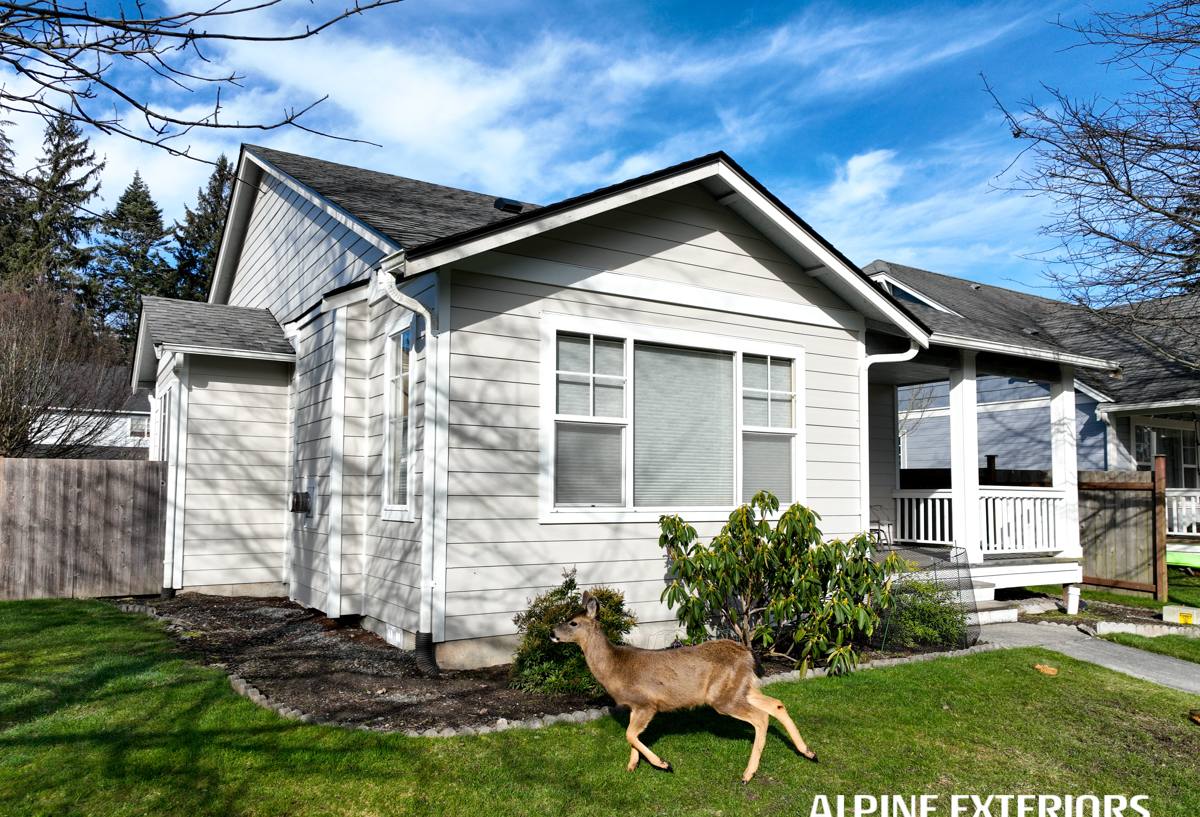
What We See on Siding Near the Water
When we're called out to look at a home in this area, the failure points are usually predictable:
Moisture at the Laps and Seams
Wind-driven rain finds any gap in caulking or flashing and works it over years, not days. On lower-quality siding, that moisture gets absorbed into the material itself, not just past it — which leads to swelling, delamination, or soft spots long before the paint looks bad.
Moss and Algae Growth
Shaded walls and roof lines hold moisture and grow moss, especially on textured or wood-based siding where spores have something to grip. Moss holds water against the surface, which speeds up rot underneath it.
Paint and Finish Breakdown
Salt air is hard on field-applied paint. Once a finish starts chalking or peeling, the substrate underneath is exposed to the same moisture and UV that broke the paint down in the first place — and the cycle repeats.
Why We Only Install James Hardie Fiber Cement
We made a decision a while back to install one siding system across every job we do, including in exposed, marine-adjacent areas like Ship Harbor: James Hardie fiber cement. A few reasons that matter specifically for this kind of exposure:
- Non-combustible: Fiber cement doesn't burn, which matters anywhere near tree cover and dry summer stretches, even in a generally wet climate.
- Dimensionally stable: Hardie board doesn't swell and shrink with moisture the way wood-based products can, so it holds paint lines and caulk joints longer under repeated wet-dry cycles.
- ColorPlus factory finish: A baked-on finish applied under controlled conditions holds up to UV and salt exposure noticeably better than field-applied paint, and it comes with its own finish warranty.
- HZ5 engineering: Hardie's HZ5 product line is engineered for the Pacific Northwest's freeze-thaw and moisture profile specifically, not just a generic climate zone.
- Moss and mildew resistance: The surface doesn't feed organic growth the way wood fiber does, so moss and algae are easier to keep off and easier to clean when they do show up.
We don't install vinyl, LP SmartSide, primed spruce, cedar, or other fiber cement brands like Allura or Cemplank. That's not because every one of those products is a bad product in general — it's that we'd rather stand behind one system we trust completely in this climate than offer a menu of options with different long-term risk profiles. If a homeowner wants to understand the trade-offs of those other materials, we're glad to walk through them honestly; we just don't put them on houses.
Material Comparison for Coastal Anacortes Exposure
| Material | Moisture Behavior | Fire Rating | Typical Finish Longevity |
|---|---|---|---|
| James Hardie fiber cement | Dimensionally stable, doesn't swell/rot | Non-combustible | Factory ColorPlus finish, long warranty |
| Vinyl siding | Doesn't absorb water, but seams/gaps trap moisture behind panels | Combustible, can warp near heat | Color fades over time, not repaintable easily |
| LP SmartSide (engineered wood) | Wood-based; vulnerable at cut edges and unsealed seams | Combustible | Field or factory finish, edge sealing critical |
| Cedar / primed spruce | Absorbs moisture, prone to swelling and rot without diligent maintenance | Combustible | Field-applied paint/stain, shorter repaint cycle |
Our Process for Ship Harbor Jobs
Every siding job starts the same way regardless of neighborhood, but exposed sites like Ship Harbor get a closer look at a few specific things:
- On-site assessment: We check wall orientation, tree shade, and existing moisture damage before we quote anything — a north wall under fir cover gets treated differently than a south wall in the open.
- Water management first: House wrap, flashing details, and window integration get addressed before a single piece of siding goes up. Fiber cement only performs as well as what's behind it.
- Correct fastening and clearances: Hardie's warranty depends on installation to spec — proper fastener spacing, ground clearance, and caulking at penetrations. We follow the manufacturer's install guide, not shortcuts.
- Final inspection and cleanup: We walk the job with the homeowner before we call it done.
Roofing, Windows, and Decks Face the Same Conditions
Siding isn't the only exterior surface fighting salt air and rain near Ship Harbor. We also handle roofing, windows, and decks, and the same climate logic applies across all of them:
- Roofing: Moss growth and wind-driven rain under shingle edges are the two most common issues we find on roofs in this area. Proper underlayment and moss-resistant materials matter more here than on a dry-side house.
- Windows: Old aluminum and poorly flashed windows are a common leak source near the water. Correct flashing integration with new siding is often more important than the window unit itself.
- Decks: Uncovered decks near the water take direct salt spray and rain; material choice and fastener quality matter for longevity here just as much as they do on siding.
Handling these together means the water management details — flashing, drainage planes, transitions — are consistent across the whole exterior instead of being handled by different crews with different standards.
Why a Local Crew Matters Here
A contractor based elsewhere in Skagit County or driving up from further south doesn't necessarily know that a west-facing wall near Ship Harbor sees different exposure than a similar wall three miles inland in Anacortes. Local experience means fewer surprises: we know what moss growth patterns look like on this side of town, we know which details tend to fail first on homes exposed to the water, and we're not learning the local climate on your project.
Signs Your Siding May Need Attention
- Visible moss or algae streaking, especially on shaded or north-facing walls
- Paint that's chalking, peeling, or bubbling
- Soft spots or slight give when you press on the siding surface
- Gaps opening up at seams, corners, or trim boards
- Staining or discoloration that keeps returning after cleaning
- Visible warping or cupping in individual boards or panels
What Affects Cost on a Ship Harbor Project
Every home is different, but a few factors tend to move the number up or down on jobs in this area:
- Extent of existing water damage: Hidden rot behind old siding adds repair scope that isn't visible until removal.
- Home size and wall complexity: More corners, dormers, and trim details mean more labor and material cuts.
- Access: Steep or wooded lots common near the water can slow staging and material handling.
- Scope: Siding-only versus a combined siding, window, and roofing project changes both the price and the scheduling.
We give straightforward, written estimates and explain what's driving the number, rather than a vague lump sum.
If you're in Ship Harbor or anywhere else around Anacortes and want an honest look at what your siding, roof, windows, or deck are up against, we're happy to come take a look. The estimate is free, there's no pressure, and you'll get a straight answer about what your home actually needs.