 Anacortes
 Similk Beach's Exposure: Water on Three Sides of Everything
Similk Beach sits along Similk Bay on Fidalgo Island, close to the Highway 20 corridor that carries traffic toward Deception Pass and Whidbey Island. It's a setting most homeowners elsewhere would envy — water views, mature tree cover, a quieter pace than the mainland. But that same setting puts exterior building materials through a tougher test than a typical inland Skagit County lot. Homes here sit close enough to saltwater to pick up airborne salt spray, exposed enough to catch wind-driven rain off the bay, and shaded enough by fir and cedar canopy to stay damp longer after every storm.
None of that is unusual for northern Puget Sound waterfront living. But it does mean the siding, roofing, windows, and decking on a Similk Beach home are working harder, year-round, than the same products would on a home twenty minutes inland. We built our business around understanding that difference.
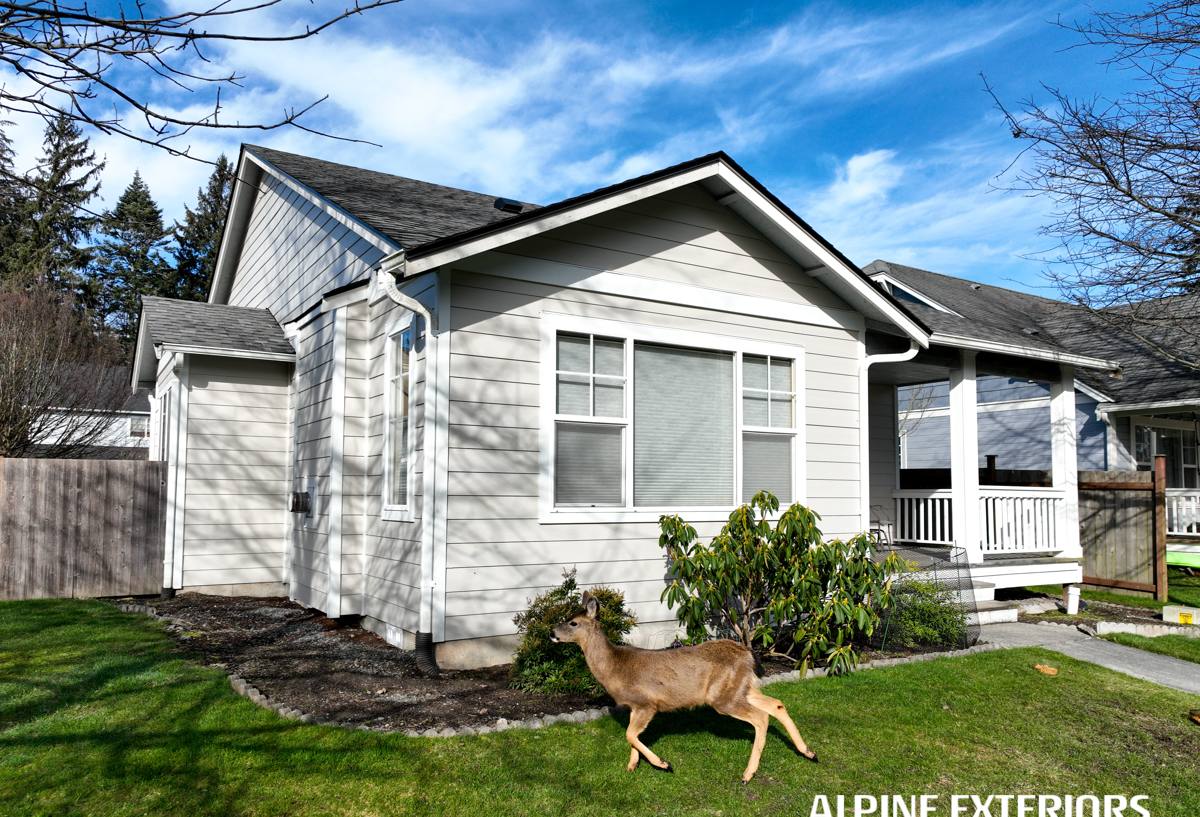
What Salt Air and Driving Rain Actually Do to a House
Salt Air
Airborne salt is corrosive to metal fasteners, flashing, and trim, and it's abrasive to painted and coated surfaces over time. On siding specifically, salt-laden moisture accelerates the breakdown of paint films and can work into seams and end cuts that aren't properly sealed. Materials that rely on a factory or field-applied coating to keep moisture out are the ones most exposed to this kind of slow degradation.
Driving Rain
Similk Beach's waterfront exposure means rain doesn't always fall straight down — wind off the bay pushes it sideways, driving it against walls, under eaves, and into joints that would stay dry on a more sheltered lot. That's a water-management problem as much as a materials problem: house wrap, flashing details, and siding laps all have to be installed correctly, not just with a good product on the outside.
Why Moss Season Is Its Own Category Here
Western Washington's long wet season, combined with tree canopy that limits direct sun on north- and east-facing walls, creates ideal conditions for moss, algae, and mildew growth on exterior surfaces. This isn't just cosmetic. Moss holds moisture against a wall surface for extended periods, and on materials that aren't dimensionally stable or well-sealed at the edges, that sustained dampness is exactly what leads to swelling, delamination, or rot underneath the surface. A siding product's real test in a place like Similk Beach isn't a dry summer afternoon — it's month four of moss season.
Why We Install Only James Hardie Fiber Cement
We don't offer vinyl, LP SmartSide, primed wood, cedar, or other fiber cement brands. That's a deliberate standard, not a limitation of what we're capable of installing. James Hardie fiber cement is engineered specifically to hold up to the moisture cycling, humidity, and coastal exposure common to this region:
- Fiber cement doesn't feed moss or mildew growth the way wood-based products can, and it doesn't swell or delaminate the way engineered wood siding can when moisture gets past the surface.
- Hardie's ColorPlus factory finish is baked on under controlled conditions, which holds up better against sun and salt exposure than field-applied paint, and it carries its own finish warranty.
- Hardie's HZ5 product line is engineered for climates with significant moisture exposure — relevant for a bay-front property like this, even though our broader region falls in a moderate HZ zone.
- Fiber cement is non-combustible, which matters increasingly across Washington as wildfire risk gets factored into insurance and building decisions, even in wetter coastal areas.
We're not going to tell you every other product on the market is junk — plenty of them perform fine in the right conditions with the right maintenance. But for a Similk Beach exposure, we've made the call that Hardie is the product we're willing to put our name behind and warranty.
How the Materials Compare in This Kind of Exposure
| Factor | James Hardie Fiber Cement | Vinyl | Engineered Wood (e.g. LP SmartSide) | Cedar / Primed Wood |
|---|---|---|---|---|
| Moisture & swelling risk | Low — cement-based, dimensionally stable | Low swelling, but seams can gap and warp in heat/cold cycling | Moderate — vulnerable at cut edges and joints if moisture gets in | Higher — natural wood movement and rot risk without diligent upkeep |
| Moss/algae resistance | Good — doesn't feed organic growth | Fair — surface growth still occurs, harder to feel/see damage underneath | Fair — wood fiber content can support growth if coating fails | Lower — organic material, prone to moss colonization |
| Salt air / coastal finish durability | Strong — factory ColorPlus finish | Can fade/chalk over time | Depends on field-applied coating quality | Requires regular refinishing |
| Fire resistance | Non-combustible | Melts/deforms under heat | Combustible | Combustible |
| Typical maintenance cycle | Repaint/refinish every 15+ years | Low maintenance but limited repair options | Regular caulk/paint inspection | Refinish every 2-5 years |
Beyond Siding: The Whole Exterior Envelope
Siding doesn't work in isolation. On a property with the kind of wind and moisture exposure Similk Beach sees, the roof, windows, and any exterior decking all need to be doing their part of the water-management job too:
Roofing
A roof system that's shedding water correctly, with flashing and underlayment matched to the local rain load, keeps water from ever reaching the wall assembly in the first place. Moss on a roof surface is often the first visible sign of the same shaded, damp conditions that will eventually show up on siding.
Windows
Window flashing and sealant details are one of the most common failure points on wind-driven-rain exposures. Properly integrated window flashing that ties into the siding's water-resistive barrier matters more here than the window brand itself.
Decks
Waterfront and near-waterfront decks in this area take a beating from moisture cycling and sun/shade contrast. Framing, fasteners, and decking material all need to be chosen with that in mind, not just for looks.
We handle all four — siding, roofing, windows, and decks — because treating them as one connected system, rather than four separate contractors making four separate assumptions about how water moves, is how a house actually stays dry.
What Correct Installation Involves
James Hardie siding is only as good as its installation. Manufacturer specifications call for specific fastening patterns, clearances, flashing integration, and caulking practices — and skipping any of them is one of the more common ways a good product underperforms. On a Similk Beach lot, we pay particular attention to:
- Proper starter strip and water-resistive barrier integration at the foundation line, where splashback and grade moisture are most common.
- Correct clearances between siding and roof lines, decks, and grade, so water has somewhere to go instead of wicking upward.
- Flashing details at every window, door, and penetration — the majority of moisture intrusion complaints trace back to flashing, not the siding panel itself.
- Factory-cut and sealed panel ends wherever possible, since field cuts are the most vulnerable point for moisture entry if not properly sealed.
Why a Local Crew Matters Here
Similk Beach isn't a subdivision with identical lots — it's a mix of waterfront and near-waterfront properties, varied tree cover, and lots with their own drainage quirks. A crew that works across Anacortes and Skagit County regularly sees how these coastal exposure patterns actually play out on real homes over years, not just on a spec sheet. That experience shapes decisions on-site: where to add extra flashing attention, which wall faces need particular care around moss and shade, and how to sequence work around this area's weather windows.
Signs Your Siding May Already Be Struggling
If you're not sure whether your current siding is holding up to the exposure, a few warning signs are worth a closer look before they become bigger repairs:
- Persistent moss or dark staining on north- or east-facing walls that doesn't clear up after cleaning
- Soft spots, bubbling, or visible swelling, especially near the bottom courses or around windows
- Paint that's peeling, chalking heavily, or failing faster than it used to
- Visible gaps at seams, corners, or trim that weren't there when the siding was installed
- A musty smell or visible staining on interior walls that share an exterior wall with heavy siding wear
Catching these early is almost always cheaper than waiting until moisture has worked its way into the wall assembly.
Get a Straightforward Look at Your Home
If you're weighing a siding, roofing, window, or deck project for a Similk Beach property, we're happy to take a look and give you an honest read on what your home's exposure actually calls for — no pressure, no inflated urgency. Fill out the form below for a free estimate.