 Anacortes
 Why La Conner's Waterfront Setting Is Hard on a Roof
La Conner sits on the water along the Swinomish Channel, tucked into the farmland and tidal flats of Skagit County. That location is part of what makes the town beautiful, and it's also exactly why roofs here take more punishment than roofs twenty miles inland. Salt-laden air moves off the channel and Puget Sound, wind-driven rain comes in sideways during winter storms, and the shade from mature trees around many older La Conner properties keeps roof surfaces damp long after a storm has passed. A roof built for a dry inland suburb is not automatically the right roof for La Conner, even if the products are the same.
Salt Air and Roofing Metal
Airborne salt accelerates corrosion on exposed metal — flashing, fasteners, vent caps, and gutter hardware all age faster near the water than they would a few miles inland. This doesn't mean metal can't be used well in La Conner; it means the metal, the fastener coatings, and the flashing details all have to be chosen with that exposure in mind, not treated as an afterthought.
Driving Rain and Wind
Storms coming off the water tend to push rain sideways rather than straight down, which puts real stress on the parts of a roof that a calmer climate barely tests: valleys, hips, ridge caps, and anywhere a wall meets a roof plane. A roof that looks fine from the ground can still be letting wind-driven water past marginal flashing, one storm at a time.
Moss Season and Tree Cover
Western Washington's long wet season, combined with shade from surrounding trees, gives moss and moss-friendly algae months at a time to establish themselves on north-facing and shaded slopes. Moss holds moisture against the roofing material, works into shingle edges, and lifts tabs over time — it's a slow, patient way to shorten a roof's life, and it's one of the most common things we see accelerating replacement decisions on La Conner homes.
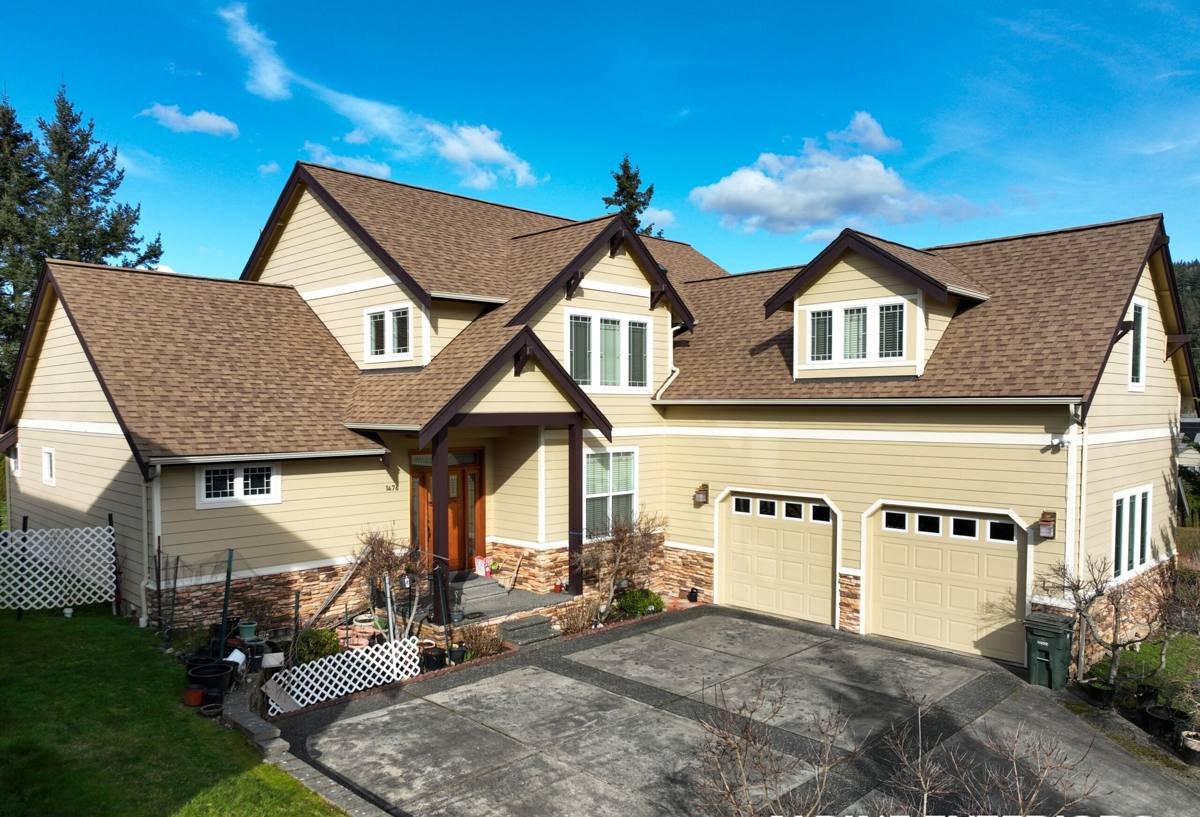
Signs Your La Conner Roof Needs Replacement, Not Just Repair
Not every roof problem calls for a full replacement. But there's a point where patching becomes false economy — where the money spent chasing individual leaks would have been better spent on a new roof with a full warranty. Some signs point clearly toward replacement:
- Granules collecting in gutters or at downspout outlets, a sign the shingle surface is wearing thin
- Shingles that are curling, cupping, or cracking, especially on south- and west-facing slopes
- Moss or dark algae staining that keeps returning within a season or two of cleaning
- Soft or spongy spots underfoot, which usually mean the decking underneath has taken on moisture
- Daylight visible through the roof deck from inside the attic
- Multiple past repairs in different areas rather than one isolated problem
- Flashing that's rusted, loose, or was never properly stepped at walls and chimneys
- The roof is nearing or past the manufacturer's expected service life for its material and exposure
If you're only seeing one or two of these and the roof is otherwise sound, a repair may still make sense. If you're seeing several at once, that's usually a sign the roof system as a whole is failing rather than one localized spot.
What a Correct Roof Replacement Actually Includes
A roof replacement is more than swapping old shingles for new ones. The parts you don't see — the deck, the underlayment, the flashing — are what determine whether the new roof actually performs in La Conner's weather or just looks new for a season or two.
Tear-Off and Deck Inspection
We remove the existing roofing down to the deck rather than layering over it. That lets us actually see the plywood or plank decking underneath, replace any sections that have gone soft or delaminated from past moisture intrusion, and confirm the deck is properly fastened before anything new goes down. Skipping this step is how a new roof ends up failing over an old, hidden problem.
Underlayment and Ice-and-Water Barrier
The underlayment is the roof's backup layer — the barrier that protects the deck if wind-driven rain gets past the shingles, which in a climate like this one, it eventually will at some point in the roof's life. We use synthetic underlayment across the field of the roof and self-adhering ice-and-water membrane at the vulnerable spots: eaves, valleys, and around penetrations, where wind-driven rain and any winter freeze-thaw activity are most likely to find a weakness.
Flashing at Valleys, Chimneys, and Walls
Flashing is where most roof leaks actually originate, not in the open field of shingles. Valleys, chimney step flashing, skylight curbs, and wall-to-roof transitions all need to be done correctly and, in a salt-air environment, done with materials and fasteners chosen to resist corrosion rather than the cheapest option available.
Ventilation
A roof needs balanced intake and exhaust ventilation to let moisture escape the attic space instead of condensing against the underside of the deck. In a damp climate, poor ventilation quietly rots decking and framing from the inside, often years before it shows up as a visible roof problem. We check and correct attic ventilation as part of every replacement, not as an upsell after the fact.
Choosing a Roofing Material for La Conner's Climate
There's no single "best" roofing material — there's a best fit for your home, your budget, and how much long-term maintenance you're willing to take on. Here's how the common options compare specifically against La Conner's salt air, rain, and moss exposure:
| Material | Typical Lifespan | Moss & Moisture Resistance | Salt-Air Durability | Ongoing Maintenance |
|---|---|---|---|---|
| Architectural asphalt shingle | 25–30 years | Good with algae-resistant granules; needs periodic moss removal on shaded slopes | Good; fasteners and flashing should still be corrosion-resistant | Moderate — periodic cleaning recommended |
| Standing seam metal | 40–50+ years | Excellent; moss struggles to grip a smooth metal surface | Depends heavily on coating and fastener quality near saltwater | Low, if installed with the right coatings |
| Cedar shake | 20–30 years with upkeep | Requires the most active maintenance; absorbs and holds moisture | Fair; needs regular treatment and inspection | High — periodic treatment and moss control needed |
Cedar has a genuine appeal for the look many La Conner homeowners want, but we're upfront about the trade-off: it's a natural, moisture-absorbent material in a climate that stays damp for months at a time, and it needs a real maintenance commitment to hold up. Metal costs more up front but asks the least of you over time. Architectural asphalt remains the most common choice because it balances upfront cost, appearance, and performance reasonably well — as long as the installation details underneath it are done right.
Our Roof Replacement Process
- On-site assessment. We inspect the existing roof, attic ventilation, and any problem areas in person before recommending anything, and give you an honest read on repair versus replacement.
- Written estimate. You get a clear, itemized estimate covering material, tear-off, deck repair allowance, flashing, and ventilation work — no vague lump-sum guessing.
- Scheduling around the weather. We plan the work for a realistic dry window and have a plan for covering an open roof if weather turns during the job.
- Tear-off and deck inspection. Old roofing comes off, the deck is inspected and repaired as needed before we move forward.
- Underlayment, flashing, and installation. Ice-and-water barrier, synthetic underlayment, corrosion-resistant flashing, and the roofing material go on in that order, with attention to every valley, penetration, and edge.
- Ventilation check. Intake and exhaust ventilation are verified and corrected so the new roof can actually breathe.
- Final walkthrough and cleanup. We walk the finished roof with you, answer questions, and make sure the property is clean of debris and stray fasteners before we leave.
Why a Crew That Already Works in La Conner Matters
Roofing crews that mostly work drier, inland areas can install a technically fine roof and still miss the details that matter here — under-specifying flashing metal for salt exposure, skipping ice-and-water protection because "it doesn't really freeze," or not accounting for how shaded, tree-covered lots hold moisture longer after a storm. A crew that regularly works La Conner and the surrounding Skagit County waterfront has already seen what fails in this specific environment and builds the roof to answer for it up front, rather than learning the lesson on your house.
Local familiarity also means a more realistic estimate. We're not guessing at how this climate treats a roof over ten or twenty years — we're accounting for what we've already seen happen to roofs a few miles from yours.
Timing a Roof Replacement Around Skagit County Weather
Roofing can be done in most seasons here, but the driest, most predictable stretches of the year make for the smoothest installs and the least schedule risk. Late spring through early fall generally offers the most consistent dry windows for tear-off and installation. That doesn't mean fall and winter replacements are off the table — they're often necessary when a roof is actively failing — but they call for tighter scheduling, weather contingency planning, and a crew that isn't caught off guard by a system moving in off the water. We'll always give you a straight answer about the best timing for your specific situation rather than pushing a date that doesn't fit the forecast.
Keeping a New Roof Performing After Installation
A well-installed roof still benefits from basic upkeep in this climate, especially where shade and moss are a factor:
- Keep gutters and downspouts clear so water isn't backing up under the roof edge
- Have shaded, moss-prone slopes checked and gently cleaned every year or two rather than letting growth establish
- Trim back overhanging branches where practical to reduce shade and debris buildup
- Have flashing and penetrations visually checked after major storms, particularly ones with high wind off the water
- Address small issues — a lifted shingle tab, a small gutter leak — before they become deck-level problems
None of this is intensive work, but skipping it is how a well-built roof still ends up with a shortened lifespan in a climate this wet.
If your La Conner roof is showing its age, or you just want an honest opinion on repair versus replacement, we're glad to take a look. Request a free, no-pressure estimate using the form below and we'll walk the roof with you and tell you straight what it actually needs.