 Anacortes
 Siding, Roofing, Windows, and Decks for Conway Homes
Conway sits in the lower Skagit River delta, a flat, low-lying stretch of farmland and older homesteads not far from where the river meets Puget Sound. It's a different kind of exposure than a tight neighborhood block in town — homes here tend to sit on open lots with little windbreak, and the combination of river moisture, marine air moving in off the Sound, and heavy regional rainfall puts real, sustained stress on exterior materials. We work throughout Skagit County out of Anacortes, and Conway is a regular stop on our route because the climate challenges here are consistent and predictable once you've seen enough of them.
This page covers what we actually see on Conway homes, how our siding, roofing, window, and deck work is scoped for this kind of exposure, and why we install only James Hardie fiber cement siding rather than the vinyl, LP SmartSide, or wood products still common on older homes in the area.
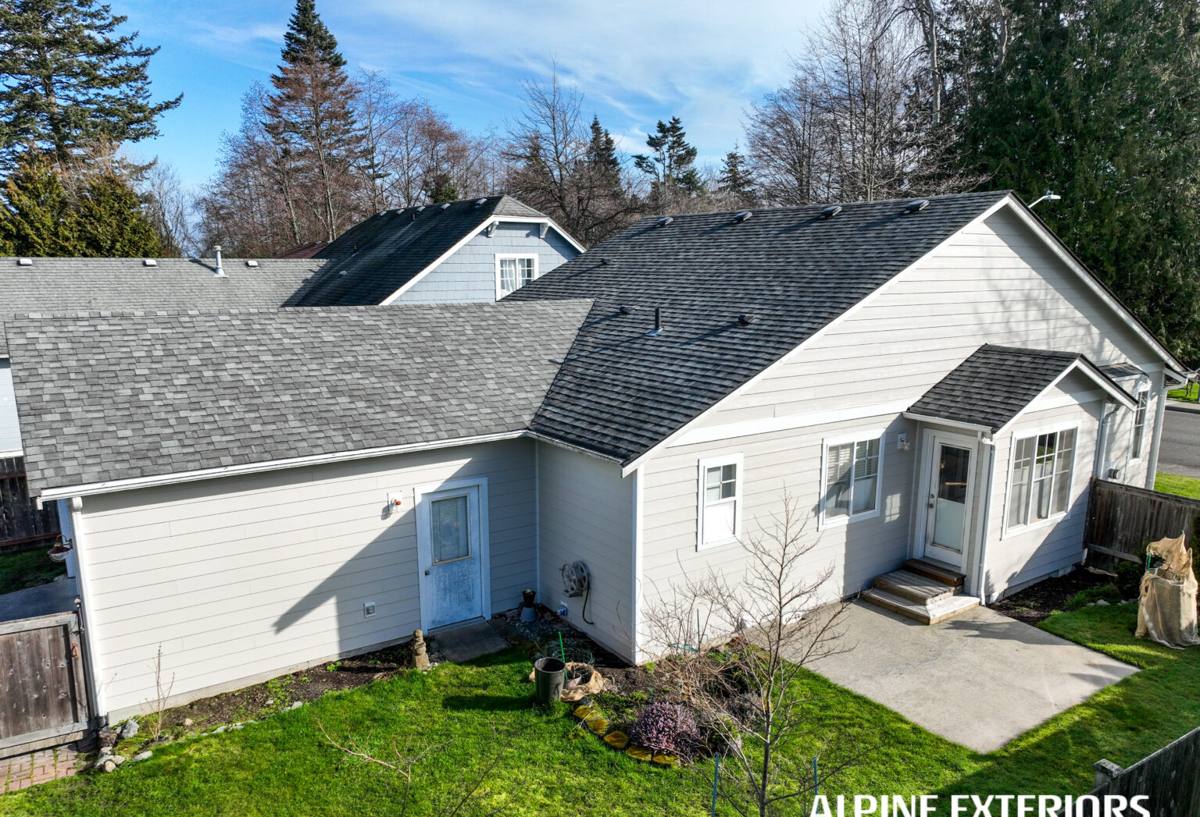
What the Climate Does to a Conway Home
Damp, Low-Lying Ground
Delta and floodplain properties hold moisture in the air and soil longer than homes on higher, better-drained ground. Combined with our long Pacific Northwest wet season, that means siding, trim, and fascia stay damp for extended stretches through fall, winter, and spring. Wood-based products — cedar, primed spruce trim, engineered wood siding — depend on paint film and caulk staying intact to keep that moisture out. Once a seam opens or a coating thins, water gets in and doesn't dry out quickly in this setting.
Salt Air, Even Inland
Conway isn't right on the water the way parts of Anacortes are, but it's close enough to Puget Sound and the Skagit delta's tidal influence that salt-laden air still reaches exposed siding, fasteners, and metal flashing. Salt air accelerates corrosion on lower-grade hardware and speeds up the breakdown of finishes that aren't built for it.
Moss and Organic Growth
Shaded, damp conditions are exactly what moss and algae need. On horizontal surfaces, north-facing walls, and anywhere tree cover blocks sun and airflow, we routinely see moss establishing on siding, trim, and roofing within a few years of installation if the material and finish aren't suited to it. Moss holds moisture against the surface even longer, which compounds the damp-climate problem above.
Driving Rain and Wind-Driven Moisture
Open exposure across flat delta land means wind can drive rain sideways into wall assemblies, especially around windows, corners, and anywhere flashing details are marginal. This is less about total rainfall and more about how rain gets pushed into gaps that would stay dry in a more sheltered setting.
Why We Standardized on James Hardie Fiber Cement
We used to install a wider range of products. After years of callbacks, warranty claims, and re-siding jobs on homes with rot, cracking, and failed finishes, we made the decision to install only James Hardie fiber cement. It's not about James Hardie paying for the loyalty — it's about what holds up in this specific climate without turning into a maintenance project for the homeowner.
Non-Combustible Core
Fiber cement is made primarily from cement, sand, and cellulose fiber. It doesn't burn, which matters in Washington's wildfire-adjacent regions and is simply a good baseline for any exterior material.
Factory-Applied ColorPlus Finish
Rather than relying on field-applied paint that has to be reapplied every several years, Hardie's ColorPlus finish is baked on in a controlled factory environment, with a longer color and finish warranty than site-applied paint typically carries. That matters directly for Conway: less field paint means fewer opportunities for a coating failure to let moisture behind the board.
Climate-Engineered Product Lines
Hardie makes region-specific formulations (HZ10 for the more temperate zones, HZ5 for colder climates) engineered around moisture and freeze-thaw behavior for the area they're sold into. That's a level of climate-specific engineering that generic fiber cement or wood alternatives don't offer.
Dimensional Stability
Fiber cement doesn't swell, cup, or warp with moisture cycling the way wood-based products can. On a property with sustained dampness like Conway's, that stability is the difference between siding that stays flat and tight for decades and siding that starts telegraphing waviness and open joints within a few years.
Why We Don't Install Vinyl, LP SmartSide, or Wood Siding
We get asked about these regularly, so we're upfront about it.
Vinyl
Vinyl is inexpensive and low-maintenance in dry climates, but it's a thin plastic product that expands and contracts significantly with temperature swings, can crack in impacts, and its seams and J-channels give wind-driven rain an easier path behind the cladding than a properly installed fiber cement system. In an open, wind-exposed setting like Conway, that's a real consideration.
LP SmartSide
LP SmartSide is an engineered wood product — strand board with a resin and wax treatment, not fiber cement. It performs reasonably where installation and maintenance are done exactly to spec, but it's still wood at its core, and wood-based products are more sensitive to sustained moisture exposure than fiber cement. In a damp delta environment, that sensitivity is exactly the kind of risk we'd rather not put on a homeowner's home.
Cedar and Primed Wood Trim
Real wood siding and trim can look great, but they require a repainting and recaulking cycle that most homeowners underestimate, and any lapse lets moisture in fast in a climate like this one. We still see older Conway-area homes with wood trim rot at corners and window returns that traces directly back to a missed maintenance cycle.
Comparing Siding Options for a Conway Home
| Material | Moisture Resilience Here | Maintenance Cycle | Typical Lifespan |
|---|---|---|---|
| James Hardie Fiber Cement | Strong — engineered for regional moisture and freeze-thaw | Occasional wash; factory finish, no repainting cycle | 30+ years to finish failure |
| Vinyl | Moderate — seams and panel movement are weak points in wind-driven rain | Low, but panels crack/fade over time | 20-30 years, variable |
| LP SmartSide | Moderate — sensitive to sustained moisture if coating is compromised | Periodic caulk/paint touch-up per manufacturer spec | 20-30 years with proper upkeep |
| Cedar / Primed Wood | Weak in sustained damp conditions without diligent upkeep | Repaint/reseal every 3-7 years | Highly variable, often under 20 years if maintenance lapses |
Roofing, Windows, and Decks in the Same Climate
Siding is only part of the exterior envelope, and we treat roofing, windows, and decks with the same climate logic.
- Roofing: moss prevention detailing, proper underlayment, and flashing sized for wind-driven rain rather than just vertical rainfall.
- Windows: flashing and sealant integration matters more than the window unit itself — most leaks we find trace back to installation detail, not the window brand.
- Decks: ledger board flashing and joist protection are critical on a property with sustained ground moisture; a deck built without them will show rot at the house connection first.
What Correct Installation Actually Involves
Fiber cement performs the way it's rated to only when it's installed to manufacturer spec. That means:
- Correct fastener type and spacing — undersized or wrong-material fasteners corrode faster in salt-influenced air.
- Proper clearance from grade, decks, and roof lines so board bottoms don't sit in standing moisture.
- Rain-screen or drainage plane detailing appropriate to a damp, low-drainage site.
- Correctly lapped and sealed joints, especially around window and door penetrations, where wind-driven rain finds gaps first.
- Factory-cut and factory-primed edges wherever possible, since field-cut edges need to be sealed to maintain the ColorPlus warranty.
Why a Local Crew Matters in Conway
A crew that only occasionally works this specific stretch of Skagit County can miss the details that matter here — how open the exposure is, how long moisture lingers on flat delta ground, and where moss actually establishes first on a given lot orientation. Working out of Anacortes means we're in this climate zone constantly, not treating it as an edge case. We show up knowing what a Conway property is up against before we even walk the site.
What to Expect from an Estimate
A site visit for Conway typically includes a look at current siding or trim condition, moisture or moss patterns on the exterior, drainage and grading near the foundation, and existing flashing at windows, doors, and roof-wall intersections. We'll walk through what we find, what it means for material choice and installation detail, and give you a straightforward scope and cost range — no pressure, no inflated urgency.
If you're planning ahead for siding, roofing, windows, or a deck on a Conway property, we're happy to come take a look and talk through what your home specifically needs. The estimate is free, and there's no obligation to move forward.