 Anacortes
 Living on the Water Side of Fidalgo Island
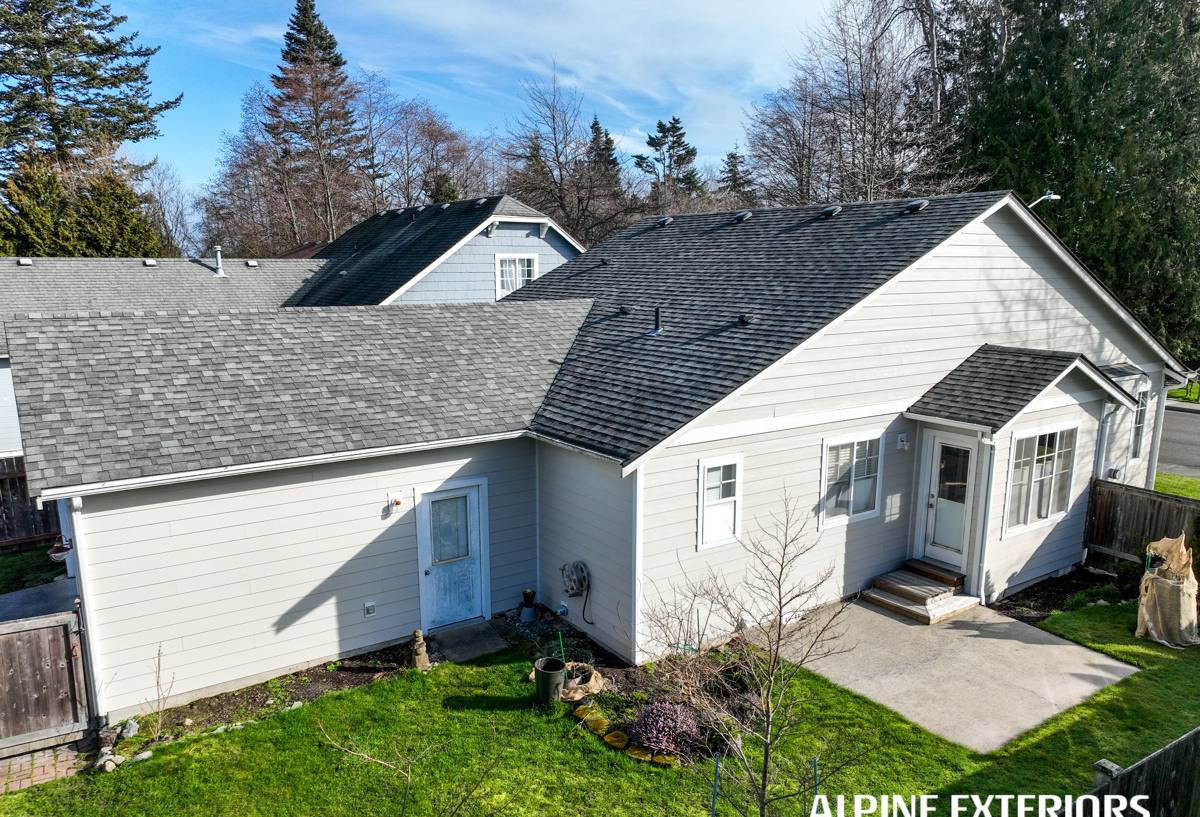
West Anacortes sits closer to the water than almost any other part of the city, with homes catching wind and moisture off Rosario Strait, Guemes Channel, and the surrounding marine waters. That proximity is part of why people love it here, but it also means the exterior of a house on this side of town works harder than a house set back in a more sheltered part of Skagit County. Salt-laden air, wind-driven rain, and long stretches of shade from mature evergreens all combine to put real, ongoing stress on siding, trim, roofing, and windows.
We've been doing exterior work across Anacortes long enough to know that West Anacortes properties tend to show weather damage differently than homes further inland. Understanding those patterns is a big part of recommending the right materials and the right installation approach for this specific stretch of coastline.
What Salt Air and Driving Rain Do to Siding Over Time
Marine air carries fine salt particles that settle on exterior surfaces and accelerate corrosion of fasteners, flashing, and any metal trim components. On siding materials that aren't engineered to resist moisture intrusion, that salt exposure combines with our long, wet winters to create a slow but steady breakdown process.
Driving rain is the other half of the equation. Storms coming off the Strait of Juan de Fuca and Puget Sound don't just fall straight down — wind pushes rain sideways into wall assemblies, seams, and butt joints. Siding that isn't properly flashed, gapped, and finished will absorb that moisture at the edges first, which is exactly where problems like swelling, delamination, and rot tend to start.
Moss and the Shade Factor
Many West Anacortes lots have significant tree cover, which is great for privacy and shade but keeps north- and west-facing walls damp for extended periods. Moss and algae take hold anywhere organic material can find a moisture source, and once established, they hold water against the siding surface even longer. Over a full moss season — which in this part of Skagit County can run from fall through spring — that constant dampness is one of the biggest long-term threats to exterior materials that aren't built to shed water quickly.
Why We Install Only James Hardie Fiber Cement Siding
We made a deliberate decision as a company to install one siding product: James Hardie fiber cement. We don't install vinyl, LP SmartSide, Cemplank, Allura, primed spruce, or cedar. That's not a marketing gimmick — it's a standard we hold to because of what we've seen happen to other materials in exactly the kind of coastal, wet, shaded conditions West Anacortes homes deal with every year.
Fiber cement is made primarily from cement, sand, and cellulose fibers. It doesn't rot, it doesn't feed insects, and it's non-combustible, which matters increasingly in a region where wildfire smoke and dry-season risk have become part of the conversation even on the wet side of the Cascades. James Hardie backs its ColorPlus factory-finished products with a long-term, transferable limited warranty, which gives homeowners real protection instead of a promise that depends heavily on how the product was maintained.
What We Give Up by Not Installing Other Products — Honestly
To be fair, other materials have real advantages. Vinyl is inexpensive and light. LP SmartSide is engineered wood that installs quickly and costs less than fiber cement. Cedar has a natural look many homeowners love. We're not going to claim those products are junk, because they aren't — they're simply built around different trade-offs. Vinyl can warp and fade, and its seams and expansion gaps are a weak point against driving rain. Engineered wood products rely on their outer resin coating staying intact; any breach lets moisture into the wood substrate underneath. Cedar is a real wood product that needs ongoing refinishing to resist moisture, and in a shaded, damp environment it's more susceptible to rot and moss growth without diligent upkeep. For a coastal Skagit County location like West Anacortes, we decided those trade-offs weren't ones we wanted to put our name behind, so we standardized on the one product line we've found holds up consistently when installed correctly.
How Hardie Performs in West Anacortes Conditions
James Hardie engineers different product formulations for different climates through its HardieZone system. Homes in our region typically call for the HZ5 formulation, engineered specifically for wetter, more variable climates like ours — as opposed to the HZ10 formulation used in hot, dry regions. That distinction matters more than most homeowners realize, because a siding product built for a desert climate behaves differently in a marine environment than one engineered for exactly the conditions we get on Fidalgo Island.
Fiber cement doesn't absorb water the way wood-based products can, and it doesn't degrade under UV and salt exposure the way vinyl can over a long enough timeline. The ColorPlus finish is baked on in a controlled factory setting, which produces a more consistent, durable topcoat than field-applied paint, and it resists the fading and chalking that coastal sun and salt air can cause on site-painted surfaces.
Material Comparison for Coastal Skagit County Homes
| Material | Moisture Behavior | Salt Air / Coastal Fit | Maintenance Burden |
|---|---|---|---|
| James Hardie Fiber Cement | Does not rot or swell; engineered HZ5 formulation for our climate | Strong; factory finish resists salt-driven fading | Low — occasional wash, repaint only when desired |
| Vinyl | Doesn't absorb water, but seams/gaps allow wind-driven rain intrusion | Can fade, warp, or become brittle over time | Low, but limited repair options if damaged |
| LP SmartSide (Engineered Wood) | Wood substrate vulnerable if outer coating is breached | Coating must stay intact to resist coastal moisture | Moderate — coating and caulking need monitoring |
| Cedar | Natural wood; absorbs moisture without upkeep | Prone to moss/rot in shaded, damp coastal spots | High — regular refinishing required |
What Correct Installation Actually Involves
Even the best siding product fails early if it's installed poorly, and fiber cement is unforgiving of shortcuts. A handful of details separate a Hardie installation that lasts decades from one that causes callbacks within a few years:
- Proper flashing at every window, door, and roofline transition to direct water away from the wall assembly
- Correct fastener placement and spacing, per James Hardie's published installation specifications
- Maintaining the manufacturer's minimum clearance between siding and grade, decks, and roof lines
- Butt joints and seams properly caulked or flashed rather than simply butted together
- Factory-primed cut edges sealed in the field to prevent moisture wicking
- A weather-resistant barrier installed correctly behind the siding, with proper overlap and taping
James Hardie's warranty coverage assumes the product was installed to these specifications, which is part of why choosing an experienced installer matters as much as choosing the right product.
Beyond Siding: Treating the Exterior as One System
Siding doesn't work in isolation. On a West Anacortes home dealing with driving rain and salt air, roofing, windows, and decks all interact with the same moisture challenges. A roof with worn flashing can send water down behind siding at the eaves. Windows with failed seals let moisture into wall cavities that no amount of good siding can fully protect. Decks attached to the house need proper ledger flashing so water doesn't track back into the structure.
Because we handle siding, roofing, windows, and decks, we look at a property's exterior as one connected system rather than a series of separate projects. That matters most in coastal conditions, where a weak point in one component tends to show up as damage somewhere else a season or two later.
Signs a West Anacortes Home May Need Exterior Attention
- Persistent moss or algae staining on north- or west-facing walls that returns quickly after cleaning
- Visible swelling, soft spots, or bubbling on existing siding, especially near ground level or roof lines
- Peeling or bubbling paint that keeps recurring in the same areas year after year
- Gaps or cracking at siding seams and trim joints
- Water staining on interior walls near exterior corners after heavy rain
- Rust streaking from fasteners or metal trim components
Why a Local Crew Matters Here
A siding crew that mostly works inland, or outside Skagit County, doesn't necessarily think about wind-driven rain patterns off the Strait, the specific shade and moss patterns common on West Anacortes lots, or how salt air affects fastener choice and flashing detail over the long run. Local experience shapes decisions that don't show up on a spec sheet — where to add extra flashing attention, which walls need closer joint sealing, and how to sequence a project around our wetter months.
We work throughout Anacortes and the surrounding Skagit County area, and West Anacortes' coastal exposure is a condition we plan for from the first estimate, not something we discover partway through a project.
Get a Straightforward Look at Your Home's Exterior
If you're noticing moss buildup, aging siding, or general wear on a West Anacortes home, we're happy to take a look and give you an honest read on what's going on and what your options are. Reach out for a free, no-pressure estimate — there's no obligation, just a clear assessment from a crew that installs one siding product because we believe it's the right one for homes like yours.