 Anacortes
 Siding for Sedro-Woolley Homes, Built for the Skagit Valley Climate
Sedro-Woolley sits inland along the Skagit River, but it shares the same weather pattern that defines this whole corner of Washington: long, wet winters, a marine air mass that pushes moisture inland from the Salish Sea, and a growing season for moss and algae that can run nine months out of the year. Homes here don't get hit with hurricane-force storms, but they get something arguably harder on exterior materials — sustained dampness. Weeks of drizzle, heavy dew, fog that sits in the valley overnight, and driving rain that comes sideways off a southwest wind. That combination is exactly what breaks down the wrong siding material over time, and it's exactly what we build for.
Anacortes Siding works throughout Skagit County, and Sedro-Woolley is one of the communities we're in regularly for siding, roofing, window, and deck work. We install one siding product — James Hardie fiber cement — and in this article we'll explain what that choice means for a Sedro-Woolley home specifically, not just in general terms.
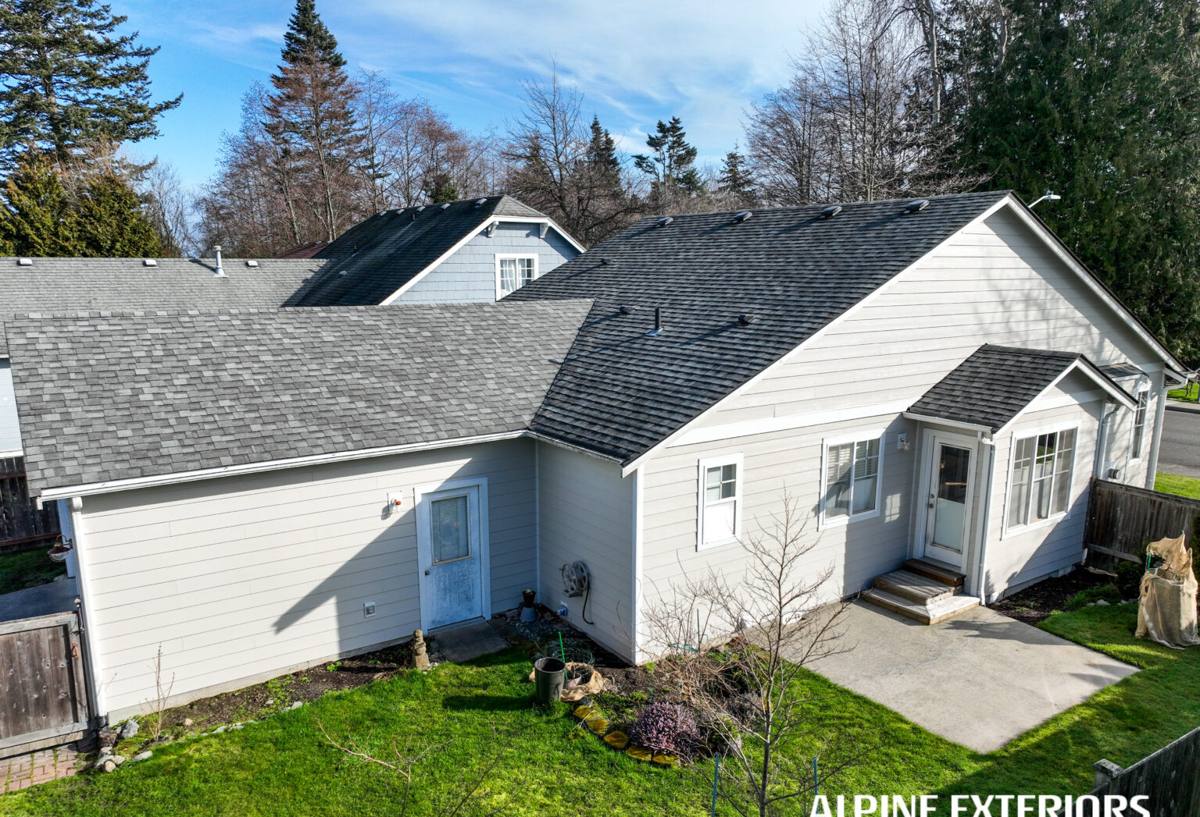
What the Local Climate Actually Does to Siding
Moisture Load, Not Just Rainfall
A lot of people think about siding durability in terms of total rainfall. That's part of it, but the bigger factor in Skagit County is how long a surface stays wet. Short, hard downpours dry out fast. What we get here instead is low-intensity rain and heavy fog that can keep a wall assembly damp for days at a time, especially on north- and west-facing walls that don't get much direct sun. Materials that absorb water, swell, or trap moisture behind their surface are working against the climate every single week of the year, not just during a storm event.
Moss, Algae, and Organic Growth
Anywhere shaded and damp — under eaves, behind landscaping, on the north side of a house — you'll find moss and algae staining showing up on siding that isn't holding its finish well. This isn't just cosmetic. Organic growth holds moisture against the substrate, which accelerates rot in wood-based products and can void warranties on products that weren't engineered for sustained damp exposure.
Wind-Driven Rain at Seams and Trim
Wind off the valley and out of the Sound funnels rain sideways against exterior walls, which means water finds its way into any gap, seam, or poorly sealed joint. The quality of the installation — flashing details, caulking, panel spacing — matters as much as the material itself. A great product installed carelessly will still fail at the seams.
Why We Only Install James Hardie Fiber Cement
We get asked fairly often why we don't offer vinyl, LP SmartSide, or other fiber cement brands like Cemplank or Allura. It's a fair question, and the honest answer is that we standardized on one product because we got tired of repairing the failures of the others.
| Material | How It Handles Sustained PNW Moisture | Why We Passed On It |
|---|---|---|
| Vinyl siding | Doesn't absorb water itself, but seams and panel gaps let moisture behind the cladding, and it can warp or crack in temperature swings | Poor impact resistance, fades over time, doesn't hold caulk or paint well for detail work |
| LP SmartSide (engineered wood) | Wood-based; performs fine if perfectly maintained, but any breach in the coating lets moisture into the substrate | Ongoing maintenance burden, higher risk of edge swelling in a climate this consistently damp |
| Cedar or primed spruce | Natural wood, attractive but needs regular refinishing and is vulnerable to rot and pest damage in wet climates | Maintenance cost and moisture vulnerability outweigh the appearance benefits for most owners |
| Cemplank / Allura (other fiber cement) | Similar base material to Hardie, generally solid performers | We standardized on one manufacturer for warranty consistency, factory finish quality, and product line depth (HZ5 climate engineering) |
| James Hardie fiber cement | Non-combustible, dimensionally stable, engineered moisture resistance, factory-applied ColorPlus finish | This is what we install |
To be clear, this isn't a claim that every other product is defective. Vinyl and engineered wood siding are installed successfully on plenty of homes. Our position is narrower and more practical: for the specific combination of sustained moisture, moss pressure, and temperature cycling that Skagit County homes deal with year-round, fiber cement — and specifically James Hardie's engineered version of it — gives homeowners the best long-term balance of durability, low maintenance, and finish life. That's the standard we hold our own work to.
James Hardie's HZ Product Lines and Why They Fit Here
James Hardie engineers its siding by climate zone. Homes in our region typically get the HZ5 product line, which is built for areas with freeze-thaw cycling and high moisture exposure — a reasonable description of a Skagit Valley winter. The fiber cement formulation resists moisture absorption far better than wood-based products, and it won't rot, and it's non-combustible, which matters given the wildfire smoke seasons the whole region has seen more of in recent summers.
ColorPlus Factory Finish
Most Hardie siding we install uses the ColorPlus finish — baked on at the factory in multiple coats rather than field-painted after installation. That finish is warrantied separately from the substrate and is formulated to hold color and resist the fading that comes from constant damp-to-dry cycling. For a homeowner, the practical benefit is fewer repaint cycles over the life of the siding.
Board Profiles That Work in the Valley
Hardie's lap siding, board-and-batten, and shingle profiles all perform well here — the choice usually comes down to the style of home and the look the owner wants, not a performance trade-off. We'll walk through profile and color options as part of any estimate.
Beyond Siding: Roofing, Windows, and Decks in Sedro-Woolley
Siding doesn't work in isolation — it's one part of an exterior envelope that has to work together to keep water out. We handle the rest of that envelope too.
- Roofing: A roof in bad condition undermines even the best siding job, since water that gets past bad flashing or worn roofing material runs down behind the wall assembly. We assess roof condition as part of any full exterior project.
- Windows: Window flashing and trim details are one of the most common failure points we find during siding tear-off. Replacing or properly re-flashing windows during a siding job is often the right time to fix it, rather than working around an old problem.
- Decks: Decks take a similar beating from moisture and moss as siding does, and a rotting deck ledger board attached to the house is a real risk point for water intrusion into the wall behind it.
When we're on-site for a siding estimate, we're happy to look at all four — it gives the homeowner a clearer picture of where the real priorities are, instead of tackling one component in isolation.
What a Siding Project Actually Involves
Assessment First
We start by looking at what's actually happening behind the current siding, not just the surface. Soft spots, moisture staining on interior walls near exterior corners, and visible rot at trim and window edges all tell us something about what we'll find once the old material comes off.
Tear-Off and Moisture Barrier
Correct installation starts with the water-resistive barrier underneath the siding — this is the layer that actually stops bulk water, with the siding as the first line of defense. Getting this layer right matters more in a climate like ours than in drier parts of the country, because the barrier has to perform under sustained exposure, not just occasional storms.
Flashing and Fastening
Every window, door, and roof intersection needs proper flashing integrated with the water-resistive barrier — installed in the right order, not caulked over as an afterthought. Hardie fastening also has to follow manufacturer specs for exposure and blind-nailing versus face-nailing depending on the profile; getting this wrong can void the material warranty even if the product itself is fine.
Finish Details
Corner trim, J-channel, and caulking at seams are where a lot of amateur installs show their weaknesses within a few years. We follow Hardie's installation guidelines closely because the long-term performance of the whole system depends on those details, not just the panels themselves.
Why a Local Crew Matters for This Kind of Work
Anacortes Siding works throughout Skagit County, which means we're dealing with this exact climate on every job, not adapting techniques learned somewhere drier. We know what a wall assembly looks like after fifteen years of valley fog and winter rain, because we've opened up plenty of them. That experience shapes decisions on the jobsite — where extra flashing attention is worth the time, which details actually matter here versus in a different climate, and what's realistic to expect from a given product over the long run.
Being local also means we're accountable after the job is done. If something needs a look two years down the road, we're not a crew that came through from out of the area and moved on.
Planning a Siding Project: What to Think About
- Current siding material and its actual condition, not just its age
- Signs of moisture intrusion at windows, corners, and the base of walls
- Whether roofing or window work should happen alongside the siding
- Realistic budget range and how it maps to scope (full replacement vs. targeted repair)
- Color and profile choices, including how they'll read against neighboring homes and HOA rules if applicable
- Timeline — siding work is best scheduled around the dry season when possible, though it isn't strictly required
Cost Factors Homeowners Should Understand
| Factor | How It Affects the Project |
|---|---|
| Home size and wall complexity | More corners, gables, and dormers mean more cutting, flashing, and labor time |
| Extent of hidden damage | Rot found once old siding comes off adds sheathing and framing repair costs not visible at estimate time |
| Siding profile chosen | Lap, board-and-batten, and shingle styles differ in material and labor cost |
| Trim and detail work | Corner boards, window trim, and fascia detail add cost but also protect the system long-term |
| Access and site conditions | Landscaping, slope, and multi-story sections affect staging and labor time |
We give straightforward, itemized estimates so homeowners can see where the money is going, and we'll flag any hidden damage before proceeding rather than surprising anyone with it after the fact.
If you're in Sedro-Woolley and thinking about siding, roofing, windows, or a deck, we're glad to come take a look and give you a straight assessment — no pressure, no inflated scope. Fill out the form below to schedule a free estimate.