 Anacortes
 Roof Repair in La Conner: What Salt Air, Rain, and Moss Actually Do to a Roof
La Conner sits on the water in Skagit County, a short drive from our home base in Anacortes, and that waterfront setting is exactly what makes roof repair here different from roof repair fifty miles inland. Homes in this part of Washington deal with a longer, wetter roofing season than most of the state, and the roofs that fail early are almost always the ones that never got a proper repair when the first small problem showed up. We've built our repair process around three things this climate throws at a roof: salt-laden air, driving rain that rarely falls straight down, and a moss season that runs longer than most homeowners realize.
Salt Air and Slow Corrosion
Being close to Puget Sound and the Swinomish Channel means the air here carries a fine mist of salt, especially on windy days. That salt settles on metal roofing components — flashing, drip edge, fasteners, vent caps, gutter hardware — and speeds up corrosion in ways that simply don't happen on a roof further inland. A fastener that would last decades in a dry climate can show rust streaks in a fraction of that time near the water. When we repair a roof in La Conner, metal components are one of the first things we check, because a single corroded flashing joint is one of the most common starting points for a leak.
Driving Rain and Wind-Driven Water
Rain in this area rarely falls straight down. Storms coming off the water push rain sideways, driving it up under shingle edges, into vent flashing, and along roof-to-wall transitions that would stay dry in a calmer climate. A roof that looks fine from the ground can still be taking on water at these transition points, which is why repair work here has to account for wind exposure and roof orientation, not just where a stain happens to show up on the ceiling below.
A Long Moss Season
Shaded, north-facing slopes and roofs under tree cover hold moisture for days after a storm passes, and that's exactly what moss needs to take hold. Once established, moss lifts shingle edges, traps water against the roof deck, and works its way under flashing over time. Moss season here effectively runs most of the year, not just a few winter months, which is why moss control has to be part of an ongoing maintenance conversation rather than a one-time cleanup.
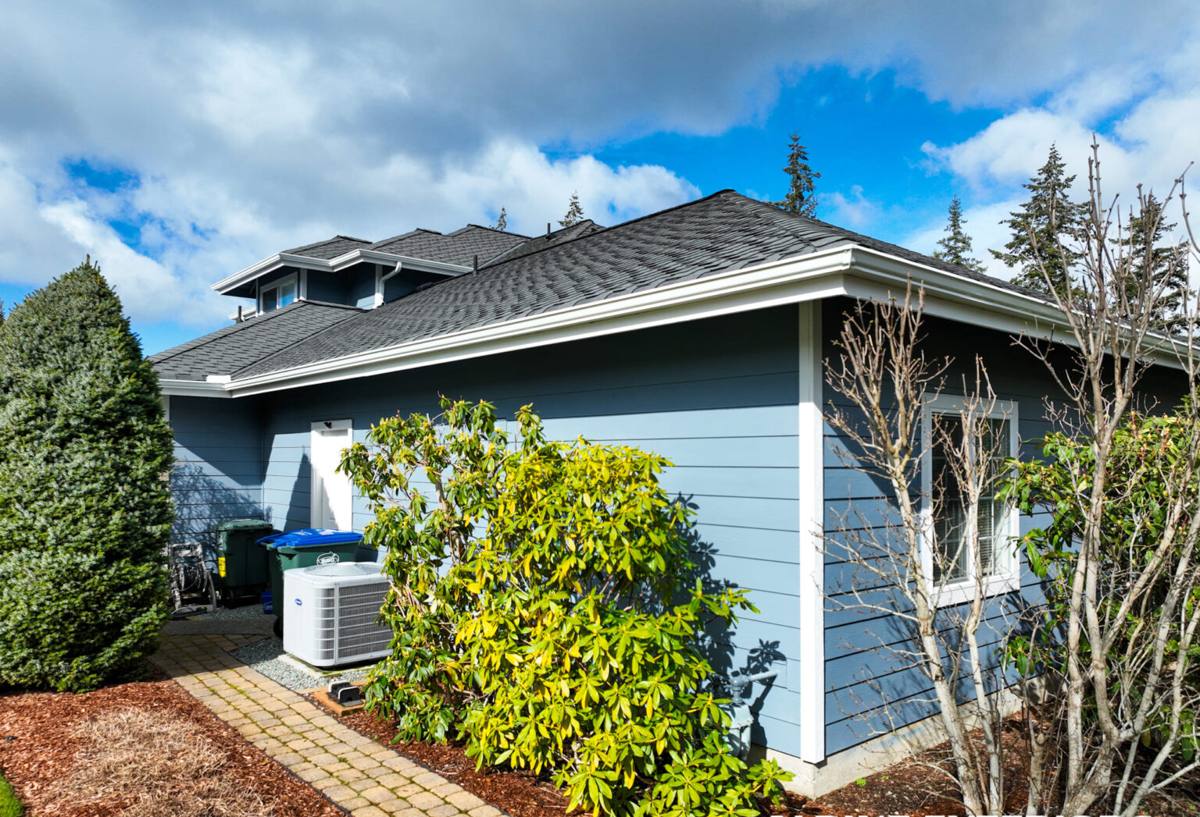
Signs a La Conner Roof Needs Repair
Most roof failures we see didn't happen overnight — they started as a small, fixable problem that went unnoticed for a season or two. Here's what we tell La Conner homeowners to watch for:
- Granules collecting in gutters or at downspout outlets, a sign shingles are wearing thin
- Dark streaking or green-tinged patches, especially on shaded or north-facing slopes
- Curling, cracked, or lifted shingle edges, particularly on sections exposed to prevailing wind
- Rust staining or visible corrosion around flashing, vent caps, or exposed fasteners
- Soft or spongy spots underfoot near chimneys, skylights, or roof-to-wall transitions
- Daylight visible through the roof deck from inside an attic
- Water stains on interior ceilings that appear or worsen only during wind-driven storms
- Sagging gutters or debris buildup that keeps water sitting against the roof edge
Any one of these on its own might be minor. Two or three together usually mean water has already found a way in, even if there's no visible leak indoors yet.
What a Correct Roof Repair Actually Involves
It's Rarely Just the Shingles
A homeowner often calls about a stain on the ceiling and assumes a shingle is missing. Sometimes that's the whole story. More often the shingle is a symptom, and the real cause is failed flashing, a cracked pipe boot, or underlayment that's been compromised by years of wind-driven moisture. A repair that only swaps the visible shingle without checking what's underneath tends to fail again within a season or two — which is why we inspect the full assembly at every repair, not just the spot where damage first showed up.
Common Repair Types We Handle
| Repair Type | Typical Cause Near the Water | What a Correct Fix Involves |
|---|---|---|
| Flashing repair or replacement | Salt-accelerated corrosion, wind lifting fastened edges | Remove and replace corroded metal, reseal transitions, confirm proper overlap and fastening |
| Shingle replacement (spot repair) | Wind lift, granule loss, physical damage | Match existing shingle profile, check underlayment condition before re-covering |
| Pipe boot and vent repair | UV and moisture breakdown of rubber gaskets over time | Replace boot or gasket, reseal collar, verify no water tracking under adjacent shingles |
| Moss remediation and treatment | Shaded slopes, tree cover, prolonged surface moisture | Careful removal, low-pressure treatment, and addressing the shade or drainage issue causing regrowth |
| Deck repair (rotted sheathing) | Long-term undetected leak, saturated insulation below | Cut out and replace affected decking, confirm framing is sound before re-roofing that section |
| Gutter and edge repair | Debris buildup holding water against the roof edge | Clear, reset pitch, reseal seams, confirm water is directed away from the fascia |
Our Roof Repair Process
We keep the process straightforward because homeowners deserve to know exactly what's happening on their roof and why.
- Inspection. We walk the roof (or use a ladder and drone where pitch or access doesn't allow safe foot traffic) and check every slope, not just the section reported as a problem.
- Diagnosis. We trace the actual water path, not just the visible damage — a leak's entry point and its interior stain are often several feet apart.
- Written scope. You get a clear explanation of what's failing, why, and what repairing it correctly involves, before any work starts.
- Repair. We match materials to the existing roof where possible and address the underlying cause, not just the surface symptom.
- Cleanup and haul-away. Debris, old material, and fasteners are cleared from the roof, gutters, and grounds.
- Follow-up. We confirm the repair is holding, especially after the next significant wind-driven rain event.
Roofing Materials: What Holds Up Best Near the Water
Not every roofing material handles salt air and prolonged moisture the same way. When we're repairing or replacing a section, we talk through these trade-offs honestly rather than pushing one product for every situation.
| Material | Salt Air / Corrosion Resistance | Moss Resistance | Maintenance Burden |
|---|---|---|---|
| Architectural asphalt shingle (algae-resistant) | Good, when metal flashing is properly coated or stainless | Improved with copper- or zinc-infused granules, still needs periodic cleaning | Low to moderate |
| Standard three-tab asphalt shingle | Fair; shorter service life in coastal exposure | Lower resistance, more prone to moss holding moisture | Moderate; earlier repair needs |
| Standing-seam metal | Excellent with marine-grade coatings and stainless fasteners | Very good — smooth surface sheds debris and dries quickly | Low, but coating and fastener quality matter |
| Cedar shake | Fair; wood is sensitive to prolonged dampness | Requires diligent upkeep to prevent moss and rot in shaded areas | High |
We're honest about wood shake in this specific environment: it can look great, but in a climate with this much sustained moisture and shade, it demands a level of ongoing maintenance — cleaning, treating, and inspecting — that most homeowners underestimate. That's not a knock on the material itself, just a fair account of the upkeep it needs here versus a drier climate.
Cost Factors in a La Conner Roof Repair
Every roof and every failure is different, so we don't quote a repair without seeing it. But these are the factors that consistently move a repair estimate up or down:
| Factor | Why It Matters |
|---|---|
| Extent of decking damage | A surface repair costs far less than one that requires cutting out and replacing rotted sheathing |
| Roof pitch and access | Steep or high roofs take longer and require more safety equipment to work safely |
| How long the leak went undetected | Longer-standing leaks tend to spread damage into framing and insulation, widening the repair scope |
| Material availability and match | Matching an older shingle or metal profile can take more sourcing time than using current stock material |
| Number and complexity of penetrations | Chimneys, skylights, and multiple vents each add flashing detail that takes time to do right |
As a general guide, a straightforward flashing or pipe-boot repair tends to be a modest, single-day cost, while repairs involving rotted decking or multiple failure points run higher because of the added labor and material. We'll always give you a specific number after seeing the roof, not a guess.
Moss and Debris Maintenance Between Repairs
A repair fixes what's already failed. Maintenance is what keeps the next repair from happening ahead of schedule. In La Conner, that mostly comes down to two things: keeping moss from re-establishing on shaded slopes, and keeping gutters and valleys clear so water has somewhere to go.
What Helps
Low-pressure moss treatment (not aggressive pressure washing, which can strip granules and shorten shingle life), periodic gutter clearing, and trimming back branches that keep a slope shaded and damp all reduce how fast moss and debris build back up. On roofs with a persistent shade problem, no amount of treatment fully solves it without addressing the tree cover or airflow issue causing the moisture to linger in the first place.
Why Hiring a Crew That Already Works in La Conner Matters
A roofer who mostly works drier, inland areas doesn't always think to check for salt corrosion on flashing that looks fine at a glance, or to account for the specific wind exposure a waterfront lot gets during a storm. Working regularly in La Conner and the surrounding Skagit County waterfront means we know which roof orientations take the worst of the wind-driven rain, which slopes hold moss the longest, and which flashing details tend to fail first in this specific environment. That local pattern recognition is what separates a repair that lasts from one that's back on the schedule in a year.
Warranties and What to Expect From an Estimate
We put the scope of work in writing before we start, so there's no ambiguity about what's being repaired and how. Workmanship on our repairs is backed by our own warranty, separate from whatever warranty applies to the shingle or metal manufacturer's material itself — and we'll explain that distinction clearly, since the two aren't the same thing and homeowners are often surprised to learn manufacturer warranties rarely cover labor. If a repair turns out to be more involved once we're into it — decking that's softer than expected, for example — we'll stop and talk through it with you rather than surprise you with the difference on the final invoice.
If you're dealing with a stain on the ceiling, missing shingles after a windstorm, or just want an honest read on how much life is left in a moss-covered roof, we'll come take a look. Estimates are free and there's no pressure to move forward — fill out the form below and we'll get back to you to schedule a time.