 Anacortes
 Why Flounder Bay Decks Wear Out Faster Than Homeowners Expect
Flounder Bay sits close enough to the water that every deck in the neighborhood is dealing with three things at once: salt-laden air off the bay, driving rain that comes in sideways during winter storms, and a moss and algae season that can run eight months or longer in a shaded, moisture-heavy corner of Skagit County. Individually, none of those are unusual for Anacortes. Together, on a deck that sits low, faces the water, or gets shaded by mature evergreens, they speed up decay in ways a lot of homeowners don't see coming until the structure underneath is already compromised.
Salt air corrodes exposed metal — nails, screws, joist hangers, railing brackets — long before most people think to check it. Driving rain doesn't just fall on a deck, it drives up under boards and into end grain, ledger connections, and post bases where water has nowhere to go. And moss doesn't just make a deck look neglected; it holds moisture against the wood surface for weeks at a time, which is exactly the environment rot fungus needs to get established. A deck built for a drier inland climate, or built without those three factors in mind, simply doesn't hold up the same way out here.
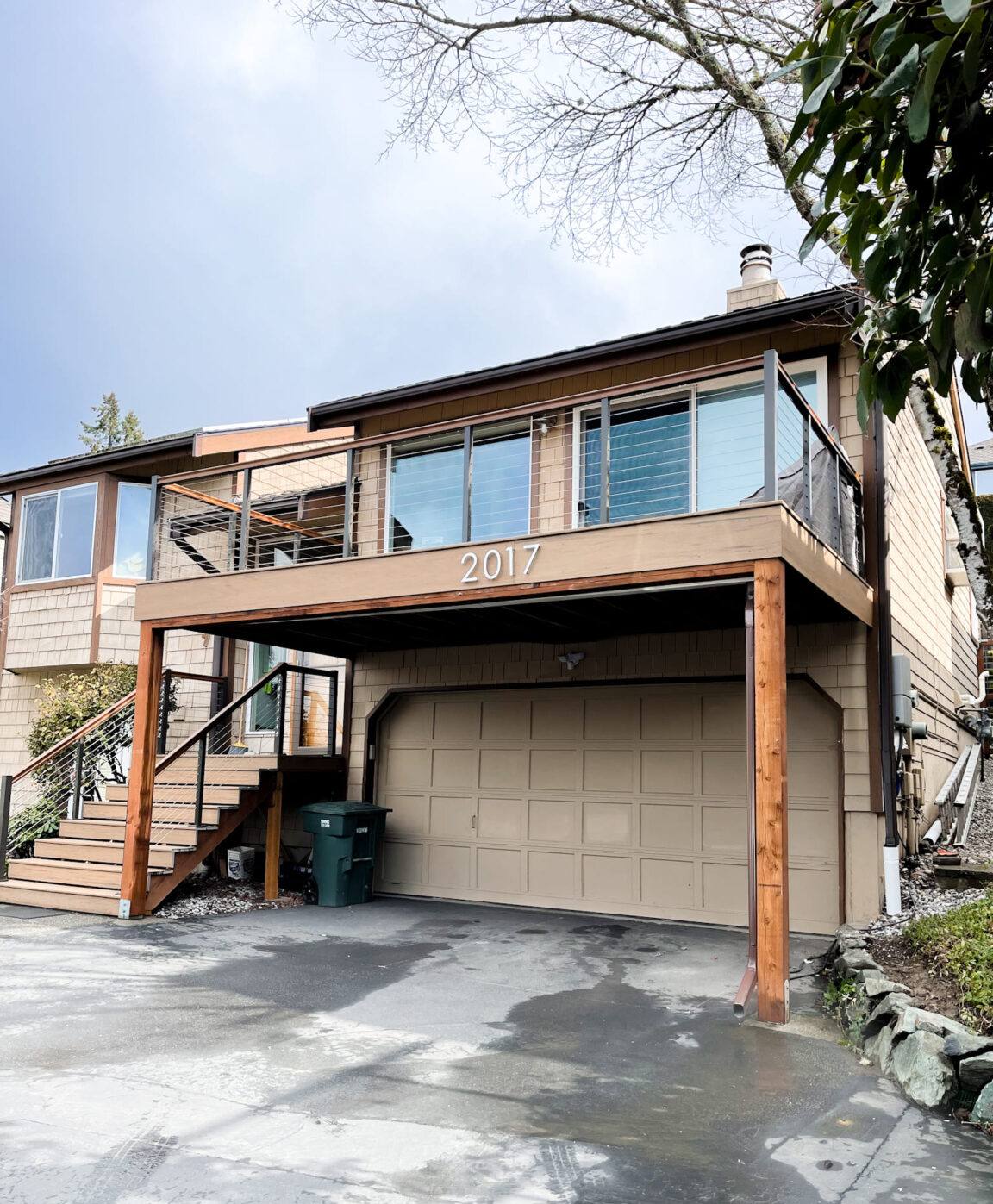
Signs a Flounder Bay Deck Needs Replacement, Not Just Repair
Not every tired-looking deck needs to be torn out. But there's a point where patching boards is just delaying a bigger problem, and it's worth knowing where that line is before you spend money on repairs that won't hold.
- Soft, spongy, or bouncy decking boards, especially near the house or in shaded areas
- Rust streaks running down from fasteners or metal connectors
- A ledger board (where the deck attaches to the house) that's dark, swollen, or separating from the siding
- Posts or footings that feel loose when you push on the railing
- Persistent moss or black staining that comes back within weeks of cleaning
- Visible gaps opening up between boards that used to be tight
- A deck older than 15-20 years that was built with standard lumber and has never been re-flashed
If you're only seeing one or two of these and the framing underneath is sound, repair is often the right call. If you're seeing several at once, or the framing itself is soft, replacement is usually the more honest recommendation — and cheaper in the long run than repairing the same spots every couple of years.
What a Correct Deck Replacement Actually Involves
A deck replacement is more than swapping old boards for new ones. Done right, it starts from the ground up and addresses the parts of the structure that are hardest to see and most likely to fail first in this climate.
Ledger and Flashing
The ledger board connection to your house is the single most common point of hidden rot on any deck near the water. Proper flashing — a metal or membrane barrier that directs water away from the ledger and the house's wall assembly — has to be installed correctly the first time, because it's not something you can inspect again once the decking is down. We treat this connection as the most important detail on the whole project, not an afterthought.
Framing and Footings
Joists, beams, and posts need to be sized and spaced for the actual loads the deck will see, and footings need to sit below frost depth and bear on undisturbed soil. In a marine climate, we also pay close attention to ground contact and drainage around footings, since standing water at the base of a post is one of the fastest ways to shorten its life.
Fasteners and Hardware
This is where salt air does the most damage over time, and it's also where a lot of corners get cut because it's invisible after the fact. Joist hangers, structural screws, and post connectors should be rated for coastal or corrosive exposure, not just general exterior use. We'd rather spend a little more here than have a homeowner find rusted hardware five years in.
Decking Surface and Ventilation
The boards on top matter for looks, but airflow underneath the deck matters just as much for how long the whole structure lasts. Proper board spacing, joist protection tape, and clearance above grade all help the structure dry out between storms instead of staying damp for days.
Choosing a Decking Material for This Climate
There's no single "best" decking material for every home — it depends on budget, how much maintenance you're willing to do, and how exposed the deck is to weather and moss growth. Here's how the common options actually compare for a Flounder Bay property.
| Material | Moisture & Moss Behavior | Maintenance | Typical Lifespan |
|---|---|---|---|
| Pressure-treated lumber | Absorbs water; needs sealing to resist staining and moss buildup | Annual cleaning, re-sealing every 2-3 years | 15-20 years with upkeep |
| Cedar | Naturally rot-resistant but still needs finish maintenance in shaded, damp spots | Cleaning and re-staining every 1-2 years | 20-25 years with upkeep |
| Composite decking | Doesn't absorb water like wood, but moss and algae still grow on the surface if shaded | Periodic washing, no sealing or staining | 25-30+ years, warranty-backed |
| PVC decking | Fully resists moisture absorption; easiest surface to keep moss-free | Occasional washing only | 25-30+ years, warranty-backed |
For a deck that gets a lot of shade or sits close to the water, we generally steer homeowners toward composite or PVC for the walking surface, simply because they don't take on moisture the way wood does and they're far easier to keep clear of moss without constant scrubbing. That said, some homeowners want the look and feel of real wood and are willing to keep up with the maintenance — that's a legitimate choice too, as long as it's made with clear eyes about the upkeep involved.
A Note on Railings
Railings take the same weather beating as the decking but often get less attention. Wood railings need the same finish maintenance as wood decking. Metal railings need to be rated for coastal exposure or they'll show rust at welds and fastener points within a few seasons. Composite and aluminum railing systems tend to hold up best with the least ongoing work in this environment.
How Our Deck Replacement Process Works
- On-site assessment — we look at the existing structure, ledger connection, footings, and framing to confirm whether replacement is really needed and to identify any moisture damage to the house itself.
- Honest estimate — you get a written scope covering demolition, framing, flashing, decking material, railings, and hardware, with material options explained in plain terms.
- Permitting — deck replacements typically require a permit through the relevant local building department; we handle that paperwork so it's not on you.
- Demolition and disposal — the old deck comes out, including any hidden rotted framing that wasn't visible from the surface.
- Structural rebuild — new footings, framing, ledger flashing, and hardware sized and rated for this climate.
- Decking, railing, and stair installation — installed to the manufacturer's specs so warranties stay valid.
- Final walkthrough — we go over the finished deck with you, including any maintenance recommendations specific to the material you chose.
What Affects the Cost of a Deck Replacement
Every deck is different, so exact pricing depends on your specific project, but these are the main factors that move the number up or down.
| Factor | Why It Matters |
|---|---|
| Deck size and shape | Larger footprints and multi-level designs need more material and labor |
| Decking material chosen | Pressure-treated is the least expensive upfront; composite and PVC cost more initially but less over time |
| Height above grade | Taller decks need more substantial framing, footings, and often stairs or additional railing |
| Condition of existing structure | Hidden rot discovered during demolition can add framing repair that wasn't visible in the estimate |
| Railing style | Cable, glass, and custom railing systems cost more than standard baluster designs |
| Site access | Decks on slopes, near the water, or with limited equipment access can add labor time |
We'd rather walk you through these factors up front than hand you a number with no explanation behind it. If budget is a concern, we can talk through where it makes sense to spend more (framing, fasteners, flashing) and where you have more flexibility (decking style, railing design).
Protecting Your New Deck Once It's Built
A well-built deck still needs some seasonal attention in a climate like this. A short maintenance routine goes a long way toward getting the full lifespan out of the materials you paid for.
- Sweep debris and standing leaves off the surface regularly, especially in fall
- Rinse off salt residue and moss spores a few times a year, more often if the deck is heavily shaded
- Check that gaps between boards stay clear so water can drain through rather than pool
- Inspect the ledger flashing and any visible fasteners once a year for rust or separation
- Re-seal or re-stain wood decking on the schedule recommended for that species
- Keep gutters and downspouts near the deck clear so runoff isn't dumping directly onto it
Why It Matters to Hire a Crew That Already Works Flounder Bay
Deck-building fundamentals don't change from town to town, but the details that make a deck last do. A crew that regularly works in Flounder Bay and the surrounding Anacortes waterfront already knows which fastener grades hold up against salt air, which corners of a lot tend to stay shaded and moss-prone, and how local permitting works for decks near the water. That's not something you can fully substitute with a generic checklist — it comes from having actually replaced decks in this specific environment and seen which choices held up ten years later and which ones didn't.
It also means fewer surprises during the project. We're not guessing about how Skagit County's weather patterns affect a build timeline, and we're not learning on your project which hardware corrodes fastest a few hundred feet from saltwater. That local experience translates directly into a deck that's built to actually last here, not just built to code on paper.
Ready to Talk About Your Deck?
If your Flounder Bay deck is showing its age, we're happy to take a look and give you an honest read on whether it needs full replacement or targeted repair. Reach out below for a free, no-pressure estimate — there's no obligation, and you'll walk away with a clear picture of what's involved and what it will cost.