 Anacortes
 Storm Damage Roof Repair Built for La Conner's Weather
La Conner sits right on the Swinomish Channel, close enough to open water that every roof in town takes a different kind of beating than a house twenty miles inland. Storms roll in off Rosario Strait and Puget Sound, pick up speed across the flats and farmland surrounding town, and hit rooflines with a mix of wind, driving rain, and salt-laden air that most roofing crews never have to think about. If you've had a windstorm come through and you're not sure whether your roof came out of it okay, or you already know it didn't, this page is about doing that repair correctly the first time — not just tarping it and hoping.
Storm damage repair is a narrow, specific job. It isn't a full reroof, and it isn't cosmetic patching either. Done right, it restores the roof's ability to shed water and wind exactly the way it did before the storm, with materials and flashing details that match the rest of the system. Done wrong — with a mismatched patch, a missed layer of underlayment, or flashing that was reused instead of replaced — it leaves a soft spot that fails again in the next storm, usually somewhere you can't see until there's a stain on the ceiling.
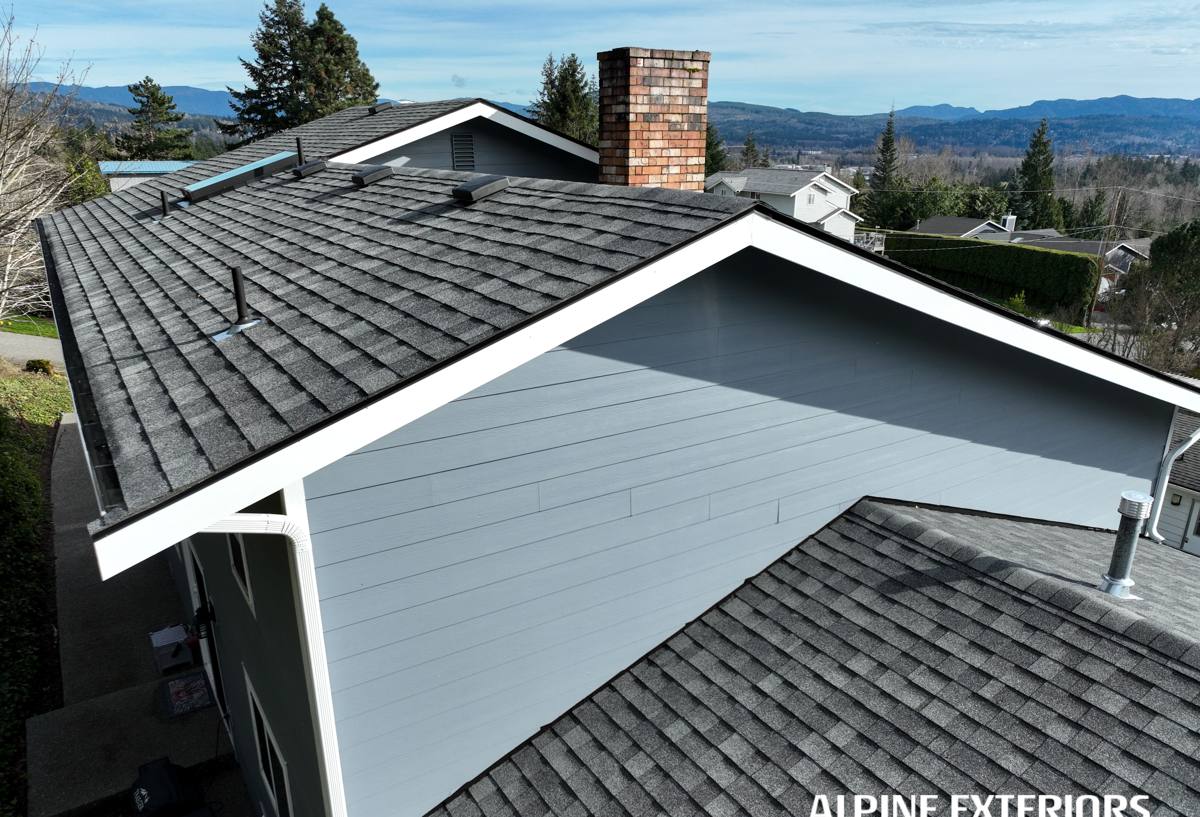
What Skagit County Storms Actually Do to a Roof
Anacortes and La Conner share the same marine climate, but La Conner's low, waterside position and open exposure across the channel and surrounding fields mean wind and rain often arrive with less to slow them down. A few specific mechanisms account for most of the storm damage we see on roofs in this area.
Wind and Driving Rain
Wind alone rarely tears a roof apart. What causes damage is wind combined with rain hitting the roof at an angle instead of falling straight down. Driving rain gets forced up and under shingle tabs, into nail lines, and behind flashing that was only ever designed to handle water moving downhill. A gust strong enough to lift a shingle edge even slightly creates an opening that rain will find on every storm afterward, whether or not the wind ever gets that strong again.
Salt Air and Corrosion
Proximity to the water means fasteners, flashing, and any exposed metal on a roof age faster here than they would on an equivalent inland home. Galvanized nails and lower-grade flashing corrode from the inside of the seam outward, long before they show visible rust on the surface. A storm that wouldn't damage a healthy roof can be enough to finish off flashing that salt air had already been quietly weakening for years.
Moss and Trapped Moisture
La Conner's moss season runs long — shaded roof sections, north-facing slopes, and anywhere debris collects stay damp for months at a stretch. Moss doesn't just look bad; it lifts shingle edges as it grows, holds water against the roofing material, and gives wind something to grab onto during a storm. A roof with an existing moss problem is more likely to suffer real damage in the same wind event that a clean roof shrugs off.
Signs Your La Conner Roof Has Storm Damage
Some storm damage is obvious. Most of it isn't. After any significant wind or rain event, it's worth walking the property and checking for the following before assuming everything is fine:
- Shingles that look lifted, curled, creased, or are missing outright
- Granules collecting in gutters or at downspout outlets
- Bent, lifted, or missing flashing around chimneys, vents, and roof edges
- New or growing water stains on ceilings or in the attic
- Daylight visible through the roof deck from inside the attic
- Debris, branches, or standing water pooling on the roof surface
- Gutters pulled loose or sagging away from the fascia
- A musty smell in upstairs rooms or closets after a storm
None of these guarantee major damage on their own, but any one of them is a reason to get a roof looked at rather than wait for the next storm to make the decision for you.
What a Correct Storm Damage Repair Involves
A proper repair starts below the surface, not at the shingles. Once storm-damaged shingles are pulled back, the deck underneath gets checked for soft spots, delamination, or rot — damage that's often worse than what caused it, because water has usually been getting in longer than the storm that finally announced it. Any compromised sheathing gets replaced before anything new goes down.
From there, underlayment goes back in as a full system, not a patch layered over old material. Flashing at valleys, chimneys, vents, and roof-to-wall transitions gets replaced rather than reused — flashing is cheap compared to the labor of doing the job twice, and reused flashing is one of the most common reasons a storm repair leaks again within a year. Finally, shingles get matched as closely as possible to the surrounding roof, fastened to the manufacturer's wind-rating specifications, not just tacked down to look finished.
Ventilation gets a check too. A roof that was under-ventilated before the storm will trap moisture under the new repair just as it did under the old roof, so a storm repair is a reasonable point to correct that if it's contributing to the problem.
Temporary Protection: What to Do Right After a Storm
If you've got active damage — missing shingles, a hole in the deck, or water actively coming in — the priority is stopping further water intrusion, not doing anything permanent. A properly secured tarp, weighted and fastened so it doesn't become its own wind hazard, buys time until a full repair can be scheduled and materials sourced. Clearing debris and checking that gutters and downspouts are still directing water away from the foundation matters too, since a clogged gutter during the next rain event just adds a second problem on top of the roof damage.
What we'd steer you away from is climbing onto a storm-damaged roof yourself to inspect or tarp it. Storm-damaged decking can be softer and less trustworthy than it looks, and wet, mossy roof surfaces in this climate are slippery even when they look intact.
Repair, Patch, or Reroof? Matching the Fix to the Damage
Not every storm-damaged roof needs the same scope of work. The right call depends on how much of the roof is affected, how old the existing roof was before the storm, and whether the damage is isolated or a sign the whole roof was already near the end of its service life.
| Option | Best For | What's Involved | Typical Cost Factor |
|---|---|---|---|
| Spot Repair | Isolated damage — a few shingles, one section of flashing | Localized tear-off, deck check, new underlayment and shingles matched to existing | Lowest cost; scales with size of the damaged area |
| Partial Reroof | Damage concentrated on one slope or side of the house | Full tear-off and rebuild of the affected slope, tied into the remaining roof | Mid-range; depends on slope size and deck condition |
| Full Reroof | Widespread damage, or an older roof already near end of life | Complete tear-off, deck repair, new underlayment and roofing system across the whole house | Highest cost; reflects full material and labor scope |
An honest inspection should tell you which category your roof falls into and why — not default to the largest scope of work as a starting point. If a spot repair genuinely solves the problem, that's what we'll recommend.
Insurance Claims After Storm Damage
Most homeowners' policies cover sudden storm damage — wind, falling debris, a tree limb through a roof deck — though coverage details, deductibles, and what counts as "storm damage" versus "wear and tear" vary by policy and insurer. What we can do is document the damage thoroughly with clear photos and a written scope of work before any repair begins, which gives you something solid to bring to an adjuster. We're glad to walk an adjuster through the damage on site if that's useful, and we'll always be straightforward about what looks storm-related versus what looks like pre-existing wear, since claiming the latter as storm damage doesn't do you any favors with your insurer down the road.
Our Process for La Conner Storm Repairs
We keep the process simple and don't push anything beyond what the roof actually needs:
- On-site inspection of the roof, attic, and any interior water damage, with photos of everything relevant
- A written estimate that explains what's damaged, why, and what scope of repair addresses it
- Temporary protection first if the roof is actively leaking or exposed
- Scheduled repair using matched materials and full flashing/underlayment replacement where the deck was opened up
- Site cleanup, including magnetic sweep for nails and disposal of old material
We'll tell you plainly if damage looks minor enough to monitor rather than repair immediately, and we'll tell you just as plainly if what looks like a small problem is actually sitting on top of a bigger one.
Why a Crew That Already Works La Conner Matters
A roofing crew that mostly works dry, inland neighborhoods doesn't see salt air corrosion, long moss seasons, or wind-driven rain patterns often enough to know what they're looking at when they show up. A crew that already works in and around La Conner and Anacortes knows which roof details tend to fail first in this specific environment, is familiar with Skagit County permitting and inspection expectations, and can usually respond faster after a regional storm event because the area is already part of the regular route — not a special trip.
That local familiarity shows up in small decisions that matter: which flashing details to upgrade rather than just replace in kind, where ventilation is worth correcting during a repair, and how much of a roof's remaining life is realistic to expect given the exposure it's had. None of that comes from a manual — it comes from having repaired enough roofs in this exact stretch of Skagit County to know the patterns.
If a recent storm has you wondering about your roof, or you've already spotted damage and want it done right the first time, we're happy to come take a look. The estimate is free, there's no pressure attached to it, and you'll get a straight answer about what your roof actually needs — just fill out the form below to get started.