 Anacortes
 Why West Anacortes Siding Takes a Harder Hit
Homes on the west side of Anacortes sit close to open water, and that changes what siding has to deal with day to day. Wind coming off Rosario Strait and the surrounding channels carries salt air inland, and that salt settles on exterior surfaces, works into seams and fastener heads, and accelerates corrosion and finish breakdown in ways that inland Skagit County homes don't experience nearly as much. Add in driving rain that comes in sideways during winter storms, not just straight down, and siding on this side of town is being asked to shed wind-driven water at every lap, corner, and trim joint.
Then there's moss. Anacortes gets a long stretch of damp, mild weather every year, and anything shaded, north-facing, or tucked under overhangs stays wet longer than it dries out. That's exactly the environment moss and algae need to get established. Once organic growth takes hold on a siding surface, it holds moisture against the material, which is a problem for wood-based products in particular. None of this means West Anacortes homes need exotic materials — it means the material and the installation both need to be matched to what this specific stretch of coastline actually does to a house.
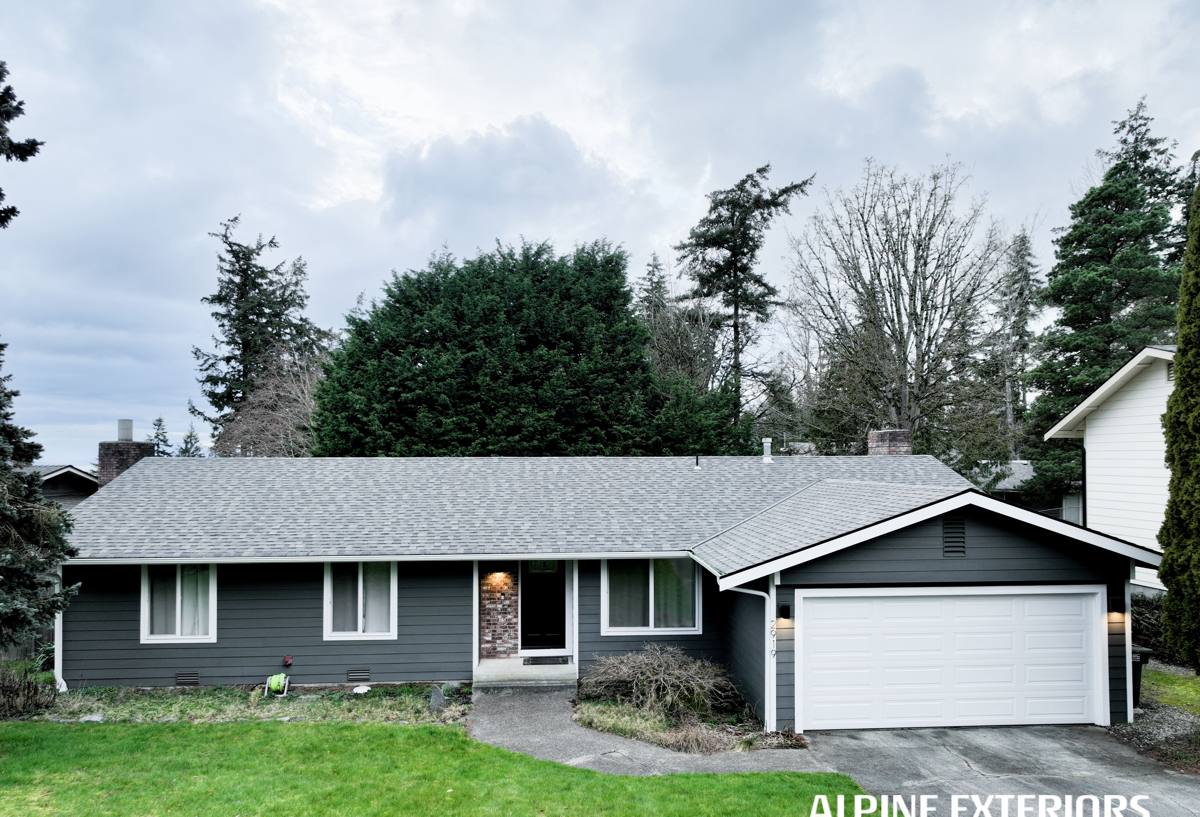
What a Correct Siding Installation Actually Involves
Good siding installation is mostly about water management, not appearance. The visible panels are the last layer of a system that starts underneath them. A correct installation includes:
- A continuous weather-resistive barrier behind the siding, lapped correctly so water is always directed outward and down
- Properly flashed windows, doors, and any wall penetration — this is where the majority of siding failures actually start
- Correct panel overlap and fastening pattern, matched to the manufacturer's specifications for the wind exposure of the site
- Adequate clearance at the bottom of the wall so siding isn't sitting in standing water or wicking moisture from grade or a deck surface
- Caulking used only where it belongs — as a supplement to flashing, never as a substitute for it
Skip any one of these steps and the siding can still look fine for a year or two while moisture works its way into the wall assembly behind it. That's the trap with a rushed or underbid installation: the visible result looks the same as a correct one until the problems show up from the inside out.
Why We Install Only James Hardie Fiber Cement
We standardized on James Hardie fiber cement siding and don't install vinyl, LP SmartSide, or wood products, including cedar. That's a deliberate call based on how those materials hold up against sustained coastal moisture and salt exposure over decades, not just the first few years.
James Hardie's HZ5 product line is engineered specifically for climates like ours — freeze-thaw cycles, sustained damp weather, and coastal exposure. Fiber cement doesn't rot, doesn't feed pests, and won't warp or swell the way wood-based siding can when it stays wet for extended periods. It's also non-combustible, which matters more every year as wildfire smoke seasons stretch into the Pacific Northwest. The factory-applied ColorPlus finish is baked on under controlled conditions, which holds color and resists fading and chipping far better than field-applied paint — a real advantage in a place where repainting siding on a two-story home isn't a cheap or quick job to redo. Hardie also backs the product with a strong transferable warranty, but that warranty only means something if the installation itself follows spec, which is why our process below matters as much as the material choice.
Our Installation Process for West Anacortes Homes
Assessment First
Before we quote anything, we look at the existing wall assembly, not just the old siding. On a house near the water, we're checking for signs the sheathing underneath has already taken on moisture — soft spots, staining, or fastener corrosion are all clues. This tells us whether it's a straightforward re-side or whether there's underlying repair to budget for.
Tear-Off, Not Overlay
We remove the existing siding rather than installing over it. Overlaying traps whatever moisture or damage is already in the wall and hides it for the next owner to find. It also means we can't verify or correct the weather-resistive barrier and flashing details underneath, which defeats the point of a quality installation.
Building the Water Management System
We install a continuous weather-resistive barrier, then flash every window, door, and penetration before a single piece of Hardie siding goes up. On a house exposed to wind-driven rain off the water, this step gets extra attention at inside corners and anywhere two rooflines or wall planes meet, since those are the spots where water concentrates.
Installing to Manufacturer Spec
Panels and lap siding go up with the fastening pattern, clearances, and joint treatment James Hardie specifies — not a generic approach borrowed from other siding types. This is also where an installer's experience with fiber cement specifically shows: it cuts, fastens, and finishes differently than wood or vinyl, and treating it the same way leads to cracked boards or compromised joints down the line.
Trim, Caulking, and Cleanup
We finish with corner trim and caulking at the joints designed to take sealant, then do a full site cleanup — fiber cement generates dust and offcuts that need to be handled properly, not left for the homeowner to deal with.
Signs Your Current Siding Is Already Failing
Homeowners often call us after noticing something cosmetic, only to find the underlying issue is further along than it looks. Common warning signs on West Anacortes homes include:
- Persistent moss or dark algae staining that comes back within weeks of cleaning, especially on north- or west-facing walls
- Cupping, warping, or soft boards, which usually means wood or wood-composite siding has been absorbing moisture for a while
- Cracking or splitting along fiber cement panels, often a sign of incorrect fastening or missing expansion clearance from a prior installation
- Paint that's peeling or bubbling rather than just fading, which can point to trapped moisture behind the surface
- Visible gaps or separation at trim and corner boards, which lets wind-driven rain behind the siding directly
Any one of these on its own isn't necessarily an emergency, but they're worth having looked at before the next wet season, since moisture problems in a wall assembly get more expensive to fix the longer they're left alone.
Cost Factors for a West Anacortes Siding Installation
Every home is different, but the same handful of factors drive most of the variation in project scope and price. We give exact numbers only after an on-site look, but this is what typically moves the estimate:
| Factor | Why It Matters |
|---|---|
| Home size and number of stories | More wall area and taller work means more material, more labor hours, and added equipment for safe access |
| Condition of the sheathing underneath | Water-damaged sheathing found during tear-off needs to be repaired or replaced before new siding goes on |
| Trim, corners, and architectural detail | Homes with more windows, dormers, or roofline transitions require more flashing and cutting work |
| Siding profile chosen | Lap siding, panel systems, and shingle-style Hardie products differ in material and labor cost |
| Site access | Tight side yards, decks, or landscaping close to the walls can add time for staging and protection |
The one factor we won't cut corners on regardless of budget is the water management details — flashing and the weather-resistive barrier aren't a place to save money, because a failure there costs far more to fix later than it would have cost to do right the first time.
Maintenance After Installation
Fiber cement with a factory finish is low-maintenance compared to wood or repainted surfaces, but "low-maintenance" isn't "no-maintenance," especially this close to the water. A few habits go a long way:
- Keep gutters and downspouts clear so water isn't overflowing onto siding below
- Rinse siding periodically, particularly on shaded sides of the house where moss and algae tend to start
- Trim back vegetation and tree branches that keep a wall section shaded and damp
- Have caulked joints and trim inspected every few years — caulk is the one part of the system that wears out on a normal schedule and needs periodic renewal
Because the ColorPlus finish is factory-applied and warrantied, you're not looking at a repaint cycle the way you would with field-painted wood siding, which is one of the bigger long-term savings homeowners see after switching.
Why Local Experience in West Anacortes Matters
A siding crew that already works this side of town knows which walls take the worst of the weather before they even get on site — which elevations see the most driving rain, where moss shows up first, and how much salt exposure to plan around for fasteners and trim. That knowledge shapes real decisions: where to add extra flashing attention, which trim details hold up best, and how to sequence a project around the wet-weather windows that are part of doing exterior work in Skagit County. It also means dealing with a contractor who understands local permitting and the practical realities of scheduling work on the island, rather than relearning those details project by project.
What to Ask Before You Hire
Whoever you choose for a siding installation in West Anacortes, a few questions will tell you a lot about how they'll handle your home:
- Do you tear off the old siding, or install over it?
- How do you flash windows, doors, and wall penetrations, and can you walk me through it?
- What weather-resistive barrier do you use, and how is it lapped?
- Are you installing to the manufacturer's published fastening and clearance specs?
- What's included in the warranty, and does it require anything specific from the installer to stay valid?
If a contractor can't answer these clearly, that's worth noting before you sign anything.
If your West Anacortes home needs new siding or you're seeing early signs of trouble, we're happy to take a look and walk you through what we find. Reach out for a free, no-pressure estimate using the form below.