 Anacortes
 Anacortes Weather Doesn't Go Easy on Skyline Roofs
Homes in the Skyline area sit up on elevated, view-oriented lots facing the water — which means more direct exposure to the wind and salt air coming off the Sound than homes tucked into lower, more sheltered parts of Anacortes. That exposure is great for the view and hard on a roof. Salt-laden air accelerates corrosion on exposed metal fasteners, flashing, and vents. Driving rain, pushed sideways by wind off the water, finds every weak seam, nail pop, and underlayment gap that a calmer climate might never expose. And Skagit County's long, wet, low-sun winters keep roofs damp for months at a stretch, which is exactly what moss and moss-related decay need to get established.
None of this means a Skyline roof needs to be replaced more often than it should — it means the replacement has to be done with those specific stresses in mind. A roofing job that would hold up fine in a dry inland climate can fail early here if the flashing, fastener choice, and ventilation aren't matched to what this neighborhood actually deals with every winter.
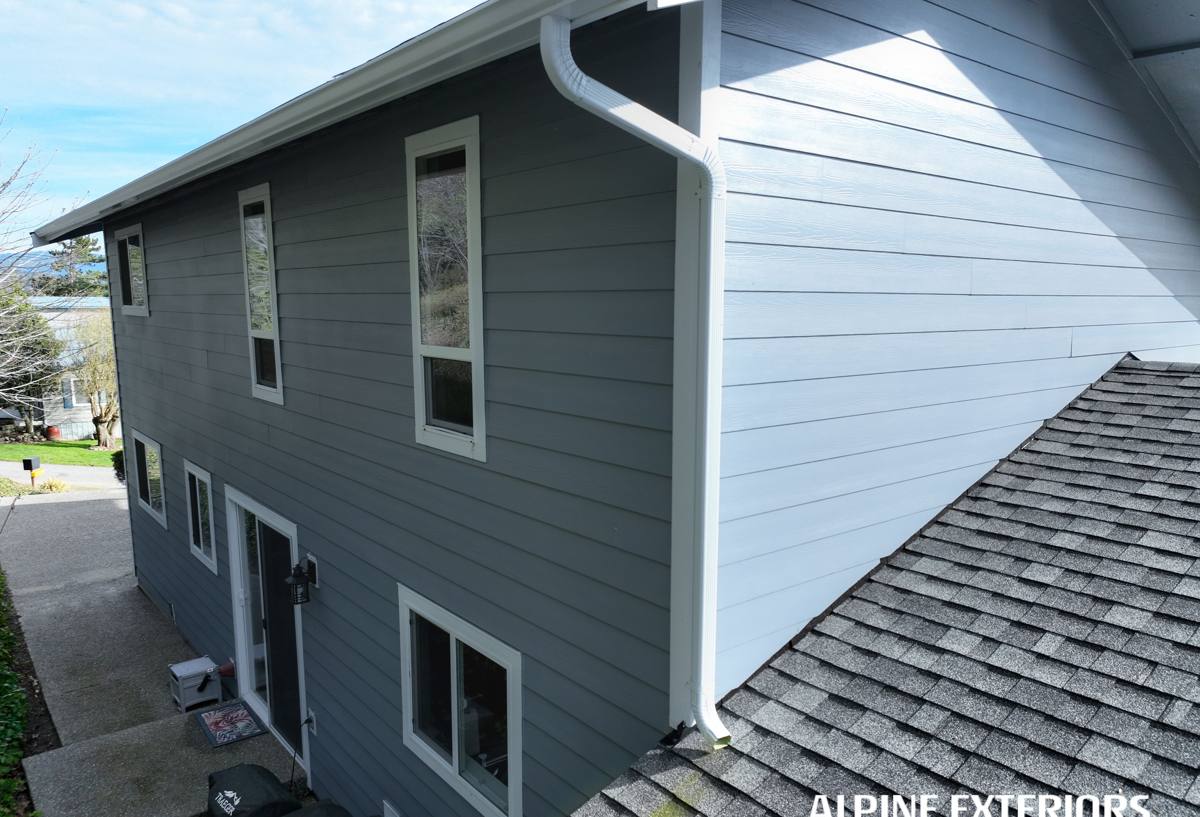
Signs a Skyline Roof Needs Replacing, Not Just Repair
Not every roof problem calls for a full tear-off. But a few signs consistently mean patching is a short-term fix at best, especially on homes with this level of wind and salt exposure:
- Granule loss heavy enough that you can see bare, shiny patches on asphalt shingles, especially on the wind-facing slopes
- Shingles that are cupping, curling at the edges, or cracking when you press on them
- Rusted or heavily corroded flashing around chimneys, skylights, and roof-to-wall junctions
- Soft or spongy decking felt underfoot, or sagging visible from the ground
- Moss that keeps coming back within a season or two of cleaning, especially on north-facing or shaded slopes
- Water staining on interior ceilings or in the attic that shows up during wind-driven storms specifically
If a roof is showing two or more of these at once, or if it's original to a home built more than 20-25 years ago, a full replacement is usually the more honest recommendation than another round of spot repairs.
What a Correct Roof Replacement Involves
A roof replacement is really several separate systems working together — the covering, the water barrier underneath it, the flashing at every transition, and the airflow behind all of it. Skipping or shortcutting any one of these is where most premature roof failures in this climate actually start, not with the shingles themselves.
Tear-Off and Deck Inspection
We remove the old roofing down to the deck rather than layering over it, because you can't properly inspect or waterproof a deck you can't see. This is also when soft, rotted, or delaminated sheathing gets found and replaced — a step that's easy to skip and impossible to fix later without tearing the new roof back off.
Underlayment and Water Protection
Given how much wind-driven rain this area sees, the underlayment matters as much as the shingle on top of it. We use synthetic or ice-and-water shield underlayment at eaves, valleys, and other vulnerable areas so that if wind ever forces water backward under the shingles, there's still a sealed barrier protecting the deck.
Flashing Details
Flashing is where roofs actually fail. Chimneys, skylights, sidewall junctions, and vent penetrations all need step flashing, counterflashing, or pipe boots installed correctly and sealed against salt-air corrosion — not just caulked over the old flashing to save time.
Ventilation
A roof deck that can't breathe traps moisture, which accelerates rot and gives moss and algae a head start. We check that intake and exhaust ventilation are balanced so the attic space can dry out between the wet stretches that define a Skagit County winter.
Choosing a Roofing Material for Skyline's Exposure
There's no single "best" roofing material — the right choice depends on how much wind and salt exposure a specific roof faces, the roof's pitch, and what the homeowner wants to maintain over time. Here's how the common options stack up for a home in this kind of setting:
| Material | Wind & Salt Air Performance | Moss Resistance | Typical Lifespan |
|---|---|---|---|
| Architectural asphalt shingle | Good, with proper fastening and edge detail | Moderate — benefits from algae-resistant granules | 25-30 years |
| Standing seam metal | Excellent when fasteners and flashing are corrosion-rated | Very good — sheds moisture quickly | 40-50+ years |
| Synthetic/composite shake | Good, lightweight and impact-resistant | Moderate to good depending on product | 30-40 years |
| Cedar shake (untreated) | Fair — more sensitive to sustained moisture | Poor without regular maintenance | 20-30 years, maintenance-dependent |
We steer most Skyline homeowners toward architectural asphalt or standing seam metal, not because other materials can't work, but because those two options handle sustained wind-driven moisture with the least ongoing maintenance. Untreated cedar shake, in particular, needs a level of upkeep in this climate that most homeowners underestimate when they choose it — it's a legitimate look, but it's an honest trade-off in maintenance burden that's worth understanding going in.
Moss, Algae, and the Long Wet Season
Moss doesn't just sit on a roof looking messy — its root structure holds moisture against the shingle surface and can lift edges over time, and on wood-based products it accelerates rot directly. Anacortes' shady, north-facing slopes and long stretches of overcast, damp weather make moss close to inevitable on some roof faces no matter what material is used.
What actually controls it during a replacement is a combination of choices: algae-resistant shingle granules where applicable, keeping overhanging branches trimmed back for sunlight and airflow, and — where the roof design allows it — zinc or copper strips near the ridge that release trace metal ions as it rains, which suppresses moss regrowth over years without chemical treatments. None of these eliminate the need for occasional cleaning, but together they cut down how often it's needed.
Our Roof Replacement Process, Step by Step
- On-site assessment. We walk the roof, check the attic for ventilation and moisture signs, and look at flashing, decking condition, and slope-specific wear before recommending anything.
- Written estimate. A clear scope of work and material options, with pricing broken out so you know what you're paying for and why.
- Scheduling around the weather. We plan tear-off days to minimize how long a deck sits exposed, and we don't start a project we can't reasonably finish before an incoming system.
- Tear-off and deck repair. Old roofing removed, deck inspected, any damaged sheathing replaced before anything new goes down.
- Underlayment, flashing, and installation. Water barrier, all flashing details, and the roofing material installed to manufacturer specifications.
- Ventilation check and cleanup. Intake/exhaust balance confirmed, site cleaned, and a final walkthrough so you know exactly what was done.
Why a Crew That Already Works in Skyline Matters
A roofer who's worked this specific neighborhood already knows which slopes tend to hold moss, how much wind exposure a given elevation actually sees, and which flashing and fastener choices hold up rather than corrode out in a handful of years near this much salt air. That's not something you get from general roofing experience alone — it comes from having been up on these particular roofs, in this particular weather, more than once.
It also means fewer surprises during the estimate. We're not guessing at how Anacortes' wind patterns or Skagit County's wet season will affect a given roof design — we've already seen how similar homes nearby have held up, and what's worked.
What to Ask Before You Hire a Roofing Contractor
Roof replacement is a significant investment, and it's worth vetting whoever you're considering. A few questions worth asking any contractor before signing anything:
- Are you licensed and insured to work in Washington State, and can you provide proof?
- Will you inspect and replace damaged decking as part of the job, or only if I ask?
- What underlayment and flashing materials do you use, and why those specifically?
- How do you handle ventilation — will you check the attic before recommending a system?
- What's covered under workmanship warranty versus manufacturer material warranty, and for how long?
- Can I get the scope of work and pricing in writing before any work starts?
A contractor who answers these clearly and specifically, without dodging into vague reassurances, is generally one worth trusting with a roof over your head for the next few decades.
If your Skyline home's roof is showing its age or you just want an honest read on how much life it has left, we're happy to take a look. Fill out the form below for a free, no-pressure estimate — no obligation, just a straight assessment of what your roof actually needs.