 Anacortes
 Roofing in a Climate That Doesn't Let Up
Burlington sits just inland from Anacortes, but it gets the same weather pattern that defines roofing work across Skagit County: wet, mild winters, a marine layer that keeps humidity high year-round, and a moss season that can run from early fall through late spring. None of that is dramatic on its own. It's the combination — near-constant moisture, salt-tinged air moving in off the water, and long stretches without enough sun to let a roof fully dry out — that wears roofing systems down faster than most homeowners expect, even when the shingles still look intact from the ground.
A roof replacement done right in this area isn't just about swapping old material for new. It's about building a system — decking, underlayment, flashing, ventilation, and the roof covering itself — matched to how much rain this region actually gets and how long moss and algae have to take hold between dry spells.
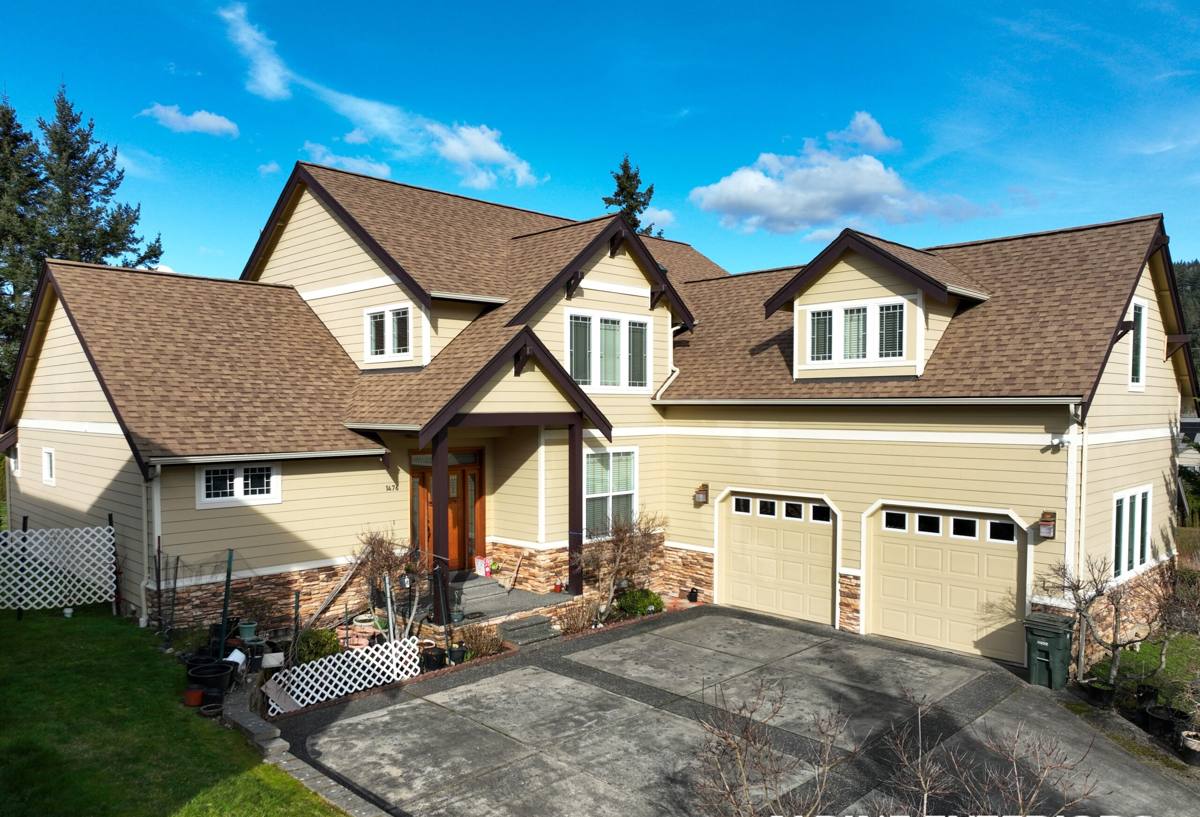
Signs Your Roof Has Reached Replacement, Not Repair
Most roofs give warning signs well before they fail outright. In Burlington and the surrounding area, we typically hear from homeowners for one of two reasons: a leak that's already showing up inside, or a roof that's simply reached the end of its practical service life. Repair makes sense for isolated damage. Replacement becomes the right call when problems are spread across the whole roof or the underlying material has started to fail.
- Granules collecting in gutters or at downspout outlets, a sign the shingle surface is wearing thin
- Shingles that are cupping, curling, or cracking, especially on south- and west-facing slopes
- Moss or algae that keeps coming back within a season or two of cleaning
- Soft or spongy spots underfoot, which usually mean the decking underneath has taken on moisture
- Daylight visible through the roof deck from inside the attic
- Staining on interior ceilings or in the attic that doesn't line up with one obvious leak point
- A roof that's at or past the general service life of its material, even if it still looks fine from the street
If you're only seeing one or two of these, a repair may still buy you time. If several show up together, patching one area usually just delays the same conversation somewhere else on the roof a year or two later.
What a Correct Roof Replacement Involves
Tear-Off vs. Overlay
Some roofers offer to install new shingles directly over the old layer to save time and cost. We don't do that as standard practice on homes in this climate. A second layer traps moisture that's already worked its way into the old roofing against the deck, and it hides the one thing you actually need to see before replacement: the condition of the plywood or OSB underneath. In an area that gets as much sustained rain as Skagit County does, that hidden moisture and rot risk isn't worth the shortcut. A full tear-off lets us inspect and repair the deck itself, which is where most long-term roof failures actually start.
Underlayment and Moisture Barriers
Driving rain — rain pushed sideways by wind, which this region gets regularly off the water — can work its way under standard felt paper at seams, nail penetrations, and low-slope transitions. We install synthetic or self-adhering underlayment sized to how exposed a given roof is, with extra water-resistant membrane at valleys, eaves, and anywhere water is likely to back up or pool, not just wherever code sets the bare minimum.
Flashing Details
Flashing around chimneys, skylights, vent pipes, and roof-to-wall transitions is where the majority of roof leaks actually originate, not the open field of the roof itself. We replace flashing as part of every full roof replacement rather than reusing old pieces, and we pay particular attention to step flashing at wall intersections and kick-out flashing that directs water away from siding at roof edges. Reused or poorly fitted flashing is one of the most common reasons a "new" roof develops a leak within the first year or two.
Ventilation
A roof that can't breathe holds moisture against the underside of the deck, which feeds both rot and the moss and algae growth that thrive in this climate. We check intake ventilation at the eaves and exhaust at the ridge as part of every replacement, and we correct imbalanced or blocked ventilation rather than just laying new shingles over an attic that's already struggling to dry out between storms.
Choosing a Roofing Material for This Climate
There isn't one right roofing material for every home, but some options handle Skagit County's combination of salt air, sustained moisture, and moss pressure better than others. Here's how the common choices compare for a home in the Burlington and Anacortes area.
| Material | Typical Lifespan | How It Handles This Climate |
|---|---|---|
| Asphalt composition shingle (3-tab) | 15-20 years | Budget-friendly; more prone to moss buildup and granule loss under sustained moisture |
| Architectural / laminate shingle | 25-30 years | Heavier profile sheds water better and holds up well to wind-driven rain; our most common recommendation |
| Standing seam metal | 40-50+ years | Sheds moss and moisture best of any option, handles salt air well when properly coated, higher upfront cost |
| Cedar shake | 20-30 years with upkeep | Attractive but needs regular treatment and cleaning to resist moss and rot in a wet marine climate; we're upfront about the maintenance commitment before recommending it |
We don't push one material on every homeowner. What we do is walk through how much maintenance you're realistically willing to take on, how long you plan to stay in the home, and what the roof's exposure to sun, shade, and moisture actually looks like, then match the material to that.
Dealing With Moss and the Long Wet Season
Moss is less about any one roof being installed wrong and more about geography. Shaded, north-facing slopes, tree cover, and long stretches of overcast, damp weather all give moss spores what they need to establish themselves, and once moss takes hold it holds moisture against the shingle surface, which accelerates wear and can lift shingle edges over time. A new roof doesn't make a home immune to moss — it resets the clock, but the same conditions that grew moss on the old roof are still there waiting.
What we control for during replacement: proper ventilation to reduce trapped moisture, keeping valleys and low-slope areas clear of debris-catching details, and, where a homeowner wants it, zinc or copper strips near the ridge that release trace amounts of metal ions in the rain runoff to slow moss regrowth on the slopes below. None of this eliminates the need for periodic roof cleaning in a climate like ours, but it meaningfully extends the time between cleanings and keeps moss from getting a foothold in the first place.
What Affects the Cost of a Roof Replacement
Every roof is different, and we won't quote a number without seeing the actual job, but a few factors consistently move the price up or down on homes in this area.
- Roof size and number of layers being removed — more tear-off means more labor and disposal
- Roof pitch and accessibility — steep or hard-to-reach roofs take longer and require more safety setup
- Number of penetrations — chimneys, skylights, and vent pipes each need their own flashing work
- Decking condition — rot found during tear-off means replacing plywood or OSB before new material goes on
- Material choice — asphalt, architectural shingle, and metal sit at very different price points
- Ventilation upgrades — correcting inadequate intake or exhaust ventilation adds some cost but pays off in roof life
We break all of this out in writing so you can see exactly what you're paying for, not just a single lump-sum number.
Timing a Replacement Around Skagit County Weather
Roofing work needs a dry window to go in correctly, and in this climate that window isn't guaranteed on any particular date. Late spring through early fall tends to give the most reliable stretches of dry weather, but we replace roofs outside that window too when conditions allow — the key is not opening up a roof deck when rain is imminent. If your roof is already leaking or showing active damage, it's better to address it as soon as a safe weather window allows rather than waiting for a "perfect" month, since damage from trapped moisture tends to compound the longer it sits.
How Our Roof Replacement Process Works
- Inspection and estimate. We look at the roof from the ground and, where safe and useful, up close, check the attic for ventilation and moisture signs, and give you a written estimate that spells out material, scope, and price.
- Material selection. We go over the options that fit your home, budget, and how much upkeep you want to take on, without steering you toward whatever's easiest for us to install.
- Scheduling around the weather. We plan the job with the local forecast in mind and communicate honestly if weather pushes a start date.
- Tear-off and deck inspection. Old roofing comes off down to the deck, and we flag any rot or damage before it's covered back up, with photos and a straight explanation of what needs to be addressed.
- Installation. Underlayment, flashing, ventilation components, and the roofing material go on in that order, following manufacturer specifications so warranty coverage stays intact.
- Cleanup and walkthrough. We clear debris and nails from the property, including a magnetic sweep, and walk the finished roof with you before calling the job done.
Permits and Code in Skagit County
Roof replacement in Burlington and the surrounding unincorporated parts of Skagit County typically requires a building permit, particularly for a full tear-off. We handle the permitting process as part of the job rather than leaving it to the homeowner, and we build to current code for wind exposure, water-resistant membrane placement at eaves, and ventilation ratios. Skipping the permit step might save a few days up front, but it can create real problems later — at resale, with insurance claims, or if the work ever needs to be verified by an inspector.
Why It Matters to Hire a Crew That Already Works This Area
A roofing crew that works across Anacortes, Burlington, and the rest of Skagit County regularly sees how these specific conditions play out on real roofs — which slopes hold moss the longest, which flashing details tend to fail first under wind-driven rain, and which materials actually hold up once salt air and a long wet season have had a few years to work on them. That's different from general roofing knowledge. It's the difference between a roof built to a generic spec sheet and one built for the weather it's actually going to face every winter.
We're also familiar with the local permitting process, typical home construction in the area, and the practical realities of scheduling work around a climate that doesn't always cooperate. That familiarity tends to show up as fewer surprises during the job and fewer callbacks after it's done.
If your roof is showing its age or you're just not sure whether you're looking at a repair or a full replacement, we're happy to take a look. Reach out for a free, no-pressure estimate — we'll give you a straight answer about what your roof actually needs, not an upsell.