 Anacortes
 Roof Repair for Burlington Homes: Built for Skagit County Weather
A roof in Burlington doesn't fail the way a roof fails in a dry climate. It fails slowly, from the top down and the inside out, because of moisture that never fully gets a chance to dry. Skagit County sees long stretches of grey, wet weather punctuated by driving windstorms off the Sound, and that combination is hard on every layer of a roofing system — shingles, flashing, underlayment, and the decking underneath. Roof repair here isn't just about patching a leak; it's about understanding why water found its way in and stopping the next entry point before it opens up.
This page is specifically about roof repair — not full tear-off replacement — for homes in and around Burlington. If your roof is holding up structurally but has developed leaks, moss damage, flashing failures, or storm-related wear, this is the work we do and the process we follow.
What Skagit County Climate Does to a Roof
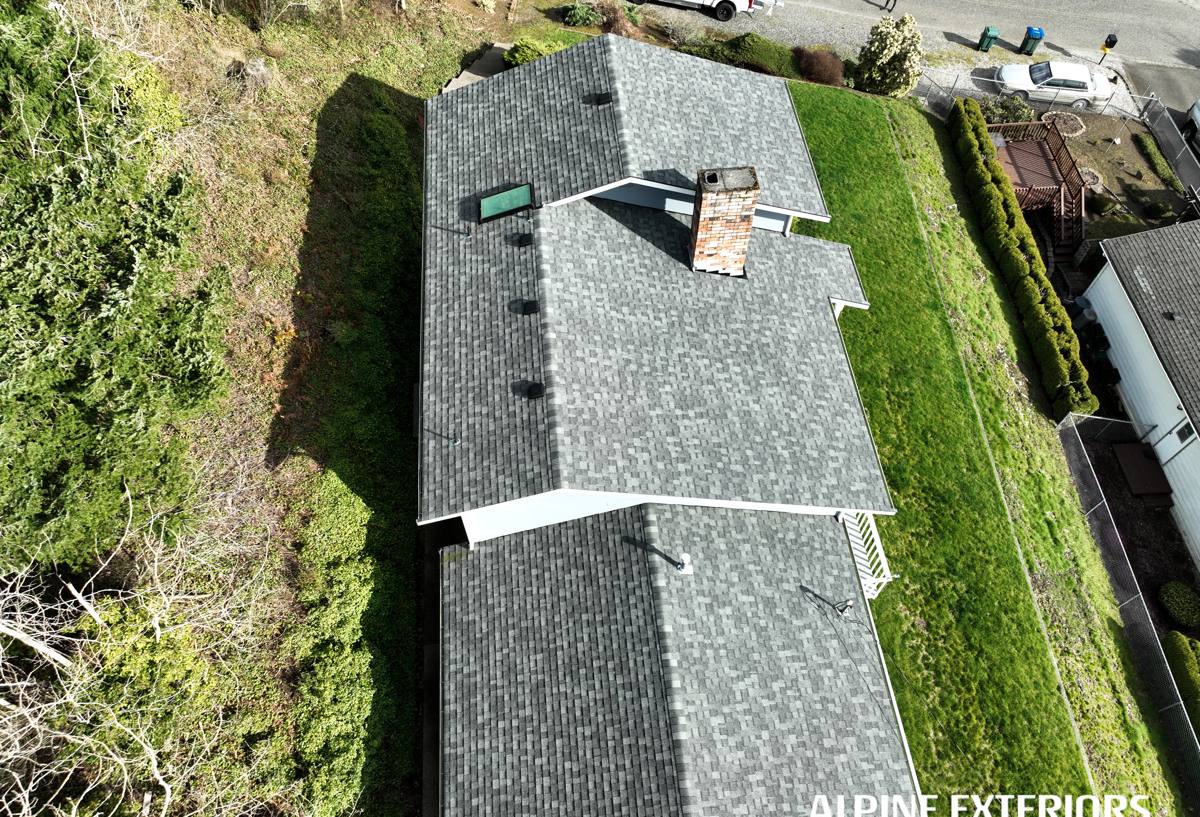
Burlington sits in Skagit County, close enough to Anacortes and the Salish Sea that homes here deal with salt-tinged air, near-constant humidity in the cooler months, and a moss season that can run from fall through spring. None of these factors destroy a roof overnight — they work slowly, and that's exactly why so many repair calls we get involve damage that's been building for a year or more before it showed up as a stain on a ceiling.
Moss and Organic Growth
Shaded roof sections, north-facing slopes, and areas under overhanging trees stay damp for days after a storm. Moss and algae take hold in those conditions, and once established, moss does more than sit on top of shingles — it grows under shingle tabs and lifts them slightly, which is enough to let wind-driven rain work its way underneath. Roofs with heavy moss cover almost always show granule loss and softened shingle edges when we get up close.
Wind-Driven Rain and Flashing
Rain that falls straight down is easy for a roof to shed. Rain that's being pushed sideways by wind off the water is a different problem — it finds the smallest gaps in flashing around chimneys, skylights, vent pipes, and roof-to-wall transitions. Flashing failure, not shingle failure, is the single most common cause of interior leaks we diagnose on repair calls.
Salt Air and Metal Components
Roofs in the broader Anacortes and Skagit County area are exposed to more airborne salt than roofs further inland. Over years, that accelerates corrosion on exposed fasteners, metal flashing, and gutter hardware. It's a slow effect, but it's part of why a repair plan here has to account for metal condition, not just shingle condition.
Common Roof Repair Issues We See in Burlington Homes
Most repair calls fall into a handful of categories. Recognizing which one you're dealing with helps set expectations for scope and cost before a crew ever gets on the roof.
- Moss-related shingle lifting — granule loss, curling edges, and soft spots on shaded or north-facing slopes
- Flashing leaks — around chimneys, skylights, plumbing vents, and where a roof meets a wall or dormer
- Wind and storm damage — torn, creased, or missing shingles after a wind event, usually along ridges and exposed edges
- Gutter and edge failures — sagging or clogged gutters that back water up under the roof edge instead of shedding it
- Ridge cap wear — the ridge takes the most direct wind exposure on the whole roof and often wears out faster than the field shingles
- Isolated decking damage — soft or rotted plywood found under a leak once shingles are pulled back
What a Correct Roof Repair Actually Involves
The honest difference between a repair that lasts and one that fails again in a year usually comes down to diagnosis, not materials. Sealing over a visible symptom without finding the actual entry point is the most common shortcut in this trade, and it's why some homeowners end up paying for the "same" leak two or three times.
Finding the Real Source
Water rarely drips straight down from where it enters. It can travel along rafters or decking and show up on a ceiling several feet from the actual leak. A proper repair starts with tracing the water path from the interior stain or attic evidence back up to the roof, not just patching whatever's visible from the ground.
Matching Materials Correctly
Shingle repairs need to match the existing roof in type, weight, and often color batch as closely as possible — mismatched patches stand out and can behave differently in wind and rain than the surrounding material. When exact matches aren't available, we're upfront about that before starting the work.
Checking What's Underneath
Any time shingles are pulled back for a repair, the decking and underlayment underneath get inspected. Soft or delaminated plywood needs to be addressed at that point — covering it back up without fixing it just resets the clock on the same failure.
Rebuilding Flashing Properly
Flashing isn't caulked into place as a permanent fix. Correct flashing repair means re-forming or replacing the metal so water sheds over it in layers, with sealant used to back up the mechanical seal — not substitute for it.
Our Roof Repair Process
- Inspection and diagnosis — we get on the roof (or use safe access methods when pitch or condition doesn't allow it) and identify the actual cause, not just the symptom
- Written scope and estimate — you get a clear explanation of what's failing, what needs to be done, and an honest price range before any work starts
- Repair execution — shingles, flashing, decking, or gutter components are replaced or rebuilt as needed, matched to your existing roof as closely as possible
- Cleanup and debris removal — old materials and nails are cleared from the roof and property
- Follow-up — for storm or moss-related repairs, we'll flag other areas of the roof worth keeping an eye on going forward
Repair vs. Replacement: How We Help You Decide
Not every roof problem needs a repair, and not every repair means the roof is failing overall. Age, extent of damage, and how many separate issues are showing up all factor into an honest recommendation.
| Factor | Leans Toward Repair | Leans Toward Replacement |
|---|---|---|
| Roof age | Under 15–18 years, comp shingle | Approaching or past expected lifespan |
| Damage extent | Isolated to one area or slope | Spread across multiple slopes |
| Decking condition | Solid, dry, no rot found | Widespread soft spots or rot |
| Leak history | First occurrence, clear single cause | Repeated leaks in different spots over time |
| Shingle condition overall | Granules intact, flexible material | Widespread granule loss, brittle shingles |
We'll always tell you plainly when a roof is a good candidate for repair versus when a repair would just be a short-term fix on a roof that's genuinely at the end of its service life. That's a judgment call we make based on what we actually find, not a default push toward the bigger job.
Materials We Use and Why
For repairs, we work with composition shingles matched to your existing roof, proper metal flashing formed for the specific detail being repaired, and self-adhering ice-and-water membrane in vulnerable areas like valleys, eaves, and around penetrations. In a climate with as much sustained wet weather as Skagit County, that membrane matters more here than it would in a drier region — it's a second line of defense in exactly the spots where wind-driven rain and ice dams are most likely to get past the shingle layer.
We're selective about sealants and adhesives too. Some products look like a fast fix but break down faster under UV and moisture cycling than a properly formed flashing detail. Our standard is to build the repair so it sheds water mechanically first, with sealant as a secondary seal rather than the whole solution.
Why a Local Skagit County Crew Matters
A crew that already works roofs in Burlington and the surrounding Anacortes area knows what this climate does to a roof over time — where moss builds up fastest, which flashing details tend to fail first in wind-driven storms, and how salt air affects metal components differently than it would fifty miles inland. That local pattern recognition speeds up diagnosis and helps avoid guessing.
There's also a practical side: storm damage and active leaks don't wait for a convenient schedule. A local crew can typically respond faster than a company traveling in from outside the area, which matters when water is actively getting into your home.
Maintenance That Extends the Life of a Repair
A good repair lasts longer when the roof around it is kept up. These are the basics worth doing on a regular schedule, especially given how much moss and debris this region generates:
- Clear gutters and downspouts at least twice a year — more often if you have overhanging trees
- Have moss treated or removed before it spreads across a full slope, not after
- Trim back branches that keep sections of the roof shaded and damp
- Check attic ventilation — poor airflow traps moisture and accelerates decking and shingle wear from underneath
- Walk the exterior after major windstorms and look for shingles on the ground or visibly out of place
- Schedule a roof inspection every couple of years even without an obvious problem, so small issues get caught before they become interior leaks
Getting an Honest Assessment
If you've got a leak, storm damage, or a roof that's just showing its age, the first step is a straightforward look at what's actually going on up there. If you're in Burlington or elsewhere in Skagit County and want a clear read on what your roof needs, reach out for a free, no-pressure estimate using the form below.