 Anacortes
 Asphalt Shingle Roofing Built for La Conner's Conditions
La Conner sits right where the Swinomish Channel meets Skagit County's tidal flats, and that location shapes everything about how a roof ages here. Homes get a steady dose of salt-laden air off the water, wind-driven rain that finds its way under poorly lapped shingles, and a long wet season that lets moss and moisture sit on the roof deck for months at a time. An asphalt shingle roof installed the same way you'd install one inland won't hold up the same way out here. It needs the right materials, the right ventilation, and flashing details that account for wind direction and standing moisture, not just a manufacturer's minimum spec.
We work throughout Skagit County, and La Conner's roofs get specific attention because the combination of coastal exposure and low-lying, tree-shaded lots is tougher on shingles than most of the surrounding area. This page covers what that actually means for a shingle roof here — what fails first, what a correct installation looks like, and how we run the job from estimate to cleanup.
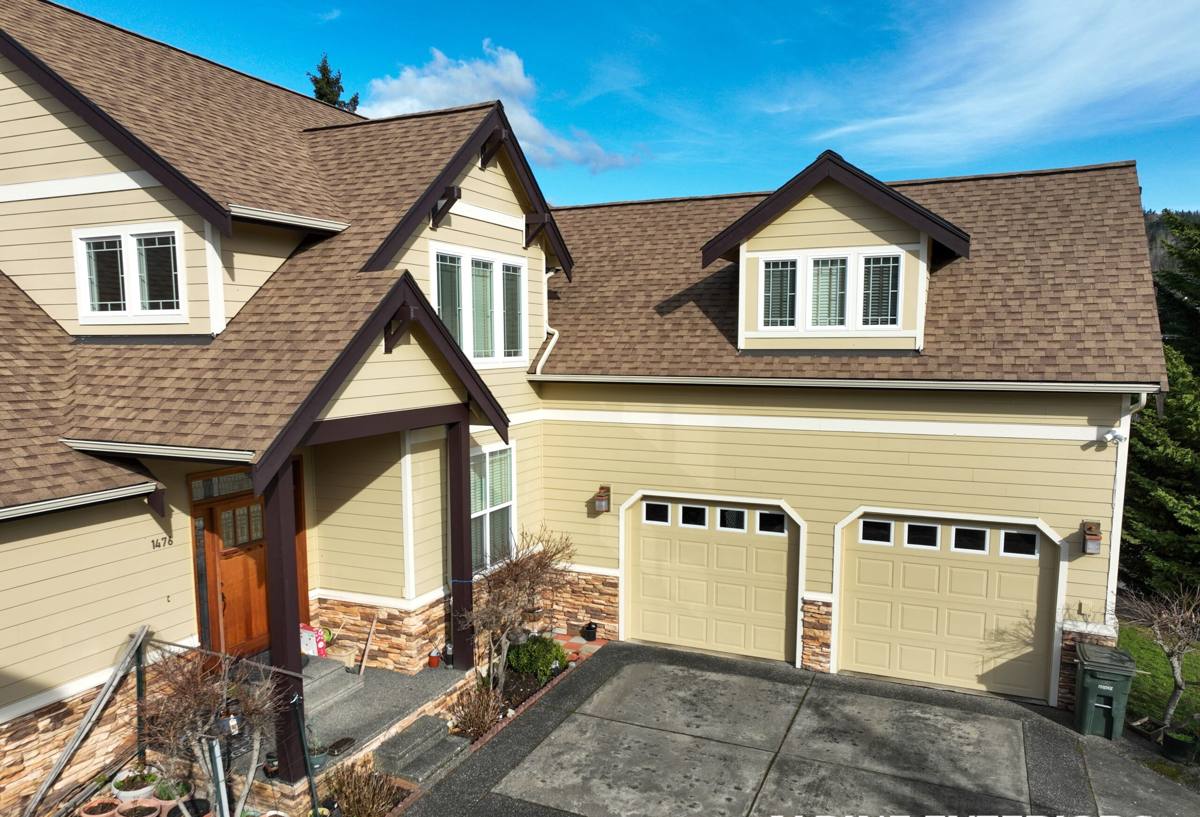
What La Conner's Climate Actually Does to a Shingle Roof
Salt Air and Metal Fatigue
Salt air doesn't just sit on the surface — it accelerates corrosion on any exposed metal: nail heads, flashing, drip edge, and vent housings. Once corrosion starts on fasteners or flashing, water finds a path underneath the shingle mat long before the shingles themselves show visible wear. This is why we don't treat flashing and fastener choice as an afterthought on La Conner jobs; it's often the first thing to fail, not the last.
Driving Rain and Wind-Lift
Storms coming off the water tend to drive rain sideways rather than straight down, which puts pressure on shingle edges, ridge caps, and any transition point — valleys, sidewalls, chimney saddles — where wind can get up and under a tab. A roof that would perform fine in a calmer inland setting can develop leaks at these transition points here within a few seasons if the underlayment and sealing weren't done with wind-driven rain in mind.
Moss, Shade, and a Long Wet Season
Many La Conner lots sit low and close to tree cover, which means roofs stay damp longer after rain and get less direct sun to dry out between storms. That's exactly the environment moss needs. Moss doesn't just look bad — it holds moisture against the shingle surface, works its way under tab edges as it grows, and can lift granules and shorten the shingle's usable life well before its rated warranty period.
What a Correct Asphalt Shingle Job Looks Like Out Here
A shingle roof is a system, not a single product. Every layer matters, and skipping or downgrading any one of them is where coastal roofs run into trouble early.
- Deck inspection and repair: Any soft, delaminated, or water-stained sheathing gets replaced before a single shingle goes down — covering a compromised deck just hides the problem.
- Ice and water shield at vulnerable points: Eaves, valleys, and roof-to-wall transitions get a self-adhering waterproof membrane, not just felt, because these are the spots wind-driven rain targets first.
- Synthetic underlayment across the field: A high-quality synthetic underlayment sheds water more reliably than old-style felt and holds up better to the humidity that sits under the shingles here.
- Corrosion-resistant fasteners and flashing: Given the salt exposure, we don't use standard-grade fasteners or flashing on La Conner roofs — the upcharge is minor compared to a re-flash job five years down the road.
- Proper nailing pattern and shingle placement: Manufacturer nailing zones exist for wind resistance. High-wind or coastal-exposure fastening patterns matter more here than in a sheltered inland yard.
- Balanced attic ventilation: Intake at the eaves and exhaust at the ridge keep the underside of the deck dry and regulate temperature, which protects the shingles from underneath, not just from above.
- Ridge cap and hip detailing: These are high-exposure points on a roof and need dedicated cap shingles installed to spec, not cut down from field shingles.
Choosing Shingles for a Coastal Skagit County Home
Not every asphalt shingle product is a good match for La Conner's exposure. We steer homeowners toward shingles and installation methods based on how they actually perform in wind and moisture, not just on price per square.
| Factor | Standard 3-Tab | Architectural (Laminate) |
|---|---|---|
| Wind performance | Lower rated; more prone to lift in driving coastal wind | Higher wind ratings available; better tab adhesion from laminated construction |
| Moss resistance options | Limited availability | Algae/moss-resistant granule options widely available |
| Expected lifespan in this climate | Shorter, due to added coastal and moss stress | Longer, especially with proper ventilation and moss-resistant granules |
| Appearance | Flat, uniform look | Dimensional, heavier-looking profile |
| Typical cost | Lower upfront | Moderate premium, offset by longer service life here |
We don't install lower-tier products on exposed La Conner roofs as a matter of professional standard — the labor cost to install a roof is the same regardless of shingle grade, so putting a shorter-lived product on a high-exposure roof just moves the expense to the homeowner sooner. We'll walk through the honest tradeoffs for your specific roof rather than pushing one line.
Our Process, Start to Finish
- On-site assessment: We inspect the existing roof, deck condition, ventilation setup, and exposure — noting wind direction, tree cover, and any existing moss or moisture damage.
- Written estimate: You get a clear scope of work and price before anything is scheduled — no surprise add-ons once tear-off starts unless we find hidden deck damage, which we'll show you before proceeding.
- Tear-off and deck check: Old roofing comes off down to the deck so we can actually see what's underneath, rather than roofing over existing problems.
- Underlayment and flashing installation: Ice and water shield, synthetic underlayment, and all new flashing go in before a single shingle is installed.
- Shingle installation: Installed to manufacturer spec with fastening patterns matched to the site's wind exposure.
- Ventilation check and correction: We confirm intake and exhaust are balanced, correcting undersized or blocked vents where we find them.
- Final walkthrough and cleanup: Full site cleanup including magnetic sweep for stray nails, plus a walkthrough so you understand what was done and why.
Signs Your La Conner Roof Needs Attention
Because moss and moisture damage build slowly here, homeowners often don't notice a problem until it shows up as an active leak. Catching it earlier is cheaper and less disruptive.
- Granules collecting in gutters or at downspout outlets
- Visible moss growth, especially on north-facing or shaded roof planes
- Curling, cupping, or lifted shingle edges
- Dark streaking or staining across the roof surface
- Soft spots or sagging when viewed from the attic or a ladder
- Rusty streaks near flashing, vents, or nail heads
- Daylight visible through the roof deck from inside the attic
Maintenance That Actually Extends Roof Life Here
A shingle roof in La Conner benefits from a bit more upkeep than the same roof would need in a drier, less shaded location. None of this is complicated, but skipping it shortens the roof's life.
Gutter and Debris Management
Keeping gutters and valleys clear of needles and leaf debris prevents water from backing up under shingle edges, which is one of the most common causes of early leaks we see on shaded coastal lots.
Moss Treatment
Addressing moss while it's still light growth — rather than after it's established — protects the granule layer and keeps moisture from tracking under tabs. This matters more on a La Conner roof than almost anywhere else in the county given the shade and moisture combination.
Periodic Flashing Checks
Given the corrosion risk from salt air, flashing around chimneys, vents, and skylights is worth a visual check every couple of years, even on a newer roof.
Why Hire a Crew That Already Works in La Conner
Roofing crews who mostly work drier, inland areas don't always default to coastal-grade fasteners, moss-resistant shingle options, or wind-driven-rain flashing details — because they don't need to most of the time. A crew that regularly works Skagit County's waterfront communities builds those decisions into the estimate from the start instead of treating them as upgrades. That familiarity also means fewer surprises during tear-off: we've seen what La Conner's deck and ventilation conditions typically look like under the shingles, and we plan for it.
Local presence also matters for warranty follow-through. A roof is only as good as the contractor's willingness to come back if something needs attention, and that's a lot easier for a crew that's already in the area regularly.
Get a Free, No-Pressure Estimate
If your La Conner roof is showing moss, granule loss, or you're just planning ahead before the next wet season sets in, we're happy to take a look and give you a straightforward assessment — no pressure, no hard sell. Use the form below to request a free estimate.