 Anacortes
 Why La Conner's Waterfront Setting Is Hard on Siding
La Conner sits right on the Swinomish Channel, and that waterfront location comes with a climate that's noticeably harder on exterior building materials than a few miles inland. Salt-laden air moves off the channel and settles on every exposed surface, driving rain comes in sideways during winter storms, and the mild, damp Skagit County climate keeps moss and algae growing on north-facing walls for most of the year. Siding here doesn't just need to look good — it needs to survive constant moisture cycling without swelling, rotting, or letting water behind the wall assembly.
We work throughout Anacortes and the surrounding Skagit County waterfront communities, and La Conner's siding problems tend to follow a pattern: paint failing early on the weather-facing walls, soft trim boards near ground level, and moss buildup that traps moisture against the siding face long after a rain has passed. None of that is unusual for the area — it's just what happens when siding wasn't specified or installed with this climate in mind.
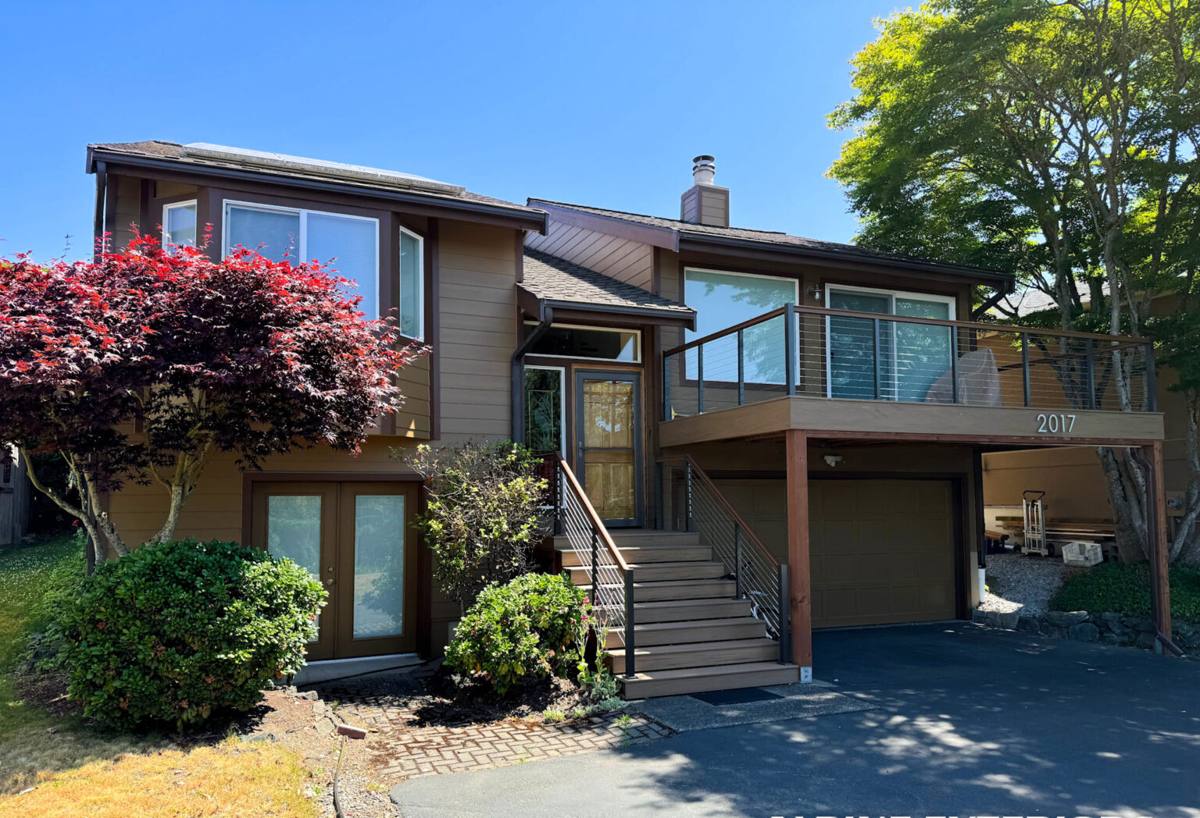
What La Conner Homes Actually Need From Their Siding
A siding system built for this stretch of Puget Sound needs to handle three things at once: near-constant moisture exposure, salt air that accelerates corrosion and finish breakdown, and long stretches of shade and dampness that feed moss and mildew. That means the material itself has to resist water absorption and rot, the finish has to hold color and seal integrity without repeated repainting, and the installation details — flashing, clearances, fastening — have to be done correctly the first time, because a callback to fix hidden rot on a channel-front home is a much bigger job than on a dry inland lot.
Homeowners in La Conner are often replacing wood or older composite siding that simply couldn't keep up. The failure mode is almost always moisture — not one dramatic storm, but years of the material staying damp longer than it was designed to.
Why We Install Only James Hardie Fiber Cement
We made a decision as a company to install James Hardie fiber cement siding exclusively, and we don't install vinyl, LP SmartSide, Cemplank, Allura, primed spruce, or cedar. That's not a marketing position — it's a standard we hold to because of what we've seen happen to other products in exactly this kind of marine, high-moisture climate.
Vinyl siding can work fine in drier climates, but it expands and contracts with temperature swings, and driving rain can find its way behind loose panels over time. Wood products like cedar or primed spruce look great on day one, but they need ongoing maintenance — recoating, caulking, spot repairs — to keep moisture out, and that maintenance burden is exactly what a salt-air, high-rainfall environment punishes hardest. Engineered wood products like LP SmartSide have improved over the years, but they're still a wood-based substrate, which means the long-term moisture question never fully goes away.
James Hardie fiber cement is non-combustible, doesn't swell or rot from moisture the way wood-based products can, and comes with a factory-applied ColorPlus finish that's baked on rather than painted after installation — which matters a lot when salt air and UV are working against a painted finish year-round. Hardie also engineers its siding by climate zone (its HZ product lines), so what we install is matched to the freeze-thaw and moisture profile of the Pacific Northwest rather than a one-size-fits-all formulation. The warranty is transferable, which matters to buyers and sellers alike in a market where homes change hands.
What This Means in Practice
When we quote a La Conner siding job, we're quoting one system, installed correctly, not a menu of budget options with different long-term risk profiles. That keeps the conversation simple and keeps every job we do to the same standard.
What a Correct Siding Installation Actually Involves
Siding failures on waterfront homes are rarely about the siding material choice alone — they're about what's happening behind the siding. A correct install pays as much attention to what you can't see as what you can.
Tear-Off and Wall Inspection
Once old siding comes off, we inspect the sheathing and framing underneath for rot, soft spots, or prior water intrusion. On a moisture-heavy site like La Conner, this step catches problems that would otherwise get sealed behind new siding and left to spread.
Weather-Resistive Barrier and Flashing
A proper weather barrier and correctly lapped flashing around windows, doors, and penetrations is what actually keeps driving rain out of the wall assembly — the siding is the second line of defense, not the first. This detail work matters more in a channel-front climate than almost anywhere else in the region.
Clearances and Fastening
James Hardie specifies clearances from grade, roof lines, and decks, along with fastener spacing and type, for a reason: get those wrong and you create a path for water to sit against the board or wick up from below. We follow manufacturer installation specs to the letter, which is also what keeps the Hardie warranty intact.
Caulking and Trim Details
Butt joints, trim intersections, and penetrations get sealed with the right sealant and technique. On a home exposed to salt air and constant rain, sloppy caulking is one of the most common early failure points we see on other people's work.
Our Process for La Conner Projects
We approach every La Conner job the same structured way, because skipping steps is how moisture problems get built into a wall for the next twenty years.
- On-site assessment — we look at existing siding condition, wall assembly, moss and moisture patterns, and sun/wind exposure on each elevation.
- Scope and product plan — we spec the right Hardie plank, panel, or shingle profile and ColorPlus color for the home, and give you a clear, honest estimate.
- Prep and tear-off — old siding comes off, sheathing gets inspected and repaired as needed, and we address anything we find before covering it up.
- Weather barrier, flashing, and installation — installed to manufacturer spec, with attention to the details that matter most in this climate.
- Final walkthrough — we go over the finished work with you before we consider the job done.
Cost Factors on a La Conner Siding Job
Every home is different, but the same handful of factors drive most of the cost variation we see on siding jobs in this area.
| Factor | Why It Matters Here |
|---|---|
| Extent of hidden wall damage | Waterfront moisture exposure means tear-off sometimes reveals sheathing or framing repair needs |
| Home size and wall complexity | More corners, dormers, and trim details mean more labor and material |
| Siding profile and finish | Lap plank, panel, and shingle-style Hardie products vary in material and install time |
| Access and site conditions | Tight lots, water-adjacent access, or multi-story walls affect staging and labor |
| Trim and detail work | Window and door surrounds, fascia, and soffit work add scope beyond flat wall coverage |
Signs Your Current Siding Is Already Failing
Waterfront homes often show warning signs well before a full replacement feels urgent. Worth checking for:
- Soft or spongy spots when you press on the siding, especially near the bottom courses
- Paint that's peeling or bubbling faster than it used to, particularly on shaded or north-facing walls
- Persistent moss or algae growth that doesn't go away between rainy seasons
- Visible gaps, warping, or buckling at panel seams and butt joints
- Musty smell or staining on interior walls that share an exterior wall with problem siding
- Caulking that's cracked, shrunk, or missing around trim and penetrations
Any one of these on its own isn't necessarily an emergency, but a few together usually mean moisture has already gotten behind the siding.
Why Hiring a Crew That Already Works La Conner Matters
Siding installation isn't a generic skill applied the same way everywhere — the details that matter change with the climate. A crew that regularly works the Anacortes and Skagit County waterfront already knows where driving rain tends to find weak points, which elevations take the worst of the salt air, and how aggressive the moss growth gets on shaded walls in this specific setting. That local pattern recognition shows up in better flashing decisions, better clearance judgment calls, and fewer callbacks down the road.
It also means we're not learning the region's quirks on your project. We've seen how homes in this exact climate age, what fails first, and what holds up — and we install accordingly.
If you're seeing early wear on your La Conner home's siding, or you're just planning ahead, we're happy to walk the property with you and give you a straightforward, no-pressure estimate. There's no obligation — just an honest look at what your home needs. Use the form below to get started.