 Anacortes
 Why Composite Decking Fits Burlington's Climate
Burlington sits in the Skagit Valley just inland from Anacortes and the saltwater of Fidalgo Bay, which means homes here get a mix of marine air, valley moisture, and long stretches of gray, wet weather. That combination is hard on outdoor wood. Composite decking was designed for exactly this kind of exposure — it doesn't absorb water the way lumber does, it won't warp or cup from repeated wet-dry cycles, and it holds up better against the salt-laden air that drifts inland from the Sound. For homeowners in Burlington who want a deck that still looks good after a decade of Skagit County winters, composite is usually the more sensible long-term choice.
That said, composite decking is not maintenance-free, and it is not installed the same way everywhere. A deck built the same way you'd build one in Spokane or Sacramento will not perform the same way in Burlington. The framing, fastening, and drainage details matter more here because the moisture load is higher and the drying window is shorter.
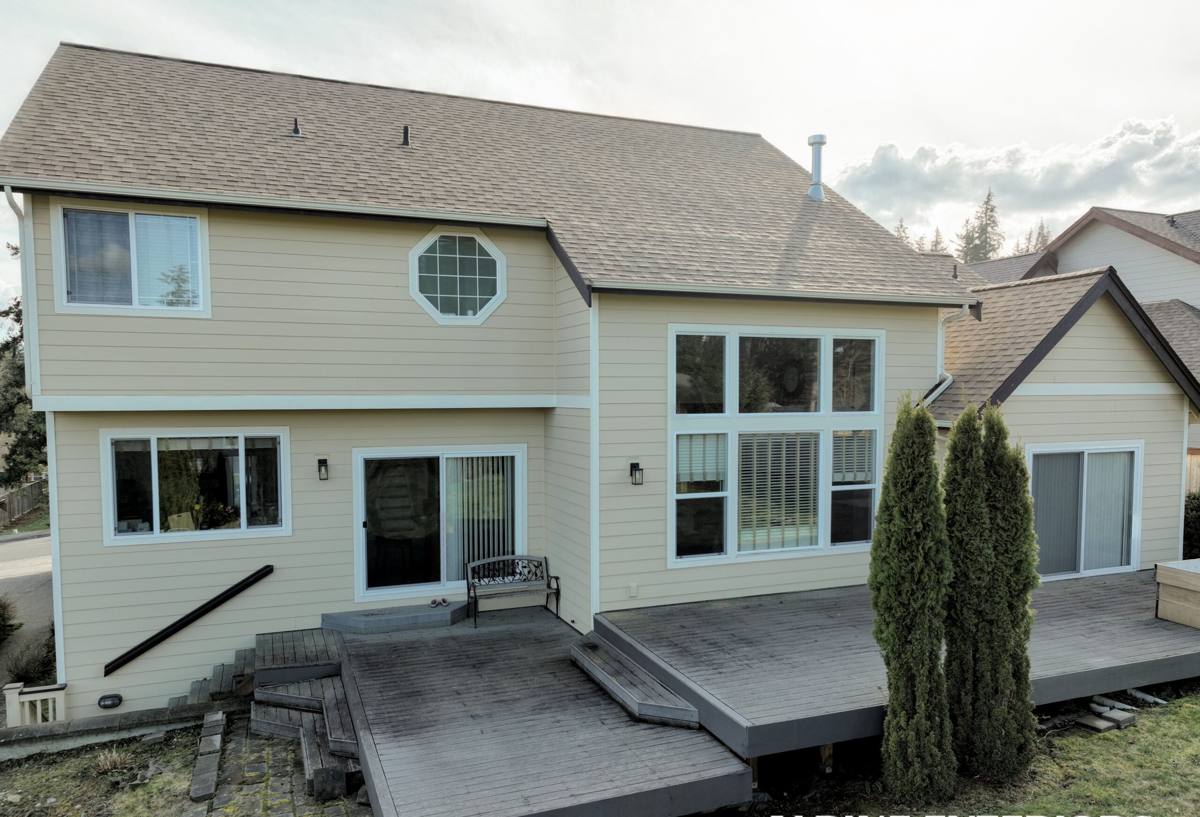
What Salt Air, Rain, and Moss Actually Do to a Deck
Moisture That Doesn't Leave
Western Washington doesn't just get a lot of rain — it gets long stretches of damp, low-sun weather where surfaces stay wet for days at a time. On a deck, that means water sitting in joints, around fasteners, and underneath boards far longer than it would in a drier climate. Wood decking swells and dries repeatedly through this cycle, which is what eventually causes splitting, cupping, and loose boards. Composite boards resist that swelling, but the substructure underneath — ledger boards, joists, posts — is often still wood, and that framing needs to be protected regardless of what decking material sits on top.
Moss and Algae Growth
The same shade and dampness that make Skagit County green also make it a good environment for moss and algae on any exterior surface that stays wet, including deck boards. Composite decking is more resistant to organic growth than untreated wood, but it isn't immune, especially on the underside of boards, in shaded corners, or anywhere airflow is restricted. A deck built without enough ventilation underneath will hold moisture longer and give moss more of a foothold, even with composite boards on top.
Salt Air and Hardware
Being close to Fidalgo Bay and the greater Puget Sound means Burlington homes deal with a mild but real salt air exposure, especially compared to inland Washington. Salt-laden air accelerates corrosion in fasteners, brackets, and any exposed metal hardware. Over years, corroding fasteners can loosen, stain the decking around them, or fail outright. This is one of the most overlooked factors in deck longevity — the boards can be excellent and the deck can still fail early if the wrong hardware was used underneath them.
What a Correct Composite Deck Installation Requires Here
Framing and Joist Protection
Even with composite boards on top, the frame underneath is almost always pressure-treated lumber, and that lumber needs real protection in this climate. Joist tape or a comparable flashing membrane over the top of each joist keeps water from sitting directly on the wood where fasteners penetrate it — this is one of the most common corners cut on lower-cost deck jobs, and it's one of the first things to fail in a wet climate like ours.
Fastening and Hardware Selection
Given the salt air exposure around Anacortes and Burlington, fastener choice isn't a minor detail. Stainless steel or coated, corrosion-rated fasteners and brackets cost more upfront but avoid the rust staining and hardware failure that shows up years earlier with standard fasteners in this environment. The same goes for any structural connectors — post bases, joist hangers, ledger bolts — all of which are exposed to the same moisture and air.
Ventilation and Drainage Underneath
A deck built tight to the ground, or without any slope or drainage path, will trap moisture underneath no matter what decking material is used. Correct builds account for airflow under the frame and a way for water to actually drain away from the structure rather than pooling under it. This is especially important on lower decks or ones built close to grade, which is common on flatter Burlington lots.
Board Spacing and Expansion
Composite boards expand and contract with temperature more than people expect, and manufacturers publish specific gapping requirements for a reason. Boards installed too tight will buckle; boards installed too loose look sloppy and catch debris. Getting this right isn't guesswork — it's following the manufacturer's spec for the specific board profile and the temperature at time of install.
Comparing Decking Materials for Burlington Homes
Every material has a place, but here's how the common options stack up against the specific conditions Burlington and greater Skagit County homes deal with.
| Material | Moisture Resistance | Moss/Algae Resistance | Maintenance | Relative Cost |
|---|---|---|---|---|
| Pressure-treated wood | Absorbs water, swells/shrinks seasonally | Needs regular cleaning and sealing | Annual sealing/staining recommended | Lowest upfront |
| Cedar | Naturally moderate resistance, still absorbs moisture | Better than treated pine, still needs care | Regular sealing to maintain color and resistance | Moderate |
| Composite decking | Very low absorption, stable in wet cycles | Resistant, though shaded/unventilated areas still need cleaning | Periodic washing, no sealing/staining | Moderate to higher upfront |
| PVC decking | Fully moisture resistant | Very resistant | Low, occasional washing | Highest upfront |
Composite tends to be the middle ground for Burlington homeowners: a meaningful upgrade over wood in a climate that punishes wood, without the full price jump of PVC. The right choice ultimately depends on budget, how much upkeep you're willing to do, and how long you plan to stay in the home.
Our Process, Start to Finish
1. On-Site Assessment
We look at the existing structure (if there is one), the grade and drainage around the deck area, sun and shade exposure, and how close the deck sits to the ground — all of which affect how the frame and drainage need to be built for this specific spot.
2. Material and Layout Planning
We walk through board options, color, and layout, and explain the tradeoffs honestly rather than upselling the most expensive product. Board spacing, fastening pattern, and framing plan are set before work starts, not figured out on the fly.
3. Framing and Protection
Joists get flashed or taped, ledger connections are sealed and flashed against the house, and hardware is selected for this climate's moisture and salt air exposure.
4. Decking Installation
Boards are installed to the manufacturer's spacing and fastening specifications, with attention to drainage slope and consistent gapping so the deck performs the way it's supposed to for its full warranty life.
5. Final Walkthrough
We walk the finished deck with the homeowner, cover basic care, and answer questions about what to expect through the first wet season.
Maintenance Composite Decking Still Needs in Skagit County
Composite is low-maintenance, not no-maintenance. In this climate, a bit of seasonal attention goes a long way toward keeping a deck looking good for its full lifespan.
- Sweep debris and standing leaves off the deck regularly, especially in fall when they trap moisture against the boards
- Wash the surface a couple times a year with a mild soap and water or manufacturer-approved cleaner to prevent moss and algae buildup
- Check gaps between boards for trapped debris that can hold moisture and encourage growth
- Keep gutters and downspouts near the deck clear so runoff isn't draining directly onto or under it
- Inspect visible fasteners and hardware periodically for rust staining, which can signal a hardware issue worth addressing early
- Confirm underneath ventilation isn't blocked by stored items, skirting, or landscaping that's grown in over time
Why Hiring a Crew That Already Works in Burlington Matters
A lot of deck problems in this region trace back to a build that was designed for a drier climate. Crews without local experience often under-detail the joist protection, skip corrosion-rated hardware because it's not required practice where they normally work, or don't account for how long moisture sits in this valley compared to other parts of the state. Working regularly around Burlington and Anacortes means seeing, firsthand, which details actually matter here — where moss builds up first, which fastener types hold up and which don't, and how local drainage and grade issues tend to show up on real properties, not just in a manual.
It also means being reachable after the job is done. A deck built by a crew that works this area consistently is a crew you can actually call in three years if something needs a look.
Getting Started
Every deck project is different depending on the lot, the existing structure, and what the homeowner actually wants day to day. If you're weighing composite decking for a home in Burlington or elsewhere around Anacortes and Skagit County, we're happy to take a look and give you a straight, no-pressure estimate — just fill out the form below to get started.