 Anacortes
 Why Sedro-Woolley Roofs Take a Different Kind of Beating
Sedro-Woolley sits inland from Anacortes, but that doesn't mean the roof problems are any easier. Homes here deal with the same wet Pacific Northwest weather pattern as the rest of Skagit County — long stretches of drizzle, heavier driving rain events off the water, and a moss season that can run nearly nine months out of the year in shaded, tree-lined lots. Add in salt-tinged air that drifts inland from the Sound on windy days, and you have a combination that ages roofing materials faster than most homeowners expect.
A roof repair here isn't just patching a leak. It's understanding why that leak happened in the first place — usually moisture that had time and a foothold to work its way under shingles, around flashing, or into a valley that wasn't draining the way it should. That's the difference between a repair that lasts a few months and one that lasts years.
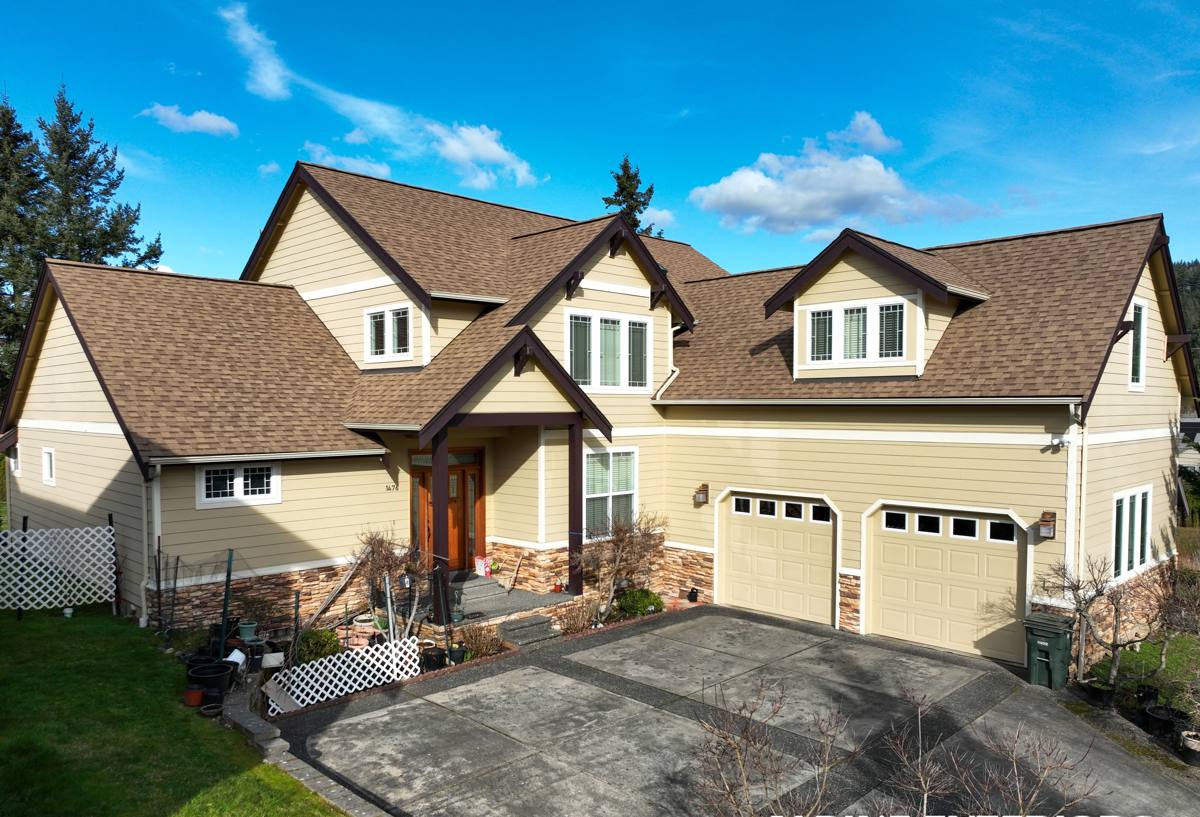
Signs a Sedro-Woolley Roof Needs Repair, Not Just a Look
Most roof damage doesn't announce itself with a dramatic leak on day one. It shows up in smaller signs first, and catching them early is what keeps a repair a repair instead of a full replacement.
- Dark streaking or thick moss growth, especially on north-facing slopes that stay shaded and damp longer
- Granules collecting in gutters or at the base of downspouts — a sign shingles are wearing thin
- Curling, cracked, or lifted shingle edges, particularly after a windy winter storm
- Soft or discolored spots on interior ceilings, even small ones that come and go with the weather
- Rusted, lifted, or missing flashing around chimneys, vents, and skylights
- Sagging or ponding in roof valleys, where debris and moss tend to collect first
- Daylight visible through the attic decking, or damp insulation near the roofline
Any one of these on its own might be minor. Two or three together usually means water has already found a way in, even if it hasn't shown up inside the house yet.
What's Actually Going Wrong Under the Surface
Moss and Organic Growth
Moss doesn't just look bad — it holds moisture directly against the roofing surface for days or weeks at a time, which accelerates granule loss on asphalt shingles and can work its way under shake or shingle edges over a season or two. In Skagit County's climate, roofs with heavy tree cover or north-facing exposure are especially prone to it, and once moss gets established it tends to come back faster each year unless it's removed properly and the roof gets some airflow.
Flashing and Penetration Failures
Flashing around chimneys, plumbing vents, and skylights is one of the most common failure points on any roof, and it's often where a "mystery leak" actually originates — even when the water shows up several feet away inside the attic. Sealant breaks down, metal corrodes faster near salt-influenced air, and fasteners loosen with repeated freeze-thaw and wet-dry cycling.
Valley and Drainage Issues
Roof valleys carry more water than any other part of the roof during a heavy rain event, and they're also where debris, needles, and moss collect first. A valley that isn't clear or wasn't flashed correctly to begin with is a near-guaranteed source of repeat leaks.
Wind and Storm Damage
Driving rain often arrives with gusty wind, and that combination is what lifts and cracks shingle tabs, especially on older roofs where the sealant strip has already dried out. Once a tab is lifted, wind-driven rain can get pushed uphill under it — something a light drizzle would never do.
Repair or Replace? An Honest Look at the Decision
Not every roof problem in Sedro-Woolley needs a full replacement, and we'd rather tell a homeowner the truth than sell a bigger job than necessary. The right call depends on the roof's age, how widespread the damage is, and what's underneath the surface layer.
| Factor | Repair Usually Makes Sense | Replacement Usually Makes Sense |
|---|---|---|
| Roof age | Under 12-15 years, asphalt shingle | Approaching or past manufacturer's expected lifespan |
| Damage location | Isolated to one section, valley, or penetration | Spread across multiple slopes or the whole roof |
| Decking condition | Solid, dry sheathing underneath | Soft, rotted, or delaminated decking found during inspection |
| Shingle condition | Granules intact, tabs mostly flat | Widespread granule loss, brittle or cracking shingles |
| History | First repair, or first in several years | Repeated leaks in different spots over recent seasons |
We won't recommend replacing a roof that has a genuinely isolated problem, and we won't patch a roof that's clearly past the point where repairs are cost-effective. The inspection is what tells us which side of that line a given roof is on.
What a Proper Roof Repair Actually Involves
A quality repair goes well beyond slapping sealant on the spot where a leak showed up inside the house. Water travels — what shows up on a ceiling is often several feet from where it actually entered the roof. A correct repair process looks like this:
- Full roof inspection, not just the section where the problem was reported, since damage in one area often points to a related issue nearby
- Tracing the water path from the interior sign of damage back to the actual entry point, which can mean checking flashing, valleys, and decking well outside the obvious trouble spot
- Removing damaged materials — shingles, underlayment, or flashing — down to solid, dry decking
- Assessing the decking itself for soft spots or rot, since repairing over damaged sheathing just delays the real fix
- Reinstalling with matching or compatible materials so the repair blends structurally and visually with the surrounding roof
- Re-checking drainage and airflow in the repaired area, since a poorly draining valley or blocked vent is often what caused the original damage
Skipping any one of these steps is how a "repair" ends up needing another repair a year later.
How Our Sedro-Woolley Roof Repair Process Works
We keep the process straightforward and try to avoid surprises, especially on cost.
- Initial assessment. We walk the roof and the attic where accessible, looking at the reported problem and anything nearby that could be a contributing factor.
- Written scope and estimate. Before any work starts, the homeowner knows what's being repaired, why, and what it will cost — no open-ended time-and-materials guessing.
- Weather-aware scheduling. Roof repair work needs a dry window to do correctly. We plan around Skagit County's rain patterns rather than rushing a repair into wet conditions where it won't seal properly.
- The repair itself. Damaged materials removed, decking checked, new materials installed and properly flashed and sealed.
- Cleanup and final check. Job site cleared of debris and nails, and the repaired area reviewed before we consider the job finished.
Materials and What Holds Up Locally
For most repair work, we match the existing roofing material so the patch blends in and performs consistently with the rest of the roof. Where a full section replacement is on the table instead of a spot repair, we talk through material trade-offs honestly rather than pushing whatever has the best margin.
| Material | How It Handles Skagit County Conditions | Maintenance Consideration |
|---|---|---|
| Architectural asphalt shingle | Solid moisture resistance, widely available, good wind rating on quality lines | Needs periodic moss removal on shaded slopes |
| Standard 3-tab shingle | Adequate but less wind and impact resistance than architectural | Shorter service life in wet, windy microclimates |
| Cedar shake | Traditional look, but more sensitive to sustained moisture and moss | Requires more diligent maintenance and periodic treatment |
| Metal roofing | Sheds moss and moisture well, handles wind-driven rain effectively | Fastener and seam inspection over time, especially near salt air exposure |
We're upfront when a material choice adds long-term maintenance burden rather than solving it — that's a trade-off worth knowing before it's on the roof, not after.
Why Local Experience in Sedro-Woolley Matters
A crew that works across Skagit County regularly sees how the same problems show up differently from one property to the next — a shaded lot near the river bottom holds moisture longer than an open, sun-exposed roof across town, and homes closer to the water pick up salt-air corrosion on metal flashing and fasteners faster than those further inland. Knowing that going in means the inspection isn't guesswork; it's checking the spots that are statistically most likely to be the actual source of a leak in this specific climate.
It also means realistic scheduling. Roof repairs need a dry window to be done right, and a local crew that tracks regional weather patterns can plan work around actual conditions instead of a generic calendar.
Maintenance That Extends a Repair's Lifespan
A good repair lasts longer with a little routine attention, especially given how much moss and moisture this region deals with year-round.
- Keep gutters and valleys clear of needles, leaves, and moss debris, especially heading into fall
- Trim back overhanging branches that keep sections of the roof shaded and slow to dry
- Have moss treated or removed before it establishes a thick mat, rather than after
- Walk the attic occasionally after heavy storms to check for early staining, not just after a visible leak appears
- Schedule a roof check-up every year or two, even without an obvious problem, since small issues are far cheaper to fix than the water damage they eventually cause
If you're dealing with a leak, moss buildup, or storm damage on a Sedro-Woolley roof, we're happy to take a look and give you a straight answer about what it actually needs. Fill out the form below for a free, no-pressure estimate.