 Anacortes
 Building Decks That Actually Hold Up in Burlington
Burlington sits in the Skagit Valley, close enough to the water and the marine weather patterns that roll through Anacortes and the rest of Skagit County that a deck here faces a different set of problems than one built in a dry inland climate. Salt-tinged air, long stretches of driving rain, and a moss season that can run from fall through spring all work on wood, fasteners, and finishes in ways that show up as soft spots, black streaks, and loose railings within a few years if the deck wasn't built with that climate in mind. A deck that looks fine the day it's finished isn't the same as a deck that's still solid in year twelve.
We build and rebuild decks for homeowners around Burlington and the surrounding area, and most of the repair calls we get trace back to the same handful of decisions made at the framing and material stage — not bad luck, not "just how decks are." Get those decisions right the first time and a deck stops being a maintenance project and goes back to being a place you actually use.
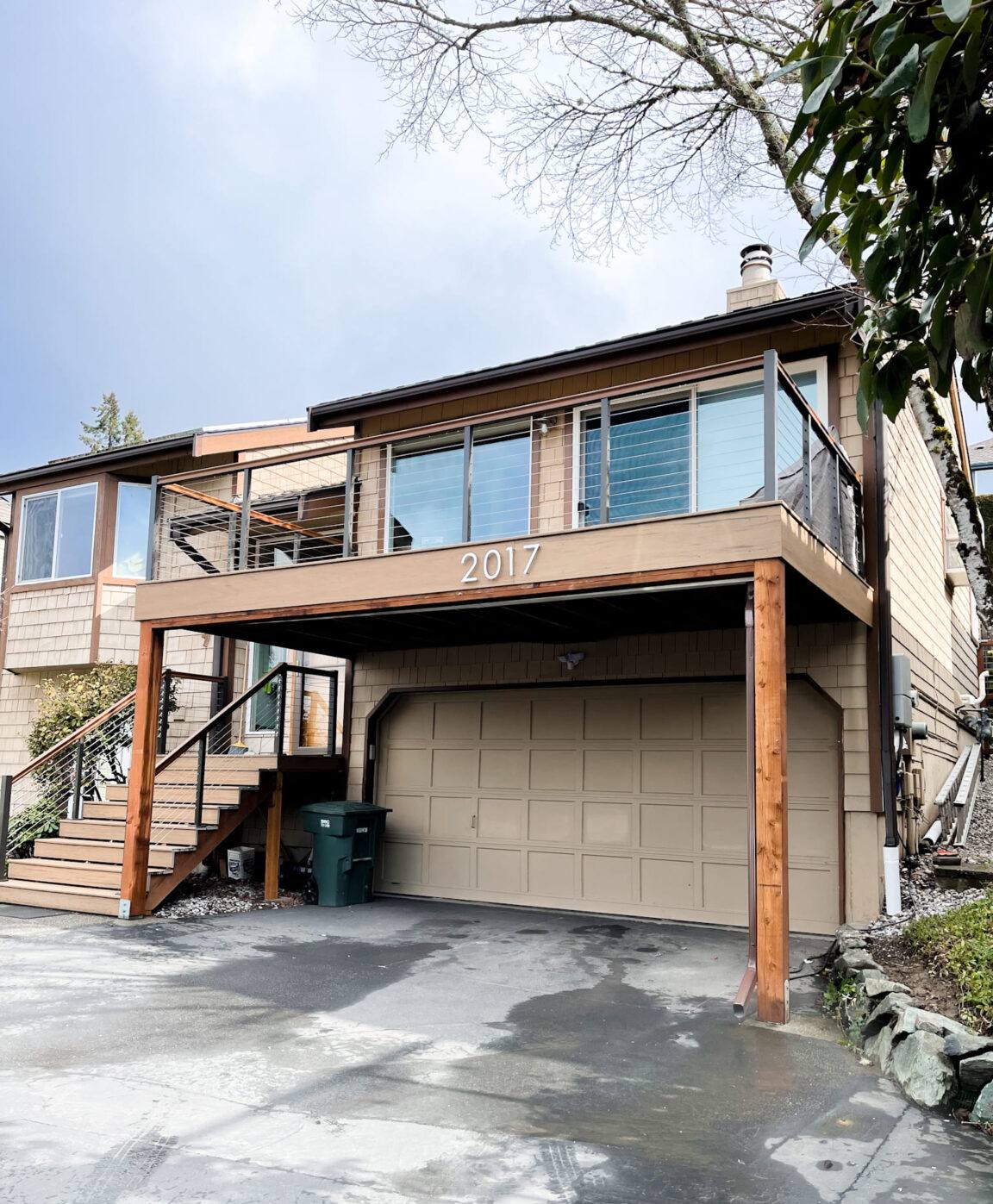
What Skagit County's Climate Does to a Deck
Moisture That Doesn't Let Up
The Pacific Northwest's wet season isn't just heavy rain — it's weeks of low-grade dampness where wood surfaces never fully dry between storms. On a deck, that moisture collects wherever it can't drain or dry: tight board gaps, ledger connections against the house, under railing posts, and anywhere debris piles up against a surface. Wood that stays damp for long stretches is exactly where rot and fungal decay get started, usually from the inside of a joist or post base where you can't see it until the damage is advanced.
Moss and Algae Growth
A long moss season means any horizontal wood or composite surface that doesn't get much sun or airflow will grow a green film if it isn't detailed to shed water and dry out. Beyond looking bad, moss and algae hold moisture against the decking surface and make boards dangerously slick — a real slip hazard on stairs and ramps, not just a cosmetic issue.
Salt-Influenced Air
Proximity to Puget Sound waters means fasteners, connectors, and hardware that aren't rated for a coastal-influenced environment corrode faster than they would inland. Once a fastener starts rusting, it loses holding strength long before it looks bad enough to notice from a normal walk-around.
What a Correctly Built Deck Needs Here
None of this means a deck can't hold up in Burlington — it means the build has to account for what the climate actually does over years, not just what looks right on installation day.
- Framing hardware and fasteners rated for wet, corrosive-prone exposure — not standard interior-grade hardware
- A ledger board connection flashed and sealed to keep water from tracking behind the siding and into the house framing
- Decking material and spacing chosen to let water drain and airflow reach the underside of boards
- Footings and post bases set to keep wood off grade and away from standing water
- Railing posts anchored so the connection can't loosen as wood fibers compress and expand with seasonal moisture
- A finish or material surface that can be cleaned of moss and algae without stripping or damaging it
Skip any one of these and the deck will still pass a casual look, but it's borrowing against its own lifespan.
Decking Material Options for This Climate
There's no single "right" material for every deck — it depends on budget, how much upkeep you want to do, and how the deck sits relative to sun and drainage. Here's how the common options actually compare for a Burlington-area build:
| Material | Moisture Handling | Moss/Algae Resistance | Maintenance |
|---|---|---|---|
| Pressure-treated lumber | Good if properly ventilated underneath | Needs regular cleaning and refinishing | Annual cleaning, periodic sealing |
| Cedar | Naturally moisture-resistant, but surface still needs upkeep | Prone to graying and moss without maintenance | Regular cleaning, occasional oiling |
| Composite decking | Doesn't absorb water into the board itself | Still needs occasional washing; can grow surface algae if shaded | Low — periodic washing, no sealing |
| PVC/capped decking | Fully sealed surface, best resistance to moisture intrusion | Easiest to keep clean of moss and algae | Lowest — occasional washing |
We'll walk through these trade-offs honestly during your estimate — including upfront cost versus what you'll actually spend maintaining it over ten or fifteen years in this climate, which changes the math more than most homeowners expect.
Framing and Structure: Where Decks Actually Fail
Almost every deck failure we get called out for started below the decking boards, not on the surface. The ledger connection to the house is the single most important structural point on the deck — done wrong, it's both a structural risk and a direct path for water to get behind your siding and into the house framing. Post bases and footings matter just as much: wood posts set directly in or too close to soil, or footings that don't sit below the frost and drainage line properly for our soil conditions, will move and rot over time regardless of what decking material sits on top. We build framing with corrosion-resistant hardware throughout and detail every ledger connection with proper flashing, because a deck is only as good as the structure nobody sees once it's finished.
Railings, Stairs, and Everyday Safety Details
Railings and stairs take more abuse than the deck surface itself — they get grabbed, leaned on, and walked on in wet conditions constantly. We build railing posts with connections designed to resist loosening as wood moves seasonally, and we pay close attention to stair tread spacing and surface texture so steps stay usable and safer underfoot during the wetter months. These are the details that get skipped on a budget build and are exactly the ones that turn into a liability a few years in.
Our Process for a Burlington Deck Project
- On-site assessment — we look at drainage, sun exposure, existing structure (for rebuilds), and how the deck will actually be used before recommending anything
- Material and layout discussion — honest trade-offs on decking material, railing style, and layout based on your budget and maintenance preference
- Permitting — we handle the permitting process required for deck construction in Burlington and unincorporated Skagit County
- Framing and structural work — ledger connections, footings, and framing built to hold up under our specific climate conditions
- Decking, railing, and finish work — installed to shed water and resist moss buildup from day one
- Final walkthrough — we go over basic care and what to watch for so you get the full lifespan out of the materials you paid for
Repair, Rebuild, or Full Replacement?
Not every aging deck needs to be torn out. If the framing and footings are sound and the damage is limited to surface boards or railings, a partial rebuild can extend the deck's life at a fraction of full replacement cost. But if there's rot at the ledger connection, soft or spongy framing, or posts that have shifted, patching the visible symptoms without addressing the structure underneath is a short-term fix that costs more in the long run. We'll tell you plainly which situation you're in — including when a repair is genuinely the smarter call, not just the cheaper one to sell.
Signs Your Deck Needs a Closer Look
- Boards that feel soft, spongy, or spring underfoot
- Persistent moss or dark staining that comes back quickly after cleaning
- Railings or posts that wobble or have visible gaps at the base
- Rust staining around fastener heads or hardware
- Gaps or discoloration where the deck meets the house siding
- Standing water that doesn't drain within a few hours after rain
Why Hire a Crew That Already Works This Area
Building a deck that holds up in Skagit County isn't about a generic best practice pulled from a national how-to guide — it's about understanding how our specific combination of rainfall, humidity, and salt-influenced air actually wears on materials over years, not months. A crew that works decks and siding across Anacortes and Burlington regularly sees which hardware holds up, which finishes actually resist moss here, and which framing details keep water out of a ledger connection through a full wet season. That's knowledge you only get from doing the work locally and following up on it years later — not from a spec sheet.
We stand behind the decks we build because we're the ones who'll get the call if something isn't right, and we'd rather build it correctly the first time than field a warranty issue in three years.
Get a Straight Answer About Your Deck
Whether you're planning a new deck, replacing an aging one, or just want an honest opinion on whether yours needs repair or replacement, we're happy to take a look. Reach out for a free, no-pressure estimate — we'll assess your specific site and give you straightforward options, not a sales pitch.