 Anacortes
 Composite Decking in Oak Harbor: Why the Build Matters More Here
Oak Harbor sits close enough to the water that every outdoor structure on a property deals with the same combination of salt-laden air, wind-driven rain, and long stretches of gray, damp weather. A deck here isn't just furniture for the backyard — it's a structure that has to shed water fast, resist corrosion at every fastener, and stand up to moss and algae that get a head start every fall and don't let go until late spring. We're an Anacortes-based crew that works this stretch of Skagit and Island County regularly, and composite decking is one of the projects where the difference between a correctly built deck and a "good enough" one shows up within the first year, not the tenth.
This page covers what a composite deck actually needs to hold up in Oak Harbor's climate, what our install process looks like, and what to ask before you hire anyone to build one.
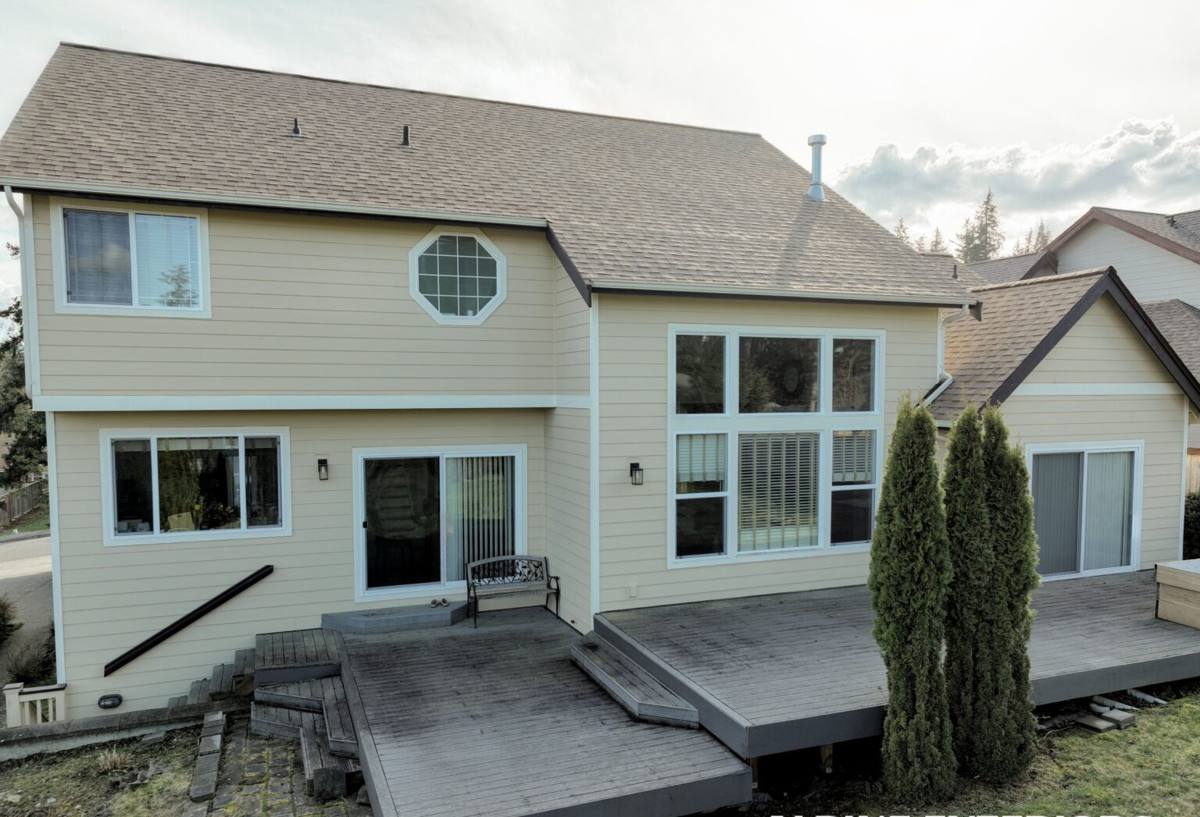
What the Local Climate Actually Does to a Deck
Homeowners often assume composite decking is "maintenance-free" and stop thinking about the site conditions once they've picked a color. The material itself resists rot, but the deck as a whole — framing, fasteners, flashing, and the ground beneath it — is still exposed to the same weather that ages any other structure on the property.
Salt Air and Corrosion
Being close to Puget Sound and the Strait, Oak Harbor properties get a steady low-level dose of salt in the air, especially on west- and south-facing decks that catch prevailing wind. Salt accelerates corrosion on any exposed metal — screw heads, joist hangers, structural screws, railing brackets. Standard zinc-coated hardware can start showing rust streaks on light-colored decking within a couple of seasons. This is a fastener and hardware decision, not a decking-brand decision, and it's one of the most common corners cut on lower-bid decks.
Driving Rain and Water Management
Rain here rarely falls straight down — wind pushes it sideways, which means water gets driven under rail posts, into end-grain cuts, and against ledger board connections that a calm-climate deck design wouldn't have to worry about as much. A deck built without deliberate water management — proper flashing at the ledger, sloped surface, gapped boards, ventilated understructure — will trap moisture even if the decking material itself doesn't rot.
Moss and Algae Season
Composite decking doesn't rot, but it isn't immune to biological growth. Shaded, low-airflow decks under trees or on the north side of a house will grow moss and algae on the surface just like a roof or a walkway does, particularly through the long wet season from fall into spring. This affects both appearance and slip resistance, and it's driven almost entirely by airflow and drainage under and around the deck — factors that get decided during framing, not after the boards go down.
What a Correctly Built Composite Deck Includes
"Composite decking" describes the surface material, not the whole job. The framing underneath, the fastening system, and the drainage plan are what actually determine whether the deck performs well in this climate for the long haul. A correct install here includes:
- Ledger board flashed and sealed to keep water from tracking behind the house siding
- Joists spaced to the decking manufacturer's coastal or wet-climate spec, not just the minimum code spacing
- Corrosion-resistant fasteners and hardware rated for coastal exposure — stainless or heavy-coated, not standard exterior-grade
- Hidden fastener clips or approved face-screw systems installed per the manufacturer's pattern, so board expansion and contraction don't telegraph as buckling or gapping
- Consistent board gapping for drainage and airflow, adjusted slightly for the temperature and humidity on install day
- Ventilated skirting or lattice, not solid enclosure, so air can move under the deck and dry it out between rain events
- Ground clearance and, where needed, a vapor barrier or gravel bed under low-clearance sections to cut down on moisture and moss buildup underneath
Composite vs. Other Decking Materials for This Climate
We install composite decking because, for most Oak Harbor properties, it's the most sensible long-term trade-off given the climate — not because every other material is a bad product. Here's how the honest trade-offs stack up for a wet, salt-air environment:
| Material | Moisture Behavior | Maintenance | Typical Trade-off Here |
|---|---|---|---|
| Composite decking | Resists rot and moisture absorption in the board itself; surface can still grow moss/algae without airflow | Periodic cleaning; no staining or sealing | Higher upfront cost, low ongoing labor over the deck's life |
| Pressure-treated wood | Absorbs moisture, prone to cupping/splitting with repeated wet-dry cycles | Regular staining/sealing needed to keep performing | Lower upfront cost, more owner maintenance to prevent decay |
| Cedar/natural wood | Attractive but softer and more moisture-sensitive without diligent upkeep | Frequent sealing, more vulnerable to moss staining | Best for owners who want the look and will commit to upkeep |
| PVC/vinyl decking | Fully moisture-resistant board, but installation tolerances are less forgiving | Low, similar to composite | Works well but limited color/texture range vs. composite |
For a lot of Oak Harbor homeowners, composite wins out because it removes the yearly staining cycle that wood demands in a climate where you don't get many dry weeks in a row to do it properly.
Our Process for an Oak Harbor Composite Deck
1. Site Walk and Exposure Assessment
We look at sun exposure, prevailing wind and rain direction, tree cover, and how close the site is to open water or salt spray. This shapes fastener choice, board gapping, and how much ventilation the substructure needs.
2. Framing and Structure
We build or inspect the substructure to handle the coastal exposure specifically — corrosion-resistant hardware throughout, ledger flashing done correctly, and footings sized for the soil conditions common around Oak Harbor and the surrounding Whidbey and Skagit shoreline areas.
3. Decking Installation
Boards go down per the manufacturer's fastening and gapping spec, adjusted for the day's humidity and temperature so the deck doesn't develop gaps or crowding as the seasons turn. Cut ends are treated per manufacturer guidance to protect against moisture wicking.
4. Railing, Stairs, and Finish Details
Rail posts get the same water-management attention as the ledger — proper flashing or blocking so water doesn't sit against the post base, which is one of the most common failure points on coastal decks.
5. Walkthrough and Care Guidance
We walk the finished deck with the homeowner and cover realistic maintenance: seasonal cleaning to keep moss from establishing, what to check on hardware over time, and how to spot early drainage issues before they become structural ones.
Maintenance Reality for This Climate
Composite is low-maintenance, not no-maintenance, especially in a moss-prone climate like Skagit County's. A short seasonal routine keeps a well-built deck looking and performing the way it should:
- Sweep debris off the surface regularly, especially in fall when leaves and needles collect in board gaps
- Rinse or lightly scrub in early spring to knock back any moss or algae film before it sets in
- Keep gutters and downspouts near the deck clear so runoff isn't dumping directly onto the surface
- Check that skirting vents and under-deck airflow paths stay clear of stored items or overgrown landscaping
- Have hardware and connections looked at every few years, particularly on decks close to open water
Choosing a Composite Decking Contractor in Oak Harbor
Composite decking looks straightforward from the outside, which is exactly why the framing and hardware decisions underneath get skipped by crews that aren't used to building for this specific climate. A few things worth asking any contractor bidding the job:
- What fastener and hardware grade do they use, and is it rated for coastal/salt-air exposure?
- How do they handle ledger flashing and water management at the house connection?
- Do they follow the decking manufacturer's specific fastening pattern and gapping guidance, or a generic approach?
- How is the substructure ventilated to manage moisture and reduce moss buildup?
- Have they built decks specifically in this area, and do they understand the exposure differences between a sheltered lot and an open, wind-exposed one?
A crew that regularly works Oak Harbor and the surrounding Anacortes and Skagit County area isn't guessing at these answers — it's routine for us, because the same salt air, rain patterns, and moss season show up on nearly every deck we build in this region.
Get a Local Estimate
If you're planning a new composite deck or replacing an aging one in Oak Harbor, we're happy to walk the site, talk through material and layout options, and give you a straightforward, no-pressure estimate. Use the form below to get started.