 Anacortes
 Building Decks for Skyline's Conditions, Not a Catalog Photo
A deck built to a national catalog spec doesn't always hold up the way homeowners expect once it's sitting outside in Anacortes weather year after year. In the Skyline area, that means salt-laden air moving in off the water, long stretches of driving rain through fall and winter, and a moss season that can run from October well into spring. None of that is exotic — it's just the normal cost of living somewhere this beautiful — but it does change what "correctly built" means for a deck. Fastener choice, framing details, drainage, and material selection all need to account for moisture that doesn't just fall from the sky once and dry up, but sits, seeps, and returns on a near-daily basis for months at a time.
This page is specifically about deck building in and around Skyline — not a generic overview of decking products. We'll walk through what the local climate demands, what a properly built deck actually involves below the surface, and how we approach the work when we're on site.
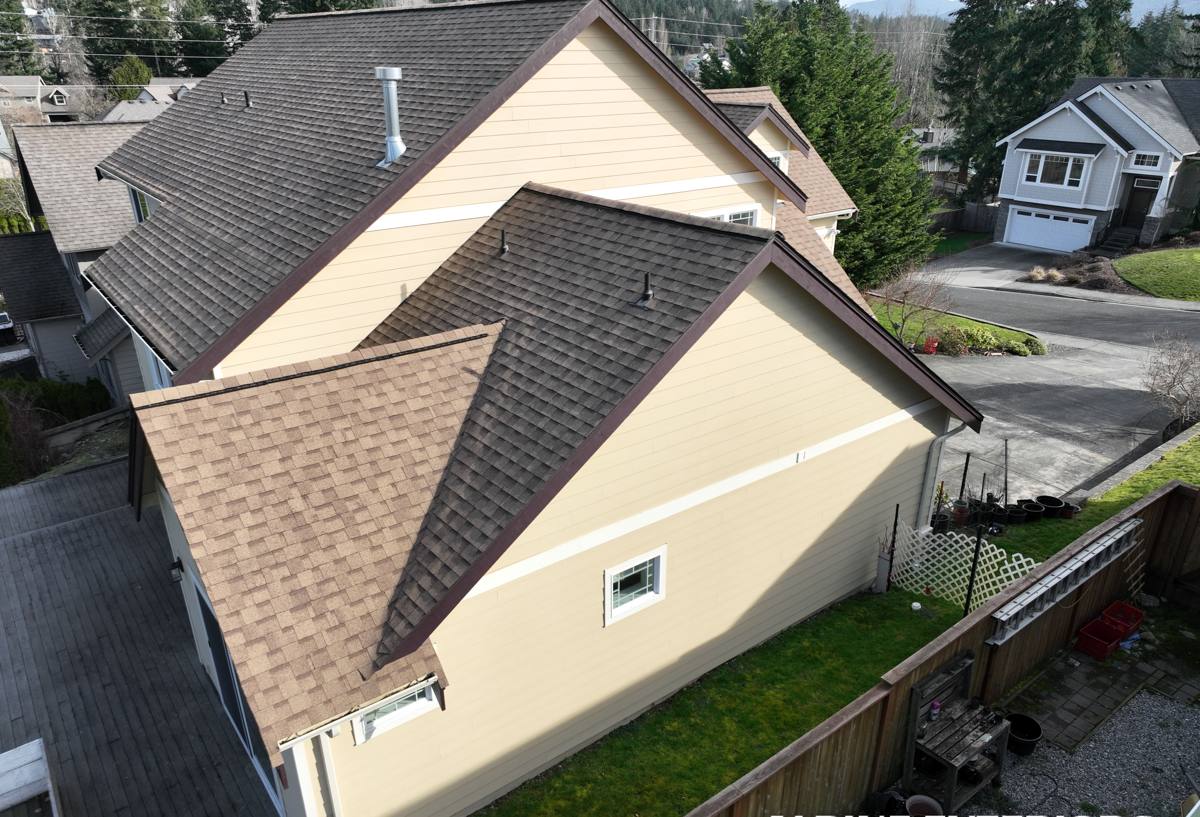
What Skyline's Setting Means for a Deck
Homes in the Skyline area often sit among mature trees and have some exposure to marine air moving through Skagit County, whether that's a direct water view or just the humidity and salt content that travels inland from Rosario Strait and the surrounding Puget Sound shoreline. Tree cover brings its own tradeoffs — shade keeps a deck cooler in summer, but it also slows drying time after rain and contributes needles, leaves, and organic debris that feed moss and algae growth. A deck tucked under a canopy of firs or cedars is going to accumulate more surface debris and hold moisture longer than one in full sun, and that needs to be planned for at the design stage, not discovered two winters later.
None of this means a deck can't be built well in Skyline — it just means the build has to account for shade, drainage, and salt exposure as real design inputs rather than afterthoughts.
Common Conditions We Plan Around
- Extended damp periods where wood-to-wood contact points stay wet for days at a time
- Moss and algae establishing on decking, stair treads, and railings in shaded or north-facing areas
- Salt-influenced air accelerating corrosion on unprotected metal hardware
- Organic debris (needles, leaves, seed pods) collecting in gaps and against ledger boards
- Freeze-thaw cycles that are mild but frequent, stressing fasteners and joints over time
Choosing the Right Decking Material
There's no single "best" decking material — there's a best material for a given budget, sun exposure, and maintenance appetite. For a Skyline property with real shade and moisture exposure, we walk homeowners through the honest tradeoffs rather than pushing whatever has the best margin.
| Material | Moisture & Moss Behavior | Maintenance | Typical Lifespan |
|---|---|---|---|
| Pressure-treated fir/hem-fir | Absorbs moisture readily; moss and algae take hold quickly in shade without regular cleaning | Annual cleaning, periodic sealing or staining | 15-20 years with upkeep |
| Cedar | Naturally rot- and insect-resistant, but still needs surface treatment to resist moss in shaded, damp spots | Sealing every 1-2 years to hold color and resist graying | 20-25 years with upkeep |
| Composite decking | Doesn't absorb water like wood, but surface texture can still host algae film if never cleaned | Occasional wash; no staining or sealing required | 25-30+ years, manufacturer-dependent |
| PVC/capped polymer | Fully moisture-resistant surface; best resistance to staining and moss adhesion | Lowest maintenance; occasional rinse | 25-30+ years |
Composite and PVC products cost more upfront, but for a shaded, moisture-prone lot they often save real money over a decade in avoided sealing, staining, and board replacement. Cedar and treated lumber are still legitimate choices — especially for homeowners who want a wood look and are willing to keep up with maintenance — but we're honest that they require more ongoing attention in a climate like ours.
Framing and Structure: Where Deck Failures Actually Start
Most deck problems we get called out to inspect don't start with the decking boards on top — they start with what's underneath and behind it. In a wet climate, the framing and connection details matter more than the surface material.
Ledger Board Flashing
The ledger board — where the deck attaches to the house — is the single most common source of hidden rot in decks anywhere in the Pacific Northwest. Without proper flashing that directs water away from the house band joist, moisture works its way behind the ledger and into the structure, often invisibly, for years before it shows on the surface. We flash every ledger connection correctly and use a moisture barrier between the ledger and the house, regardless of decking material chosen.
Joist Protection
Joist tape or a comparable moisture-blocking membrane over the top of each joist keeps water from wicking into fastener holes and end grain, which is where rot typically begins even on treated lumber. This is inexpensive relative to the total project cost and makes a meaningful difference in how long the frame lasts.
Footings and Post Bases
Footings need to be sized and set to Skagit County frost and bearing requirements, and post bases should hold the post above the decking surface rather than letting wood sit directly on concrete, where standing water collects. Elevated, ventilated post bases are a small detail that prevents a large future problem.
Railings, Fasteners, and Hardware
Salt air is hard on unprotected metal. Standard zinc-coated fasteners can start showing surface corrosion within a few seasons near the water, and once a fastener starts to rust it weakens and can stain the decking around it.
| Hardware Type | Performance in Salt Air | Where We Use It |
|---|---|---|
| Standard galvanized | Adequate short-term, but corrodes faster with salt exposure | Rarely, only where budget-driven and away from direct exposure |
| Hot-dip galvanized | Better corrosion resistance than standard galvanized | Framing connectors on less exposed builds |
| Stainless steel (305/316) | Best resistance to salt-driven corrosion | Fasteners, railing hardware, and connectors on exposed or coastal-influenced sites |
For most Skyline projects, we recommend stainless fasteners at minimum for anything visible or load-bearing near the deck surface. It costs more per piece, but hardware failure is one of the most preventable and most consequential mistakes in coastal deck building — a rusted-out railing bracket is a safety issue, not just a cosmetic one.
Managing Moss, Algae, and Standing Water Long-Term
Even a well-built deck in a shaded, damp part of Skyline will need some ongoing attention. The goal of good design is to minimize that burden, not eliminate it entirely — no deck in this climate is maintenance-free.
Maintenance Checklist for Skyline Homeowners
- Sweep debris (needles, seed pods, leaves) off the deck surface regularly, especially in fall
- Clear gaps between boards where organic material collects and holds moisture
- Wash decking with a deck-safe cleaner once or twice a year to remove early moss and algae film
- Check ledger flashing and any visible fasteners annually for signs of corrosion or gaps
- Reapply sealant or stain on wood decking per manufacturer schedule, typically every 1-2 years
- Keep gutters and downspouts near the deck clear so roof runoff isn't draining onto or under it
- Trim back overhanging branches where practical to improve sun exposure and airflow
Board spacing and airflow underneath the deck both play a role here too — decks built tight to the ground with poor ventilation dry out slower and hold moss longer than those with adequate clearance and gapping designed for drainage.
Our Deck Building Process
- On-site assessment. We look at sun exposure, drainage, existing structure (if replacing a deck), and how the site handles rain today.
- Material and layout discussion. We walk through decking, railing, and hardware options honestly, including cost and maintenance tradeoffs specific to your site's shade and exposure.
- Permitting. We handle the permit application and inspections required for the scope of work through the applicable local building authority.
- Framing and flashing. Footings, structural framing, ledger flashing, and joist protection are installed to hold up under sustained moisture exposure.
- Decking and railing installation. Surface materials and railing systems are installed with corrosion-resistant hardware appropriate to the site.
- Final walkthrough. We review the finished deck with you, including basic maintenance guidance specific to the materials chosen.
Permits and Code Considerations
Most new decks and many deck replacements in Skagit County require a building permit, particularly when the deck is attached to the house, elevated above a certain height, or involves structural changes. Requirements can vary depending on deck size, height, and whether it's a new build or replacement of an existing structure. We handle the permitting process as part of the project so homeowners aren't left navigating it alone, and we build to the structural and safety code requirements that apply, including railing height and guard spacing where elevation requires it.
Why a Crew That Already Works in Skyline Matters
Deck building isn't just carpentry — in this climate, it's carpentry plus a working understanding of how salt air, shade, and sustained rain interact with specific materials and connection details over years, not just the first season. A crew that already works in and around Skyline has seen how decks in this specific setting age, where moss actually establishes first, and which hardware and flashing details hold up versus which ones show problems within a few years. That's a different starting point than a general contractor pricing a deck from a spec sheet without that local context.
We build decks meant to hold up to Anacortes weather over the long run, not just look good on installation day. If you're planning a new deck or considering a repair or replacement in the Skyline area, we're happy to take a look at your site and talk through honest options — no pressure, no upsell. Reach out for a free estimate using the form below.