 Anacortes
 Metal Roofing for La Conner Homes
La Conner sits close enough to the water that its roofs deal with a different set of stresses than homes further inland in Skagit County. Salt-laden air off the Swinomish Channel and Padilla Bay, driving rain that comes in sideways during winter storms, and a moss season that runs long and wet all put real wear on a roof year after year. Metal roofing, installed correctly, handles that combination better than most other materials — but "installed correctly" is doing a lot of work in that sentence, and it's the part that separates a roof that lasts thirty-plus years from one that starts causing problems in five.
This page covers what a metal roof needs to hold up in this specific environment, what a proper installation actually involves, and how our process works for La Conner homeowners.
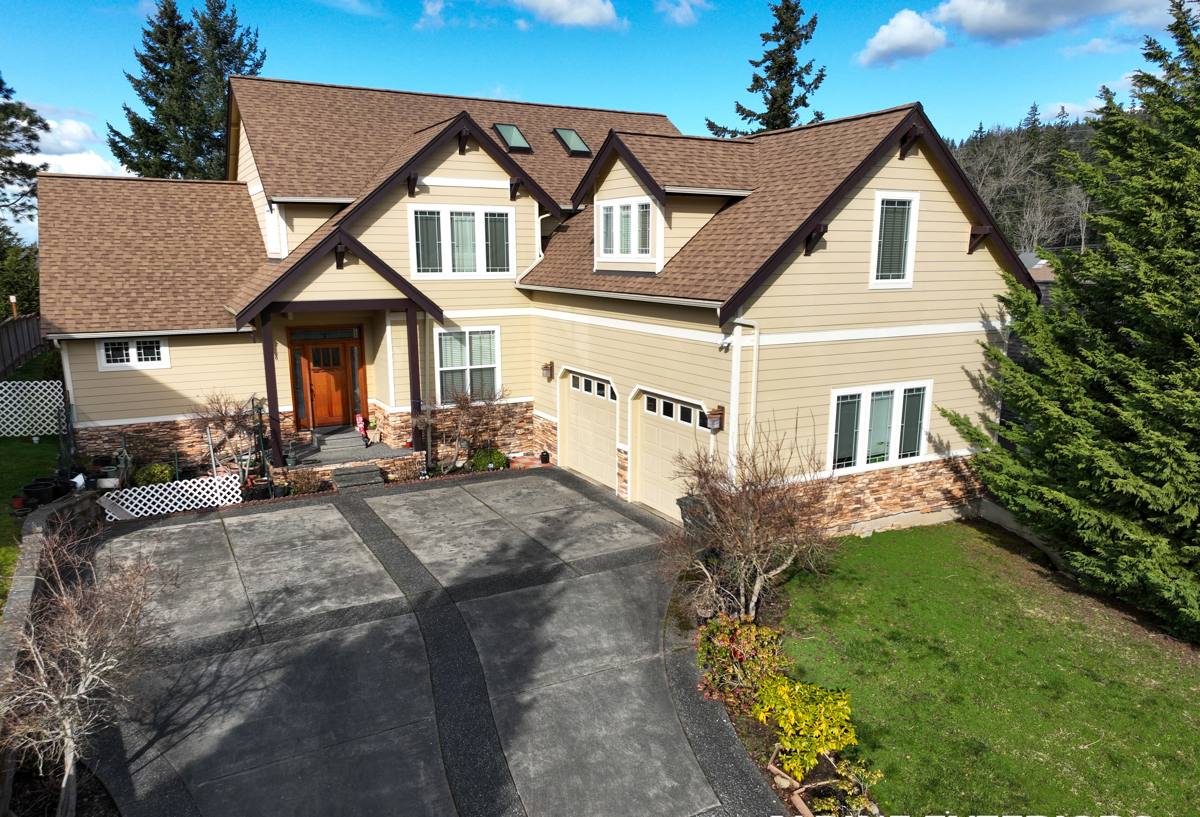
What the Local Climate Actually Does to a Roof
Salt Air
Airborne salt is corrosive to exposed metal fasteners, cut edges, and lower-grade coatings. It doesn't take a beachfront lot to be affected — homes a mile or more inland around La Conner still see measurable salt exposure carried in on marine air. Over time, salt accelerates corrosion at any point where a panel's protective coating has been scratched, drilled through, or left unsealed.
Driving Rain
Skagit County storms frequently push rain at an angle rather than straight down, which means water gets forced up under laps, around penetrations, and into any gap in flashing that a fair-weather installation might get away with. A roof here has to be detailed for wind-driven rain, not just vertical rainfall.
Moss and Sustained Moisture
Between the marine humidity and tree cover common around La Conner, moss has a long growing season and doesn't fully dry out between rain events. On organic roofing materials moss holds moisture against the surface and works its way under shingle tabs. Metal doesn't give moss the same foothold, but valleys, low-slope sections, and areas with poor airflow can still collect debris and grow moss on the surface grime if the roof isn't ever cleaned.
Why Metal Roofing Fits This Environment
Metal isn't automatically the right answer everywhere, but for the conditions La Conner sees, it has real advantages:
- Steep drainage profile on standing seam sheds wind-driven rain faster than lapped materials with more exposed edges
- No exposed organic surface for moss to colonize the way it does on wood or composition roofing
- Quality coated steel or aluminum resists the corrosion that plain fasteners and untreated edges are vulnerable to near saltwater
- Long service life reduces how often the roof is disturbed and re-flashed, which is when leaks most often get introduced
- Sheds heavy winter rain volume without the granule loss and surface wear composition shingles show in wet climates
The trade-off is that metal roofing is unforgiving of installation shortcuts. A poorly fastened panel or a badly lapped flashing detail on a metal roof tends to show up as a leak sooner, and it's more work to correct than patching a shingle. That's why we treat the installation details below as non-negotiable, not optional upgrades.
Panel Types and Finishes
Not every metal roofing product is a good fit for a home near La Conner's marine air. We'll walk through the honest trade-offs for your specific roof, but here's the general landscape:
| Panel Type | Fastening | Best Fit For | Trade-Offs |
|---|---|---|---|
| Standing seam | Concealed clips, no exposed screws on the field | Most La Conner homes, especially near water or with steep pitches | Higher material and labor cost; requires a crew experienced with seaming |
| Exposed-fastener panel | Screws through the panel face into decking | Outbuildings, shops, lower-visibility roofs, tighter budgets | Fasteners and washers need periodic inspection and eventual replacement |
| Metal shingle/shake profile | Concealed or partially concealed, interlocking | Homeowners who want a traditional look with metal's durability | More seams and laps than standing seam, so detailing matters more |
For anything within a few miles of the water, we lean toward standing seam or a marine-grade coated product with concealed fasteners, since every exposed screw head is a future maintenance point and a potential corrosion start. On steel panels, we look at coating quality (things like coating thickness and warranty terms from the manufacturer) rather than just gauge, since a thin or generic coating is often where premature rust starts near saltwater.
What a Correct Installation Actually Involves
The panels get most of the attention, but the parts of a metal roof that actually determine whether it stays watertight are mostly underneath and around the edges:
Underlayment
A high-temperature synthetic or peel-and-stick underlayment gives the roof a second line of defense if wind-driven rain ever gets past a seam or fastener. In a climate with as much sustained wet weather as this one, we don't consider underlayment optional, even under standing seam.
Fastener and Clip Selection
Fasteners and clips need to be compatible with the panel metal to avoid galvanic corrosion — mixing incompatible metals near salt air speeds up corrosion at every contact point. This is a detail that's invisible once the roof is finished but shows up as staining and pitting within a few years if it's done wrong.
Flashing and Penetrations
Valleys, chimneys, vent pipes, and wall transitions are where the overwhelming majority of roof leaks originate — on any material, not just metal. Flashing has to be formed and lapped in the correct direction for how water and wind-driven rain actually move across this specific roof, not installed to a generic template.
Ventilation
A roof deck that can't breathe traps moisture, which leads to rot and condensation issues underneath the metal regardless of how good the panels are. Ridge and soffit ventilation sized correctly for the attic space is part of a correct metal roof install, not a separate afterthought.
Edge and Eave Detail
Drip edge, eave flashing, and starter strips need to be set up to handle the wind uplift and wind-driven rain typical of Skagit County storms, particularly on homes with any water exposure.
Our Process
For a La Conner metal roofing project, our process generally looks like this:
- On-site inspection of the existing roof, decking condition, and ventilation, with photos and honest notes on what we find
- Written estimate that spells out panel type, underlayment, flashing scope, and fastener/clip system — no vague line items
- Deck repair or replacement where needed before any panel goes down; we don't install over compromised decking
- Underlayment and flashing installed first, with extra attention to valleys, penetrations, and any wall or chimney transitions
- Panel installation with fastener spacing and clip layout matched to the manufacturer's specs for our wind and rain exposure
- Final walk-through where we show you the completed work and explain what maintenance, if any, the roof will need going forward
We don't subcontract the core installation out to whoever's available that week. The same crew that quotes the job typically installs it, which matters on a material where the details are as important as they are with metal.
Maintenance in a Marine Environment
Metal roofing is low-maintenance compared to most alternatives, but "low" isn't "none," especially this close to saltwater:
- Rinse off salt residue, pollen, and debris periodically, particularly on homes with more direct water exposure
- Keep gutters and valleys clear so water isn't sitting against panel edges or fasteners longer than it needs to
- Trim back overhanging branches to reduce moss growth and debris buildup on the roof surface
- Have exposed-fastener systems inspected every few years, since screw gaskets are the first thing to wear out
- After major windstorms, a quick visual check for lifted flashing or panel edges is worth the ten minutes it takes
Cost Factors
Every roof is different, but these are the main variables that move the price on a La Conner metal roofing project:
| Factor | Why It Matters |
|---|---|
| Panel system chosen | Standing seam runs higher than exposed-fastener panel due to material and labor |
| Roof complexity | Multiple valleys, dormers, and penetrations add flashing labor |
| Deck condition | Rot or soft decking found during tear-off adds repair cost before panels go on |
| Coating and gauge | Marine-grade coatings and heavier gauge steel cost more but reduce corrosion risk near saltwater |
| Tear-off vs. re-roof | Removing existing roofing adds labor and disposal cost but is often necessary for a proper install |
We give you a real number after seeing the roof in person — not a phone estimate, since so much of the cost depends on decking condition and roof complexity that you can't fully judge from the ground.
Why a Local Crew Matters Here
A metal roofing crew that already works in and around La Conner has seen how this specific stretch of Skagit County weather treats roofs — which valleys tend to collect debris, which orientations take the worst of the driving rain, and which coating choices actually hold up near this much salt air over years, not just on a spec sheet. That experience shows up in the flashing decisions and product choices made before the first panel ever goes down, and it's the difference between a roof that's built for this climate and one that's built to a generic standard and hoping for the best.
If you're weighing metal roofing for a La Conner home, we're glad to take a look and give you a straight answer on what your roof needs. Reach out for a free, no-pressure estimate using the form below.