 Anacortes
 Deck Repair Built for Oak Harbor's Marine Climate
A deck in Oak Harbor works harder than a deck almost anywhere inland. It sits under a marine layer that keeps humidity high for months at a time, takes salt-laden wind off the water, and spends a good chunk of the year shaded and damp while moss and algae get a foothold. None of that means a deck is destined to fail early — it means the repair work has to account for conditions that a generic contractor from outside the area might not think twice about. We work decks in this climate regularly, and the fixes we make are chosen with that environment in mind, not copied from a one-size-fits-all repair checklist.
This page is about deck repair specifically — not full replacement, not new construction. Most decks we're called out to see don't need to be torn out. They need targeted structural, surface, or fastener repairs done correctly, in the right order, with materials that will actually hold up to another decade of Pacific Northwest weather.
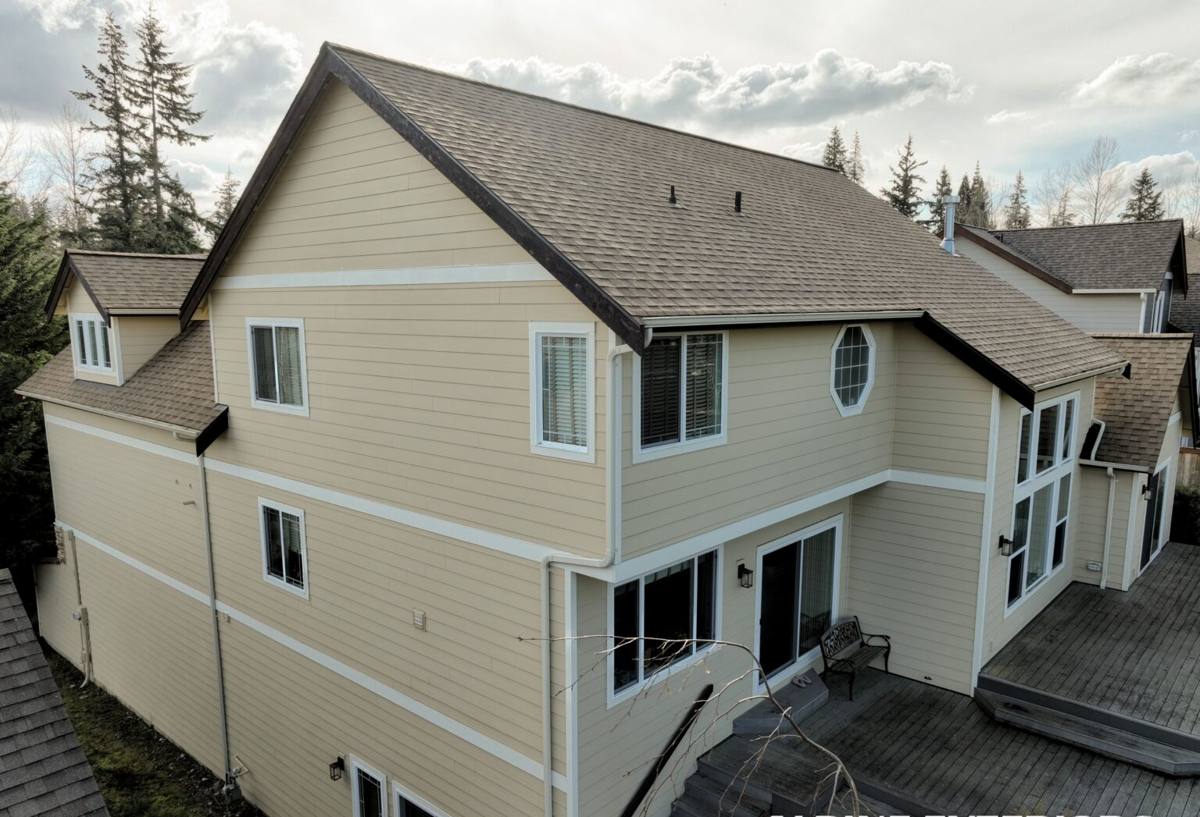
What Salt Air, Rain, and Moss Actually Do to a Deck
It helps to understand the specific failure patterns we see, because they're different from what you'd find on a deck in a dry inland climate.
Salt Air and Metal Fasteners
Coastal air carries fine salt particles that accelerate corrosion on anything metal — nails, screws, joist hangers, bolts. Corroding fasteners lose grip strength long before the wood around them shows obvious damage. A deck can look solid on the surface while the hardware holding it together is quietly failing underneath. This is one of the most common repair issues we find that homeowners had no way of spotting themselves.
Driving Rain and Moisture Intrusion
Wind-driven rain doesn't just fall straight down — it gets pushed sideways into ledger boards, under railings, and into any gap where flashing or sealant has failed. Water that gets trapped rather than shed causes rot from the inside out, which is why some of the worst damage is hidden until a board is pulled or a post is probed.
Moss, Algae, and Surface Breakdown
Long stretches of shade and dampness let moss and algae establish on decking boards, especially on the north side of a house or under overhangs. Beyond being slippery and unattractive, moss holds moisture against the wood surface far longer than open air would, which speeds up surface rot and finish breakdown. A deck that's regularly damp and shaded needs a different maintenance and repair approach than one that dries out in full sun.
Signs Your Oak Harbor Deck Needs Repair, Not Just Cleaning
Some deck problems are cosmetic and some are structural. Knowing the difference matters, because pressure-washing a deck with a compromised ledger board or corroded hangers just makes the surface look better while the real problem keeps getting worse underneath.
- Soft, spongy, or springy spots when you walk across the decking
- Visible rust streaks or corrosion around fastener heads and joist hangers
- Railings or posts that wobble or flex under hand pressure
- Gaps opening up where the deck meets the house, or at the ledger board connection
- Persistent moss or dark staining that returns quickly after cleaning
- Boards that are cupping, splitting, or visibly graying and rough underfoot
- Stairs that feel less solid than they used to, especially at the stringer connections
- A musty smell coming from underneath the deck structure
If you're seeing more than one of these at once, it's worth having someone look at the structure before spring and summer deck season, not after.
How We Approach a Deck Repair
We don't quote deck repair sight unseen, and we don't start swapping boards without understanding what's happening underneath them first. Our process is straightforward:
1. Full Structural Inspection
Before we talk about surface repairs, we check the parts that actually hold the deck up: the ledger board connection to the house, the posts and footings, the joists, and the fasteners and hardware throughout. This is where hidden damage from moisture intrusion or fastener corrosion usually shows up first.
2. Honest Scope of Work
We tell you what genuinely needs to be repaired, what's optional, and what can wait. Not every issue on a deck needs to be fixed in the same visit, and we'd rather give you an accurate picture than upsell work that isn't necessary yet.
3. Targeted Repairs
Depending on what we find, that might mean replacing individual rotted or cupped boards, sistering or replacing a compromised joist, upgrading corroded fasteners to coastal-rated hardware, resealing a ledger board connection, or rebuilding a section of railing or stairs that's no longer solid. We fix what's actually broken rather than defaulting to a full tear-out.
4. Correcting the Root Cause
A repair that doesn't address why the damage happened in the first place is a temporary fix. If poor drainage, missing flashing, or standard hardware in a corrosive environment caused the original failure, we address that as part of the repair — not just the symptom.
Repair vs. Replace: How We Make the Call
Homeowners often assume any visible deck damage means the whole structure needs to come out. That's rarely true. Here's generally how we think about it:
| Condition | Usually Repairable | Usually Warrants Replacement |
|---|---|---|
| Ledger board & framing | Sound with isolated fastener or flashing issues | Widespread rot at ledger, multiple compromised joists |
| Decking boards | Scattered soft, cupped, or split boards | Majority of boards failing or beyond their service life |
| Posts & footings | Solid footings, isolated post damage | Undersized or shifting footings, widespread post rot |
| Railings & stairs | Loose connections, isolated damaged balusters | Structural flex throughout, non-code-compliant spacing/height |
| Fasteners & hardware | Localized corrosion, upgradeable in place | Original hardware wasn't coastal-rated and has failed broadly |
In many cases a deck that looks tired can be brought back to solid, safe condition with focused repair work at a fraction of the cost of a full rebuild.
Decking Material Considerations for This Climate
When we're replacing individual boards or sections during a repair, the material choice matters more here than it would in a drier climate.
Wood Decking
Cedar and other softwoods are common and look good, but they need consistent upkeep — sealing, cleaning, and moss control — to hold up under sustained moisture. We're honest with clients about this maintenance burden up front rather than after the fact.
Composite Decking
Composite boards resist moisture absorption and don't rot, which reduces one of the biggest failure points we see. They're not maintenance-free, though — moss and algae can still grow on the surface in shaded, damp spots, and they still need periodic cleaning. The trade-off is generally less structural risk in exchange for a different appearance and higher upfront material cost.
Hardware and Fasteners
Regardless of decking material, we use fasteners and structural hardware rated for coastal or high-moisture exposure on repair work in this area. Standard hardware may be cheaper up front, but replacing corroded fasteners again in a few years costs more in the long run — both in money and in the disruption of redoing work.
Cost Factors for Deck Repair
Every deck is different, so we don't publish flat repair pricing, but the main factors that drive cost are consistent:
| Factor | Why It Matters |
|---|---|
| Extent of structural damage | Framing and ledger repairs take more labor and access than surface board swaps |
| Number of boards affected | Isolated board replacement is far less costly than widespread surface failure |
| Accessibility | Decks with limited underneath access or elevated structures take longer to inspect and repair |
| Material choice | Wood, composite, and hardware upgrades vary in material cost |
| Root-cause corrections | Fixing drainage, flashing, or grading issues adds scope but prevents repeat damage |
We walk through these factors with you during the estimate so there are no surprises once work starts.
Maintenance That Extends the Life of a Repair
A good repair job on an Oak Harbor deck is only half the equation — what happens afterward matters too. A few habits go a long way in this climate:
- Sweep debris and standing moisture off the deck surface regularly, especially in shaded areas
- Clean moss and algae buildup before it has a chance to establish and spread
- Check railings and stair connections for looseness once or twice a year
- Keep gutters and downspouts clear so runoff isn't draining directly onto or under the deck
- Reseal or refinish wood decking on the schedule the product actually calls for, not just when it looks bad
- Have fasteners and hardware spot-checked periodically, since corrosion isn't always visible from the top
Why It Matters Working With a Crew That Knows Oak Harbor
A contractor who mostly works drier, inland climates can do competent general carpentry and still miss the specific things that matter here — where moisture tends to collect on a coastal deck, which hardware actually holds up to salt air over years rather than months, and how much moss exposure a given deck orientation is realistically going to see. We work decks in Anacortes, Skagit County, and the surrounding communities regularly enough to know what tends to fail first in this environment and to build the repair around that, not around a generic checklist.
That local familiarity also means a more accurate first estimate. We're not guessing at how a marine climate affects a structure — we're applying what we've already seen hold up and what hasn't.
Get a Straight Answer on Your Deck
If your deck is showing soft spots, corrosion, moss buildup, or just doesn't feel as solid as it used to, we're glad to take a look and give you an honest read on what it actually needs. We offer free, no-pressure estimates — use the form below to get started.