 Anacortes
 Why Fidalgo Island Is a Tough Place for Siding
Fidalgo Island sits surrounded by saltwater on nearly every side, and that setting shapes what a home's exterior has to survive year after year. Salt-laden air moves inland off the water and settles on siding, trim, and fasteners. Combine that with the driving rain that rolls through Skagit County for much of the year and the long, damp stretch of moss season that follows, and you have a climate that punishes weak siding systems faster than most inland parts of Washington. Homes here don't just get wet — they stay wet, and they get a steady dose of airborne salt on top of it.
That combination is hard on wood, hard on vinyl, and hard on any siding product that wasn't engineered with moisture and marine exposure specifically in mind. It's also exactly the environment James Hardie's climate-engineered product lines were built to handle, which is why it's the only siding we install on Anacortes and Fidalgo Island homes.
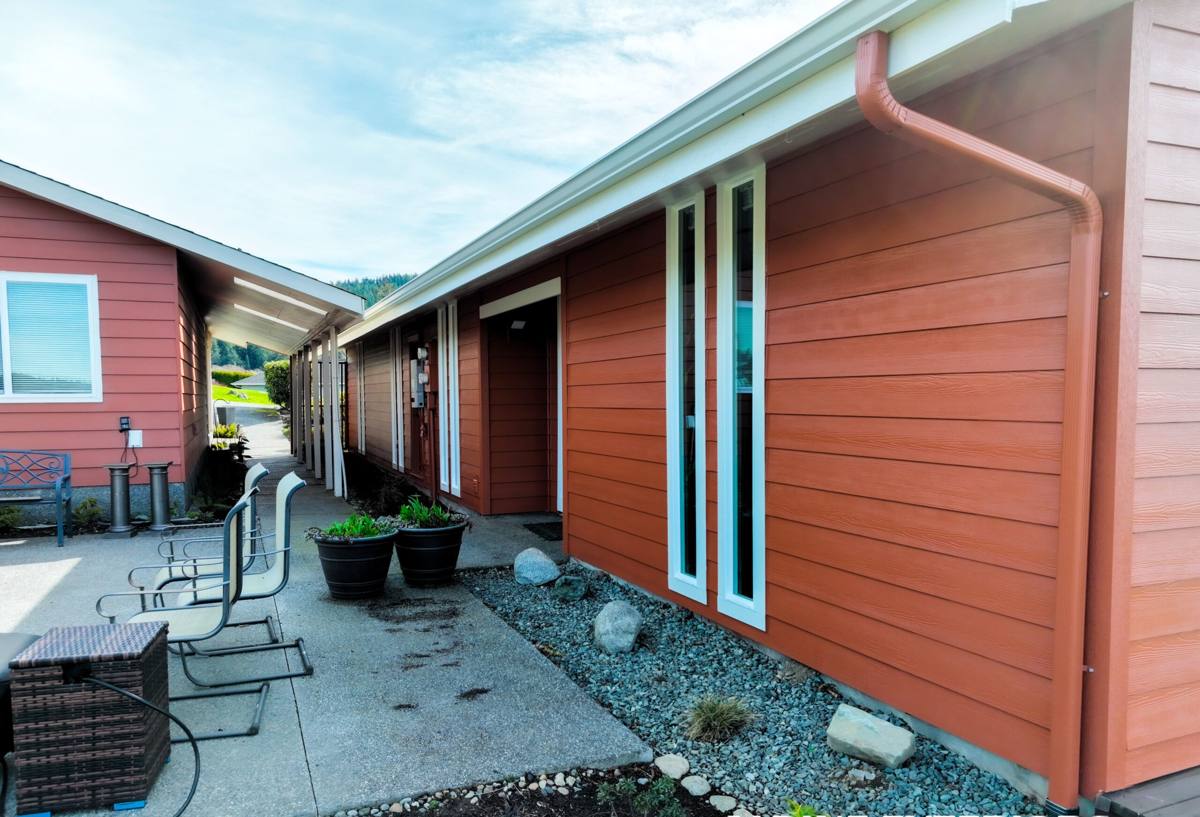
What Salt Air, Rain, and Moss Actually Do to a House
Salt Air
Airborne salt is corrosive to metal fasteners and flashing, and it accelerates the breakdown of finishes that aren't formulated to resist it. Over years, a siding product with a weak factory finish will chalk, fade, or start to show wear noticeably faster on an island home than it would twenty miles inland.
Driving Rain
Wind-driven rain doesn't just hit siding — it gets pushed sideways into laps, seams, and butt joints. A siding system depends on correct overlaps, gapping, and flashing details to keep that water moving out and down instead of behind the cladding. When those details are wrong, water finds a way in, and it often does so quietly, behind the siding, long before anyone notices a problem.
Moss and Sustained Dampness
Skagit County's moss season means long stretches where north-facing and shaded walls stay damp for days at a time. Moss and algae growth on siding isn't just cosmetic — sustained dampness against a wall assembly is exactly the condition that rots wood-based products and stresses paint films. Siding that can shed water and dry out between rain events holds up; siding that traps moisture against itself does not.
Why We Install James Hardie Fiber Cement Only
We don't install vinyl, LP SmartSide, or primed wood siding, and on an island like this the reasoning is straightforward. Vinyl can warp and become brittle with age and temperature swings, and its seams and J-channels give wind-driven rain more opportunities to work water behind the cladding. Wood-based and engineered-wood products are dimensionally stable when new, but they depend on flawless field caulking and paint maintenance to keep moisture out — a maintenance burden that's tougher to stay ahead of in a climate this wet.
James Hardie fiber cement is a cement, sand, and cellulose fiber composite. It doesn't rot, it's non-combustible, and it holds its shape in freeze-thaw and wet-dry cycles far better than wood-based alternatives. Hardie's HZ5 product formulation is specifically engineered for wetter, harsher climates like the Pacific Northwest, and its ColorPlus factory-applied finish is baked on under controlled conditions rather than field-painted — which matters when you're trying to get consistent, long-lasting color performance on a house that gets hit with salt air and rain nine months of the year.
What Correct Installation Involves
Fiber cement is only as good as the installation behind it. On Fidalgo Island homes specifically, we pay close attention to:
- Proper starter strip and clearance from grade, decks, and roof lines so siding never sits in standing water or gets trapped moisture from below
- Correct fastener type and spacing — using hot-dip galvanized or stainless fasteners rated for coastal exposure, not standard fasteners that corrode in salt air
- Flashing at every window, door, and penetration, installed so water sheds outward and down, never behind the water-resistive barrier
- Manufacturer-specified gapping at butt joints and trim, caulked with a high-quality sealant rated for the movement and moisture this climate produces
- A continuous, correctly lapped weather-resistive barrier underneath the siding — the last line of defense if any water does get past the cladding
- Factory-cut and factory-primed edges wherever possible, since field-cut edges need to be sealed to maintain the product's moisture resistance
Skipping any one of these steps doesn't usually cause an immediate problem — it causes a problem in year five or year eight, after enough rain cycles have found the gap. That's why installation quality matters as much as the product choice itself.
Choosing the Right Hardie Product for Your Home
James Hardie makes several distinct product lines, and the right one depends on your home's style, exposure, and how much of the wall faces prevailing weather.
| Product | Best Suited For | Notes for This Climate |
|---|---|---|
| HardiePlank Lap Siding | Traditional and craftsman-style homes | Most common choice; available in smooth and cedar-textured finishes |
| HardiePanel Vertical Siding | Modern homes, accent walls, gable ends | Clean vertical lines; needs correctly detailed battens and flashing |
| HardieShingle Siding | Cottage and Cape Cod-style homes | Staggered or straight-edge shingle look without wood's moisture risk |
| HardieTrim | Corners, fascia, window and door trim | Matches the siding's durability at the most exposure-prone edges |
All of these come with the ColorPlus factory finish system, which carries a stronger, longer finish warranty than field-applied paint because the color and topcoat are cured under controlled conditions before the material ever reaches the jobsite.
Our Process on Fidalgo Island Projects
1. On-Site Assessment
We walk the exterior, check the current siding and any trim or sheathing damage, and look specifically at exposure — which walls face prevailing wind and rain, and where salt and moisture damage is most likely to already be a factor.
2. Scope and Product Selection
We go over the right Hardie product line, profile, and color for your home, and give you a clear, honest scope of what the job involves — no vague allowances.
3. Tear-Off and Sheathing Check
Once old siding comes off, we inspect the sheathing and framing underneath for rot or moisture damage before anything new goes up. This is often the point where hidden water damage from a prior siding failure gets found and addressed.
4. Weather Barrier and Flashing
We install a continuous weather-resistive barrier and detail all flashing before the first piece of Hardie siding goes on. This step is invisible once the job is done, but it's the part that determines whether the house stays dry for the next thirty years.
5. Installation to Manufacturer Spec
Siding, trim, and fasteners go on to James Hardie's published installation requirements for our climate zone — not a shortcut version.
6. Final Walkthrough
We walk the finished job with you, point out what was done and why, and make sure you know the basic care your new siding needs going forward.
Cost Factors for Fiber Cement Siding on an Island Home
| Factor | Why It Matters Here |
|---|---|
| Home size and wall complexity | More corners, gables, and dormers mean more cutting, flashing, and labor |
| Current siding removal | Tear-off of old wood, vinyl, or damaged material adds time and disposal cost |
| Sheathing or framing repair | Salt air and long-term moisture exposure sometimes mean hidden rot is found once old siding is off |
| Product line and profile | Shingle-style and vertical panel siding generally take more labor than standard lap siding |
| Trim and accessory scope | Full HardieTrim packages at corners and openings add material and labor cost, but also add durability at the most exposure-prone points |
| Site access | Waterfront and hillside lots common on the island can affect staging, scaffolding, and material delivery |
We give a firm, itemized quote after seeing the home in person — not a rough phone estimate — because the factors above can shift the number significantly from one house to the next.
Living With Fiber Cement in a Salt Air, Moss-Prone Climate
Fiber cement is low-maintenance compared to wood or vinyl, but "low-maintenance" isn't "no-maintenance," especially in this environment. A simple seasonal routine keeps your siding performing the way it's designed to:
- Rinse siding with a garden hose once or twice a year to clear accumulated salt residue, pollen, and grime — a pressure washer isn't necessary and can damage caulk lines if used carelessly
- Keep an eye on shaded, north-facing walls where moss and algae are most likely to establish during the wet season
- Check caulking at trim, windows, and butt joints annually; sealant is the one component that wears out before the siding itself does
- Trim back vegetation and maintain clearance between siding and grade, plantings, or mulch beds
- Touch up any chips or scratches promptly using manufacturer-matched ColorPlus touch-up product to keep the finish sealed at that spot
Why Hiring a Crew That Already Works Fidalgo Island Matters
Installation standards for fiber cement siding don't change from one town to the next, but judgment calls do — how much clearance to leave at a waterfront-facing wall, which fastener spec to use on a wall that takes the brunt of the weather, how aggressively to detail flashing on a home a hundred yards from the water versus one set back in a more sheltered part of Anacortes. A crew that's put Hardie siding on homes across Fidalgo Island and the surrounding Skagit County area has already seen how this specific climate treats a house, and builds that into the job instead of applying a generic, one-size-fits-all installation.
That local experience also means faster, more accurate quotes, fewer surprises once old siding comes off, and a crew that stands behind its work in a community it actually operates in.
If you're planning a siding project on Fidalgo Island, we're happy to take a look at your home and put together a clear, no-pressure estimate — just fill out the form below to get started.