 Anacortes
 Edison's Setting Is Hard on a Roof
Edison sits low in the Skagit Valley, close to open water and tidal flats, with farmland running right up to the edge of town. That location is part of what makes the area beautiful, and it's also exactly why roofs here wear differently than roofs twenty miles inland. Salt-laden air off the bay accelerates corrosion on metal fasteners, flashing, and hardware. Driving rain off the Salish Sea finds every gap in flashing and underlayment that a drier climate would never expose. And the deep shade from mature trees, combined with our long stretch of damp, low-sun months, gives moss and algae months at a time to establish themselves on north-facing slopes.
None of that means a roof in Edison needs to be exotic or over-built. It means the materials, fastener choices, and installation details have to match the conditions this specific spot in Skagit County actually sees, rather than a generic spec sheet written for a drier region.
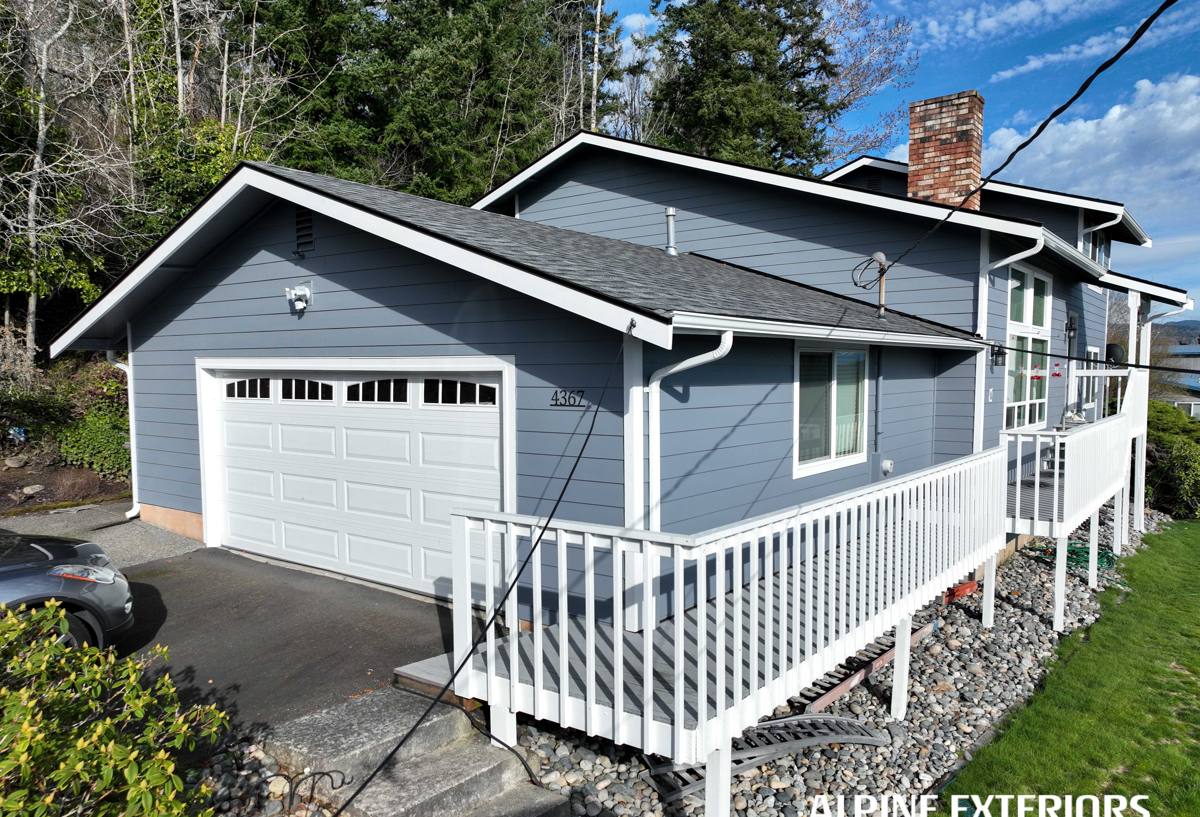
Signs an Edison Home Needs a New Roof, Not Another Repair
Homeowners often ask us to patch a leak, and sometimes that's the right call. But there's a point where repeated repairs are just delaying an inevitable full replacement, and spending money on that point past it. Some signs worth taking seriously:
- Granule loss heavy enough that you're finding grit in gutters every season, not just after a storm
- Shingles that are curling, cupping, or cracking across multiple slopes rather than one isolated area
- Moss that has worked under shingle tabs rather than just sitting on the surface — this lifts shingles and holds moisture against the deck
- Soft spots or sagging in the roof deck when walked on, which points to water damage below the surface
- A roof approaching or past its expected service life, especially if it was installed with builder-grade materials rather than climate-appropriate ones
- Leaks appearing in more than one location, which usually means the underlayment and flashing system has failed generally, not just at one point
A straightforward way to think about it: repairs make sense when the problem is localized and the rest of the roofing system is sound. Replacement makes sense when the underlayment, flashing, and decking are approaching failure together, which is common on older roofs once our wet season has had a couple of decades to work on them.
What a Correct Installation Actually Involves
A new roof is only as good as the parts nobody sees once it's finished. In a climate like ours, three details matter more than they would somewhere drier.
Ventilation
Balanced intake and exhaust ventilation keeps moist air moving out of the attic instead of condensing on the underside of the deck. In a marine climate with long stretches of damp weather, poor ventilation is one of the most common causes of premature deck rot — often well before the shingles themselves are due for replacement.
Underlayment and Flashing
We install ice-and-water shield along eaves, valleys, and around every penetration — chimneys, vents, skylights — because these are the spots where driving, wind-blown rain finds its way in. Standard felt underlayment across the field of the roof is fine for most of the surface, but the transition points are where nearly every leak we're called out to fix actually started. Flashing gets custom-bent and properly lapped, not caulked over as a shortcut.
Fasteners and Wind Rating
Given the salt content in the air near the bay, we favor corrosion-resistant fasteners and flashing metals over standard galvanized options wherever the budget allows. It costs a little more up front and saves the homeowner from fastener corrosion showing up as rust streaks and loosened shingles years before it should.
Choosing a Material That Matches This Climate
There's no single "best" roofing material — the right choice depends on budget, roof pitch, how much shade and moss exposure the property has, and how long the homeowner plans to stay in the house. Here's how the common options compare for a property like this in Skagit County:
| Material | Moss/Algae Resistance | Typical Lifespan Here | Maintenance Needs | Relative Upfront Cost |
|---|---|---|---|---|
| Standard asphalt composition shingle | Moderate — benefits from algae-resistant granules | 18–25 years | Periodic moss removal, gutter clearing | Lowest |
| Premium/architectural composition shingle | Good, especially with copper or zinc strips | 25–30 years | Lighter maintenance than standard shingle | Moderate |
| Standing seam metal | Very good — moss struggles to grip smooth metal | 40–50+ years | Low; occasional fastener/seam check | Highest |
| Synthetic/composite shake or slate | Good, with proper underlayment | 30–50 years | Low to moderate | High |
Homes tucked under tree cover on shaded, north-facing slopes tend to see moss return faster no matter what material goes down — in those cases, we'll often recommend zinc or copper control strips near the ridge as part of the installation, since they release trace metal ions with every rain that keep moss from taking hold as quickly.
How We Handle the Installation, Start to Finish
- Inspection and estimate — we walk the roof, check the deck for soft spots, look at current ventilation, and talk through material options based on your budget and how the house sits relative to shade and wind exposure.
- Tear-off — old roofing and underlayment come off down to the deck so we can actually see what's underneath, rather than roofing over hidden problems.
- Deck repair — any soft, rotted, or delaminated sheathing gets replaced before anything new goes down. This step gets skipped by crews trying to save time, and it's the single most common cause of early failure on a "new" roof.
- Underlayment and flashing — ice-and-water shield at vulnerable points, felt or synthetic underlayment across the field, new flashing custom-fit at every penetration and valley.
- Ventilation check — intake and exhaust venting confirmed or upgraded to match the attic's actual needs.
- Roofing installation — material installed to manufacturer spec, with corrosion-resistant fasteners and correct nailing patterns for our local wind exposure.
- Cleanup and final walkthrough — site cleared, magnetic sweep for stray nails, and a walkthrough so you know exactly what was done and what to watch for going forward.
Moss, Algae, and What Happens After Installation
Even a well-installed roof in Edison will see some moss and algae activity eventually — that's the reality of a long, wet, low-light season here. What changes with a correct installation is how much that growth matters. Moss sitting on the surface of a properly laid, well-ventilated roof is mostly cosmetic and manageable with periodic soft washing. Moss on a poorly ventilated roof with saturated underlayment is a much bigger problem, because it's holding moisture against a deck that's already struggling to dry out. We'll walk you through a simple maintenance rhythm — generally a look at the roof and gutters once or twice a year — that keeps a new roof performing the way it's supposed to for its full expected life.
Why a Crew That Already Works in Edison Matters
A roof crew that mostly works drier, inland areas can still do competent work, but they're often applying assumptions that don't hold up here. Ventilation ratios, underlayment choices, and moss-prevention details that are "optional upgrades" elsewhere are closer to standard practice for anything near the water in Skagit County. Working this area regularly also means we already understand the local permitting process, we're familiar with how weather windows here actually behave for scheduling tear-off and dry-in, and we're not learning on your roof what a marine climate does to a fastener over ten years.
Questions Worth Asking Before You Hire Anyone
- Will you replace damaged decking as part of the quoted price, or is that a change-order surprise later?
- What underlayment and ice-and-water shield brand and coverage are included, and where specifically will it be installed?
- Are you licensed and insured in Washington, and can you provide proof before work starts?
- What's your plan if weather moves in mid-tear-off — how is the deck protected overnight?
- Is the ventilation being assessed and addressed, or just the visible shingle layer?
- What warranty applies to labor specifically, separate from the manufacturer's material warranty?
A contractor who answers these clearly and specifically, without vague reassurances, is usually one who's actually done the work before — not just quoted it.
If your Edison roof is showing its age, or you just want an honest read on whether repair or replacement makes more sense, we're happy to take a look. The estimate is free, there's no pressure, and you'll get a straight answer about what your roof actually needs.