 Anacortes
 Metal Roofing in Conway: Built for Skagit Delta Weather
Conway sits low in the Skagit River delta, close enough to Skagit Bay that salt-laden air is a fact of life, and close enough to the river and surrounding farmland that fog, standing moisture, and heavy rain runoff are routine. A roof out here does more work than a roof in a drier inland town. We install and replace metal roofing for homes in and around Conway, and this page covers what that actually involves: what the climate demands, how a correct installation is built, and what to expect from us when you call.
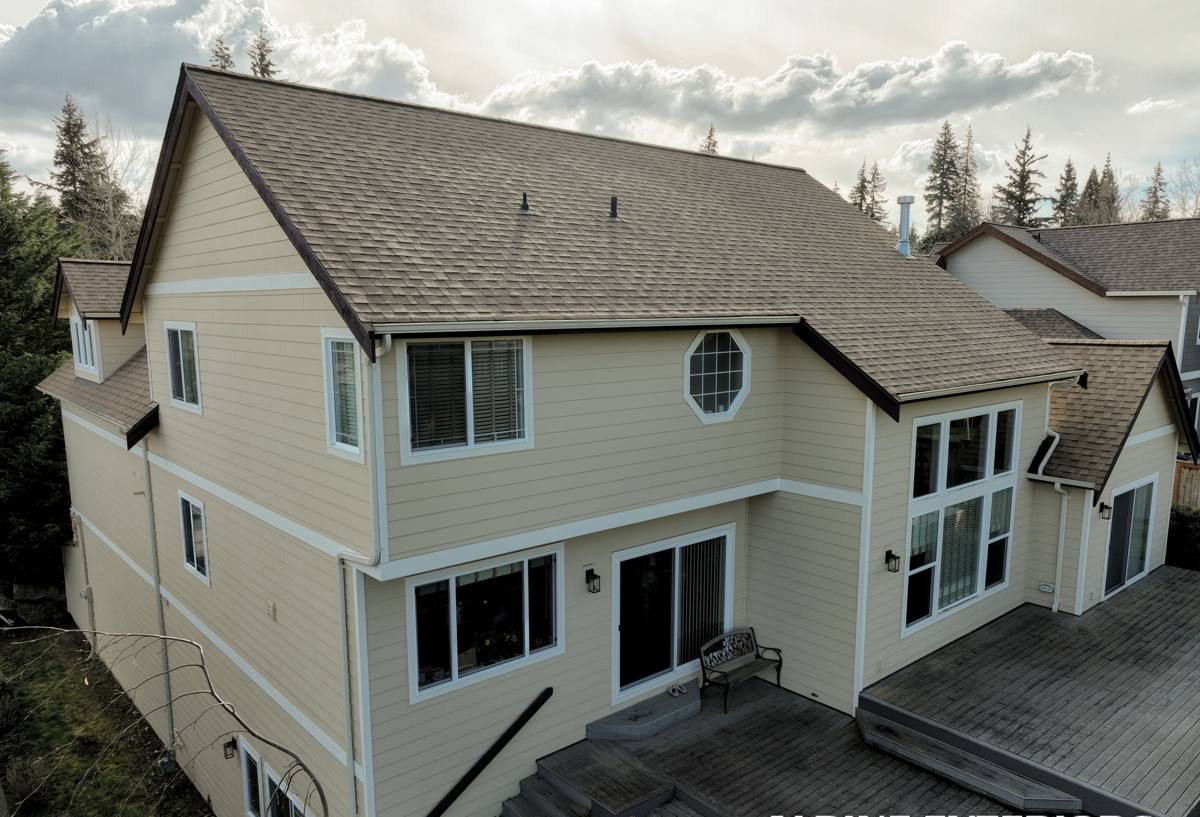
What Conway's Climate Does to a Roof
Three things wear roofs out faster in this part of Skagit County, and they compound each other.
Salt Air
Being near the bay and the tidal reaches of the Skagit River means airborne salt settles on every exterior surface, roofs included. Salt accelerates corrosion on bare or poorly coated metal, degrades cheap fasteners, and eats away at unprotected steel edges over years of exposure. It's not dramatic — it's slow, and it's the reason material choice and coating quality matter more here than in a landlocked town.
Driving Rain
Storms coming off the Sound and up the delta often arrive with wind behind them, which pushes rain sideways and up under laps, flashing, and fastener heads instead of letting it run straight down and off. A roof that only sheds water well when it's falling straight down will leak here. Every seam, valley, and penetration has to be detailed to handle water moving in more than one direction.
Moss Season
Western Skagit County stays damp and shaded for a good stretch of the year, and moss and moisture-loving organic growth take hold on any surface that stays wet and doesn't dry out fast — especially on the north-facing and shaded slopes common on wooded or low-set lots. On composition shingles, moss lifts the mat and holds water against the roof deck. Metal doesn't give moss the same foothold, but it isn't immune, and gutters, valleys, and low-slope transitions still need attention.
Why Metal Roofing Fits Conway Homes
None of this means metal is a magic fix — it's a material that responds well to this specific set of conditions when it's specified and installed correctly. A quality metal roof sheds wind-driven rain more reliably than a shingle roof because of how the panels lock together, gives moss and moisture far less to cling to on open, well-pitched slopes, and, with the right coating system, resists the slow corrosion that salt air causes. It also holds up under the freeze-thaw swings and wind gusts that come through the delta in winter without the granule loss and edge lifting that shingles experience over time.
What it doesn't do is eliminate maintenance. Fasteners loosen, sealants age, and debris still needs to be cleared from valleys and gutters. We'll be straight with you about that during the estimate rather than oversell the material.
Choosing the Right Metal Roofing System
Not every metal roofing product is built the same way, and the right choice depends on your roof's pitch, your budget, and how long you want to go between maintenance visits. Here's how the common options compare for a home in this climate.
| System | How It's Fastened | Best For | Trade-Offs in This Climate |
|---|---|---|---|
| Standing seam | Concealed clips, no exposed fasteners | Most Conway homes, especially wind- and rain-exposed roofs | Higher upfront cost; best long-term performance against driving rain and salt exposure |
| Exposed-fastener panel | Screws driven through the panel face | Outbuildings, shops, budget-conscious projects | Fasteners and washers age faster in salt air and need periodic inspection/replacement |
| Metal shingle/shake panels | Interlocking panels, concealed fasteners | Homes wanting a traditional look with metal performance | More seams than standing seam; installation quality matters even more |
| Stone-coated steel | Interlocking panels over battens | Homes wanting the profile of tile or shake | Coating adds cost; still needs correct underlayment and ventilation beneath it |
For most homes near Conway, we steer people toward standing seam because concealed fasteners remove the weak point that salt air and wind-driven rain attack first. That said, exposed-fastener panels are a reasonable, more affordable option for a shop, garage, or outbuilding where the roof isn't sheltering living space.
What a Correct Metal Roof Installation Involves
A metal roof is only as good as what's underneath it and how the details are handled. Cutting corners on any of the following is where most metal roof failures actually start — not with the panels themselves.
Deck Inspection and Prep
Before anything goes down, we check the existing roof deck for soft spots, rot, or damage — common on older homes near the river where humidity has had decades to work on the sheathing. Replacing bad decking before covering it is non-negotiable; metal doesn't fix a rotten deck, it hides one.
Underlayment
Given how much wind-driven rain this area sees, we use a high-temperature synthetic or self-adhered underlayment rated for the metal roofing above it, with extra protection — ice-and-water-style membrane — at eaves, valleys, and penetrations where wind-blown water is most likely to find a way in.
Panel Layout and Seams
Panel runs are laid out to minimize end laps and keep seams working with, not against, the prevailing weather direction. On standing seam, the seams are mechanically locked, which is what gives the system its resistance to wind uplift and sideways-driven rain.
Flashing and Penetrations
Chimneys, vents, skylights, and wall transitions are where the vast majority of roof leaks originate, metal or otherwise. Custom-formed flashing, properly lapped and sealed, is what keeps water out at these points — pre-fab, one-size-fits-all flashing is a shortcut we don't take.
Fasteners and Sealants
We use fasteners and sealants rated for coastal/salt-air exposure, not generic hardware-store fasteners that start rusting within a few seasons. This is a small line item that matters enormously over the life of the roof.
Ventilation
Proper intake and exhaust ventilation keeps moisture from condensing under the metal panels, which protects both the roof deck and the underlayment from the inside out — especially important in a climate this damp.
Our Process From Estimate to Cleanup
- On-site inspection: We walk the roof (not just look at it from the ground), check the deck condition where accessible, and note flashing points, valleys, and any moss or moisture damage already present.
- Written estimate: You get a clear scope — material, underlayment, flashing detail, and price — with no vague allowances or surprise add-ons buried in fine print.
- Material selection: We help you weigh panel style, gauge, and finish against your roof's pitch, exposure, and budget.
- Installation: Deck repair as needed, underlayment, panel installation, custom flashing, and fastener detailing, done in the sequence that actually keeps water out — not the fastest sequence.
- Final walkthrough and cleanup: We check seams, flashing, and fastener lines before we consider the job finished, and we clear the site of debris and stray fasteners (a magnetic sweep for nails is standard).
Maintenance and What to Watch For
Metal roofing is genuinely low-maintenance compared to shingles, but "low" isn't "none." A short annual check catches small issues before they become leaks.
- Clear gutters and valleys of leaves, needles, and moss debris, especially after fall storms
- Look for loose or backed-out fasteners on exposed-fastener systems
- Check sealant at flashing points and penetrations for cracking or shrinkage
- Watch shaded, north-facing slopes for early moss or algae growth
- Confirm downspouts are directing water away from the foundation, not pooling near it
- After any major windstorm, do a quick visual check for lifted panels or dented flashing
Cost Factors for a Conway Metal Roof
Metal roofing costs more upfront than composition shingles, but the range varies a lot based on system and site factors. We won't quote a number without seeing the roof, but here's what actually drives the price up or down.
| Factor | Effect on Cost |
|---|---|
| Panel system (exposed-fastener vs. standing seam) | Standing seam typically costs more due to labor and materials, but lasts longer with less maintenance |
| Roof pitch and complexity | Steep, cut-up rooflines with multiple valleys and penetrations take longer and cost more to flash correctly |
| Deck condition | Rot or soft decking found during tear-off adds repair cost before the new roof goes on |
| Coating and gauge | Heavier gauge and marine-grade coatings cost more but hold up better against salt air |
| Accessibility | Steep sites, limited driveway access, or tall homes add labor time |
As a rough guide, expect metal roofing to run higher than a shingle replacement of the same size, with standing seam at the upper end of that range. We'll walk you through exact numbers once we've seen your roof in person.
Why Hire a Crew That Already Works Conway
A lot of roofing problems in this area aren't about the material — they're about a crew treating a Skagit delta roof like it's the same job as a roof forty miles inland. Flashing details that are "fine" in a drier climate aren't fine here. Underlayment choices that skip the extra protection at eaves and valleys catch up with a homeowner during the first real wind-driven storm. We work in Conway and the surrounding Skagit County communities regularly, so the salt exposure, the rain patterns, and the moss pressure aren't unknowns we're guessing at — they're what we plan for from the first site visit.
If you're weighing a metal roof for a Conway home, we're happy to take a look and give you a straightforward, no-pressure estimate — just fill out the form below.