 Anacortes
 Decks in the Skagit Valley Take a Different Kind of Beating
Mount Vernon sits in the Skagit Valley, close enough to Skagit Bay and the Anacortes coastline to catch salt-tinged air on top of the near-constant rain that defines western Washington winters. That combination is hard on outdoor structures. Wood swells and shrinks through repeated wet-dry cycles, fasteners corrode faster than they would in a drier climate, and the long stretch of gray, damp months from fall through spring gives moss, algae, and mildew months to take hold before summer sun ever dries things out. A deck that would need light upkeep in a drier region often needs real repair work here within a decade or two.
We work on decks throughout Skagit County, and the failure patterns we see in Mount Vernon are consistent: soft spots where water pools and doesn't drain, moss creeping into board seams and holding moisture against the wood, and rust streaking down from fasteners that were never rated for this kind of exposure. None of that is unusual — it's just what this climate does to an unmaintained or aging deck. The fix isn't complicated, but it has to be done right, and that starts with an honest look at what's actually failing.
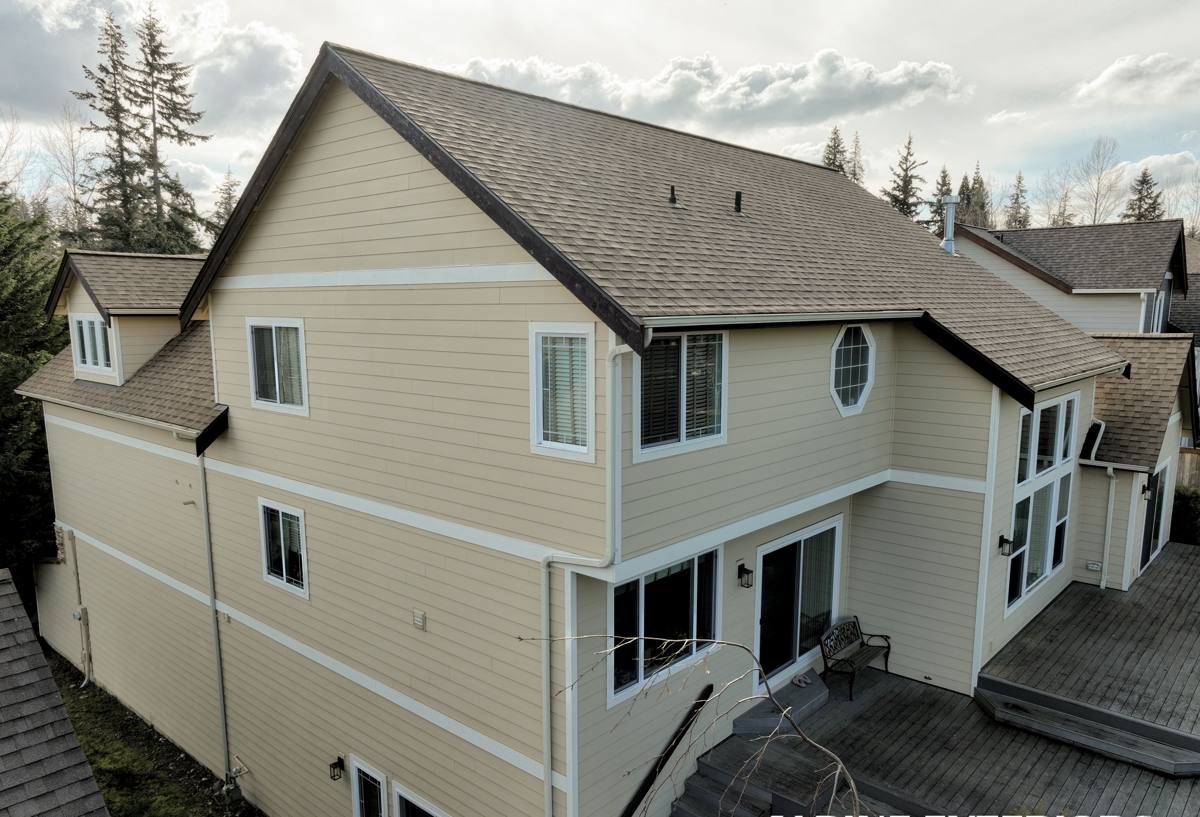
Signs Your Deck Needs Repair, Not Just Cleaning
Surface-Level Problems
Gray, weathered boards, light moss on the surface, and small surface checks in the wood are cosmetic. A good cleaning, a fresh coat of stain or sealant, and some spot sanding usually solves these. This is maintenance, not repair.
Problems That Mean It's Time to Call Someone
- Boards that flex, bounce, or feel spongy underfoot
- Visible gaps or movement where the deck attaches to the house (the ledger board)
- Rust stains bleeding from screws or nail heads, or fasteners backing out on their own
- Cracked, split, or delaminating boards, especially near the edges
- Wobbly railings or posts that shift when you lean on them
- Moss or dark staining that keeps coming back within weeks of cleaning
- Visible daylight or gaps between joists and beams, or sagging between support posts
The line between "clean it" and "repair it" usually comes down to whether water is getting trapped somewhere it shouldn't be. Trapped moisture is what turns a cosmetic issue into a structural one, and in a climate with as much standing damp weather as Mount Vernon gets, that transition happens faster than most homeowners expect.
What a Proper Deck Repair Actually Involves
Structural Inspection First
Before any board gets replaced, we check the parts of the deck you can't see from the top: the ledger board connection to the house, the condition of the joists and beams underneath, the footings, and the hardware holding it all together. A deck can look fine on the surface while the framing underneath has been quietly rotting for years — this is the single most common thing homeowners underestimate about deck repair.
Ledger Board and Attachment Points
The ledger — the board that bolts the deck to the house — is the most safety-critical connection on the whole structure, and it's also the spot most exposed to water runoff from the house. Flashing failures here are a frequent cause of hidden rot. If the ledger is compromised, no amount of new decking on top fixes the underlying problem.
Framing, Joists, and Support Posts
Soft or spongy decking is very often a symptom of rot underneath, not just a worn-out board. We check joists for soft spots, verify post bases aren't sitting in standing water or buried in soil contact, and confirm beams are still carrying load the way they were designed to.
Decking, Railings, and Fasteners
Individual board replacement, railing tightening or rebuilding, and swapping out corroded fasteners for hardware rated for exterior, coastal-adjacent use round out most repair jobs. Fastener choice matters more here than in drier climates — standard hardware corrodes faster with the moisture and salt-air exposure this region gets.
Repair or Replace? An Honest Comparison
Not every deck problem calls for a full rebuild, and we don't push replacement when repair will genuinely hold up. Here's how we generally think about it:
| Condition | Repair Usually Makes Sense | Replacement Usually Makes Sense |
|---|---|---|
| Framing (joists, beams) | Isolated soft spots, otherwise sound structure | Widespread rot, undersized or outdated framing |
| Ledger board | Flashing failure caught early, board itself intact | Ledger rot has spread into the house rim joist |
| Decking boards | Scattered damaged boards, rest are solid | Most boards are cracked, cupped, or rotting |
| Railings | Loose posts or damaged sections | Whole railing system doesn't meet current code |
| Age | Under 15-20 years, built with decent materials | Original construction is old, undersized, or code-outdated |
A deck built with adequate framing and a sound ledger connection can usually be repaired indefinitely with periodic board and fastener replacement. Once the frame itself is failing in multiple places, patching individual boards is just delaying a bigger job — and spending money on cosmetic fixes over a bad frame isn't a good use of your budget.
Our Process for a Mount Vernon Deck Repair
1. On-Site Assessment
We walk the deck, check underneath, probe suspect boards and framing for soft spots, and look closely at the ledger connection and any drainage issues. You get a clear picture of what's cosmetic, what's structural, and what your real options are — no guessing.
2. Straightforward Scope and Pricing
We tell you what needs to happen and why, in plain terms, before any work starts. If a repair will genuinely hold up, we say so. If the deck is past the point where repair makes financial sense, we say that too.
3. The Repair Work
Depending on scope, this means removing and replacing damaged boards or framing members, correcting flashing or drainage problems at the ledger, resetting or reinforcing posts and railings, and swapping in corrosion-resistant fasteners throughout the repaired area.
4. Cleanup and Walkthrough
We clear debris and old material, and walk the finished repair with you so you know what was done and what to watch for going forward.
Materials: What We Use and Why
For framing repairs, we match or upgrade the existing lumber grade and treatment level, since undersized or improperly rated wood is a common root cause of premature rot in this climate. For decking, both quality wood and composite boards have a place, and the right choice depends on your existing deck, your budget, and how much upkeep you want to do going forward.
Wood decking, properly sealed and re-coated on a regular schedule, performs well and is often the simpler match when you're repairing sections of an existing wood deck rather than replacing the whole surface. Composite decking costs more upfront and resists moss and moisture better with less maintenance, which makes it attractive for full resurfacing jobs, but it isn't always a clean match when you're patching into an older wood deck. We'll walk you through the real trade-offs — maintenance time, upfront cost, and how the materials handle this region's wet season — rather than pushing one option across the board.
Maintenance Checklist to Extend Your Deck's Life
Between repairs, a little regular upkeep goes a long way in a climate that gives moss and moisture this much time to work. A basic seasonal routine:
- Sweep debris and standing leaves off the deck surface regularly, especially in fall
- Check and clear gaps between boards where debris traps moisture
- Look for moss regrowth after the wet season and treat it before it spreads
- Inspect fasteners annually for rust streaking or backing-out screws
- Reseal or restain wood decking on the manufacturer's recommended schedule, not just when it looks faded
- Check the ledger board area and flashing for signs of water intrusion each year
- Confirm drainage isn't pooling water anywhere on or under the deck
Why a Crew That Already Works Mount Vernon Matters
Deck problems in the Skagit Valley follow patterns that are specific to this climate — the way moss establishes itself in shaded, damp corners, the way certain fastener types corrode faster with the marine-influenced air coming off Skagit Bay, the way a minor flashing gap at the ledger turns into hidden rot after a few wet winters. A crew that repairs decks across Skagit County and the greater Anacortes area sees these failure patterns repeatedly and knows what to check first, rather than treating every deck as a generic project. That familiarity translates into a faster, more accurate assessment and a repair that's built for the conditions it actually has to survive, not a one-size-fits-all approach imported from a drier region.
If your deck in Mount Vernon has soft spots, loose railings, recurring moss, or you're just not sure whether it needs a repair or a full rebuild, we're happy to take a look. Reach out for a free, no-pressure estimate using the form below.