 Anacortes
 Deck Replacement for Burlington Homes
Burlington sits in the Skagit Valley just east of Anacortes, close enough to the water and the marine weather pattern that decks here age differently than decks further inland. If you've owned your home for more than a few years, you've probably already noticed it: boards that stay damp longer than they should, hardware that streaks with rust, or a green film that creeps back across the deck surface no matter how many times you scrub it off. That's not bad luck. It's what this climate does to a deck that wasn't built or maintained with local conditions in mind.
We work Burlington and the surrounding Anacortes area regularly, which means we're not guessing at what holds up here — we're replacing decks that failed for the same handful of reasons, over and over, and building the replacements to avoid repeating them.
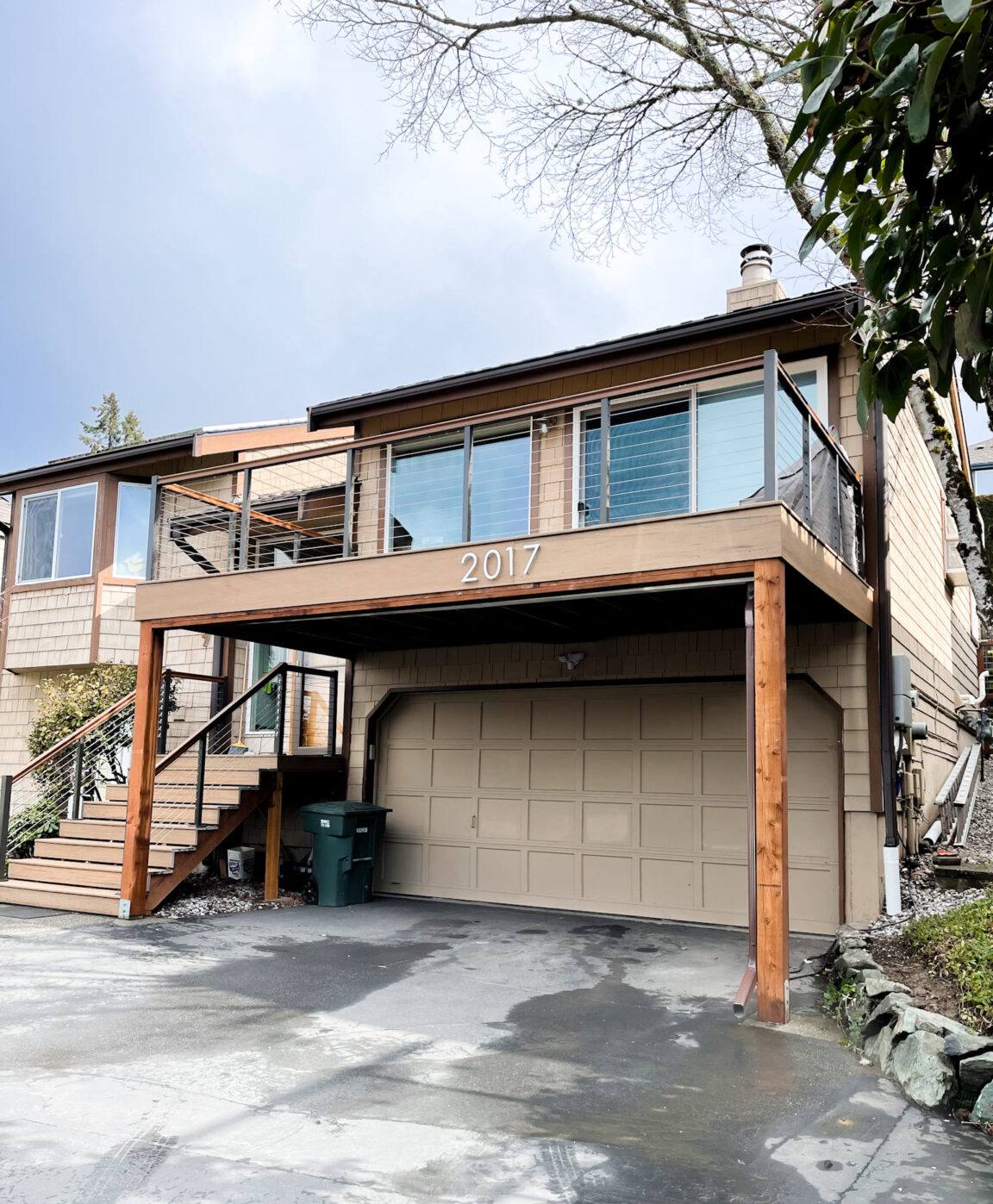
Why Decks Wear Out Faster Here
Skagit County's climate is mild, which is part of the problem. Mild doesn't mean dry. Long stretches of low-intensity rain, heavy fall and winter dampness, and salt-tinged air moving in off the Sound combine to keep wood and hardware wet for longer stretches than a drier inland climate would allow. A few specific pressures show up again and again on decks we inspect in this area:
- Extended moss season: Shaded decks, or decks under trees, can stay damp and mossy for six months or more out of the year. Moss holds moisture directly against the wood surface, which accelerates rot at ledger boards, joists, and anywhere boards butt together.
- Driving rain intrusion: Wind-driven rain doesn't just fall on a deck — it gets pushed sideways into ledger connections, stair stringers, and the house band board where the deck attaches. This is where we find the most serious hidden rot, often long before the surface boards look bad.
- Salt-air corrosion: Being near the water means airborne salt accelerates corrosion on fasteners, joist hangers, and any exposed metal hardware. Standard hardware corrodes faster here than it would fifty miles inland.
- Freeze-thaw cycling: Skagit County gets enough cold snaps each winter that trapped moisture in wood fibers or concrete footings can freeze, expand, and slowly work joints and connections loose over several seasons.
None of these are exotic problems. They're the ordinary cost of building outdoors in this part of Washington. The difference between a deck that lasts 10 years and one that lasts 25 usually comes down to whether it was built with these specific pressures in mind.
Signs a Burlington Deck Needs Replacing, Not Just Repair
Not every tired-looking deck needs full replacement. But there's a point where patching stops making financial sense and starts just delaying the inevitable. Here's how we tell the difference on a site visit:
| Repair Is Usually Enough When... | Replacement Makes More Sense When... |
|---|---|
| A few individual boards are cupped, splitting, or splintering but the frame is solid | Rot has reached the joists, beams, or ledger board attachment to the house |
| Railings are loose but posts and framing are sound | Multiple structural members show soft spots when probed with an awl |
| Surface graying or moss staining with no soft spots underfoot | The deck feels spongy, bounces excessively, or has visibly sagged |
| A handful of fasteners are rusted but hardware overall is intact | Hardware corrosion is widespread, especially at joist hangers and ledger bolts |
| The deck is under 10-12 years old and was built to current code | The deck predates current attachment and flashing standards |
That last row matters more than people expect. A lot of older decks in this area were built before ledger flashing standards tightened up, and before joist hanger and fastener codes accounted for how much moisture a Pacific Northwest deck actually sees. Even a deck that looks fine on the surface can be sitting on a ledger connection that's been slowly failing for years.
The Ledger Board: Where Most Deck Failures Start
If we had to point to one spot that determines whether a deck replacement will actually last, it's the ledger board — the piece that attaches the deck to the house. Without proper flashing, this connection lets water track behind the ledger and into the house rim joist, which is both a structural problem and a path for rot into the home itself. Any deck replacement we do in this area gets a properly flashed ledger connection as a non-negotiable step, not an upgrade option.
What a Correct Deck Replacement Involves
A deck replacement is more than swapping old boards for new ones. Done right, it's a rebuild of the structure with materials and details matched to how this climate actually behaves. Our process generally covers:
1. Full Structural Assessment
Before we quote anything, we check the ledger attachment, footings, posts, beams, and joists — not just the decking surface. This tells us what's actually driving the deck's condition and whether replacement is the right call in the first place.
2. Demolition and Disposal
Old decking, framing, and hardware come out completely. We also check what's behind and underneath — siding condition at the ledger, soil drainage around footings, and anything else the old deck may have been masking.
3. Framing Built for Moisture
New framing uses fasteners and connectors rated for the corrosion exposure this climate presents, with attention to joist spacing and beam sizing that meets current code for the deck's size and use.
4. Ledger Flashing Done Properly
Correct flashing at the ledger board, integrated with the house's existing water management, is what keeps the number-one failure point from becoming a repeat problem five years down the road.
5. Decking Material Matched to the Site
Shaded, tree-covered lots need different material and airflow considerations than open, sun-exposed decks. We'll talk through what fits your specific yard rather than defaulting to one product for every job.
6. Railings, Stairs, and Code Compliance
Railing height, baluster spacing, and stair geometry all have code requirements that older decks frequently don't meet. Replacement is the natural point to bring these up to current standard.
Decking Material Choices for This Climate
There's no single "best" decking material — there's a best material for your specific deck, budget, and how much upkeep you want to take on. We'll walk through the real trade-offs rather than pushing one option:
- Pressure-treated wood: Lowest upfront cost and widely available, but it requires the most ongoing maintenance in this climate — regular cleaning and sealing to fight moss growth and moisture absorption, especially in shaded yards.
- Cedar: A natural fit for the Pacific Northwest aesthetic, with decent natural rot resistance, but it still needs periodic sealing and isn't immune to moss or graying if left untreated.
- Composite decking: Higher upfront cost, but far less maintenance — no sealing, better moisture resistance, and less susceptibility to moss staining. The trade-off is a higher initial investment and a more limited color palette compared to natural wood.
- PVC decking: Fully synthetic, excellent moisture resistance, and the lowest long-term maintenance of the common options, but typically the highest material cost.
For a shaded Burlington lot with heavy moss exposure, we're often more cautious about recommending untreated wood, simply because the maintenance schedule needed to keep it looking good and structurally sound is more demanding than most homeowners realize going in. That's a maintenance-burden conversation, not a knock on wood as a material — it's about matching the product to how much upkeep you actually want to do.
Our Process, Start to Finish
- Site visit and assessment — we inspect the existing deck's structure, not just its surface appearance.
- Written estimate — clear scope, material options, and a straightforward price, no pressure to decide on the spot.
- Permitting — we handle the permit process required for structural deck work in your jurisdiction.
- Demolition — full removal of the old structure and hauling away debris.
- Rebuild — framing, flashing, decking, and railings installed to current code.
- Final walkthrough — we go over the finished deck with you before calling the job done.
Why a Local Crew Matters for This Job
Deck replacement isn't a job where generic, one-size-fits-all specs hold up well in Skagit County. A crew that works Anacortes, Burlington, and the surrounding areas regularly already knows which details actually matter here — where ledger flashing tends to get missed on older homes, which fastener grades hold up against the salt air, and how much airflow a deck needs under shaded conditions to keep moss from taking over again within a year or two of finishing.
We're also familiar with the permitting requirements that apply to structural deck work in this part of Skagit County, which keeps the project moving instead of stalling on paperwork. And because we're local, warranty follow-up or a question six months after the job isn't a phone call to some distant office — it's a crew that's still working in your area.
A Practical Pre-Estimate Checklist
Before we come out, it helps to walk your own deck and note what you observe. Bring this list to your estimate — it speeds up the assessment and helps us focus on what matters most for your situation:
- Any spots where the deck feels soft, spongy, or bouncy underfoot
- Areas where moss or dark staining keeps coming back no matter how often you clean it
- Visible rust or corrosion on visible fasteners, brackets, or railing hardware
- Whether the deck is in full sun, partial shade, or heavily shaded most of the day
- Any gaps or separation where the deck meets the house
- The approximate age of the deck, if known
- How you actually use the space — furniture weight, hot tub, grill, foot traffic — since that affects framing needs
Get a Straightforward Estimate
If your Burlington-area deck is showing its age — soft spots, recurring moss, rusted hardware, or just years of driving rain and salt air catching up with it — it's worth having a local crew take a look before you decide between repair and replacement. Fill out the form below for a free, no-pressure estimate, and we'll give you an honest read on what your deck actually needs.