 Anacortes
 West Anacortes Siding Has to Answer to a Tougher Climate Than Most
West Anacortes sits close enough to the water that salt-laden air is part of daily life, not an occasional nuisance. Add in the driving rain that blows off Rosario Strait and Guemes Channel during winter storms, and a moss season that can stretch from October well into spring under the shade of fir and cedar canopy, and you've got a set of conditions that will find every weakness in a siding system within a few years. Vinyl chalks and warps. Untreated wood and primed spruce trim absorb moisture and start to rot from the inside. Cheaper fiber cement products that weren't engineered for this specific climate zone can fail at the seams and fastener points long before their warranty runs out.
Homes in this part of Skagit County need a siding system that was built, from the plant formula to the factory finish, for exactly this combination of salt exposure, sustained moisture, and shade-driven moss and mildew pressure. That's the entire reason we only install James Hardie fiber cement — and why we treat West Anacortes as a distinct set of conditions, not a generic "coastal Washington" checkbox.
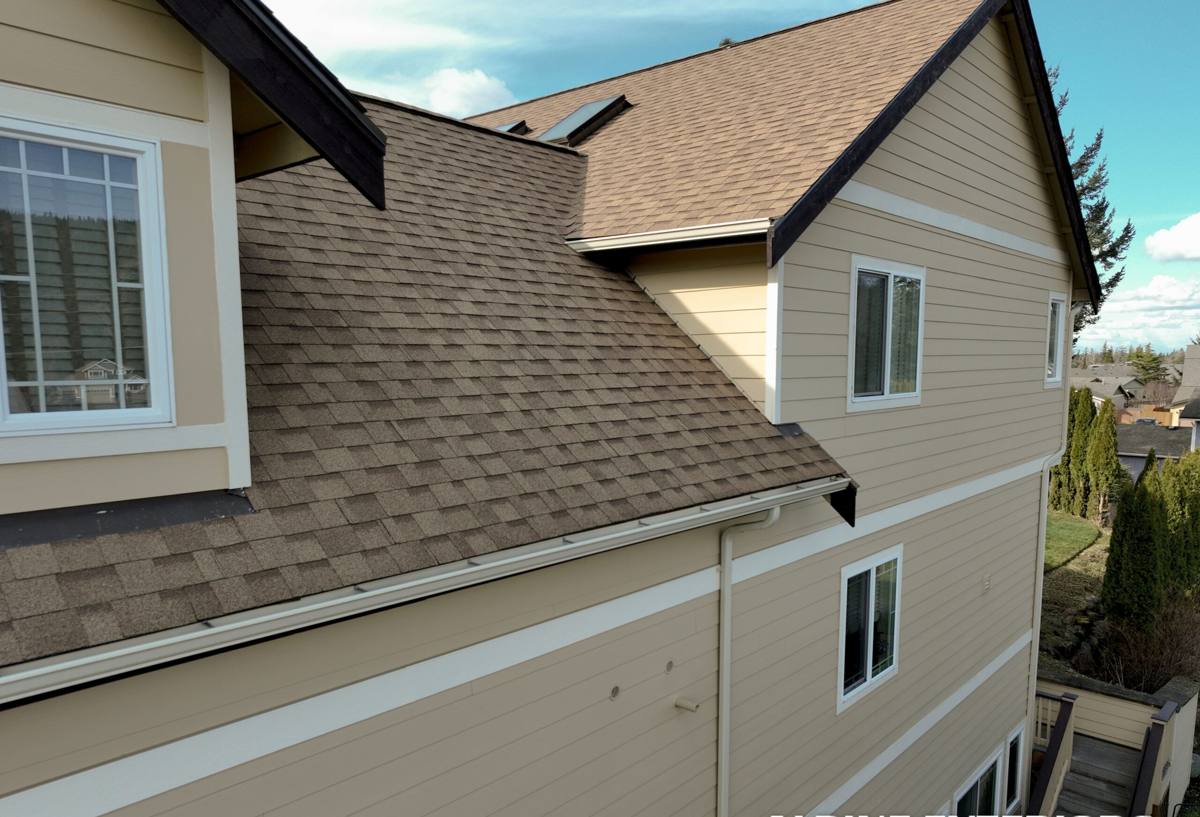
What Salt Air, Driving Rain, and Moss Actually Do to Siding
Salt Air
Airborne salt accelerates corrosion on fasteners, flashing, and any exposed metal trim, and it speeds up the breakdown of paint films and cheap coatings. Siding that isn't finished to resist it will chalk, fade unevenly, and lose its protective sheen years ahead of schedule.
Driving Rain
Wind-driven rain off the Strait doesn't just wet the surface of a wall — it gets pushed sideways and upward into laps, seams, and butt joints. A siding system is only as good as the water management behind it: the weather-resistant barrier, the flashing details, and the gap and clearance work that lets any water that does get behind the cladding drain and dry out.
Moss and Sustained Dampness
Shaded lots and the region's long wet season keep exterior surfaces damp for extended stretches. That's an ideal environment for moss, algae, and mildew to take hold on any material that stays porous or doesn't dry quickly. Wood-based products are especially vulnerable; they can hold moisture long enough for rot to start behind the surface, invisible until the damage is advanced.
Why We Only Install James Hardie in This Environment
James Hardie fiber cement is engineered from cement, sand, and cellulose fiber — a composition that doesn't rot, doesn't support insect activity, and doesn't absorb and swell with moisture the way wood-based products do. It's also non-combustible, which matters increasingly across Western Washington as wildfire risk expectations shift and insurers pay closer attention to exterior materials.
Two things about the Hardie system matter specifically for a place like West Anacortes:
- ColorPlus Technology: a factory-applied, baked-on finish that resists fading and chalking far better than field-applied paint, which matters when salt air is working against the finish year-round.
- HZ5 engineering: Hardie manufactures its products to different climate specifications by region. The Pacific Northwest falls into the HZ5 zone, engineered for cold, wet, moisture-heavy conditions rather than the heat-and-humidity profile of a Southern HZ10 product. Installing the correct zone-engineered product isn't a marketing detail — it affects how the board performs over decades.
We've made a deliberate call not to install LP SmartSide, vinyl, Cemplank, Allura, primed spruce, or cedar. Each of those has a place in the market and each has real strengths, but none of them combine non-combustibility, factory-cured moisture resistance, and a transferable warranty backed by a manufacturer with a long track record the way Hardie does. In a marine climate with this much sustained moisture exposure, that combination is what keeps a siding job looking and performing well fifteen and twenty years out, not just at the final walkthrough.
How Hardie Compares to Other Common Siding Choices Here
| Factor | James Hardie Fiber Cement | Vinyl | Cedar / Primed Wood | LP SmartSide |
|---|---|---|---|---|
| Moisture & rot resistance | Does not rot; cement-based core | Won't rot, but can warp and gap, letting water behind it | Prone to rot if finish fails or end grain is exposed | Engineered wood strand; vulnerable if edges or cuts aren't sealed |
| Salt air performance | ColorPlus factory finish holds color and sheen | Chalks and becomes brittle over time | Finish breaks down faster in salt exposure | Finish and substrate both stressed by salt exposure |
| Fire rating | Non-combustible | Combustible, can melt/deform near heat | Combustible | Combustible |
| Ongoing maintenance | Occasional wash; caulk and finish inspection | Low, but damage often means full panel replacement | Regular refinishing, sealing, moss and mildew treatment | Requires diligent sealing at seams and cuts |
| Typical warranty | Long-term, transferable manufacturer warranty | Varies widely by product grade | Limited or none on the material itself | Manufacturer warranty, shorter track record than Hardie |
What a Correct James Hardie Installation Involves
The product only performs as designed if the installation behind it is done correctly — this is where a lot of siding jobs quietly go wrong, especially in a climate that punishes shortcuts.
Weather-Resistant Barrier and Drainage Plane
Before a single board goes up, the wall needs a properly lapped weather-resistant barrier and, ideally, a drainage plane that lets incidental moisture escape rather than sit against the sheathing. Skipping or rushing this step is invisible at handoff and expensive to fix later.
Flashing at Every Penetration
Windows, doors, hose bibs, vents, and any other wall penetration need properly integrated flashing so wind-driven rain can't work its way behind the siding. This is one of the most common places corners get cut on lower-bid jobs.
Fastening and Clearances
Hardie specifies fastener type, spacing, and placement for a reason — get it wrong and you risk cracking or loosening over time. Clearance from grade, roof lines, and decks also has to follow manufacturer spec so water has somewhere to go instead of wicking up into the board.
Caulking and Joint Treatment
Butt joints and trim transitions need the right sealant, applied correctly, to stay watertight through years of expansion, contraction, and driving rain.
Our Process for a West Anacortes Siding Project
- Walkthrough and estimate: we assess your home's exposure — how much salt air, shade, and wind-driven rain it actually deals with — and give you a straightforward, no-pressure quote.
- Product and color selection: we help you choose the right HZ5 Hardie line and ColorPlus color for your home and its exposure.
- Tear-off and prep: old siding comes off, sheathing gets inspected for hidden moisture damage, and any repairs happen before new material goes up.
- Barrier, flashing, and installation: the weather-resistant barrier, flashing, and Hardie boards go in to manufacturer spec — not shortcuts, not guesswork.
- Final inspection and walkthrough: we check seams, caulking, and clearances with you before calling the job done.
Keeping Your Siding Ahead of Moss and Salt Buildup
Hardie siding is low-maintenance, not no-maintenance. A little seasonal attention goes a long way in this climate:
- Rinse the siding gently once or twice a year to clear salt film and airborne grime — a garden hose is usually enough; avoid high-pressure washing, which can force water behind panels and damage caulked joints.
- Keep gutters clear so overflow doesn't run down the siding and feed moss growth at the top courses.
- Trim back vegetation and tree limbs that keep a wall shaded and damp longer than it needs to be.
- Check caulked joints and trim transitions once a year, especially after a hard winter, and have any gaps resealed before they let water in.
- Address any moss or mildew on the siding surface early with a mild cleaning solution rather than letting it establish.
Why It Matters to Hire a Crew That Already Works in This Area
A crew that regularly works West Anacortes and the rest of Fidalgo Island already understands how exposed a given lot is, where driving rain tends to hit hardest, and which details — flashing, clearances, barrier work — matter most for the moisture load this area sees. That local familiarity shows up in fewer callbacks and a siding job that's still performing well well past year ten, not just at the final walkthrough. It also means we're not learning Skagit County's permitting and inspection expectations on your project — we already know them.
If you're weighing your siding options for a West Anacortes home, we're happy to walk the exterior with you, talk through what your home's exposure actually calls for, and put together a straightforward, no-pressure estimate — no obligation, just a clear look at what correct James Hardie installation would involve for your property.