 Anacortes
 Why West Anacortes Siding Wears Out Faster Than Homeowners Expect
West Anacortes sits close enough to open water that homes here take a different kind of weathering than siding fifty miles inland. Salt-laden air moves through the neighborhood on a regular basis, carrying fine moisture that settles on exterior walls and slowly attacks anything not built to handle it. Add Skagit County's long, wet fall-through-spring stretch of driving rain, and then the shoulder seasons where shaded, damp siding barely dries out before the next system rolls in, and you have a climate that punishes weak materials and sloppy installation in equal measure.
The result is a moss season that, in practice, runs most of the year on north- and west-facing walls, under eaves, and anywhere airflow is restricted by landscaping or a neighboring structure. Moss and algae don't just look bad — they hold moisture against the siding surface, which accelerates rot in wood-based products and breaks down paint film faster than a home a few miles inland would experience. If your siding was installed without real attention to water management, West Anacortes' climate will find every weak point within a few years, not a few decades.
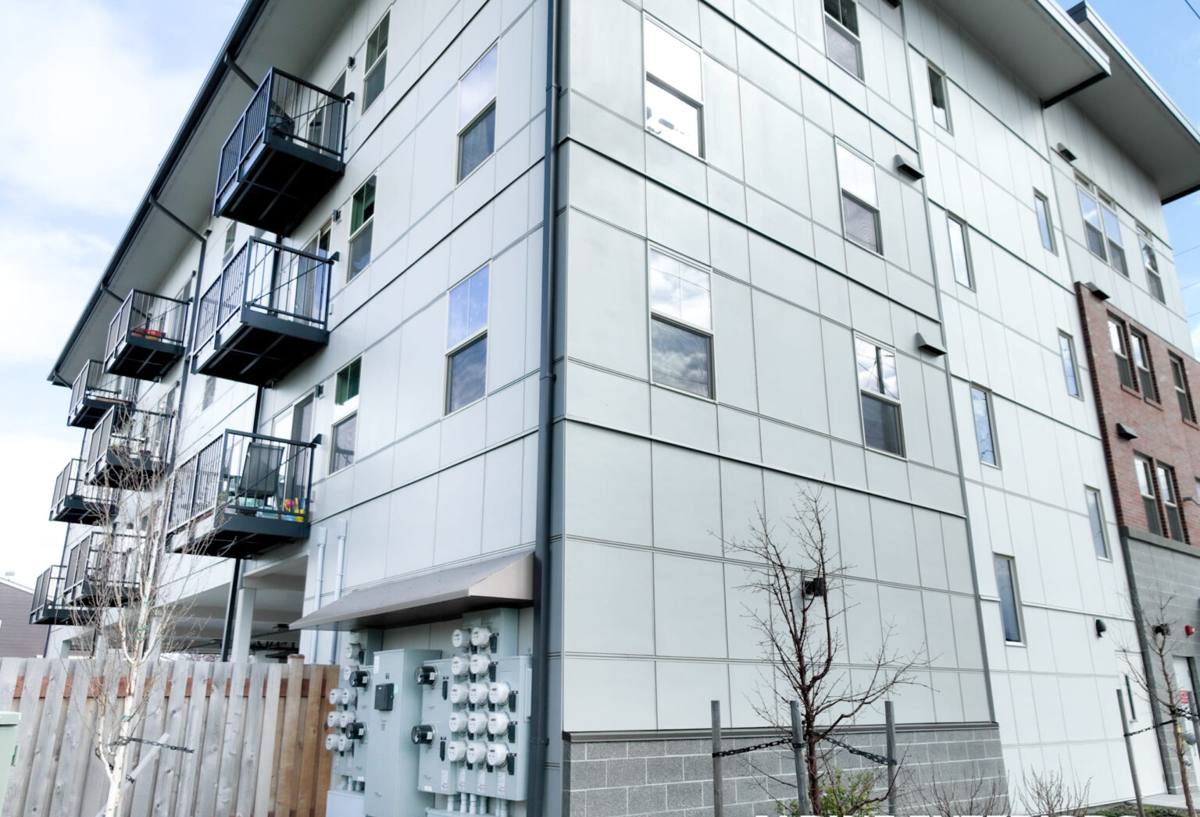
Signs a West Anacortes Home Needs Siding Replacement, Not Just Repair
Not every siding problem calls for a full tear-off. But there's a point where patching individual boards or caulking joints stops being a real fix and starts being a way to spend money without solving anything. Watch for these signs:
- Soft or spongy spots when you press on the siding, especially near the bottom courses and around window trim
- Paint that's failing in patches rather than evenly — often a sign moisture is trapped behind the surface
- Persistent moss or dark streaking that returns within weeks of cleaning
- Visible warping, cupping, or separation at seams and butt joints
- Rising energy bills that track with drafts you can feel near exterior walls
- Siding that's original to a home built more than 20-25 years ago in a wood or composite product
Any one of these on its own might be manageable. Two or three together, especially on a wall that faces prevailing wind and rain, usually means the underlying water management has already failed and repair is just delaying the real cost.
Why We Install Only James Hardie Fiber Cement
We don't install vinyl, LP SmartSide, primed spruce, cedar, or other fiber cement brands. That's not a marketing position — it's a decision built around what actually holds up in a marine climate like Anacortes'. Vinyl expands and contracts with temperature swings and can crack in cold snaps; engineered wood products depend entirely on an unbroken factory coating to keep moisture out, and any breach — a nail pop, a saw cut, a scuff — opens the door to swelling and rot. Cedar is a beautiful material but demands a maintenance schedule most homeowners underestimate, especially with West Anacortes' moss pressure.
James Hardie fiber cement is cement, sand, and cellulose fiber — it doesn't feed mold or moss the way wood-based products can, it doesn't combust, and it holds paint and its factory ColorPlus finish far longer than wood or vinyl because the substrate itself is dimensionally stable. Hardie also engineers specific product lines (HZ5 for the Pacific Northwest's colder, wetter conditions) rather than selling one national formulation, which matters more here than in a dry climate.
| Factor | James Hardie Fiber Cement | Vinyl / Engineered Wood |
|---|---|---|
| Moisture behavior | Non-organic, doesn't feed rot or moss growth | Wood-based products swell and rot if coating is breached |
| Fire rating | Non-combustible | Vinyl melts/deforms; engineered wood is combustible |
| Finish longevity | Factory ColorPlus finish, long fade-resistant warranty | Field-painted or coated finishes fail sooner in coastal moisture |
| Dimensional stability | Minimal expansion/contraction | Vinyl warps in heat/cold; wood moves with humidity |
| Typical lifespan when installed to spec | Decades, with strong transferable warranty | Shorter practical service life in marine climates |
What a Correct Siding Replacement Actually Involves
Tear-Off and Substrate Inspection
Replacement starts with removing the old siding down to the sheathing, not just installing over what's there. This is the step that catches hidden rot, compromised sheathing, or past water intrusion around windows and doors — problems that a re-side-over-existing job would simply seal in. In a climate that pushes moisture into every gap, skipping this step is how homeowners end up paying to fix the same wall twice.
Weather-Resistive Barrier and Flashing
A correctly installed weather-resistive barrier, properly lapped and sealed, is what actually keeps West Anacortes' driving rain out of the wall assembly — the siding itself is the second line of defense, not the only one. Window and door flashing has to be integrated with the barrier in the right sequence, so water sheds outward and down rather than finding a path behind the trim.
Fastening and Clearances to Manufacturer Spec
James Hardie publishes specific fastening patterns, nail types, and minimum clearances from grade, roof lines, and other flashing — deviating from those specs is one of the most common ways a warranty gets voided and a job starts failing early. Proper clearance at the bottom of the wall also matters directly for moss and splashback in a rainy climate.
Trim, Caulking, and Paint Line
Joints and trim get sealed with a product rated for the assembly, not just whatever's on the truck, and factory-finished ColorPlus panels are handled to preserve that finish rather than field-painted unnecessarily, which is one of the advantages of the product to begin with.
Our Process, From Estimate to Cleanup
- On-site assessment — we walk the exterior, check for rot and past water damage, and look at wall orientation relative to prevailing wind and rain
- Written estimate — scope, product line, color, and cost broken down so you know what you're paying for before any work starts
- Tear-off and inspection — old siding removed, sheathing checked and repaired if needed before anything new goes on
- Weather barrier and flashing installation — the water management layer goes in correctly, not as an afterthought
- Hardie installation to manufacturer spec — fastening, clearances, and joint treatment done to keep the warranty intact
- Trim, caulking, and final detailing — the finish work that determines how the job looks and performs for the next several decades
- Walkthrough and cleanup — site cleared, and we go over the finished work with you before calling it done
Why It Matters That a Crew Already Works West Anacortes
Siding installation isn't uniform across a region — a crew that mainly works dry inland projects doesn't necessarily think about wind-driven rain exposure, moss-prone shade patterns, or the salt air factor the way a crew that works Anacortes and greater Skagit County regularly does. That local pattern recognition shows up in small decisions: where to add extra flashing attention, which wall orientations need tighter joint sealing, how much clearance to leave at grade given local drainage conditions. It also means a crew that understands the practical realities of scheduling around this area's wet season, and that stands behind a warranty they can actually service because they're not driving in from out of the area.
Protecting Your Investment After Installation
James Hardie siding is low-maintenance compared to wood or vinyl, but "low-maintenance" isn't "no-maintenance," especially in a climate that grows moss well. A little seasonal attention keeps the material performing the way it's engineered to:
- Rinse the exterior with a garden hose and soft brush once or twice a year — avoid high-pressure washing, which can drive water behind joints
- Trim back vegetation and landscaping that shades walls or restricts airflow, since that's exactly where moss takes hold fastest
- Check caulking at trim and joints annually and re-seal if it's cracking or pulling away
- Keep gutters and downspouts clear so water isn't sheeting down the wall face during heavy rain
- Address any impact damage (branch strikes, equipment bumps) promptly rather than letting a chip sit exposed
What Drives the Cost of a Siding Replacement
Every project is different, but the same handful of factors determine where a job lands on the cost spectrum. We'll walk through all of these during your estimate rather than quoting a number before we've seen the house.
| Factor | Why It Matters |
|---|---|
| Home size and wall complexity | More square footage, more corners, dormers, and trim details all add labor |
| Condition of existing sheathing | Rot discovered during tear-off requires repair before new siding goes on |
| Product line and profile chosen | Hardie offers multiple plank widths, textures, and trim options at different price points |
| Story height and access | Second-story and steep-site work takes more time and equipment |
| Trim and detail work | Corner boards, window trim, and fascia detailing add finish quality and cost |
If you're weighing siding replacement for a West Anacortes home, we're happy to walk the property, look at what's actually happening with your current siding, and put together a straightforward, no-pressure estimate — no invented urgency, just a clear picture of what the job involves and what it costs. Use the form below to get started.