 Anacortes
 Flounder Bay's Climate Is Harder on Siding Than Most Homeowners Realize
Flounder Bay sits right up against the water, and that proximity changes what a house needs from its exterior. Salt-laden air moves off the bay and settles on everything it touches, including siding, trim, and fasteners. Add Skagit County's long wet season, driving rain that comes in sideways off the water during winter storms, and a moss season that can stretch for months in shaded, north-facing exposures, and you have a climate that punishes any siding product installed without real attention to detail.
Homes here don't fail because fiber cement is a bad product. They fail because someone cut a corner on flashing, caulking, or fastening that would have gone unnoticed in a drier inland town but shows up fast a few blocks from saltwater. Understanding that distinction is the whole point of this page.
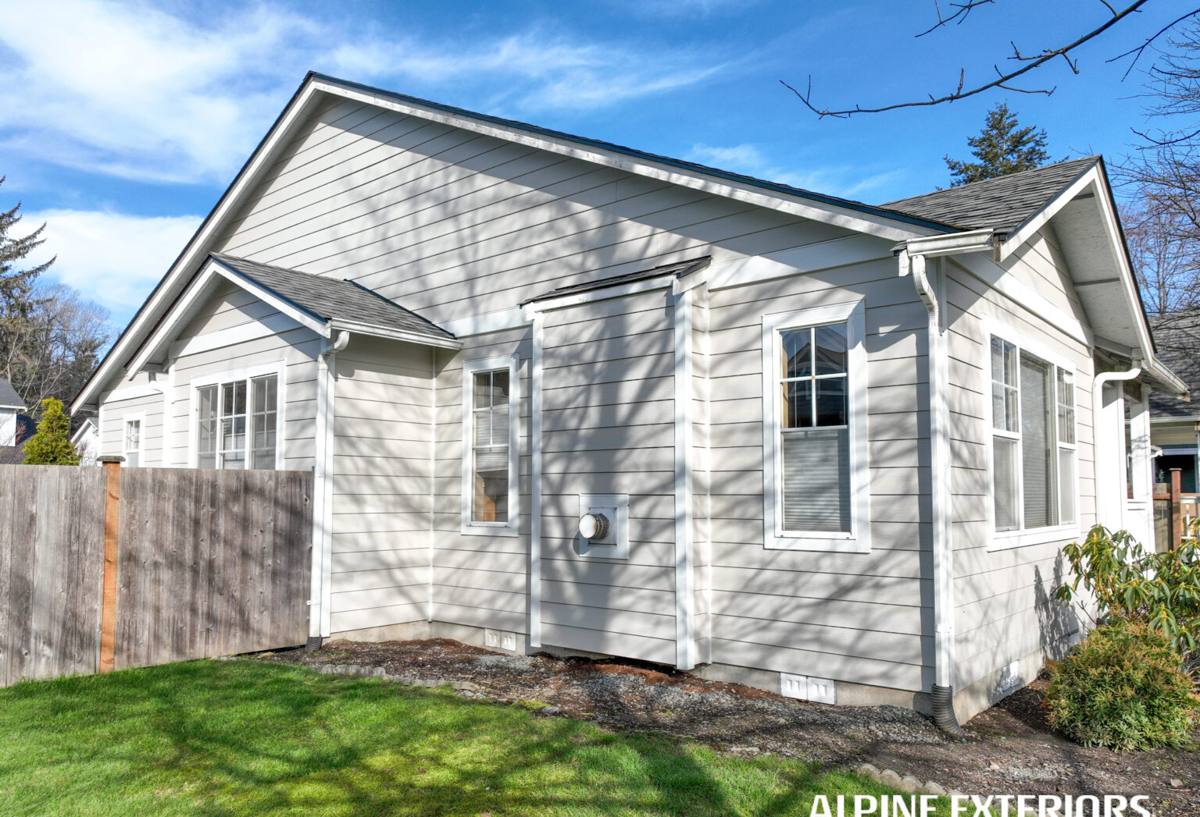
What Salt Air, Rain, and Moss Actually Do to a House
Salt Air
Airborne salt is corrosive to metal and abrasive to finishes over time. Fasteners, flashing, and trim details that aren't rated or protected for coastal exposure will show corrosion years before an equivalent product further inland. This is why fastener choice and flashing material matter more in Flounder Bay than in a subdivision on the east side of Anacortes.
Driving Rain
Wind-driven rain off the bay doesn't just fall on siding, it drives sideways into laps, seams, and any gap around windows and doors. A siding system that relies on caulk alone to keep water out, rather than proper flashing and a drainage plane behind the cladding, will eventually let moisture behind the wall. Once water gets behind siding on a shoreline home, it has more opportunities to reach sheathing and framing because the wall system rarely gets a chance to fully dry out between storms.
Moss and Sustained Moisture
Shaded, north-facing, and tree-line-adjacent walls in Flounder Bay hold moisture longer, which gives moss and algae a foothold. On some siding materials that means soaking, swelling, or coating breakdown. Fiber cement doesn't feed mold or rot the way wood-based products can, but moss buildup still needs periodic gentle cleaning so it doesn't trap moisture against the surface long-term.
Why We Only Install James Hardie Fiber Cement Here
We don't install LP SmartSide, vinyl, Cemplank, Allura, primed spruce, or cedar. That's not a marketing position, it's a standard we hold because of what we've seen play out on homes exposed to conditions like Flounder Bay's. Fiber cement itself is the right category of product for this climate because it's non-combustible and doesn't rot or feed insects the way wood-based sidings can. Within that category, James Hardie is the manufacturer whose engineering, factory finish, and warranty structure we're willing to stand behind on a shoreline exposure.
Hardie's ColorPlus factory finish is baked on and cured under controlled conditions, which gives it better adhesion and UV resistance than a field-applied paint job has to fight for over a 30- or 40-year service life. That matters on a coastal wall that's also dealing with salt exposure and moss cycles, because a finish that's failing invites more frequent repainting on top of everything else the climate is already asking of the wall.
HardieZone HZ10: Built for This Exposure
James Hardie engineers its products by climate zone, and the Pacific Northwest coastal zone (HZ10) is formulated specifically for high-moisture, high-humidity regions like ours. That's a meaningful difference from a generic fiber cement board that isn't zone-engineered at all. For a home in Flounder Bay, that zone-specific formulation is doing real work every day it sits a few hundred feet from saltwater.
What a Correct Installation Involves on a Flounder Bay Home
The siding board itself is only part of the system. Most of the problems we get called to fix on other contractors' work trace back to what's happening behind the board, not the board itself. On a home this close to the water, we treat the following as non-negotiable:
- A continuous water-resistive barrier and drainage plane behind the siding, so any moisture that does get past the cladding has a path to drain and dry rather than sitting against the sheathing
- Rain screen furring where the wall assembly and exposure call for it, giving the back of the siding an air gap to dry out after driving-rain events
- Corrosion-resistant fasteners rated for coastal use, driven to Hardie's specified pattern and depth, not just "close enough"
- Properly lapped and sealed flashing at every window, door, and roof-to-wall transition, since these are the spots where wind-driven rain finds its way in first
- Correct board-to-trim and butt-joint gaps with the right sealant, installed per manufacturer spec so joints can move without cracking open
- Minimum clearance between the bottom of the siding and grade, decks, or roof lines, so splashback and standing moisture don't sit against the board
Skip any one of these and the siding can look fine for a year or two while the real damage happens where you can't see it. That's exactly the pattern we see when we're asked to look at problem walls on other coastal jobs around Skagit County.
Our Process for a Flounder Bay Siding Project
We start with an in-person walk-around, not a phone estimate, because exposure varies wall to wall on a shoreline lot. The side of the house facing the bay is dealing with a different amount of wind-driven rain and salt exposure than the side tucked behind the garage, and we plan the flashing, fastening, and drainage details accordingly rather than treating all four walls the same.
From there:
- We inspect the existing wall assembly, sheathing, and any trouble spots (window returns, deck ledgers, roof-to-wall intersections) before we quote anything
- We spec the water-resistive barrier, flashing, and fastening approach for your specific exposure, not a one-size-fits-all package
- We remove old siding carefully so we can actually see and fix any sheathing or framing issues before they get covered back up
- We install the drainage plane and flashing details first, since these are the parts that matter most once the siding goes on
- We install James Hardie siding, trim, and fasteners to manufacturer spec, with attention to the coastal-specific fastener and clearance requirements
- We walk the finished job with you and explain what maintenance, if any, the specific exposure of your home will need going forward
Maintenance in a Salt Air and Moss Climate
Fiber cement is genuinely low-maintenance compared to wood siding, but "low-maintenance" doesn't mean "no maintenance," especially this close to the water. A short seasonal routine keeps a Flounder Bay home's siding performing the way it's designed to:
- Rinse salt residue and grime off the siding once or twice a year with a garden hose and soft brush, focusing on the bay-facing walls
- Gently clean moss and algae from shaded or north-facing sections before it builds up thick enough to hold moisture against the surface
- Check and refresh exterior caulking at trim and joints every few years, since sealant has a shorter service life than the board itself
- Walk the foundation line after major storms to confirm nothing is holding standing water against the bottom of the siding
- Keep gutters and downspouts clear so roof runoff isn't dumping extra water directly onto a wall section
None of this is heavy work, but skipping it for years at a time is how a shoreline home ends up needing repairs sooner than it should.
Cost Factors for Flounder Bay Homes
Every home is different, but the factors that move the price on a Flounder Bay siding job are fairly consistent. Rather than quote a number that doesn't mean much without seeing your house, here's what actually drives the estimate:
| Factor | Why It Matters Here |
|---|---|
| Bay-facing exposure | Walls facing prevailing wind and rain often need more robust flashing and drainage detailing than sheltered walls |
| Existing sheathing condition | Water intrusion from a prior siding job's flashing gaps can mean sheathing repair before new siding goes on |
| Home size and wall complexity | Dormers, multiple roof-to-wall transitions, and cut-up facades each add flashing detail and labor |
| Siding profile chosen | Lap siding, board-and-batten, and panel systems have different material and labor costs |
| Trim and accessory scope | Fascia, soffit, and trim replaced at the same time affects both cost and how well the whole system performs together |
| Access and site conditions | Waterfront lots with limited staging area or steep grades can add setup time |
We break all of this down in writing during the estimate so you know exactly what you're paying for and why.
Why Local Experience in Flounder Bay Specifically Matters
A crew that mostly works inland jobs may never have had to think hard about coastal fastener corrosion, rain screen detailing, or how aggressively moss takes hold on a shaded, water-adjacent wall. A crew that already works in and around Flounder Bay and the greater Anacortes shoreline has made those judgment calls before and knows which details actually matter for this specific exposure versus which are overkill.
That local experience also shows up in smaller ways: knowing how Skagit County's permitting and inspection process works for exterior projects, understanding typical lot access and staging challenges on waterfront streets, and being able to talk through your home's specific exposure instead of applying a generic checklist. It's the difference between siding that's installed correctly for the neighborhood it's actually in and siding that's installed correctly for a neighborhood it isn't.
Get a Straight Answer About Your Flounder Bay Home
If your current siding is showing its age, or you're planning ahead for a project, we're happy to walk your property, look at your specific exposure, and give you an honest read on what it needs. There's no pressure and no obligation, just a straightforward estimate from a crew that already knows this stretch of Anacortes. Fill out the form below to get started.