 Anacortes
 Why Mount Vernon Roofs Take a Different Kind of Beating
Mount Vernon sits in the Skagit River valley, close enough to Anacortes and the Salish Sound that homes here deal with the same moist, salt-tinged marine air that moves inland off the water, combined with the wind-funneling effect of the valley itself. That's a tougher combination than it sounds. Storms coming off the Sound pick up speed and moisture, then get pushed through the valley corridor, which means roofs here often see longer stretches of driving, sideways rain than homes just a few miles away on more sheltered ground. Add in a moss season that can run eight months or more in a wet year, and you've got a roof that's working harder than most homeowners realize.
None of this means Mount Vernon roofs fail faster than average. It means the damage that does happen tends to be specific: wind-lifted shingle edges, water intrusion at flashing points that were fine in dry weather but leak under sideways rain, and moss colonies that hold moisture against the roof deck long after a storm has passed. A repair that doesn't account for those local patterns is a repair that's likely to fail again at the next storm.
What Counts as Storm Damage (and What Doesn't)
Homeowners often assume storm damage means something dramatic — a tree limb through the roof, shingles scattered across the lawn. Sometimes it is. More often it's quieter than that, and it's the quiet damage that causes the most trouble because it goes unnoticed until there's a stain on a ceiling.
Wind Damage vs. Age-Related Wear
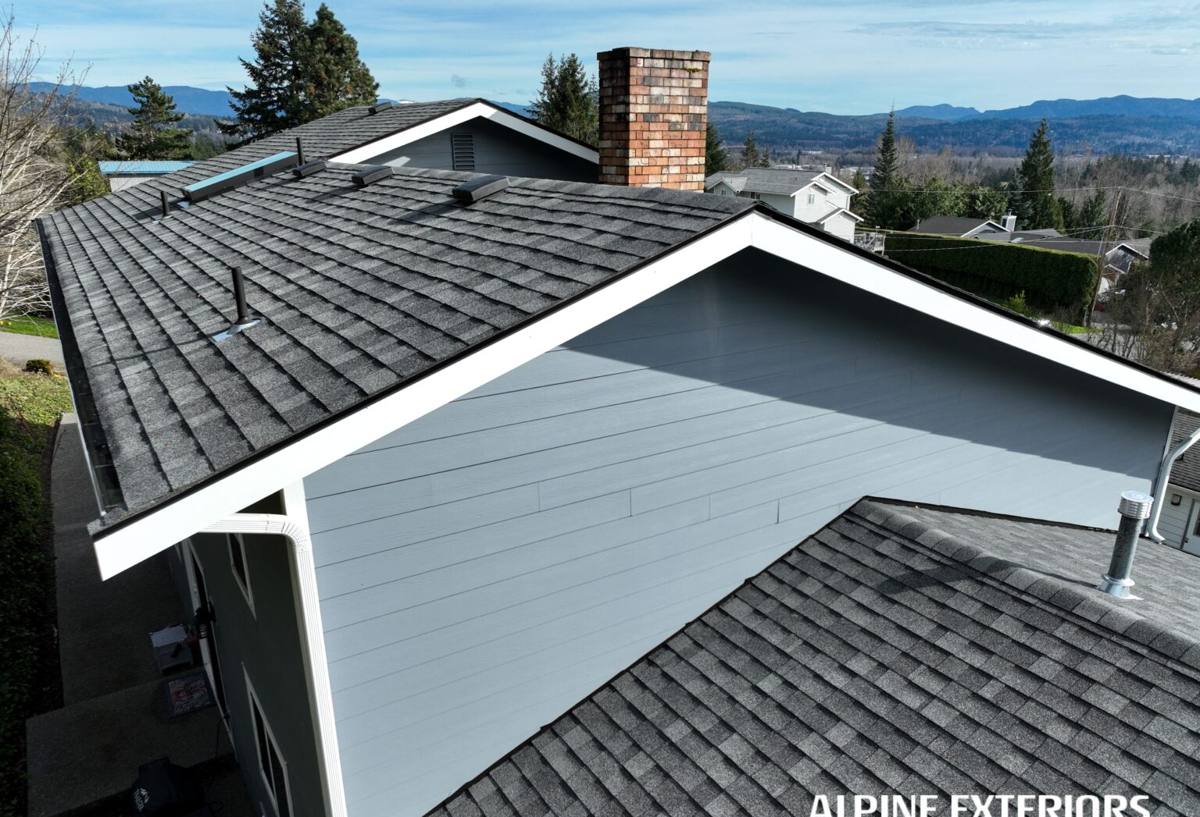
Wind damage has a specific signature: shingles lifted, creased, or torn along one edge of the roof (usually the side that faced the storm), fasteners pulled partway out, and sometimes clean gaps where a shingle blew off entirely. Age-related wear looks different — granule loss spread evenly across the whole roof, shingles that are curling or cracking uniformly, and flashing that's simply worn thin from years of expansion and contraction. Both can look similar to an untrained eye, but the repair approach is different, and if you're filing an insurance claim, the distinction matters a great deal.
Hidden Damage That Shows Up Weeks Later
The damage that catches homeowners off guard is usually underneath the visible roofing: a lifted shingle that let wind-driven rain past the underlayment, a nail that backed out just enough to open a pinhole leak, or flashing around a chimney or vent that shifted slightly and now channels water where it shouldn't. These don't always show up as an active leak right after a storm. Sometimes it takes several more rain events, or a stretch of wet weather, before water finds its way to the ceiling. That's one reason we recommend a roof inspection after any storm with sustained high winds, even if nothing looks obviously wrong from the ground.
What a Correct Storm Repair Actually Involves
A storm repair that's done right isn't just about replacing the shingles you can see are missing. It's about tracing the actual path water could take and making sure every point along that path is sealed and sound.
Inspection First, Repair Second
We start on the roof itself, not from photos or a ladder at the eave line. That means checking the field of the roof for lifted or missing shingles, examining every flashing point (chimneys, vents, skylights, valleys, and where the roof meets any wall), and checking the attic from the inside for water staining, damp insulation, or daylight coming through anywhere it shouldn't. Storm damage in the Skagit Valley often shows up first in valleys and around penetrations, because that's where wind-driven rain has the most opportunity to work past a seal that's holding fine under normal rainfall.
Matching Materials the Right Way
Repairs need to match the existing roofing in more than just color. Shingle profile, weight, and age all affect how a patch integrates with the surrounding roof. A repair using mismatched shingles can create a slightly different water-shedding pattern at the seam, which sometimes just relocates a leak instead of fixing it. On older roofs, we'll tell you honestly if a patch section is a temporary fix versus a long-term one — that's a judgment call worth having explained, not guessed at.
Our Process for Storm Repairs in Mount Vernon
We keep the process straightforward because storm repair is stressful enough without added confusion about what happens next.
- Initial contact and scheduling: We get a description of what you're seeing and get someone out promptly, especially if there's active water intrusion.
- Full roof and attic inspection: On-roof and from inside the attic, documenting what we find with photos for your records and, if needed, for your insurance adjuster.
- Written scope and honest recommendation: You get a clear explanation of what's damaged, what's simply worn, and what your repair options are — patch, section replacement, or full replacement if the damage warrants it.
- Temporary protection if needed: If there's an active leak or exposed decking, we get it covered and protected before the full repair is scheduled, so a delay in scheduling doesn't turn into interior damage.
- The repair itself: Removing and replacing damaged materials, re-sealing flashing points, and confirming water is shedding correctly before we call it done.
- Final walkthrough: We show you what was done and why, in plain terms, before we consider the job finished.
Repair vs. Replacement: How We Help You Decide
Not every storm-damaged roof needs to be replaced, and not every roof can be reasonably patched. The right call depends on a handful of factors, and we'll walk through them with you rather than defaulting to whichever answer is more profitable for us.
| Factor | Favors Repair | Favors Replacement |
|---|---|---|
| Roof age | Under roughly 12-15 years | Near or past expected service life |
| Extent of damage | Localized to one area or slope | Spread across multiple slopes |
| Underlying decking | Sound, dry, no rot found | Soft spots, rot, or repeated water staining |
| Shingle availability | Matching shingles still obtainable | Discontinued or badly weathered mismatch |
| Moss and moisture history | Isolated, recently treated | Long-term moss buildup with granule loss |
We'll always start with the least invasive option that genuinely solves the problem. If a repair is the honest answer, that's what we'll recommend — a roof doesn't need to be replaced just because it had a bad storm.
Storm Damage and Homeowner's Insurance
Many storm repairs in this area are covered in part or in full by homeowner's insurance, particularly when there's a clear wind event tied to the damage. We're not your insurance company and we won't promise a specific outcome on a claim, but we can document damage thoroughly — photos, measurements, and a written scope — so you're walking into the claims conversation with solid information rather than guesswork. If an adjuster's assessment doesn't match what we found on the roof, we're glad to talk through the specifics with you so you understand where the difference is coming from.
- Take photos of any visible damage from the ground as soon as it's safe to do so
- Avoid walking a storm-damaged roof yourself — wet, wind-loosened shingles are a fall hazard
- Get a professional inspection before making a claim decision, so you know the full scope
- Keep any receipts for emergency tarping or temporary repairs — these are often reimbursable
- Ask for a written, itemized scope of damage rather than a verbal estimate alone
The Moss Problem: Skagit Valley's Slow-Motion Storm Damage
Moss doesn't get the attention that wind and rain do, but over a long Skagit County moss season it causes a comparable amount of damage — just spread out over years instead of hours. Moss holds moisture directly against shingles and the roof deck, which accelerates granule loss and, on wood-adjacent components like fascia, can lead to rot. It also lifts shingle edges slightly as it grows, which gives wind-driven rain an easier path underneath during the next storm. In other words, moss and storm damage aren't separate issues here — moss buildup often sets up the conditions that make storm damage worse when the next system rolls through.
Where moss has been left untreated for several seasons, we'll flag it as part of any storm repair, because closing up storm damage without addressing the moss underneath it is a short-term fix. That doesn't always mean a full moss treatment project — sometimes it's as simple as clearing growth from a valley or flashing line so water can actually reach the gutter instead of pooling against a seam.
Roof Types and What Storm Damage Looks Like on Each
Mount Vernon has a mix of roofing types, and storm damage shows up differently depending on what's on your roof.
- Asphalt composition shingles: Lifted or creased edges, torn tabs, granule loss concentrated where wind hit hardest
- Wood shake or shingle: Split or displaced shakes, exposed underlayment, accelerated rot where moss has taken hold
- Metal roofing: Loosened fasteners, minor panel lifting at the ridge or eave, occasional denting from wind-borne debris
- Low-slope or flat sections: Ponding water after driving rain, membrane seams stressed by wind uplift
Whatever is on your roof, the underlying question after a storm is the same: did the roofing system's ability to shed water get compromised anywhere, even slightly? That's what we're checking for on every inspection.
Why a Crew That Already Works Mount Vernon Matters
Storm repair isn't the place for guesswork, and local, repeat experience in this specific area makes a real difference. A crew that regularly works Skagit County roofs already understands how wind tends to move through the valley, which roof orientations tend to take the worst of a given storm, and how aggressively moss grows here compared to drier parts of the state. That local pattern recognition speeds up diagnosis and helps us catch damage that an out-of-area crew, unfamiliar with how storms actually behave here, might miss on a first pass.
There's also a practical side to it: storm damage often isn't a one-and-done event during an active weather system, and a local crew can respond faster when you need temporary protection or a follow-up look after the next round of wind comes through. We stand behind our repair work, and being based nearby means that's more than a talking point.
If you're dealing with storm damage on your Mount Vernon home, or you just want a roof checked after a rough stretch of weather, we're happy to take a look. Reach out for a free, no-pressure estimate using the form below — there's no obligation, and you'll get a straight answer about what your roof actually needs.