 Anacortes
 Storm Damage Roof Repair, Built for Fidalgo Island Conditions
Fidalgo Island sits right where Puget Sound weather gets concentrated: wind off the water, driving rain that comes in sideways during winter fronts, and a marine air layer that never fully leaves. A roof here doesn't just get rained on — it gets weathered from multiple directions at once, season after season. When a storm rolls through and knocks something loose, cracks a shingle, or lifts a section of flashing, the damage is rarely as simple as "one bad spot." This page covers what storm damage roof repair actually involves for homes on Fidalgo Island, what correct work looks like, and how our process runs from the first call to the final walk-through.
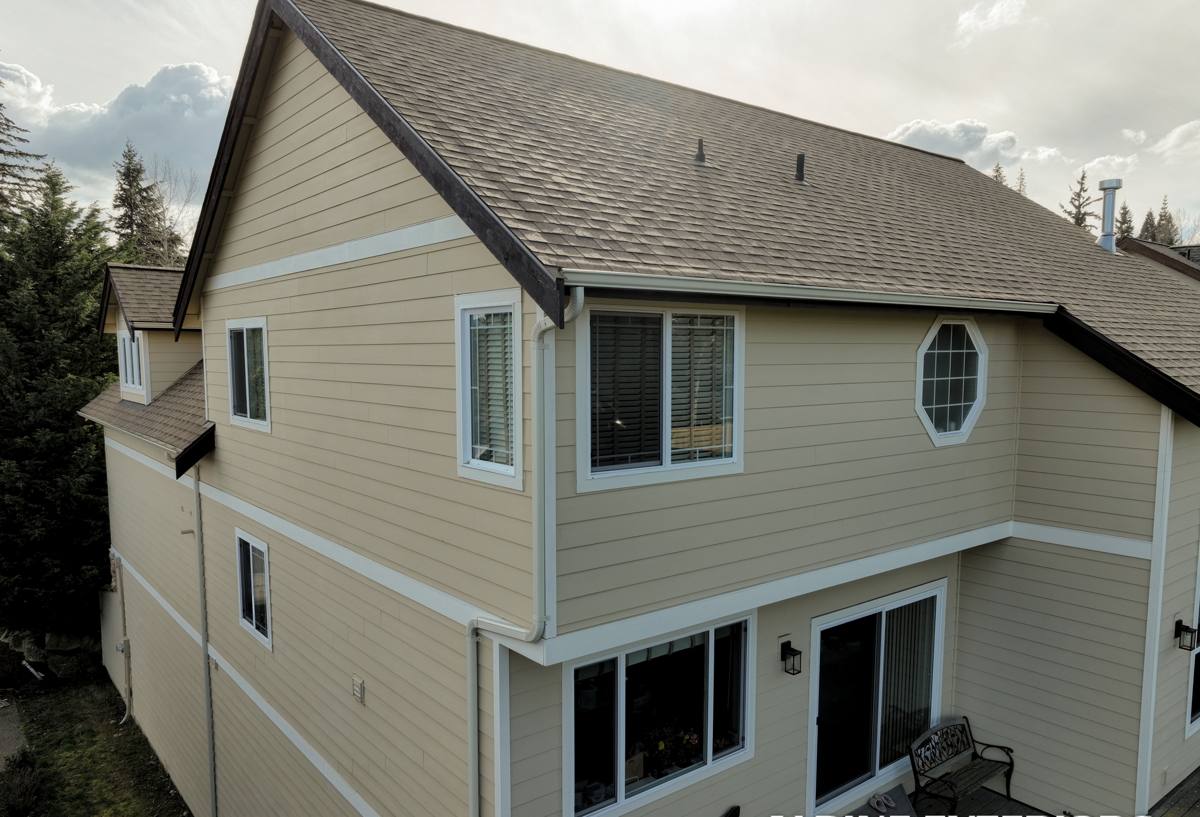
What Fidalgo Island's Climate Actually Does to a Roof
We service roofs across Anacortes and the rest of Skagit County, and Fidalgo Island roofs tend to show a specific pattern of wear that's worth understanding before you decide what kind of repair you need.
Salt Air and Corrosion
Being surrounded by saltwater means metal components — flashing, fasteners, vent boots, gutter hardware — corrode faster here than they would 30 miles inland. A storm that loosens a flashing seam on an already-corroding roof does more damage than the same storm would on a newer or better-protected roof. Part of a proper storm repair is checking whether the underlying metal was already compromised before the wind or rain event, because patching over corroded flashing just buys you a repeat visit.
Driving Rain and Wind-Driven Water
Storms that come off the Sound rarely drop rain straight down. Wind pushes it sideways and up under laps, edges, and flashing that would keep water out in a calmer climate. This is why storm damage here often shows up as interior leaks in places that look fine from the ground — the water didn't fall through a hole, it got pushed in sideways through a gap that a straight-down rain would never find.
A Long Moss Season
Skagit County's damp, mild climate gives moss and algae a long growing window on north-facing and shaded roof slopes. Moss holds moisture against the roofing material, works its way under shingle edges, and adds weight. A storm that would shed off a clean, dry roof can dislodge shingles more easily once moss has been prying at the edges for a season or two. When we assess storm damage, moss buildup is one of the first things we check, because it changes how much force it actually took to cause the damage you're looking at.
Signs of Storm Damage Worth Having Checked
Not all storm damage is obvious from the driveway. Some of it only shows up once you know what to look for.
- Missing, cracked, or curling shingles, especially on the side of the roof that faces prevailing wind
- Granules collecting in gutters or at downspout outlets after a storm
- Bent, lifted, or missing flashing around chimneys, vents, and roof-to-wall transitions
- Water stains or discoloration on interior ceilings or upper walls after a heavy rain event
- Sagging or soft spots underfoot on a roof walk (a sign water has already gotten into the decking)
- Debris, branch strikes, or dented vents and metal flashing after high wind
- Gutters pulling away from the fascia or full of shingle fragments
What a Correct Storm Damage Repair Involves
Storm repair work has a bad reputation in some circles because it can be done fast and sloppy — a few shingles nailed over the damaged area and a caulk gun used where flashing should be. That approach fails quickly in this climate. Here's what we consider a correct repair.
Full Assessment Before Any Repair
Before we fix anything, we look at the whole roof plane, not just the spot that's obviously damaged. Wind and water damage often extends beyond the visible failure point, and if we only patch what's visible, the surrounding area — already stressed by the same storm — tends to fail again within a season or two.
Matching Materials, Not Just Covering the Gap
Shingle color, profile, and manufacturer matter for both appearance and how well a repair sheds water at the seams. Where an exact match isn't available (common on older roofs), we'll tell you honestly what your options are — patch with the closest match, source a discontinued match if possible, or discuss a broader repair — instead of pretending a mismatched patch is invisible.
Flashing and Underlayment, Not Just Shingles
Because wind-driven rain on this island tends to find its way in through flashing and edge details rather than through the shingle field itself, we treat flashing repair as part of the job, not an upsell. A shingle repair over failing flashing is a repair that's designed to fail again.
Emergency Weatherproofing When Needed
If a storm has left your roof actively leaking or exposed, temporary tarping or dry-in protection comes first, before we schedule the permanent repair. The goal is to stop water intrusion into the decking and interior immediately, then do the correct repair once materials and access are in place.
Repair vs. Replacement: How We Make That Call
Storm damage doesn't automatically mean you need a new roof, and it doesn't automatically mean a patch will hold either. We walk through a few honest factors with every homeowner before recommending one over the other.
| Factor | Leans toward repair | Leans toward replacement |
|---|---|---|
| Roof age | Under 12–15 years, in otherwise sound condition | Near or past the material's expected service life |
| Extent of damage | Isolated to one section or slope | Spread across multiple slopes or the whole roof |
| Underlying deck condition | Decking is dry and solid under the damaged area | Decking shows rot, soft spots, or prior water damage |
| Moss and wear history | Minimal, well-maintained roof otherwise | Heavy moss history with underlying granule loss |
| Material availability | Matching shingles are still available | Product is discontinued and mismatch would be significant |
We'll always give you the repair option first if it's a sound long-term fix. Recommending a full replacement when a proper repair would hold doesn't serve you, and it doesn't build the kind of repeat business we rely on in a community like this one.
Our Process, Start to Finish
- Contact and initial description. Tell us what happened and what you're seeing — leak location, visible damage, timing of the storm.
- On-site inspection. We walk the roof (and check the attic or interior where relevant) to assess the full extent of damage, not just the obvious spot.
- Written scope and estimate. You get a clear explanation of what's damaged, what we recommend, and why — repair or replacement — with pricing before any work starts.
- Emergency protection if needed. If the roof is actively leaking, we address that first to stop ongoing water intrusion.
- Repair work. Matching materials, correct flashing and underlayment work, and cleanup when finished.
- Final walk-through. We review the completed work with you before we consider the job done.
Insurance Claims After Storm Damage
Many storm-related roof repairs are covered under homeowner's insurance, depending on your policy and the cause of damage. We're happy to document the damage clearly — photos, a written description, and our assessment — so you have what you need if you choose to file a claim. We don't handle the claim itself or promise a specific outcome with your insurer, but we'll give you an honest, accurate account of what happened to the roof, which is the most useful thing we can provide for that process.
Why a Crew That Already Works Fidalgo Island Matters
A contractor who works this island regularly already knows which slopes take the worst of the wind, how fast moss builds back in the shaded areas, and which flashing details tend to fail first in salt air. That familiarity shortens the diagnostic part of the job and means the repair is built for how this specific stretch of Skagit County actually behaves, not a generic weather profile. It also means we're a known, findable local business if a repair needs a follow-up visit — not a storm-chasing crew that's out of the area by the following week.
Get a Free, No-Pressure Estimate
If a recent storm has left you with a leak, missing shingles, or damage you're not sure how serious it is, we're glad to come take a look. There's no cost and no obligation to move forward — just an honest assessment of what's going on with your roof and what it would take to fix it right. Use the form below to get started.