 Anacortes
 Windows in Skyline Take a Different Kind of Beating
Skyline sits close enough to open water that homes here deal with a combination most inland Skagit County properties don't: salt-laden air, wind-driven rain that hits window walls at an angle instead of straight down, and a wet season that runs long enough to grow moss on anything that stays damp. None of that is a problem for a window on day one. It becomes a problem three, five, ten years in, when seals that were installed a little loose, flashing that was never lapped correctly, or trim that was caulked instead of properly flashed starts letting water find its way behind the siding.
We're not here to scare anyone into replacing windows that are still doing their job. Plenty of older wood windows in this area are still sound if the sash and glazing have been maintained. What we focus on is doing the installation itself correctly the first time, because in a marine climate like Anacortes, a window that's 90% right on flashing and sealing eventually behaves like a window that's 0% right — it just takes longer to show.
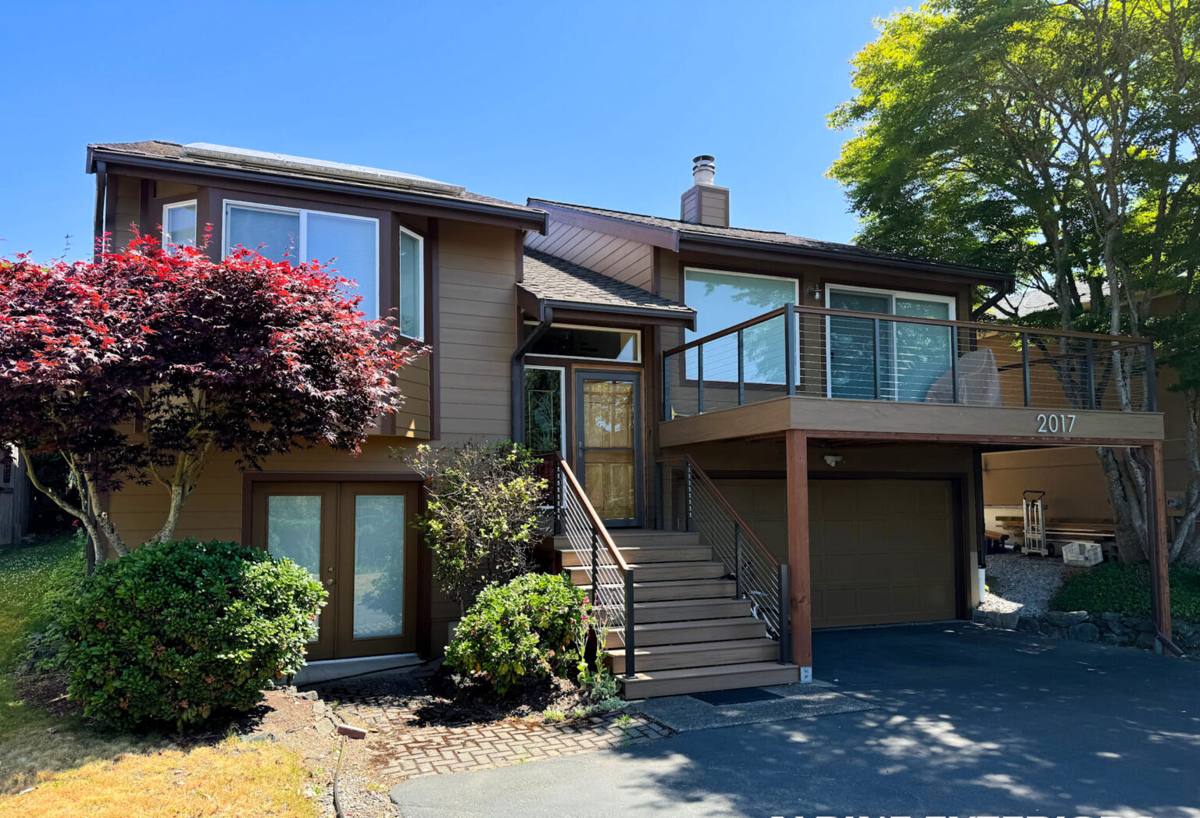
How Skyline's Exposure Shows Up in Window Problems
We see the same handful of issues repeatedly on homes in this area:
- Fogging between panes — the seal on an insulated glass unit has failed, usually from years of moisture cycling, not a single bad day of weather
- Soft or discolored trim and sill areas — a sign water has been getting behind the window casing, often from caulk-only installations with no real flashing underneath
- Green or black growth on north- and west-facing frames — moss and mildew take hold anywhere that stays shaded and damp through the wet months, and it's more cosmetic than structural until it starts holding moisture against wood
- Drafts around the sash even when the window is latched — weatherstripping breaks down faster with constant damp-dry cycling than it does in a drier climate
- Corroded hardware — salt air is hard on cheaper cranks, locks, and balances, especially on west- and south-facing exposures that catch the most wind off the water
None of these mean a full replacement is automatically the answer. But they're worth having looked at, because catching a flashing failure early is a trim repair; catching it five years late can mean sheathing and framing repair.
What a Correct Window Installation Actually Involves
Flashing and Water Management
This is the part of the job that doesn't show once the trim goes back on, and it's also the part that determines whether the window performs for twenty years or leaks in five. A proper installation means a sill pan that directs any water that gets past the window back out — not into the wall cavity — plus head, jamb, and sill flashing integrated with the home's weather-resistive barrier in the correct shingle-lap order (each layer overlapping the one below it, so water always sheds outward and down). In a spot like Skyline, where wind can drive rain sideways against a wall, this detail matters more than it would somewhere drier.
Air Sealing and Insulation
Between the window frame and the rough opening, we use a combination of backer rod and low-expansion foam or approved sealant — never foam alone packed in tight, which can bow a frame and cause it to bind or leak. The goal is a continuous air seal without compromising the window's ability to operate correctly.
Fastening and Shimming
Windows need to be shimmed plumb, level, and square before they're fastened, with shims placed at the manufacturer's specified points — not just wherever it's convenient. A window that's slightly racked will still open the day it's installed; it's a year or two later, once the frame has settled under its own tension, that homeowners notice it's hard to operate or won't latch tightly.
Choosing Materials That Hold Up to This Climate
There's no single "best" window material — it depends on the home, the exposure, and the budget. What we won't do is install something we know is a poor fit for a given wall's sun and rain exposure just because it's cheaper. Here's how the common options compare for a marine climate like ours:
| Material | Moisture / Salt-Air Resistance | Maintenance | Typical Lifespan |
|---|---|---|---|
| Vinyl | Good — won't rot or corrode, though very cheap vinyl can warp with heat/cold cycling | Low — occasional wash-down | 20–30 years |
| Fiberglass | Very good — dimensionally stable, holds paint well, resists salt air corrosion | Low to moderate | 30–40+ years |
| Wood (unclad, painted) | Fair — needs consistent upkeep to keep water out of end grain and joints | High — repaint/reseal on a regular cycle | Varies widely with maintenance |
| Wood-clad (aluminum or vinyl exterior) | Good on the exterior face; interior wood still needs attention if the seal ever fails | Moderate | 25–35 years |
For most Skyline homes with direct wind and rain exposure, we lean toward vinyl or fiberglass on the exterior face because they don't give salt air and standing moisture anything to work on. Wood or wood-clad is a fine choice too, especially where it matches an existing look — it just needs an owner willing to keep up with the maintenance schedule.
Our Installation Process
- On-site assessment — we look at the existing window openings, flashing condition, siding type, and any signs of past water intrusion before recommending anything
- Product selection — full-frame replacement, insert (pocket) replacement, or new construction framing, depending on whether the existing frame and flashing are sound
- Written estimate — scope, materials, and price, no surprise add-ons once work starts
- Removal and opening prep — old units come out, the opening is inspected for rot or damage before anything new goes in
- Flashing and sealing — sill pan, weather-resistive barrier integration, and window flashing installed per manufacturer and code requirements
- Window installation — shimmed, squared, fastened, and air-sealed
- Interior and exterior trim — finished to match the home
- Final walkthrough — every window opened, closed, and locked in front of the homeowner before we call it done
Insert Replacement vs. Full-Frame Replacement
This is one of the most common questions we get, because it directly affects both cost and long-term performance.
Insert (pocket) replacement keeps the existing frame in place and fits a new window inside it. It's faster and less invasive, and it works well when the existing frame is square, dry, and free of rot. Full-frame replacement removes the window down to the rough opening, which lets us fix flashing or framing problems, but it costs more and takes longer. For homes in Skyline that have had any history of water intrusion around the windows, we generally recommend at least inspecting behind the frame rather than assuming an insert is the right call — covering up a moisture problem with a new window on top of it doesn't solve anything.
Why Local Experience in Skyline Matters
A crew that's worked windows in this specific area already knows which exposures take the worst of the weather, what kind of flashing details hold up against wind-driven rain off the water, and how long moss takes to establish itself on a shaded north wall in this climate. That's not something you get from a general contractor who does one job in Anacortes and moves on to a different county. It also means we're familiar with Skagit County permitting requirements for window replacement, which can vary depending on whether the work is like-for-like or involves resizing an opening.
Being local also means we're available if a question comes up two years after the install — not just the week the invoice was due.
What Affects the Cost of a Window Installation
| Factor | Why It Matters |
|---|---|
| Insert vs. full-frame replacement | Full-frame costs more but is often necessary if flashing or framing needs repair |
| Window material | Vinyl is typically the most affordable; fiberglass and wood-clad cost more upfront |
| Glass package | Double vs. triple pane, Low-E coatings, and gas fills (argon) all add cost and improve performance |
| Number and size of openings | Larger or custom-sized windows cost more than standard sizes |
| Condition of the existing opening | Rot or water damage found during removal adds repair time before the new window can go in |
| Trim and exterior finish work | Matching existing trim profiles or siding can add labor |
We give a written, itemized estimate before any work starts, so there's no guessing about where the cost is coming from.
Keeping New Windows Performing in This Climate
A correct installation is most of the battle, but a little upkeep goes a long way in a wet, salt-air environment:
- Rinse frames and tracks periodically to clear salt residue, especially on wind-exposed walls
- Check and clear weep holes so water can drain out instead of pooling on the sill
- Keep an eye on caulking at the trim joints and touch it up before it fails, not after
- Address moss or mildew on frames and trim early — it holds moisture against the surface the longer it sits
- Operate every window a few times a year, even ones you rarely open, so hardware doesn't seize up
If you're dealing with drafty, foggy, or hard-to-operate windows in Skyline, or you're planning ahead for a remodel, we're happy to take a look and give you a straightforward, no-pressure estimate — just fill out the form below.