 Anacortes
 Why Ship Harbor Roofs Wear Differently Than Roofs Inland
Ship Harbor sits on the west side of Fidalgo Island, close enough to the water that homes there deal with a different set of stresses than a roof twenty minutes inland in Skagit County. Three things drive most of the roofing problems we see out this way: salt-laden air off Rosario Strait, driving rain that comes in sideways during winter storms, and a moss season that runs longer here than almost anywhere else in the county because the tree cover and marine humidity keep roof surfaces damp for weeks at a stretch.
None of that means a roof in Ship Harbor needs to be exotic or overbuilt. It means the installation details — fasteners, flashing, ventilation, and underlayment — have to be chosen and executed with those specific conditions in mind, not just installed to the minimum code spec and called done.
Salt Air and Metal Components
Salt air accelerates corrosion on any exposed metal — nail heads, flashing, gutter fasteners, vent stacks. On a standard asphalt roof this shows up first as rust streaking below flashing points and at nail pops. It's a slow process, but it's steady, and it's one reason we don't cut corners on fastener and flashing material selection for homes this close to the water.
Driving Rain and Wind-Driven Water
Anacortes gets plenty of rain that falls straight down and causes no trouble at all. The rain that causes roof leaks is the sideways kind, pushed by wind off the strait, that gets up under shingle tabs, around chimney flashing, and into valleys that weren't lapped correctly. A roof built for a drier, calmer climate can look fine for years and still leak the first time a real southwesterly storm hits it broadside.
Moss Season
Shade from mature trees plus persistent marine moisture means moss and algae get a long runway here — often close to nine months of the year when conditions stay favorable for growth. Moss isn't just cosmetic. It holds moisture against the roofing material, lifts shingle edges as it grows, and works its way into fastener penetrations over time.
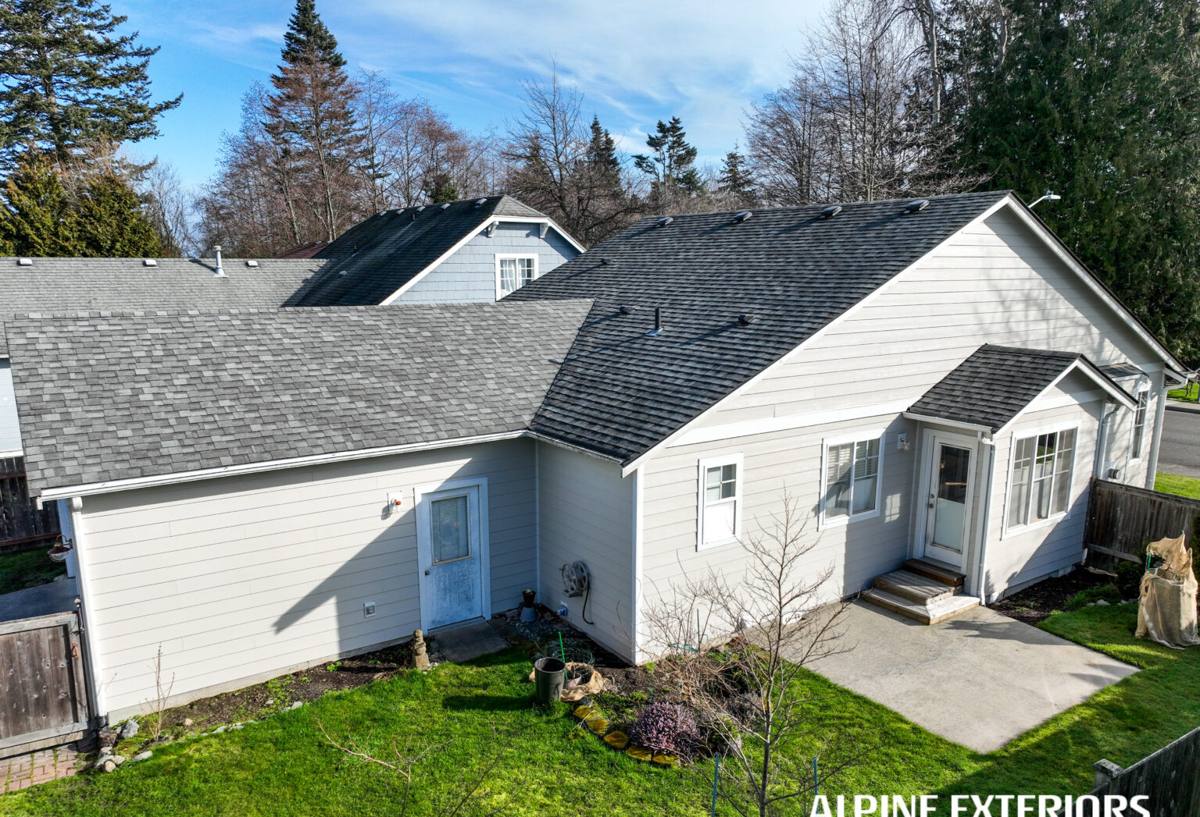
Signs a Ship Harbor Home Needs a New Roof, Not Another Repair
Not every roof problem calls for full replacement. But there's a point where patching stops making financial sense. Watch for these:
- Granule loss heavy enough that you can see bare, shiny patches on shingles from the ground
- Moss established at the ridge and working down the field of the roof, not just in shaded valleys
- Daylight visible through the roof deck from the attic, or damp insulation after a storm
- Shingles curling, cupping, or cracking across large sections rather than a few isolated spots
- Repeated flashing leaks at the same chimney, skylight, or wall intersection despite past repairs
- A roof past 20-25 years old on standard asphalt shingles, especially one that's never had ventilation upgrades
If you're only seeing one or two of these in a small area, a repair may still be the right call. A new roof makes sense when the underlying materials — deck, underlayment, flashing system — are failing broadly rather than in one spot.
What a Correct Roof Installation Actually Involves
A new roof is more than stripping old shingles and nailing down new ones. For a Ship Harbor property, the parts that matter most are usually invisible once the job is done.
Full Tear-Off and Deck Inspection
We don't install over existing layers. A tear-off lets us actually see the deck — soft spots, rot around old vent penetrations, and prior water damage that a layover would just bury. Any damaged sheathing gets replaced before anything new goes down.
Underlayment Built for Wind-Driven Rain
Given how often wind-driven rain is the actual cause of leaks in this area, we use synthetic or ice-and-water underlayment at eaves, valleys, and roof penetrations rather than relying on felt paper alone in those vulnerable spots. This is the layer that saves the house if wind ever forces water under the shingle surface.
Flashing Detail Work
Chimneys, skylights, sidewalls, and valleys are where the vast majority of roof leaks originate — not the open field of shingles. Correct step flashing, counter-flashing, and valley metal, properly lapped and sealed, matters more to long-term performance than almost any other single decision on the job.
Ventilation That Fights Moss and Moisture
Balanced intake and exhaust ventilation keeps the underside of the roof deck drier and closer to outdoor temperature, which slows moss growth from below and reduces the condensation that rots decking from the inside. This is frequently the piece that gets skipped on budget installs, and it's the piece that shows up as problems five to ten years later.
Material Options for This Climate
There's no single "best" roofing material for every Ship Harbor home — it depends on the roof's slope, the amount of shade and moss exposure, and budget. Here's how the common options compare for this specific environment:
| Material | Moisture & Moss Behavior | Typical Lifespan Here | Maintenance Burden |
|---|---|---|---|
| Architectural asphalt shingle | Good with proper ventilation; algae-resistant granules help but don't eliminate moss risk in shaded areas | 20-30 years | Moderate — periodic moss/debris removal recommended |
| Standing seam metal | Sheds moisture fast, minimal surface for moss to grip; needs quality fasteners near salt air | 40-60 years | Low |
| Cedar shake | Traditional look but holds moisture longer and is more moss-prone in shaded, humid spots | 20-30 years with upkeep | High — regular treatment and moss control needed |
| Synthetic composite shake/slate | Mimics wood or slate appearance without the moisture retention of natural wood | 40-50 years | Low to moderate |
We don't push cedar shake for heavily shaded Ship Harbor lots as a rule — not because it's a bad product, but because it requires a maintenance commitment (regular treatment, aggressive moss control) that many homeowners underestimate given how long the moss season runs here. If a homeowner wants that look and understands the upkeep, we'll install it correctly. Otherwise, a synthetic alternative or a well-ventilated asphalt system usually serves the property better long-term.
Our Installation Process
- On-site assessment: We inspect the existing roof, attic ventilation, and any trouble spots (chimneys, skylights, valleys) before quoting anything.
- Material and system selection: Based on slope, shade exposure, and your budget, we walk through the realistic options rather than pushing one product.
- Tear-off and deck repair: Full removal of old roofing, deck inspected and repaired as needed.
- Underlayment and flashing installation: Ice-and-water membrane at vulnerable points, new flashing throughout.
- Ventilation check and upgrade: Intake and exhaust balanced to current code and best practice for the attic configuration.
- Roofing material installation: Installed to manufacturer spec, including proper nailing patterns and exposure for wind resistance.
- Final walkthrough: We review the completed roof with you, including care and moss-prevention guidance specific to the site.
Cost Factors for a Ship Harbor Roof Replacement
Every roof is priced on its own specifics, but the main variables that move the number are consistent:
| Factor | Why It Matters |
|---|---|
| Roof size and number of planes | More squares and more complex geometry mean more material and labor hours |
| Roof pitch and access | Steeper roofs and limited site access (common on wooded or view lots) increase labor time and safety equipment needs |
| Deck condition underneath | Rot or soft sheathing discovered during tear-off adds material and labor not visible in an initial estimate |
| Material choice | Standing seam metal and synthetic composites cost more upfront than asphalt shingle but reduce long-term maintenance |
| Flashing and penetration count | Chimneys, skylights, and multiple vent stacks each add detail work |
| Ventilation upgrades needed | Adding or correcting intake/exhaust venting is inexpensive during a full tear-off, costly to retrofit later |
We'd rather walk a roof in person and give you real numbers than throw out a broad range that doesn't mean much for your specific house. What we can say honestly is that the cheapest bid is rarely the cheapest roof once you account for what gets skipped to hit that number.
Why a Crew That Already Works Ship Harbor Matters
A roofer who works this specific stretch of Anacortes regularly has already seen how the salt exposure, tree cover, and storm exposure on this side of Fidalgo Island play out over time. That matters in practical ways: knowing which fastener grades hold up near the water, recognizing early moss patterns that signal a ventilation problem versus just a shady roof, and understanding how local wind patterns off the strait tend to find weak flashing details. A crew unfamiliar with the area is working from general textbook knowledge; a crew that's replaced and repaired roofs here for years is working from what's actually held up.
Skagit County's building department and permitting requirements also apply consistently across Anacortes, and a local crew handles that process routinely rather than treating it as a one-off.
What to Check Before You Hire Anyone
- Current Washington state contractor license and liability insurance, verifiable on request
- Manufacturer certification if you're considering a system with an extended warranty
- A written scope that specifies underlayment type, flashing materials, and ventilation plan — not just "shingles and labor"
- Willingness to do a full tear-off and deck inspection rather than quoting sight-unseen over the phone
- References or completed work you can actually see, not just a generic sales pitch
- A clear explanation of warranty terms — both the manufacturer's material warranty and the installer's workmanship warranty
If a bid comes in dramatically lower than others with no explanation of what's different in the scope, that's usually where ventilation, flashing detail, or underlayment quality gets quietly cut.
If your Ship Harbor roof is showing its age or you just want an honest read on where it stands, we're glad to come take a look. There's no pressure and no charge for the estimate — just a straight assessment of what your roof needs and what it doesn't.