 Anacortes
 Why Cap Sante Puts Extra Demands on an Asphalt Shingle Roof
Cap Sante sits up on high, exposed ground with open views over the water, and that same exposure is exactly what wears down a roof faster than it would a few miles inland. Homes here take a steady mix of salt-laden air, wind-driven rain that gets pushed sideways under standard flashing details, and a long stretch of the year where shade and moisture combine to grow moss on anything north-facing. None of that is unique to one house — it's the baseline condition for the whole neighborhood, and it changes what "correct installation" actually means here.
A shingle roof installed the same way you'd install one in a dry inland climate will usually survive in Cap Sante too — for a while. The problem shows up five, eight, ten years in, as granule loss, soft spots at the eaves, and moss mats holding water against the shingle mat longer than the manufacturer ever designed for. The fixes for that aren't exotic. They're mostly about underlayment choice, fastening, flashing detail, and ventilation — done right the first time instead of patched later.
Salt Air and Metal Components
Salt air doesn't touch the asphalt shingles themselves much, but it's hard on every metal component tied into the roof system — nail heads, drip edge, step flashing, vent stacks, and gutter hardware. Corrosion-resistant fasteners and flashing metals aren't an upsell in a location like this; they're the difference between flashing that lasts the life of the roof and flashing that starts rusting through in under a decade.
Wind-Driven Rain
Rain that falls straight down is easy to shed. Rain that's being pushed sideways by wind coming off open water finds every weak seam — under-lapped shingle courses, short nail placement, valleys that weren't detailed for lateral water movement. Cap Sante gets more of this sideways rain pattern than sheltered inland lots, which is why valley and edge detail work matters more here than the shingle brand does.
The Moss Season
Skagit County's wet season runs long, and any roof plane that stays shaded and damp for weeks at a stretch is a candidate for moss growth. Moss isn't just cosmetic — it lifts shingle edges, holds moisture against the roof deck, and accelerates granule loss in exactly the spots you can't see from the ground.
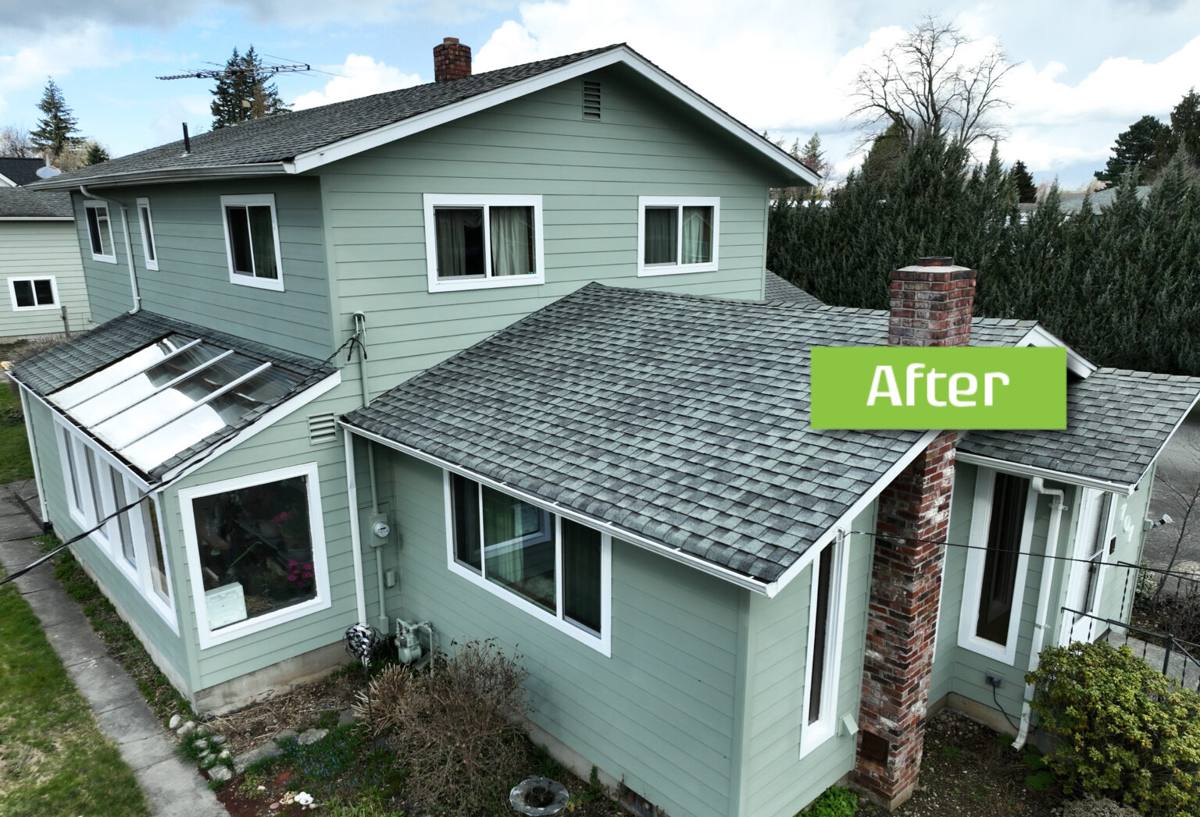
What a Correctly Built Asphalt Shingle Roof Includes Here
There's no single "premium" shingle that solves these problems on its own. A roof that holds up in Cap Sante is a system, and every layer of that system has a job:
- Deck condition: sound, dry sheathing before anything goes down — covering up a soft or water-stained deck just relocates the problem.
- Underlayment: a synthetic or self-adhered membrane rated for the exposure, with extra ice-and-water-style membrane at eaves and valleys where wind-driven rain and moss dams are most likely.
- Starter strips and fastening pattern: correct nail count and placement per shingle, not the minimum — this is one of the most common shortcuts in wind-exposed installs.
- Flashing: corrosion-resistant step and counter-flashing at every wall intersection, chimney, and skylight curb.
- Shingle selection: algae-resistant granules as standard, with wind rating matched to the site's actual exposure rather than the minimum code allows.
- Ventilation: balanced intake and exhaust so the attic isn't trapping moisture under the deck year-round.
Shingle Options and How They Perform in This Climate
Homeowners usually ask us to compare a small number of realistic options rather than the full catalog. Here's how the common categories stack up for a Cap Sante roof specifically:
| Shingle Type | Wind Performance | Moss/Algae Resistance | Typical Lifespan Here |
|---|---|---|---|
| Standard 3-tab | Adequate if fastened correctly; lower margin in gusty exposure | Only as good as the granule coating; older lines weather faster | 15–20 years with maintenance |
| Architectural (laminated) | Higher rated, better performance in open, windy sites | Algae-resistant granules standard on most current lines | 25–30 years with maintenance |
| Impact-rated / heavier laminate | Best available wind and impact rating | Same granule technology, thicker mat resists lifting | 30+ years with maintenance |
For most Cap Sante homes, we lean toward architectural shingles as the practical middle ground — meaningfully better wind and weathering performance than 3-tab for a moderate cost step up. Impact-rated products make sense on the most exposed lots or for owners planning to stay long-term and wanting the longest realistic service life. We'll walk your specific roof and give you a straight recommendation rather than defaulting to the most expensive option.
Our Installation Process
The steps themselves aren't a secret — most of the industry follows a similar sequence. What matters is which steps get shortcuts under time pressure, and we don't take them.
- Roof and attic inspection. We check deck condition, existing ventilation, and any signs of past moisture intrusion before quoting anything.
- Tear-off and deck assessment. Old roofing comes off down to the deck so we can actually see what's underneath, and any soft or damaged sheathing gets replaced rather than covered.
- Underlayment and eave/valley protection. Self-adhered membrane goes in at the vulnerable zones first, then synthetic underlayment across the field.
- Flashing. New step flashing, counter-flashing, and drip edge in corrosion-resistant metal at every penetration and wall intersection.
- Shingle installation. Correct nail count, placement, and course alignment — not just visually straight, but properly lapped for wind and water shedding.
- Ventilation check and adjustment. Intake and exhaust balanced so the new roof isn't sitting on top of a moisture problem in the attic.
- Final walk-through. We show you what was done and what to watch for going forward.
Keeping Moss and Salt Air From Shortening Your Roof's Life
A well-installed roof still needs some ongoing attention in this climate. The good news is it's simple, low-cost maintenance rather than anything complicated:
| Task | Why It Matters Here | How Often |
|---|---|---|
| Gentle moss removal (no pressure washing) | Prevents moisture from being trapped under lifted shingle edges | As needed, typically once a year on shaded slopes |
| Gutter and downspout clearing | Wind-driven rain and moss debris clog gutters faster near the water | Twice a year, more if tree cover is heavy |
| Flashing and fastener check | Salt air accelerates corrosion on exposed metal | Every 2–3 years or after major storms |
| Attic ventilation check | Trapped moisture shortens shingle life from underneath | Every few years or with any roof inspection |
Pressure washing is worth calling out specifically: it strips granules and can drive water under shingle edges, which does more long-term damage than the moss it removes. Zinc or copper strips near the ridge, and gentle brushing or low-pressure treatments, are the safer route.
Signs Your Cap Sante Roof Needs a Closer Look
Most shingle roof failures give warning signs well before there's an active leak. Worth checking for, or having us check for, if your roof is past the ten-year mark:
- Granules collecting in gutters or at downspout outlets
- Dark streaking or moss patches on north-facing or shaded slopes
- Curling, cupping, or lifted shingle edges, especially near eaves and valleys
- Rust staining running down from flashing or vent stacks
- Soft spots or sagging visible from the ground or attic
- Daylight visible through the roof deck from inside the attic
- Higher heating bills that might point to attic moisture or ventilation problems
Any one of these on its own isn't necessarily urgent, but a couple together usually means it's worth a proper inspection rather than waiting for a leak to show up during the next storm.
Why It Matters That We Already Work in This Neighborhood
A roofing crew that mostly works drier, more sheltered parts of Skagit County can still do competent work, but they're solving for conditions that aren't quite what Cap Sante actually throws at a roof. Knowing which slopes on this hill hold moss longest, which wall-to-roof intersections take the worst wind-driven rain, and which flashing metals actually hold up against the salt air isn't something you learn from a manufacturer's install guide — it's something you learn by doing the work here repeatedly and seeing how it ages.
That local pattern recognition shows up in small decisions during the job: where we add extra underlayment even though code doesn't strictly require it, which fastener spec we default to instead of the bare minimum, and where we flag a ventilation issue that has nothing to do with the shingles themselves but will shorten their life if left alone.
What Affects the Cost of a Cap Sante Roof
Every roof is different, so we're not going to throw out a number that doesn't mean anything until we've actually looked at yours. What generally moves the price:
- Roof size and pitch — steeper roofs take longer and require more safety setup
- Number of layers being removed and deck condition underneath
- Shingle tier chosen (3-tab vs. architectural vs. impact-rated)
- Amount of flashing, valley, and penetration work required
- Ventilation upgrades needed to correct an existing imbalance
- Access — steep sites or limited staging area can add time
We'll walk the roof, explain what we're seeing, and put together a written estimate that spells out exactly what's included — no vague allowances you find out about later.
If your Cap Sante roof is showing wear, coming up on 15–20 years old, or you just want a straight answer about what shape it's in, we're glad to come take a look. The estimate is free, there's no pressure attached to it, and you'll get a plain-English rundown of what we find — just fill out the form below to get started.