 Anacortes
 Windows Built for Guemes Island's Salt Air and Wet Winters
Guemes Island sits just across the ferry channel from Anacortes, but its windows live a harder life than most homes on the mainland side of Skagit County. Salt-laden air off Rosario Strait and Guemes Channel works on metal hardware and finishes year-round. Winter storms bring driving rain that hits west- and south-facing glass almost sideways. And the long, damp moss season here keeps siding, trim, and window sills wet for weeks at a stretch. A window that's a good fit in a drier inland town can fail early on Guemes if it isn't chosen and installed with those conditions in mind.
We do custom window work across Anacortes and the surrounding islands, and Guemes is part of our regular route. This page covers what actually matters for window replacement or custom window installation on Guemes Island specifically — the climate factors, what a correct install looks like, how our process handles the ferry and island logistics, and what to expect from materials and cost.
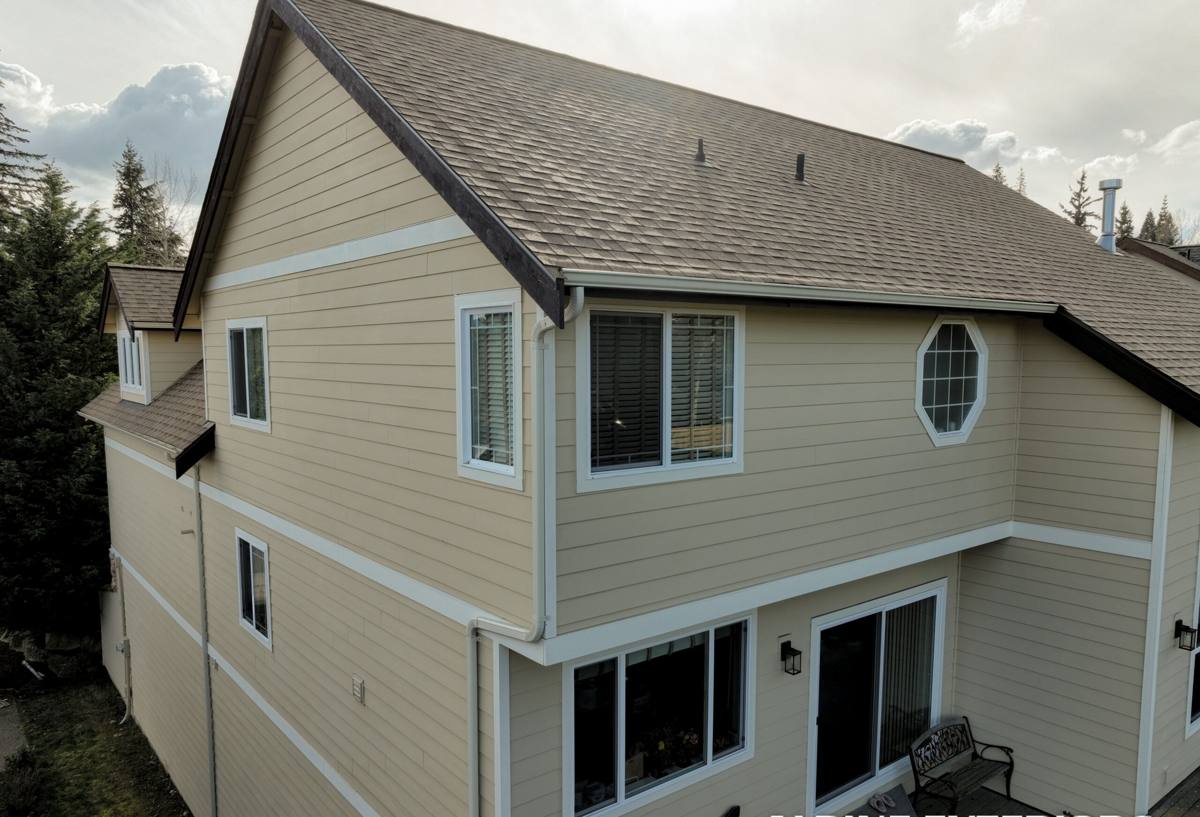
What Guemes Island's Climate Does to Windows
Salt air and corrosion
Homes closer to the water take the brunt of this, but salt spray carries further than most people expect on a small island. Aluminum window frames, older steel hardware, and lower-grade fasteners corrode faster here than in a typical Skagit County subdivision. Over time that shows up as pitted or seized locks, streaking on frames, and hardware that won't operate smoothly. It's one of the reasons we're selective about hardware finishes and frame materials on island jobs.
Driving rain and wind
Storms coming off the Strait don't just fall — they push. Wind-driven rain finds any gap in flashing, caulking, or window-to-wall transitions and will exploit it over years, not days. A window that's watertight in calm weather can still leak under wind pressure if the flashing details weren't done right. This is the single biggest cause of hidden window damage we find on older island homes: not the glass, but the water management around it.
Moss season and moisture
Guemes Island, like the rest of the Anacortes area, gets a long stretch of low sun angle and steady damp weather that keeps north-facing walls and window sills wet or shaded for extended periods. That moisture supports moss and mildew growth on sills, trim, and lower sashes, and it slows drying time after every rain event. Wood window sills and trim that aren't properly sealed or flashed will show rot years before they should.
Signs a Guemes Island Home Needs Window Attention
- Soft, spongy, or visibly rotted wood around the sill, jamb, or trim
- Fogging or moisture between panes on double- or triple-glazed units — a sign the seal has failed
- Drafts or a noticeable temperature difference near the window even with it closed
- Hardware that's stiff, corroded, or won't latch fully — common with older aluminum or steel hardware here
- Paint or finish that's peeling or bubbling on the interior sill, often a sign of moisture getting in from outside
- Visible daylight or gaps around the frame from outside
- Moss or dark staining building up on sills and lower trim faster than the rest of the house
Any one of these on its own might be minor. Several together, especially on a west- or south-facing wall, usually means water has been getting past the window assembly for a while.
What a Correct Custom Window Job Involves
"Custom windows" on Guemes Island usually means one of two things: replacement windows sized and built to fit an existing opening (common in older homes with non-standard framing), or new construction/remodel windows set into a fresh rough opening. Either way, the window unit itself is only part of the job. The install details are what determine whether it holds up through a few winters of driving rain.
Sill pan flashing
A sloped, sealed pan under the window directs any water that does get past the sash back outside instead of into the wall framing. This matters more on Guemes than in a drier climate because the window will see more wind-driven rain events over its life.
Integrated flashing sequence
Flashing tape and building paper or house wrap need to be layered correctly — sill first, then jambs, then head flashing lapped over the top — so water sheds down and out at every layer, never into a seam. Getting this sequence backwards is a common cause of slow leaks that don't show up for a year or two.
Sealant selection and placement
Not every gap should be caulked solid. Weep paths need to stay open so any trapped moisture can drain back out, and the sealant used on the exterior needs to hold up to UV and salt exposure without going brittle. We match sealant type to location on the window rather than using one product everywhere.
Proper shimming and squaring
A window that's out of square binds, doesn't latch fully, and stresses the seals over time — a fast track to the fogged-glass and hardware problems above. Every unit gets shimmed level, plumb, and square before it's fastened and flashed.
Choosing Materials for a Waterfront-Adjacent Island Home
There's no single "right" window material for Guemes Island — it depends on the home's exposure, style, and budget. Here's how the common options hold up against the salt air and rain conditions specific to this area:
| Material | How it handles salt air and moisture | Maintenance | General cost position |
|---|---|---|---|
| Vinyl | Doesn't corrode; performs well in salt air with no coating to fail | Low — occasional cleaning | Lower |
| Fiberglass | Very stable, resists corrosion and expansion/contraction from temperature swings | Low | Mid to upper |
| Wood, clad exterior | Good if cladding and flashing are done right; exposed wood trim needs protection from driving rain | Moderate — watch sills and any exposed wood joints | Upper |
| Aluminum | Prone to corrosion and hardware issues in salt-heavy air over time | Higher — hardware and finish need monitoring | Varies |
We don't push one brand or product line on every job. What we will do is walk a homeowner through the honest trade-offs for their specific exposure — a window on the water-facing side of a Guemes property has different needs than one on a sheltered interior wall of the same house.
How We Handle Guemes Island Logistics
Working on an island adds a scheduling layer that a mainland Anacortes job doesn't have, and it's worth being upfront about it rather than surprising a homeowner mid-project.
Ferry-aware scheduling
We plan crew time and material deliveries around the Guemes Island ferry schedule so a job isn't stalled waiting on a missed sailing. Custom window orders already carry lead time from the manufacturer; we build the install date around both that lead time and realistic ferry access.
Right-sized crew and one trip for materials
Because every extra ferry crossing costs time, we plan material loads and crew size to minimize back-and-forth trips. That's part of why we measure carefully and confirm order specs before anything is built — a wrong measurement on an island job costs more in delay than the same mistake would on the mainland.
Familiarity with island homes
Guemes has a mix of older cabins, remodeled full-time residences, and newer builds, often with framing quirks that come from additions or seasonal-use origins. Having worked island homes before means fewer surprises once a wall is opened up.
Our Process for a Guemes Island Window Project
- On-site assessment — we look at existing window condition, framing, exposure to wind and rain, and any sill or trim rot before recommending anything.
- Honest scope and estimate — a clear breakdown of what's being replaced, what materials fit the home's exposure, and a realistic cost range with no pressure to decide on the spot.
- Precise measurement and ordering — critical on custom sizing, and especially so given ferry lead times for corrections.
- Scheduled install around the ferry — crew and materials arrive together, minimizing the number of crossings and time on site.
- Full flashing and sealing detail — sill pan, jamb and head flashing, and correct sealant placement, not just setting the unit and caulking the outside edge.
- Walkthrough and operation check — every window opens, closes, and latches correctly before we call the job done.
Maintaining Custom Windows in a Guemes Island Climate
- Rinse salt residue off frames and hardware a few times a year, especially on water-facing sides
- Clear moss and debris from sills and tracks before it holds moisture against the frame
- Check and re-apply exterior sealant at the manufacturer's recommended interval — UV and salt exposure break it down faster here than inland
- Operate hardware periodically through the winter to keep locks and hinges from seizing
- Watch for early signs of sill or trim softness after the wettest months and address it before it spreads
Why Hire a Crew That Already Works Guemes Island
A contractor unfamiliar with island jobs will often underprice the logistics, miss a ferry sailing, or treat a Guemes install exactly like a standard Anacortes job — same flashing approach, same material assumptions, no adjustment for the extra salt and wind exposure. That gap shows up later as premature hardware failure or a slow leak that traces back to a shortcut in the flashing sequence. Working this island regularly means we already understand the exposure differences between a sheltered lot and a water-facing one, the realistic timeline around ferry access, and the framing conditions common in the island's older housing stock. That translates into fewer surprises and a window install that's actually built for where it's going, not just installed and hoped for.
Get a Free, No-Pressure Estimate
If you're dealing with drafty, fogged, or hard-to-operate windows on your Guemes Island home, or you're planning a remodel with new custom openings, we're happy to take a look and give you a straight assessment. Fill out the form below for a free estimate — no pressure, no obligation, just an honest read on what your windows need and what it'll take to get them right for this climate.