 Anacortes
 Why Siding Repair Looks Different on a Skyline Lot
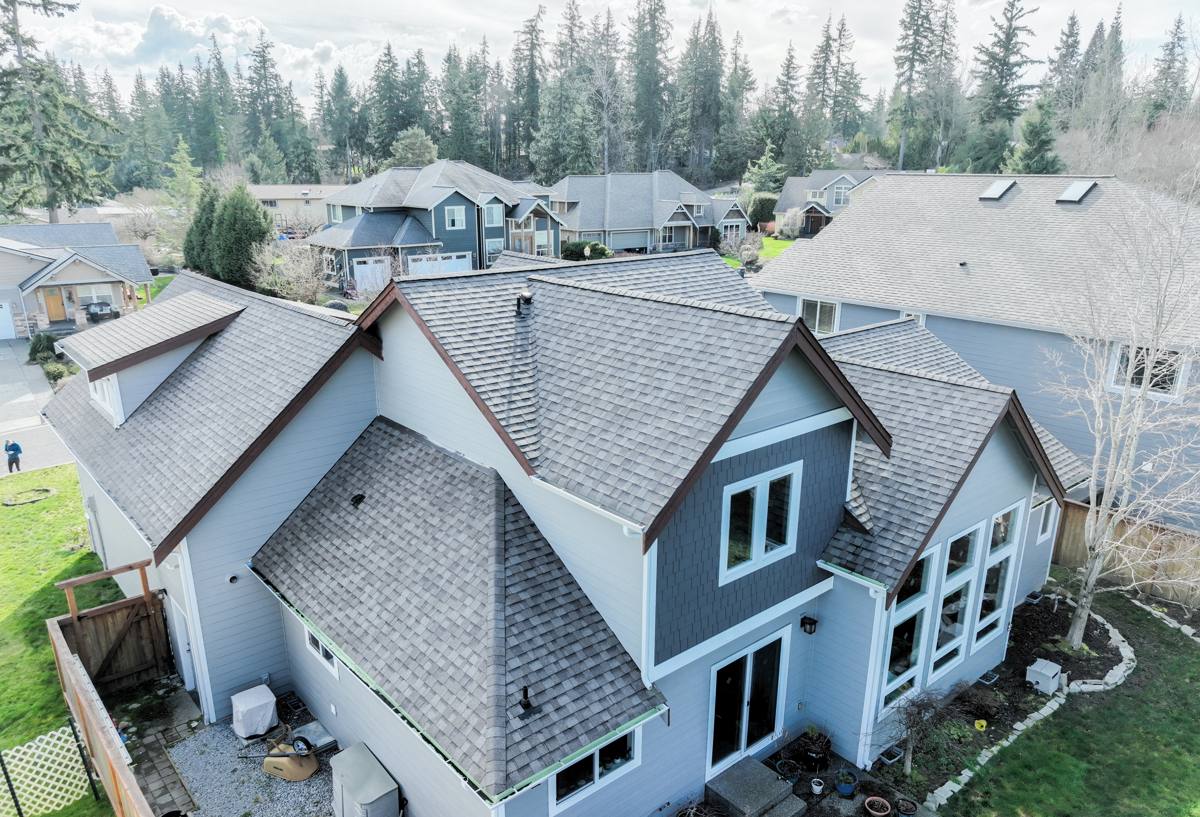
Skyline sits up on the bluff on the west side of Anacortes, catching wind and weather straight off the Salish Sea. That exposure is part of why people live there, but it's also why siding on a Skyline home tends to show damage sooner, and in different patterns, than siding a few blocks inland. Salt-laden air works on fasteners and trim continuously, not just during storms. Wind-driven rain gets pushed at angles ordinary rainfall doesn't reach. And Skagit County's long, damp season — plus the shade a lot of Skyline lots get from mature evergreens — gives moss and algae a real foothold on north- and east-facing walls.
Siding repair done right on a lot like this starts with figuring out what's actually wrong before touching anything. A cracked board, a bubbled seam, or a patch of moss can be a cosmetic nuisance or a sign that water has already gotten behind the cladding — and those two situations call for very different fixes. This page covers what tends to go wrong with siding on Skyline homes specifically, how we diagnose and repair it correctly, and why a crew that already works this neighborhood catches things a crew learning it on your project might not.
What Actually Damages Siding Out Here
Salt Air and Fastener Corrosion
Salt in the air off the water accelerates corrosion on nails, staples, and flashing well before it's visible from the ground. A fastener that's lost its grip to rust doesn't announce itself — it shows up as a board that's started to bow slightly, a seam that's opened up, or trim that's pulling away at the corners. On an exposed Skyline wall, corroded fastening is one of the more common root causes behind siding that looks like it's failing "for no reason."
Wind-Driven Rain
Rain that comes in sideways off the water finds gaps that vertical rain never would — lap joints, butt seams, and trim intersections that were detailed for ordinary weather rather than sustained wind-driven exposure. Once water gets behind a piece of siding, it can travel and cause damage well away from where it actually entered, which is why a repair estimate has to trace the path, not just patch the visible spot.
Moss, Algae, and Prolonged Moisture
Shaded, north-facing sections of a Skyline home can stay damp for days after a storm, especially under tree cover. That moisture supports moss and algae growth that holds water against the siding surface far longer than an open, sunny wall ever would. Over time, that sustained dampness breaks down caulking, softens wood-based products, and can work its way into seams that were otherwise sound.
UV, Wet-Dry Cycling, and Caulk Failure
Even on walls that don't take direct wind-driven rain, the constant cycle of wet weather followed by intervals of sun and salt air takes a toll on caulking and coatings. Caulk that's shrunk, cracked, or pulled away from a joint is one of the most common — and most overlooked — reasons water starts finding its way behind siding that otherwise looks intact.
Signs Your Siding Needs a Closer Look
- Boards or panels that are visibly bowed, cupped, or separating at the seams
- Cracked, crumbling, or missing caulk at joints, corners, and window or door trim
- Soft spots when you press on siding or trim near ground level or under windows
- Moss or algae buildup that keeps returning on the same shaded sections
- Peeling paint or a chalky, faded finish on wood-based siding or trim
- Staining or discoloration running down from a seam, corner, or window head
- Visible rust streaking from fasteners or flashing
Any one of these on its own might be minor. Several showing up in the same area, or repeat problems in the same spot year after year, usually mean there's something happening behind the siding that a surface-level look won't catch.
Cosmetic Wear vs. a Real Moisture Problem
Not every issue on aging siding calls for the same response, and telling the two apart correctly is the actual job of a repair estimate — not just naming what's visible.
| Symptom | Usually Cosmetic | Often a Deeper Problem |
|---|---|---|
| Faded or chalky finish on an otherwise intact surface | Yes — sun and weathering | Only if paired with soft spots or bowing |
| Moss on a shaded, north-facing section | Often, if siding beneath is firm | Yes, if boards feel soft when pressed |
| Hairline cracking in caulk joints | Early stage — worth sealing soon | Becomes one once water's been tracking in for a season or more |
| Bowed or separated board seams | Rarely | Usually — suggests moisture or fastener failure behind it |
| Staining below a window or trim joint | No | Yes — active water intrusion at that detail |
| Rust streaking from a fastener | Cosmetic if isolated and shallow | Can mean fastener strength is compromised |
Cosmetic issues can usually be scheduled as routine maintenance. Anything pointing to active moisture behind the siding needs attention sooner, because the damage almost always continues out of sight even while the exterior symptom looks stable.
How We Diagnose Before We Recommend Anything
A repair estimate that's actually worth something starts with a real inspection, not a guess from the driveway. On a Skyline property, that typically includes:
- Checking every seam, corner, and trim joint for gaps, cracked caulk, or signs of past water intrusion
- Pressing on siding and trim near grade, under windows, and at wall penetrations to feel for soft or spongy areas
- Looking at flashing above windows, doors, and any wall-to-roof intersections, since that's where wind-driven rain most often gets past a standard detail
- Identifying which sections of the home take direct wind and rain versus which are more sheltered, since the repair priority isn't the same for both
- Noting moss and algae patterns, which often point us toward the shaded, slow-drying sections most likely to have moisture issues underneath
We'll tell you plainly what we find — including when something looks worse than it is, or when a section that looks fine actually needs attention.
Repair vs. Re-Side: How That Decision Actually Gets Made
Homeowners often assume any siding problem means the whole wall needs to come off, or the opposite — that a patch will hold indefinitely. Neither assumption is reliable on its own. The factors that actually decide it:
- How far the damage has spread. A handful of affected boards in one area is usually a straightforward repair. Moisture damage showing up in multiple, unrelated locations often means the underlying weather barrier or flashing system has failed more broadly.
- What's underneath the visible siding. If sheathing or framing has taken on rot, patching the surface without addressing what's behind it just buys a short delay before the same spot fails again.
- Age and material of the existing siding. Older wood, vinyl, or lower-grade fiber cement nearing the end of its practical life is a weaker repair candidate than siding that's otherwise sound with one localized problem.
- Whether a color or profile match is realistic. Some products, especially older vinyl or discontinued fiber cement runs, can't be matched closely enough to make a patch look right, which shifts the math toward a fuller re-side even when the damage itself is limited.
We'll give a straight answer on which situation your home is actually in, including when a repair is genuinely the right call and a full re-side would be overkill.
What a Correct Repair Involves
We install James Hardie fiber cement exclusively for new siding and full re-sides — we don't install vinyl, LP SmartSide, Cemplank, Allura, primed spruce, or cedar. That standard shapes how we approach repair, too. When damage is limited to a section of an existing Hardie installation, we can typically patch it with matching Hardie product and get a clean, durable result. When a home has vinyl, wood, or another material and the damage is contained, we'll repair what's there rather than push an unnecessary re-side — but we'll also be honest if that material's track record in this climate means the repair is a short-term fix rather than a long-term one.
Fastening matters as much as the board itself. On a Skyline wall, we use corrosion-resistant fasteners rated for coastal exposure, not standard-grade hardware that put the repair on the same failure timeline as whatever just failed. And we don't consider a repair finished until the cause is addressed — reflashing a window head, resealing a joint properly, correcting a detail that let water in the first place — because replacing damaged material without fixing what let the water in just delays the next repair call.
Where Full Hardie Replacement Becomes the Better Answer
When repair estimates turn up moisture damage in multiple areas, or when the existing material is vinyl or wood that's reached the point of diminishing returns, replacing the affected elevation — or the whole exterior — with James Hardie fiber cement is often the more cost-effective path over the long run. Hardie's ColorPlus factory finish resists the fading and chalking that UV and salt air cause faster here than inland, and the HZ10 climate-engineered line is formulated specifically for wetter, harsher exposure zones like ours. It's a bigger decision than a patch repair, and we won't push it unless the inspection actually supports it.
Maintenance That Extends a Repair's Life
- Rinse siding periodically, especially shaded and north-facing sections, to keep salt residue and organic buildup from settling in
- Recaulk joints on a regular schedule rather than waiting for a visible gap — caulk fails from the inside out before it looks bad
- Trim back branches and shrubs that keep siding shaded and slow to dry after rain
- Check painted trim and wood-based siding for early chalking or peeling and address it before bare material is exposed
- Have flashing at windows, doors, and roof intersections checked periodically, since that's where most repeat problems start
Why It Matters That We Already Work Skyline
Skagit County's coastal microclimates aren't uniform, and Skyline's particular mix of elevation, open-water exposure, and tree shade is something you learn from working on homes here repeatedly, not from a general checklist. We know which elevations on a Skyline lot take the worst of a winter storm, which corners tend to hold moss no matter what gets done, and which flashing details are the actual difference-makers versus which are just code minimums. That shows up in a more accurate first estimate — less guessing, less back-and-forth, and a repair scope that reflects what this specific site is dealing with rather than a generic read on siding damage.
It also means fewer surprises around access — narrow driveways, tree cover affecting staging, or bluff-lot logistics that come up more often here than on a flat, sheltered lot elsewhere in town.
If you're seeing cracked caulk, bowed boards, moss that won't quit, or staining near a window on your Skyline home, we're glad to take a look and give you a straight read on what it actually needs. Reach out below for a free, no-pressure estimate.