 Anacortes
 Building Decks for Skyline's Coastal Climate
Skyline sits up on Fidalgo Island with open exposure to wind and weather coming off the water, which means decks here take a harder hit than decks built a few miles inland. Salt air accelerates corrosion on anything metal, driving rain finds every gap in flashing and fastener holes, and the long stretch of gray, damp months each year keeps wood surfaces wet far longer than in drier climates. Add in the shade from mature evergreens common on Skyline lots, and you get a long moss season that turns unmaintained deck boards slick and green by late fall.
None of this means a deck in Skyline has to be high-maintenance or short-lived. It means the build has to account for the actual conditions from day one — the framing, the fasteners, the drainage details, and the material choice all matter more here than they would somewhere sheltered and dry. A deck designed for a different climate, or built to the cheapest spec that passes inspection, will show its age fast in this part of Skagit County.
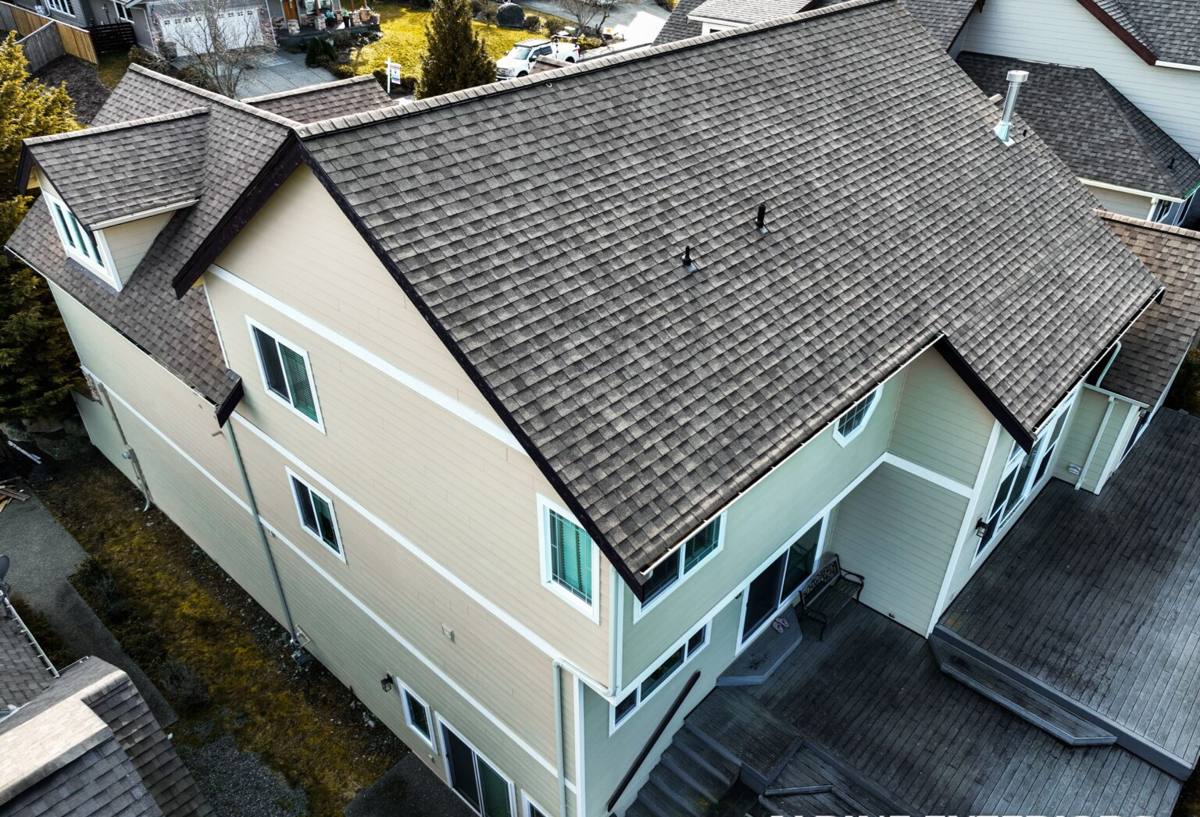
What Skyline Homes Actually Need From a Deck
Most of the deck problems we get called out for in this neighborhood trace back to the same handful of causes: ledger boards attached without proper flashing, joists that were never treated or sealed on the cut ends, fasteners that started rusting within a few years, and decking material chosen for looks rather than how it handles standing moisture. A correctly built deck in Skyline needs to manage water first — getting it off the surface, away from the house, and out of the framing — before anything else about the design matters.
The specific challenges
- Wind-driven rain that pushes water sideways into ledger connections and under poorly lapped flashing
- Salt-laden air that speeds up corrosion on screws, joist hangers, and railing hardware not rated for coastal exposure
- Shaded, damp areas under tree cover where moss and algae take hold on decking and stair treads
- Extended wet seasons that keep untreated wood at higher moisture content for months at a stretch
- Elevated or view-oriented lots where wind loads on railings and structure are higher than average
Choosing the Right Decking Material
There's no single "best" decking material for every home — it depends on budget, how much upkeep you want to do, and how exposed the deck is to sun, shade, and rain. Here's how the common options actually perform in a marine Pacific Northwest climate like Anacortes:
| Material | Upfront Cost | Maintenance | How It Handles This Climate |
|---|---|---|---|
| Pressure-treated wood | Lowest | Annual cleaning, refinishing every 2-3 years | Affordable and strong, but needs consistent upkeep to resist moss, checking, and moisture damage |
| Cedar | Mid-range | Regular oiling or sealing to maintain color and resist moisture | Naturally rot-resistant and handles our humidity well, but still needs care to avoid graying and moss buildup in shaded spots |
| Composite decking | Higher | Occasional washing, no sealing or staining | Resists moisture, moss, and salt exposure well; some lower-grade composites can still get slick when wet, so board texture matters |
| PVC/synthetic decking | Highest | Minimal — mostly rinsing | Fully moisture-proof and low-maintenance, best for homes that want to avoid yearly deck upkeep entirely |
For Skyline specifically, we lean toward recommending composite or synthetic decking on shaded or heavily rain-exposed lots, simply because they hold up to moss and standing moisture with far less owner effort. That said, plenty of homeowners still prefer the look and feel of real wood and are happy to keep up with the maintenance — that's a legitimate choice too, as long as it's made with clear eyes about the upkeep involved.
Why we're selective about which composite products we install
Not all composite and PVC decking is built the same. Some early-generation composite boards had known issues with moisture absorption at the core, which is a real liability in a climate that stays wet as long as ours does. We stick to products with solid warranty coverage, a proven track record in wet coastal climates, and manufacturer-backed fastening systems — because a deck that fails at the material level can't be fixed with better installation.
What a Correctly Built Deck Involves
A deck is only as good as what's underneath it. The visible boards get all the attention, but the framing, connections, and drainage details are what determine whether a deck lasts 10 years or 30 in a climate like this.
Framing and structure
Joists and beams need to be sized correctly for the span and load — including wind and snow load requirements for the area — and any cut ends or field modifications should be sealed to prevent rot from starting at the exposed grain. Post footings need to go below frost depth and bear on solid, well-drained soil, which matters on Skyline's sloped and sometimes fill-graded lots.
Ledger attachment and flashing
Where a deck attaches to the house, the ledger board is the single most common failure point we see on older decks. It has to be through-bolted (not just nailed or screwed), properly flashed with the flashing lapped correctly under the house's weather-resistive barrier, and fitted with a drainage gap so water doesn't sit trapped between the ledger and the siding.
Fasteners and hardware
In a salt-air environment, standard galvanized fasteners corrode faster than they would inland. We use stainless steel or coated fasteners rated for coastal/marine exposure on connections that matter most — joist hangers, structural bolts, and any hardware near ground level or exposed to direct wind-driven rain.
Drainage and airflow
Decking boards need proper spacing for water to drain through rather than pool on the surface, and the space underneath the deck needs enough airflow to let framing dry out between rain events instead of staying damp for weeks.
Our Custom Deck Process
- On-site assessment — we look at your lot's exposure, drainage, existing structure (if replacing a deck), and how the space will actually be used before recommending anything.
- Design and material selection — we walk through layout, railing style, stairs, and material tradeoffs based on your budget and how much upkeep you want to take on.
- Permitting — we handle the permit application and coordinate any required inspections so the deck is built to code, not just to what happens to pass a walk-by.
- Demolition and site prep (if replacing an old deck) — including a check for any hidden rot or moisture damage at the ledger and framing that needs to be addressed before rebuilding.
- Framing and structural work — footings, posts, beams, joists, and ledger attachment, built to the loads and exposure your specific site requires.
- Decking, railings, and stairs — installed per manufacturer spec, with fastener and flashing details suited to a marine climate.
- Final walkthrough — we go over care and maintenance specific to the material you chose so you know what upkeep, if any, to expect.
Railings, Stairs, and Code Requirements
Railing height, baluster spacing, and stair geometry are all governed by building code, and inspectors in this area check them closely — for good reason, since these are the components most tied to safety. Beyond the code minimums, we pay attention to railing hardware corrosion resistance and how stair treads perform when wet, since a slick stair tread in a shaded, moss-prone spot is a real hazard, not a cosmetic issue.
Maintenance in a Marine Climate
Whatever material you choose, a little seasonal attention goes a long way toward avoiding early repairs. Here's a simple checklist worth following through Skagit County's wet season:
- Sweep debris and standing leaves off the deck surface regularly, especially under tree cover
- Clean moss and algae off boards and stairs before they build up — a stiff brush and deck-safe cleaner is usually enough
- Check that gaps between boards haven't clogged with debris, which blocks drainage
- Inspect the ledger board area and any visible framing once a year for signs of moisture staining or soft wood
- Re-oil or reseal wood decking on the schedule recommended for that specific product — don't wait until it's visibly gray
- Look over railing posts and stair connections for loose hardware or early rust
Why Hire a Crew That Already Works Skyline
A deck built to a generic spec sheet can look fine on day one and still fail early if it wasn't designed for the wind exposure, moisture load, and shade patterns of the specific lot it's on. Working regularly in Skyline and the surrounding Anacortes area means we've already seen how ledger flashing holds up on wind-exposed sites, which fastener choices actually last through a Puget Sound winter, and which decking products handle moss and standing rain well versus which ones just look good in a showroom. That local pattern-matching is hard to get from a crew that only occasionally works this part of Skagit County.
It also means we're not guessing on permitting requirements or code details specific to the jurisdiction — we know the process because we've been through it here before.
If you're planning a new deck or need to replace one that's showing its age, we're happy to take a look and put together a straightforward, no-pressure estimate. Use the form below to get started.