 Anacortes
 Building New in Flounder Bay Means Getting Windows Right the First Time
New construction gives you one real chance to install windows correctly before the siding, trim, and interior finishes close everything up. On a Flounder Bay lot, that first chance matters more than most places in Skagit County. Homes here sit close enough to the water to catch salt-laden air, and the exposure to wind-driven rain off Rosario Strait and the surrounding channels is real. A window that's slightly out of plumb, a flashing lap installed backwards, or a sealant bead skipped in one corner won't show a problem on day one. It shows up two or three winters later as a stain on the drywall below the sill, and by then the fix means opening up finished wall.
We install new-construction windows as part of the framing sequence — working directly with builders and general contractors on Flounder Bay projects, not retrofitting after the fact. That means the window opening, the weather-resistive barrier, the flashing, and the window itself all get built as one integrated system instead of a stack of separate trades hoping their work lines up.
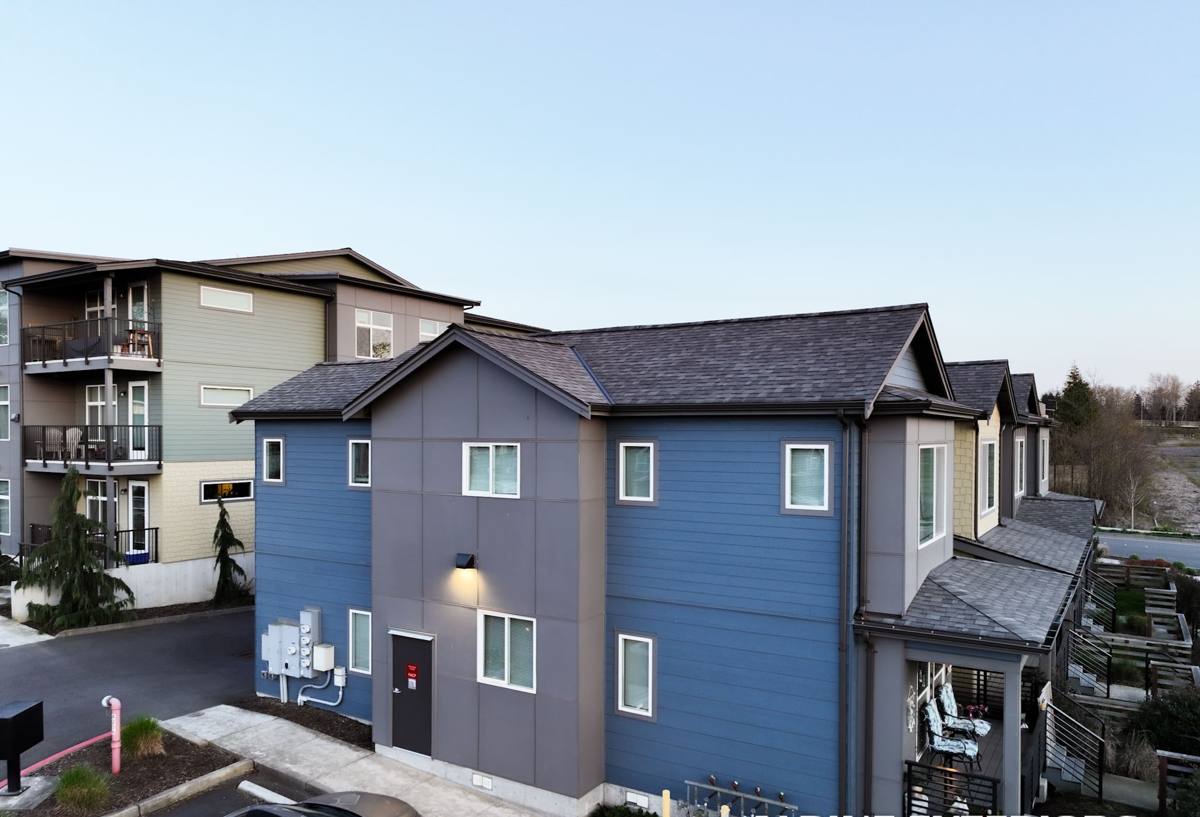
What Flounder Bay's Climate Demands From New Construction Windows
Anacortes sits on Fidalgo Island, and Flounder Bay is about as close to open water as residential construction gets around here. That proximity shapes three things we plan for on every job.
Salt Air and Hardware Corrosion
Airborne salt doesn't just affect boats and dock hardware. It settles on window screens, hinges, cranks, and exposed fasteners, and over years it accelerates corrosion on anything that isn't rated for a marine-adjacent environment. Standard mill-finish aluminum trim, low-grade steel screws, and bargain hardware will pit and streak faster near Flounder Bay than they would a few miles inland in Anacortes or elsewhere in Skagit County. We spec corrosion-resistant fasteners and hardware as standard on waterfront and near-waterfront builds, not as an upsell.
Driving Rain and Flashing Details
Wind off the water doesn't let rain fall straight down — it drives it sideways into wall assemblies, and window openings are the weakest point in any wall for water intrusion. A correct flashing sequence (sill pan first, then the window, then the weather-resistive barrier lapped over the nailing flange in the right order, then head flashing) is what actually keeps water out. Skip a step or reverse the order and the window will still look fine and even pass a casual glance, but it's built to leak the first time a real southwesterly storm hits.
Extended Moss Season and Moisture Cycling
Anacortes runs a long damp season, and moss doesn't just grow on roofs — it colonizes north-facing trim, sills, and anywhere moisture sits without drying. That extended dampness means sealants need time and the right temperature range to cure properly, and any wood trim or sill material needs to be able to shed water rather than absorb and hold it. We sequence installs around weather windows and use sealants rated for the temperature and humidity ranges we actually get, not just whatever cures fastest.
Choosing the Right Window for a Flounder Bay New Build
There's no single "best" frame material for every house — it depends on budget, exposure, and how the window will be finished on the exterior. Here's how the common options stack up for a near-water build like this.
| Frame Material | Salt Air / Corrosion | Maintenance | Typical Lifespan |
|---|---|---|---|
| Vinyl | Won't corrode; hardware inside is the weak point | Low — occasional cleaning | 20–30 years with quality product |
| Fiberglass | Very stable, dimensionally strong in temperature swings | Low | 30+ years, holds paint well if factory-finished |
| Wood-clad | Cladding protects wood, but any breach exposes wood to rot risk | Higher — joints and cladding seams need periodic checks | Varies widely with maintenance |
| Aluminum | Poor without marine-grade coatings; prone to pitting near salt air | Moderate to high near water | Depends heavily on coating quality |
For most Flounder Bay new builds, we steer clients toward vinyl or fiberglass with stainless or otherwise corrosion-resistant hardware, and we're candid about the trade-offs on wood-clad — it can look great, but it puts more of the long-term moisture management burden on maintenance rather than the material itself. That's a decision for the homeowner, but we want it made with the actual trade-offs on the table, not just a showroom photo.
How New-Construction Installation Differs From Replacement
New-construction windows use a nailing flange (sometimes called a nail fin) that gets integrated directly into the wall's water management system before siding goes on. That's a fundamentally different job than replacement, where the window has to work around finished siding and trim that's already in place.
- The rough opening gets checked for square, level, and correct dimensions before the window ever arrives on site
- A sloped sill pan goes in first, so any water that does get past the window has somewhere to go besides the framing
- The window is set, shimmed, and fastened through the flange per the manufacturer's schedule — not just "however many screws fit"
- The weather-resistive barrier is lapped over the top flange and integrated with head flashing, following a strict shingle-style overlap so water always sheds outward and downward
- Backer rod and the right sealant go in at the interior and exterior joints, sized and installed so the bead actually performs instead of just looking sealed
Get that sequence right once, during framing, and the window is protected for the life of the house. Get it wrong, and no amount of caulking after the siding is up will fully fix it.
Our Installation Process on Flounder Bay Builds
Coordinating With the Build Schedule
We work directly with the builder or GC on timing, since window installation has to land at the right point in framing — after the weather-resistive barrier is on, before siding starts. Showing up too early or too late creates rework for every other trade on the job.
Site-Specific Exposure Check
Before installation, we look at how the specific lot sits relative to wind and water exposure. A wall facing open water toward the bay gets treated differently than a more sheltered elevation — that can mean extra attention to head flashing detail or hardware choice on the exposed sides.
Installation and Documentation
Each window gets set plumb, level, and square, flashed in the correct sequence, and fastened to manufacturer specification. We check operation — smooth opening, closing, and locking — before moving to the next unit, not just at the very end of the job.
Final Walkthrough
Once all windows are in, we walk the exterior with the builder to confirm flashing laps are correct and nothing was disturbed by other trades working nearby afterward. Windows are one of the few building components that get built over and hidden — catching an issue before siding closes it in is far cheaper than catching it after.
Cost Factors for New-Construction Windows
Every build is different, but the line items that actually move the price on a Flounder Bay project tend to be the same ones.
| Factor | Why It Affects Cost |
|---|---|
| Frame material | Vinyl is typically the most budget-friendly; fiberglass and wood-clad cost more upfront |
| Glass package | Low-E coatings and upgraded gas fills add cost but improve comfort and energy performance year-round |
| Hardware grade | Corrosion-resistant hardware costs more than standard-grade but avoids early replacement near the water |
| Window count and size | Larger openings and higher window counts mean more flashing labor, not just more material |
| Site exposure | Elevations facing open water may warrant extra flashing detail or reinforced sealant joints |
| Access and sequencing | Tight framing schedules or difficult site access can add labor time |
We're straightforward with builders and homeowners about which of these are worth spending on for a Flounder Bay lot specifically, and which are optional upgrades rather than necessities.
A Pre-Installation Checklist for Flounder Bay New Builds
Before we set the first window, we confirm these items with the builder or homeowner:
- Rough openings match the ordered window sizes exactly, with tolerance checked, not assumed
- Weather-resistive barrier is installed and in good condition before window delivery
- Sill pan flashing material and sealant are compatible with both the window manufacturer's requirements and our regional moisture conditions
- Hardware and fastener grade is confirmed for the specific elevation's exposure to salt air and driving rain
- Weather forecast allows for proper sealant cure time — we don't install critical seals in the middle of a heavy rain system
- Glass package (Low-E, gas fill) matches the orientation of each elevation for realistic energy performance
Why Hire a Crew That Already Works Flounder Bay
General contractors and homeowners building near the water don't need a generic install — they need a crew that already understands how Anacortes weather behaves against a specific piece of land. We've installed windows across Skagit County's varied exposure conditions, from sheltered inland lots to waterfront sites that take the full force of driving rain and salt spray. That experience shows up in small decisions during the install: which corner of a rough opening tends to collect water, how much lap to build into flashing on a wall that faces open water, and which hardware grade is worth the extra cost on this specific elevation versus that one.
It also shows up in how we work with builders. New construction runs on a schedule, and a window crew that shows up on time, communicates clearly about sequencing, and doesn't create rework for the framers or siding crew behind them is worth more than a slightly lower bid that costs the project days later.
Get a Free Estimate for Your Flounder Bay Build
If you're building new in Flounder Bay or elsewhere in Anacortes and want windows installed correctly from the start, we're glad to walk the plans with you or your builder and put together a straightforward, no-pressure estimate. Use the form below to get started.