 Anacortes
 Siding That Has to Work in Similk Beach's Marine Climate
Similk Beach sits along the water on Fidalgo Island, close enough to Similk Bay and the broader Skagit County shoreline that homes here take a different kind of weather beating than houses ten miles inland. Salt-laden air moves off the water and settles on exterior surfaces year-round. Wind-driven rain doesn't just fall straight down — it gets pushed sideways into wall assemblies, seams, and trim joints. And the long, damp Pacific Northwest stretch from fall through spring gives moss and algae months to take hold on anything that stays shaded and wet.
None of that is unique to Similk Beach in isolation — it's the reality across most of Anacortes and Skagit County's waterfront and tree-shaded neighborhoods. But it's worth saying plainly: siding that would hold up fine in a dry inland climate can fail faster here. Paint chalks and peels sooner. Untreated or poorly sealed wood products absorb moisture at cut ends and swell. Some engineered wood siding products are explicit in their own installation literature about limits on ground clearance and moisture exposure — limits that are easy to miss and easy to violate on a shaded, damp lot near the water. That's the backdrop for every siding decision on this stretch of coastline, and it's why we don't treat siding as a one-size-fits-all product.
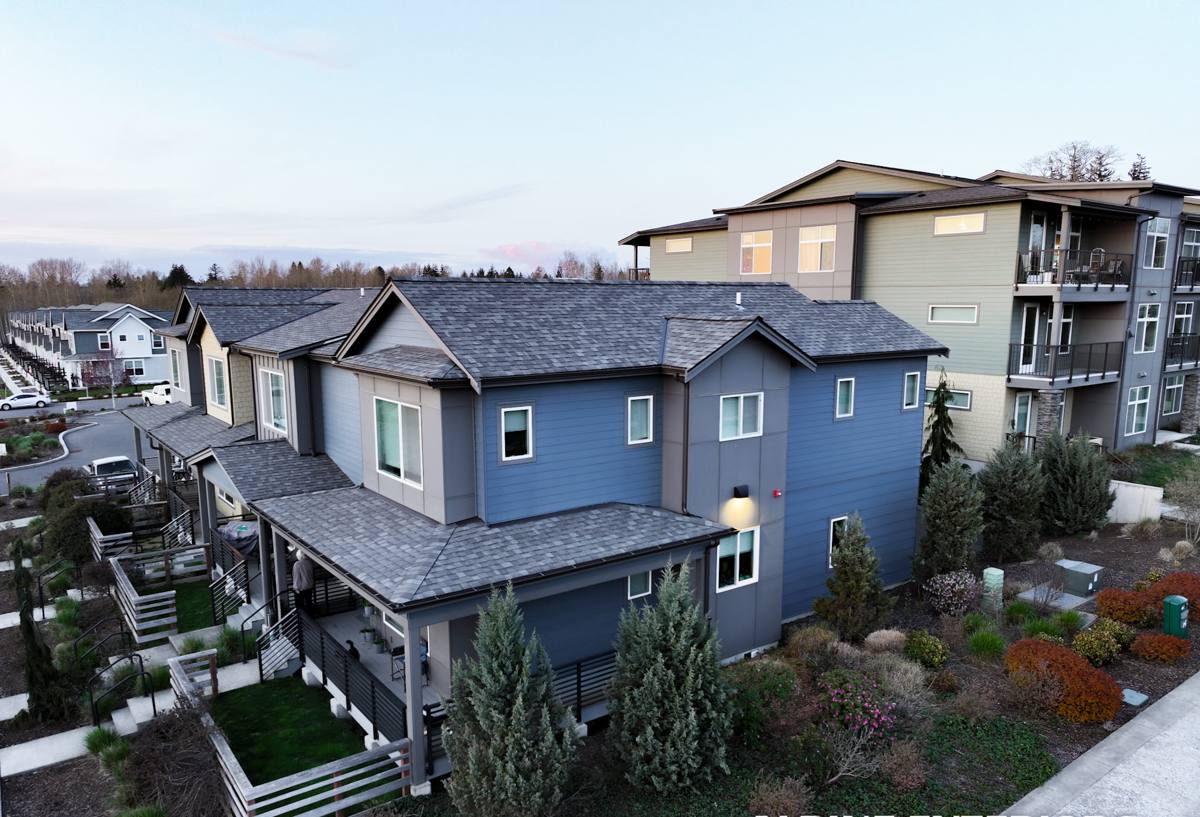
Why We Install Only James Hardie Fiber Cement Here
We standardized on James Hardie siding for every home we work on, including Similk Beach, and we don't install vinyl, LP SmartSide, Cemplank, Allura, primed spruce, or cedar. That's not a marketing position — it's a decision based on what actually holds up under this region's specific combination of salt air, sustained moisture, and moss pressure.
Fiber Cement Doesn't Feed Moss or Rot
James Hardie siding is cement, sand, and cellulose fiber. It has no wood grain for moss spores to root into and no organic material for rot fungus to feed on. Moss and algae can still grow on the surface if a wall stays shaded and damp — that's a cleaning issue, not a material failure — but the siding itself isn't degrading from underneath the way wood-based products can.
Climate-Engineered for This Region
Hardie's HZ5 product line is engineered specifically for climates with freeze-thaw cycling and sustained moisture exposure, which fits the Anacortes and greater Puget Sound climate better than a generic national product. The factory-applied ColorPlus finish is baked on under controlled conditions, which gives it better adhesion and UV/weather resistance than field-applied paint — a real advantage on a coastal lot where a house gets sun, salt spray, and driving rain in the same week.
Non-Combustible
Fiber cement doesn't burn. That matters everywhere, but with wildfire smoke and dry-season risk becoming a bigger part of the conversation in Western Washington, it's a real, practical benefit rather than a marketing line.
What a Correct Installation Actually Involves
James Hardie siding performs the way it's rated to perform only when it's installed to spec. A rushed or careless install can undercut all of the material's advantages, and salt-air, high-moisture sites like Similk Beach have less margin for error than a dry inland lot. A correct job includes:
- Proper weather-resistive barrier behind the siding, lapped correctly with the flashing at every window, door, and penetration
- Manufacturer-specified clearances — siding held up off decks, patios, and grade so it isn't sitting in standing moisture
- Correct fastener type, spacing, and depth — Hardie is specific about this, and getting it wrong affects both wind performance and warranty coverage
- Butt joints and seams treated per Hardie's installation guidelines rather than just caulked and hoped for
- Field-cut edges primed or sealed so the factory finish isn't compromised at every cut
- Ventilation behind the cladding so moisture that does get in has somewhere to go
Every one of these steps matters more on a home exposed to driving bay winds and salt air than it does on a sheltered inland lot. Skipping any of them doesn't usually show up as a problem in year one — it shows up as premature moisture damage, staining, or warranty disputes five or ten years down the road.
Signs a Similk Beach Home May Need Siding Attention
Homes near the water tend to show wear differently than inland homes. A few things worth watching for:
- Persistent green or black staining that comes back quickly after cleaning, especially on north- and west-facing walls that stay shaded and catch weather off the bay
- Paint that's chalking, peeling, or bubbling on wood or engineered wood siding
- Soft or spongy spots when you press on siding near the bottom courses, corners, or below windows
- Visible gapping, warping, or buckling at seams and butt joints
- Caulk lines that are cracked or pulling away, especially around trim and penetrations
Any of these on their own might be minor. Several together, especially on an older wood or engineered-wood-clad home, usually means moisture has been getting behind the surface for a while.
Cost and Performance Factors to Weigh
Homeowners comparing siding options for a marine-climate property like Similk Beach are usually weighing the same handful of factors. Here's an honest look at how they typically stack up:
| Factor | James Hardie Fiber Cement | Vinyl | Wood / Engineered Wood |
|---|---|---|---|
| Moisture & salt-air resistance | High — non-organic, engineered for this climate | Moderate — doesn't rot, but seams and panels can warp or crack over time | Lower — moisture-sensitive at cut ends, edges, and seams |
| Moss/algae susceptibility | Surface growth only, doesn't feed on the material | Surface growth only | Can trap moisture and encourage rot beneath surface growth |
| Finish durability | Factory-baked ColorPlus finish, long fade resistance | Color molded in but can fade and chalk | Field-applied paint, typically needs repainting every 5-10 years |
| Fire resistance | Non-combustible | Melts/deforms under heat | Combustible |
| Upfront cost | Mid-to-higher | Lower | Varies, often mid-range |
| Long-term maintenance cost | Lower over a multi-decade span when installed to spec | Low but shorter practical lifespan in harsh exposure | Higher — recurring paint, caulk, and repair cycles |
The upfront number on vinyl or engineered wood can look better on paper. What we've found, and what drove us to standardize on Hardie, is that the difference shows up in years eight through twenty — in how much repainting, caulking, and spot repair a homeowner ends up doing, and in how the material holds up specifically against salt air and sustained moisture rather than a generic climate.
How We Approach a Similk Beach Project
The process is the same discipline every time, adjusted for the specific exposure of the lot:
- Site assessment. We look at wall orientation relative to the water and prevailing weather, existing moisture damage, roofline and gutter conditions that affect how much water hits the walls, and any shaded areas prone to moss.
- Scope and prep. On a re-side, that means confirming what's happening behind the old siding before covering it up — sheathing condition, existing flashing, and whether the weather-resistive barrier needs replacing rather than reused.
- Installation to Hardie spec. Correct clearances, fastening, flashing, and joint treatment as outlined above — no shortcuts because a wall "probably won't get wet."
- Final inspection and cleanup. We walk the job before we call it done, checking seams, trim, and caulk lines, and leave the site clean.
Why Hiring a Crew That Already Works This Area Matters
Siding installation on paper looks the same everywhere. In practice, a crew that regularly works waterfront and tree-shaded Skagit County properties has already seen how a given wall orientation handles driving rain, where moss tends to establish first, and how much clearance actually matters on a lot that sits close to grade and close to the bay. That experience shows up in small decisions — flashing details, fastener choices, where extra ventilation earns its keep — that a crew unfamiliar with this specific coastal exposure might not think twice about.
It also matters for the boring but important logistics: knowing Skagit County's permitting process, being realistic about weather windows for exterior work in a marine climate, and being someone you can actually reach if a question comes up two years after the job is done. A transferable Hardie warranty is only as good as the installation behind it, which is why who installs the siding matters as much as which siding you choose.
Maintaining James Hardie Siding in a Salt-Air, High-Moss Climate
Hardie siding is low-maintenance, not no-maintenance. In a climate like this, a simple annual routine keeps it performing the way it's designed to:
- Rinse the siding once or twice a year to remove salt residue and surface grime, especially on walls facing the water
- Keep gutters clear so water isn't sheeting down the wall face
- Trim back vegetation and tree cover that keeps a wall section shaded and damp longer than it needs to be
- Check caulk lines at trim, windows, and penetrations annually and touch up before gaps let moisture behind the siding
- Address any moss or algae growth with a gentle wash rather than pressure-washing directly into seams
- Have flashing and joints spot-checked periodically, particularly after a hard windstorm off the water
Get a Straight Answer for Your Home
If you're weighing a re-side or planning ahead for one in Similk Beach, we're glad to walk your property, look at what your current siding is dealing with, and give you a straightforward assessment — no pressure, no upsell to a product we don't stand behind. Use the form below to request a free estimate.