 Anacortes
 Siding Replacement in a Skagit Valley Climate
Sedro-Woolley sits inland from the coast, tucked against the Cascade foothills along the Skagit River, which gives it a slightly different climate story than the saltwater towns closer to the water. Homes here don't take the same direct salt air that houses right on the water deal with, but they trade it for something almost as hard on siding: valley humidity, heavy tree cover, and long stretches of gray, damp weather that keep exterior surfaces wet longer than homes out in the open. Add in driving rain that comes sideways off the foothills during winter storms, and a moss season that can stretch from fall through spring, and you've got a climate that's constantly testing whatever is on the outside of a house.
Siding replacement in this area isn't just about swapping old material for new. It's about choosing a product and an installation approach that actually holds up to sustained moisture exposure, and doing the work in a way that keeps water moving away from the wall assembly instead of getting trapped behind it. That's the standard we hold every Sedro-Woolley project to.
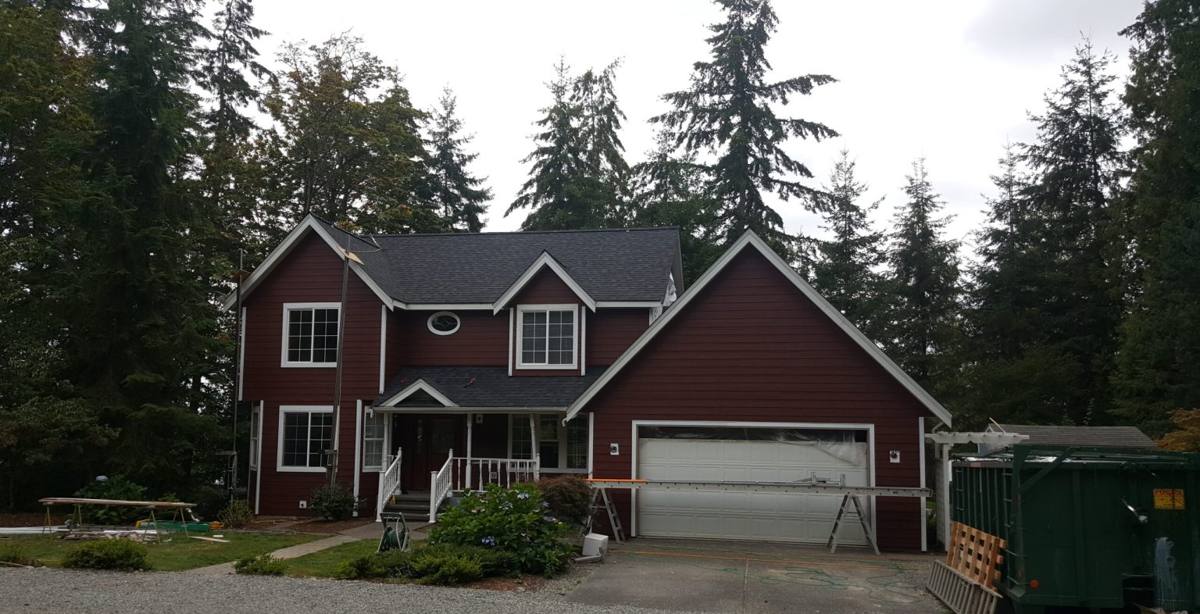
What Skagit County Moisture Does to Siding Over Time
Every siding material eventually shows wear, but the pattern of failure looks different depending on what's installed and how it was put up. In Skagit County's wetter, shaded lots — especially properties backed up to trees or with limited afternoon sun — the common failure points are predictable:
- Moisture wicking at butt joints and cut ends on wood-based products, where unsealed edges soak up water and start to swell or rot from the inside out.
- Moss and algae growth on north-facing and shaded walls that stay damp for days at a time, especially where gutters overflow or roof runoff hits the wall directly.
- Paint and coating failure from repeated wet-dry cycling, which is more about the number of moisture cycles than any single storm.
- Warping and buckling where siding was installed too tight to the wall, without room to move as it absorbs and releases moisture with the seasons.
- Caulk and joint failure around windows, trim, and penetrations, which lets water behind the siding long before the surface itself looks bad.
None of this is unique to Sedro-Woolley, but the frequency and duration of damp weather here means these problems show up sooner than they would in a drier climate, and they progress faster once they start.
Signs a Sedro-Woolley Home Is Due for Siding Replacement
Most siding doesn't fail all at once — it gives warning signs for months or years before it becomes a real problem. Worth checking for:
- Soft or spongy spots when you press on siding, especially near the bottom of walls or below windows
- Persistent moss or dark streaking that comes back within weeks of being cleaned
- Visible cracking, splitting, or delamination, particularly on sun-exposed south and west walls
- Paint that's peeling or bubbling rather than just fading
- Siding that's pulling away from the wall or has visible gaps at seams
- Rising energy bills that suggest the wall assembly isn't sealing the way it used to
- Interior signs — musty smells, staining, or soft drywall — near exterior walls, which usually mean water has already gotten past the siding
Any one of these on its own might just need a repair. Several at once, or anything involving soft wood sheathing, usually means it's time to talk about full replacement rather than patching.
What a Correct Siding Replacement Job Actually Involves
Siding replacement is one of those projects that looks simple from the curb and is easy to do poorly. A correct job in this climate isn't just removing old material and hanging new panels — it's rebuilding the wall's ability to shed water. That means:
Tear-Off and Sheathing Inspection
Once old siding comes off, the sheathing underneath gets inspected for rot, soft spots, or prior water damage — this is often the first time anyone has actually seen the condition of the wall since the house was built. Damaged sheathing gets replaced before anything new goes up, not covered over.
Weather-Resistive Barrier and Flashing
A proper water-resistive barrier goes over the sheathing, with flashing detailed correctly around every window, door, and penetration. This is the layer that actually keeps bulk water out of the wall — the siding itself is the second line of defense, not the only one.
Installation to Manufacturer Spec
Fastener placement, joint gaps, clearances off the roofline and grade, and caulking at the right (and only the right) locations all matter. Installed too tight or fastened wrong, even a good product will fail early. This is where a lot of siding jobs go wrong — not because the material was bad, but because the installation didn't respect how the material needs to move and drain.
Why We Install Only James Hardie Fiber Cement
We don't offer vinyl, LP SmartSide, primed spruce, cedar, or other fiber cement brands, and that's a deliberate standard, not an oversight. In a climate like Skagit County's — long wet seasons, heavy moss pressure, and homes that often sit in shade for much of the year — we've found the trade-offs on those other products (moisture-sensitive edges on wood-based panels, expansion and contraction issues on vinyl, coating and warranty differences on other fiber cement brands) aren't worth the risk to a homeowner who wants to install siding once and be done with it for decades.
James Hardie fiber cement is non-combustible, doesn't support rot the way wood-based siding can, and comes with a factory-applied ColorPlus finish that's baked on rather than field-painted, which matters a lot in a climate that gives paint constant reasons to fail. Hardie also engineers specific product formulations for different climate zones — the version we install here is built for wetter, milder regions like ours, not adapted from a product designed for dry desert heat. It's backed by a strong transferable warranty, which matters if you ever sell the house.
Material Comparison for Skagit Valley Conditions
| Factor | James Hardie Fiber Cement | Vinyl Siding | Wood-Based / LP-Type Siding |
|---|---|---|---|
| Moisture tolerance | Engineered for wet climates; resists rot and moisture absorption | Doesn't absorb water, but seams and expansion gaps can let it behind the panel | Vulnerable at cut edges and joints; requires diligent sealing and maintenance |
| Finish durability | Factory-baked ColorPlus finish, long fade resistance | Color molded in but can fade and chalk over time | Field-applied paint; more frequent repainting needed in this climate |
| Moss/algae resistance | Hard, dense surface resists sustained growth better than porous materials | Can trap moisture at seams, promoting growth | Porous surface holds moisture, feeding moss and mildew |
| Fire resistance | Non-combustible | Combustible | Combustible |
| Typical lifespan when installed to spec | Multiple decades | Decades, but earlier fading/warping common | Shorter if moisture management isn't perfect |
Our Process, Start to Finish
We keep the process straightforward and honest, because homeowners deserve to know what's happening to their house and why:
- Free on-site assessment — we walk the exterior, check for soft spots and moisture damage, and talk through what we're seeing before recommending anything.
- Written estimate — a clear scope of work and price, no pressure to sign on the spot.
- Tear-off and sheathing check — old siding comes off, and any damaged sheathing is identified and addressed before moving forward.
- Weather barrier and flashing installation — the part of the job that determines whether the wall stays dry for the next 30 years.
- Hardie installation to manufacturer spec — correct fastening, joint spacing, and clearances throughout.
- Final walkthrough — we go over the finished job with you before calling it done.
Why a Crew That Already Works Sedro-Woolley Matters
Siding failures here follow patterns — which walls hold moisture, which lots stay shaded and damp longer, where moss takes hold fastest. A crew that's worked houses throughout Skagit County has already seen those patterns play out on other homes, which means fewer surprises on yours. It also means realistic timelines: knowing when a wet fall or a string of rainy weeks will affect scheduling, rather than promising a timeline that doesn't account for how this area actually behaves. Local experience also shows up in the details — flashing choices, moss-prone wall treatment, and knowing which parts of a house in this climate need the most attention.
What to Ask Before Hiring for a Siding Project
Whoever you hire, a few questions separate a careful contractor from one who's just trying to move fast:
- Will you inspect and replace damaged sheathing, not just cover it?
- What weather-resistive barrier and flashing details do you use, and why?
- Is the installation done to the manufacturer's written specifications?
- What does the warranty actually cover — material, labor, or both — and is it transferable?
- Can you explain, in plain terms, why you recommend the product you're recommending for this specific house and lot?
If a contractor can't answer those clearly, that's worth paying attention to before signing anything.
If your Sedro-Woolley home is showing signs of wear, or you just want an honest read on how much life is left in your current siding, we're happy to take a look. The estimate is free, there's no pressure, and you'll get a straight answer about what your home actually needs.